Showing posts with label United States Fish and Wildlife Service. Show all posts

Thursday, June 25, 2015

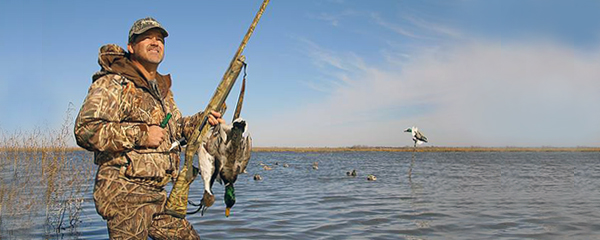
Kansas Wildlife, Parks and Tourism Commission Approves Teal Seasons


At the evening Public Hearing portion of its June 18 meeting in Hays, the Kansas Wildlife, Parks and Tourism Commission approved the early teal season and Fort Riley deer season dates for 2015.

Kansas Department of Wildlife, Parks and Tourism staff recommended early teal season dates, using frameworks provided by the U.S. Fish and Wildlife Service (USFWS). Most blue-winged teal migrate through Kansas in August and September before regular waterfowl seasons are open, so the USFWS allows states to establish a September season. The trigger for allowing the season and its length is the May Breeding Population Index (BPI), which is the number of blue-winged teal surveyed on the Prairie Pothole Region in May. If the BPI is 3.3 million bluewings, the USFWS allows a 9-day season. If the BPI exceeds 4.7 million, a 16-day season is allowed. Based on last year’s BPI of 8.5 million blue-winged teal and spring habitat conditions on the Prairie Pothole Region, staff expect the frameworks to allow a 16-day season.

The Commission approved the staff recommendation of an Early Teal Season in the Low Plains Zones taking place Sept. 12-27, 2015. Because the Migratory Bird Treaty Act limits the number of days for hunting of any one species to 107, the teal season in the High Plains Zone cannot be 16 days long. USFWS frameworks allow 97 days for the regular duck season, and two days for a youth season. The leaves only 8 days for an early teal season. To remain within the frameworks, staff recommended a 9-day Early Teal Season for the High Plains Zone taking place Sept. 19-27, 2015. (The regular High Plains Zone duck season will include 96 days to stay within the 107 maximum number of days.)

In other Public Hearing business, the Commission heard and approved recommendations for the deer seasons on the Fort Riley Military Reservation. To accommodate the changing training mission, Fort Riley personnel have requested additional archery hunting days and additional days for youth and persons with disabilities. The 12-day firearm deer season on the fort will be split into three segments.

The Commission approved the following dates for deer hunting on Fort Riley. In addition to the regular archery season, persons with required authorization can hunt with archery equipment Sep. 1-13, 2015 and Jan. 11-31, 2016. In addition to the regular season for youth and hunters with disabilities, those designated persons may hunt Oct. 9-12, 2015 on Fort Riley. There will be no Pre-rut Whitetail Antlerless-only Season on the Fort. The deer firearm season on Fort Riley will be Nov. 27-29, Dec. 19-23, and Dec. 26-29, 2015.

The next Kansas Wildlife, Parks and Tourism Commission public meeting will be conducted at the Kansas Wetlands Education Center, 592 NE K-156 Highway, Great Bend. The afternoon session will begin at 1 p.m. and recess at 5p.m. The evening Public Hearing session will begin at 6:30 p.m.

Friday, October 24, 2014

SO MANY SEASONS, SO LITTLE NOVEMBER

November marks the beginning of several hunting seasons in Kansas
PRATT – For most people, Christmas comes on Dec. 25, but for hunters and anglers, the best gifts arrive one month earlier. November marks the start of four hunting and fishing seasons that are a must-do in the Sunflower State, and if you’ve never partaken in these fall festivities, you may want to reconsider your plans this upcoming month.
TROUT FISHING: NOV. 1 - APRIL 15
From Nov. 1, 2014-April 15, 2015, anglers can enjoy some of the best fishing opportunities in the state as nearly 30 public fishing areas will be stocked periodically with this special species.
Special permits apply, so consult the 2014 Fishing Regulations Summary for complete details on your favorite waters.
To view a complete trout stocking schedule for a specific location, visit ksoutdoors.com and click “Fishing /Special Fishing Programs for You / Trout Fishing Program.”
GOOSE HUNTING
If wild turkeys aren’t your idea of a hardy holiday bird, consider bagging a goose this season. Hunters can pursue geese during the following seasons:
Canada Geese
Season: Nov. 1-9, 2014 AND Nov. 12, 2014-Feb. 15, 2015
Daily bag limit: 6 (including Brant). Possession limit: 18.
White-Fronted Geese
  • Season: Nov. 1-Dec. 14, 2014 AND Jan. 17-Feb. 15, 2015
  • Daily bag limit: 2. Possession limit: 6.
Light Geese
  • Season: Nov. 1-9, 2014 AND Nov. 12, 2014-Feb. 15, 2015
  • Daily bag limit: 50. No possession limit.
PHEASANT AND QUAIL SEASON
Recent rains leading to increased brood-rearing habitat across the state have several areas harboring more birds this year. Consider taking a peek at the 2014 Upland Bird Forecast on ksoutdoors.com to locate your next hunting honey pot.
Pheasant
  • Regular Season: November 8, 2014 - January 31, 2015
  • Youth Season: November 1-2, 2014
  • Daily Bag Limit: 4 cocks in regular season, 2 cocks in youth season.
  • NOTE: Pheasants in possession for transportation must retain intact a foot, plumage, or some part that will determine sex.
Quail
  • Regular Season: November 8, 2014 - January 31, 2015
  • Youth Season: November 1-2, 2014
    • Daily Bag Limit: 8 in regular season, 4 in youth season.
SANDHILL CRANES
Although not as widely sought-after as geese and ducks, sandhill cranes are a challenging quarry to hunt. Consider experiencing this unique season this year.
  • Season: Nov. 5 2014-Jan 1, 2015
  • Daily bag limit: 3. Possession limit: 9.
All sandhill crane hunters must take an online crane identification test each year before obtaining the required federal permit to hunt. The test can be found by visiting ksoutdoors.com and clicking “Hunting / Migratory Birds/ Sandhill Crane.”
Quivira and Kirwin National Wildlife Refuge are closed to crane hunting.

Saturday, August 30, 2014

WILDLIFE, PARKS AND TOURISM COMMISSION SETS WATERFOWL SEASONS

2014 duck and goose seasons set by Wildlife, Parks and Tourism Commission
GREAT BEND – On Thursday, August 21, the Kansas Wildlife, Parks and Tourism Commission heard 2014 duck and goose season recommendations, considered public comment and approved the following seasons.
DUCKS
High Plains Duck Zone: Oct. 11-Dec. 8, 2014 and Dec. 20, 2014-Jan. 25, 2015.
Low Plains Early Duck Zone: Oct. 11-Dec. 7, 2014 and Dec. 20, 2014-Jan. 4, 2015.
Low Plains Late Duck Zone: Nov. 1, 2014-Jan. 4, 2015 and Jan. 17-25, 2015.
Low Plains Southeast Duck Zone: Nov. 8-9, 2014 AND Nov. 15, 2014-Jan. 25, 2015.
Daily bag limit for ducks is six with the following species and sex restrictions: no more than five mallards, of which only two may be hens; three scaup; three wood ducks; two redheads; two pintails; and one canvasback. Possession limit is three times the daily bag limit. 
GEESE
Canada geese: Nov. 1-9, 2014 and Nov. 12, 2014-Feb. 15, 2015.
Daily bag limit on Canada geese is six; possession limit is 18.
Light Geese: Nov. 1-9, 2014 and Nov. 12, 2014-Feb. 15, 2015
Daily bag limit on light geese is 50 with no possession limit.
White-fronted geese: Nov. 1-Dec. 14, 2014 and Jan. 17-Feb. 15, 2015.
Daily bag limit for white-fronted geese is two and possession limit is six.
In other business, the Commission also approved a regulation allowing dogs on hand-held leashes to be used to trail dead or wounded big game animals.
The next commission meeting is scheduled for October 16, 2014 at Martinelli’s Restaurant Meeting Room, 158 S Santa Fe Ave., Salina.

Monday, March 31, 2014

LESSER PRAIRIE-CHICKEN ADDED TO FEDERAL LIST OF THREATENED SPECIES

Kansas Department of Wildlife, Parks and Tourism (KDWPT) Secretary Robin Jennison reacted with
disappointment over the U.S. Fish and Wildlife Service’s decision Thursday to list the lesser prairie-chicken as threatened. Dan Ash, director of the U.S. Fish and Wildlife Service (USFWS), announced the decision last Thursday, citing habitat fragmentation, population declines, drought, and threats from development.

“This wasn’t the decision we hoped to hear,” Jennison said. “A lot of work went into a plan to show that state wildlife agencies could manage and conserve lesser prairie chickens without designating the species as threatened.”

For the past 18 months, KDWPT participated in the Lesser Prairie-Chicken Interstate Working Group, established by the Western Association of Fish and Wildlife Agencies (WAFWA). Wildlife biologists from agencies in Kansas, Texas, Oklahoma, New Mexico and Texas, as well as other partners, worked tirelessly to develop a Range-wide Lesser Prairie Chicken Plan (RWP) to conserve the species. Keith Sexson, KDWPT assistant secretary, was actively involved in the process and is pleased with the way state agencies worked together.

“The feeling among state wildlife agencies was that such a plan would benefit lesser prairie chickens through voluntary support from industry and private landowners, and perhaps dissuade the USFWS from listing the species,” said Sexson, KDWPT assistant secretary. “I’m proud of the effort and passion shown by our staff to help create this plan, and it demonstrates the ability for state fish and wildlife agencies to work together with industry and private landowners to deliver an approach that will result in positive conservation for the lesser prairie-chicken.”

While the USFWS endorsed the final version of the conservation plan, it didn’t prevent the final listing of the species.

“I believe the development and initial success of the range-wide plan shows that our staff have the expertise necessary to manage lesser prairie chickens and their habitats. I think we missed an opportunity to break out of the status quo in managing species in need of conservation,” Jennison said. “Had the final decision been ‘not warranted,’ the range-wide plan would have represented a groundbreaking new approach for the way these decisions are made. We have a plan that would have conserved prairie chickens and benefitted all stakeholders without the burdensome red tape and often times heavy-handed approach of the federal government.”

The final RWP is the result of an unprecedented effort and collaboration among state agencies, landowners and industry. The RWP is a comprehensive lesser prairie chicken conservation/management plan that provides a vehicle to bring industry, government and private landowners together to conserve the lesser prairie-chicken and its habitat. To date, more than $20 million has been committed by oil, gas, wind and electric transmission industries that will impact nearly 4 million acres, enhancing and developing critical lesser prairie-chicken habitat.

Information about the RWP is available on the WAFWA website, www.wafwa.org.

Friday, March 14, 2014

LESSER PRAIRIE-CHICKEN RANGE-WIDE PLAN REACHES 2.5 MILLION ACRES IN FIVE STATES, INDUSTRY ENROLLMENT PROVIDES NEARLY $15 MILLION FOR HABITAT CONSERVATION

U.S. Fish and Wildlife Service Approves Oil and Gas Industry Candidate Conservation
Agreement with Assurances
Private companies in five states have now enrolled more than 2.5 million acres in the Lesser Prairie-Chicken Range-wide Conservation Plan, representing oil and gas, pipelines, electric transmission and wind energy, resulting in nearly $15 million for habitat conservation over the next three years. Added to more than 1.3 million acres of oil and gas leases under conservation agreements in New Mexico, this brings the total industry commitment close to 4 million acres.
Range-wide plan enrollment now includes 14 electric transmission companies, representing most of the electric grid across the species’ range in New Mexico, Oklahoma, and Texas. Also, eight oil and gas companies have enrolled more than 2 million acres across all five states. And, two wind energy developments and one natural gas pipeline company have signed on, with more in the process of enrollment.
Last Friday, the U.S. Fish and Wildlife Service announced it had signed a Range-wide Oil and Gas Industry Candidate Conservation Agreement with Assurances (CCAA) with the western association, under the range-wide plan developed by WAFWA and state wildlife agencies in Colorado, Kansas, New Mexico, Oklahoma, and Texas. The service also announced an accompanying Environmental Assessment. The service has proposed listing the bird as threatened under the federal Endangered Species Act, with a final determination expected by March 31.
“Under the range-wide plan, a broad coalition of government, industry, agriculture and conservation interests is demonstrating unprecedented collaboration, showing we can take care of this bird and its prairie habitat without needing to list it,” said Bill Van Pelt, Western Association of Fish and Wildlife Agencies (WAFWA) grassland coordinator.
“When you consider all acreage enrolled in the range-wide plan, plus various CCAAs, Farm Bill programs, and other conservation programs across the lesser prairie-chicken’s range, the total area is about the size of the states of Vermont and New Hampshire combined. This is also approximately half the size of the species’ current range. We believe this sets a record for conservation delivery on predominantly private land for a species under listing consideration.”
The range-wide CCAA provides another option for oil and gas companies, which can also enroll directly in the range-wide plan. CCAAs are prelisting conservation tools, where enrollment must occur prior to a listing decision. Unlike the CCAA, enrollment under the range-wide plan can occur at any time before or after the listing decision.
Enrolling companies get regulatory assurances through a special USFWS rule or a CCAA permit, so that if the species is listed the companies have a pathway to continue operations and development in the region. The companies agree to pay modest enrollment fees, follow a list of guidelines to minimize impacts on the bird, and agree to pay for impacts they cannot avoid. The money goes to farmers, ranchers and landowners to protect and restore habitat for the bird. 
Complementing the range-wide plan, landowner CCAAs offer legal assurances for farmers and ranchers in New Mexico, Texas and Oklahoma. These cover a total of nearly 2.3 million acres across the three states. Landowners in Colorado and Kansas, who do not have access to a ranching CCAA, can enroll their lands under the RWP and receive the same assurances.
The range-wide plan includes habitat management goals and conservation practices to be applied throughout the lesser prairie-chicken’s range, guided by the Crucial Habitat Assessment Tool (CHAT) online database and mapping system.
The range-wide plan can be viewed on the WAFWA website. Industry representatives with questions about the plan may contact Sean Kyle, chairman of the Lesser Prairie Chicken Interstate Working Group, at sean.kyle@wafwa.org. Farmers, ranchers, and landowners may contact their local state fish and wildlife agency biologist to answer questions about enrollment in the plan.

Wednesday, February 12, 2014

LESSER-PRAIRIE CHICKEN CONSERVATION PLAN LANDOWNER/PRODUCER SIGN-UP PERIOD OPEN

Western Association of Fish and Wildlife Agencies accepting applications throughFeb. 28

EMPORIA – Landowner/producers can apply to enroll their land in the Lesser-prairie Chicken Conservation Program through Feb 28, according to the Western Association of Fish and Wildlife Agencies (WAFWA). Those with land in the lesser prairie-chicken range willing to implement conservation practices beneficial to lesser-prairie chickens are eligible. Landowner/producers who are accepted will receive a sign-up incentive and payments for implementing conservation practices designed to maximize the value of their property to lesser-prairie chicken. Those practices include mechanical brush removal, prescribed grazing, and establishment and management of planted native grass stands. Only producers not currently enrolled in federal farm bill programs will be eligible to apply for five- and 10-year contract options.
The WAFWA will rank applications based on their value to lesser prairie-chickens and select the highest ranking offers for enrollment. Accepted landowner/producers located in the high-priority locations can receive payments of up to 125 percent of the estimated cost of implementing the conservation plan. If the species becomes federally listed, participating producers will be exempt from the take prohibition of the Endangered Species Act (ESA) if the take occurs while implementing the practices prescribed in their conservation plan.  Producers who are interested in the program should contact their local state wildlife agency office for more details or to complete an application. 
After the sign-up period is complete, the WAFWA will also be developing similar conservation plans for producers who just want to be exempted from the take prohibitions of the ESA. The management prescriptions in these plans won’t be as conservative, and landowners won’t receive payment for implementing them. However, if the species is listed, any take that occurs while implementing the prescribed practices will be exempt from the take prohibitions of the ESA.  Producers interested in this type of conservation plan should also contact their local state wildlife agency.
The WAFWA consists of 23 state and provincial wildlife agencies that have primary responsibility and authority for protecting and managing fish and wildlife in the western United States and Canada.  The state wildlife agencies in Kansas, Oklahoma, Texas, New Mexico, and Colorado are members of the WAFWA. Through the WAFWA, those five state wildlife agencies worked cooperatively over the last two years to produce the Lesser-prairie Chicken Range-wide Conservation Plan (RWP) as a means to preclude a federal listing of the species under the ESA. On October 23, 2013, the U.S. Fish and Wildlife Service (USFWS) endorsed the RWP as “a comprehensive conservation plan that reflects sound conservation design and strategy that, when implemented, will provide a net conservation benefit to the lesser prairie-chicken.” To date, the RWP is the only plan that has been endorsed by the USFWS and is the only pathway that has the potential to lead to a not warranted final decision. The amount of voluntary enrollment in the RWP will likely weigh heavily into the final listing decision that must be announced by the end of March.

Sunday, February 2, 2014

GREAT PLAINS NATURE CENTER HONORED WITH NATIONAL AWARD

Wichita’s GPNC recognized for its unique partnerships

Secretary of the Interior Sally Jewell presented the 2013 Partners in Conservation awards at a ceremony in Washington, DC on Jan. 16. The Secretary honored 20 partnership projects that have demonstrated exemplary natural resource conservation efforts through public-private cooperation. Four
partnerships nominated by the U.S. Fish and Wildlife Service(USFWS), including The Great Plains Nature Center in Wichita,received awards.

 The Great Plains Nature Center, located at 6232 E. 29th Street N in Wichita, is a wild oasis in an urban setting. Each year the Center provides outdoor recreation and educational opportunities to hundreds of thousands of visitors. The facility is a one-of-a-kind partnership that began in 1988. It serves as an outdoor education center for the City of Wichita, a regional office for the Kansas Department of Wildlife, Parks, and Tourism, and an administrative site for theUSFWS. The Friends of the Great Plains Nature Center help visitors learn about the plants and animals of the Great Plains through live animal exhibits, dioramas depicting native flora and fauna, and nature trails leading to abundant wildlife viewing opportunities on the adjacent Chisholm Creek Park. Its education programs operate throughout the year, and a highlight of the Center is a massive 2,200-gallon aquarium offering close-up views of native fish.

Other award winners include the Edwards Aquifer Recovery Implementation Program in Texas, the Klamath Tribal Leadership Development for Integrative Science and Traditional Ecological Knowledge Program in northern California and southern Oregon, and the Center for Land-Based Learning Partnership in California.

Partnerships are vital to wildlife conservation efforts nationwide as they allow us to combine the strengths of our stakeholders with the resources and abilities of our staff, saidUSFWSDirector Dan Ashe. Almost anything is possible when you leverage the skills, talents, dedication and abilities of diverse groups of stakeholders that share a common conservation agenda.

A total of 14 partnerships were submitted nationwide by Service staff for consideration as part of this year’s awards.

Additional information on the selected programs and full listings of entities involved are available here:
http://www.fws.gov/home/feature/2014/2013-pic-awards.html.

Friday, November 15, 2013

PRAIRIE CHICKEN SEASON UNIQUE HUNTING OPPORTUNITY

Kansas harbors highest prairie chicken population in world
PRATT – What may be the most unique upland bird hunting opportunity in North America begins on
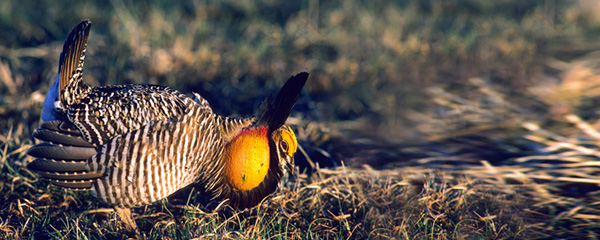
the third Saturday in November. The 2013 regular prairie chicken season opens Nov. 16 and runs through Jan. 31, 2014 in the Northwest and East units. It endsDec. 31, 2013 in the Southwest Unit. Kansas is home to lesser and greater prairie chickens, both iconic prairie grouse species of our Midwest grasslands.
In Kansas, the more numerous greater prairie chicken inhabits the tallgrass prairie of the Flint Hills, in east-central Kansas, and mixed grass prairies of the Smoky Hills, in northcentral and northwest Kansas. Less than 4 percent of the 400,000 square miles of tallgrass prairie that once covered North America still remain, and two-thirds of that is in the Kansas region known as the Flint Hills. This region in east-central Kansas still provides large, unbroken expanses of tallgrass prairie, thanks to the stewardship of private cattle ranchers, and a shallow layer of chert, or flint, that protects it from the plow.
The more rare lesser prairie chicken inhabits the shortgrass prairies of southwest Kansas. Because of habitat loss and population declines in four other states where lesser prairie chickens exist (Colorado, New Mexico, Oklahoma and Texas), Kansas is the only state where lesser prairie chickens can be hunted. In fact, the U.S. Fish and Wildlife Service (USFWS) will announce next spring whether or not the lesser prairie chicken will be added to the Threatened and Endangered Species List. To address habitat losses, wildlife agencies in the five states formed a working group that collaborated with the Western Association of Fish and Wildlife Agencies to develop a comprehensive management plan. State biologists hope the plan will dissuade the USFWS from listing the lesser prairie chicken, allowing state agencies to implement a variety of private land habitat enhancement programs designed to benefit lesser chickens.
Hunting lesser prairie chickens in Kansas has no impact on the population, and provides a truly unique upland bird hunting opportunity. The daily bag limit in the Southwest Unit is one prairie chicken per day with a possession limit of four.
Daily bag limit in the Northwest and East units is two prairie chickens per day, and the possession limit is eight. Most prairie chickens taken during the regular season are taken by pass shooting. Hunters position themselves along the edges of feed fields in the early morning or late evening hours and wait for chickens to fly in from the grasslands. Success depends on prior scouting, patience and luck. It also requires shooting skill because prairie chickens fly deceptively fast, especially with any type of tailwind.
In addition to a hunting license, unless exempt, prairie chicken hunters are required to have a $2.50 Prairie Chicken Permit. The special permit allows KDWPT to gain valuable management information from hunters who pursue prairie chickens.
The Smoky Hills region is expected to hold some of the highest densities and greatest hunting opportunities in the state for greater prairie chickens. Hunters may also find success in the Flint Hills, where reduced burning allowed for more residual grass cover for nesting compared to most years. For more details, view the 2013 Upland Bird Forecast atksoutdoors.com.

Thursday, November 14, 2013

KANSAS WILDLIFE FEDERATION SEEKS AWARD NOMINATIONS

2013 Conservation Achievement Award winners will be recognized at the February banquet in Salina

PRATT – Many conservation projects around the state would never happen without the dedicated men and women who work tirelessly each day to contribute their time, skills and expertise. The Kansas Wildlife Federation (KWF) believes these contributions, however large or small, should be recognized. If you know someone who has made exceptional contributions to wildlife and natural resource conservation this past year, KWF would like to hear about them. Nominate your favorite conservationist for a Conservation Achievement Program (CAP) award.
CAP award categories include Land and Soil Conservation, Youth Conservationist, Conservation Communicator, Conservation Educator, Wildlife Conservationist, Water Conservationist, Conservation Legislator, Conservation Farmer/Rancher, Forestry Conservationist, Stream Team Conservationist, Outdoor Skills Instructor, Conservation Organization, and Conservationist of the Year.
Nominations can be made by e-mailing your contact information along with the nominee’s contact information, and a 2,000-word explanation of why this individual should be recognized to drrkidd@gmail.com. Nominations must be received by December 10. Winners of these prestigious awards will be recognized at the 2014 CAP Banquet in Salina,Feb. 22, 2014.

Tuesday, August 20, 2013

YOUTH DOVE HUNT AT CLINTON WILDLIFE AREA

A mentored dove hunt is a perfect way to introduce a youngster to hunting

PRATT – The Jayhawk Chapter of the Quail and Upland Wildlife Federation (QUWF) and the Kansas Department of Wildlife, Parks and Tourism (KDWPT) are making preparations for their 6th Annual Youth Dove Hunt to be held opening day, Sept. 1, 2013 at Clinton Wildlife Area near Lecompton.
The hunt is open to hunters age 16 and younger. Shotguns, shells, and eye and ear protection will be provided to participants at no cost. Hunters are encouraged to wear camouflage clothing.
“This is just a great event for kids to get out in the field and get hands-on experience hunting doves without worrying about the cost. We supply them with everything they need, and we are happy to do it,” said QUWF Jayhawk Chapter member Dr. John Hill. “Last year, our young hunters shot a little over 780 shells. This year, we hope to shoot even more.”
Mentors will accompany all participants, but non-hunting family members are encouraged to attend, as well. The hunt will begin just before sunrise and conclude mid-day. To register for this event, contact Hill at (785) 550-5657 or by e-mail at hills4ku@hotmail.com.

Sunday, August 18, 2013

WILDLIFE, PARKS AND TOURISM COMMISSION PUBLIC HEARING AUG. 29

Phone conference scheduled to approve last-minute changes to possession limits for migratory birds

PRATT – The Kansas Wildlife, Parks and Tourism Commission will conduct a public hearing through a telephone conference on Thursday, August 29, 2013. The call will begin at 10 a.m., and members of the public can listen online atksoutdoors.com, or attend a satellite location listed below, where public comments may be heard.
The last-minute hearing is necessary to incorporate changes to possession limits in migratory bird hunting regulations for the 2013 seasons. Other than the late migratory bird seasons, which were set Aug. 1, seasons and regulations for doves, sandhill cranes, snipe, rail and woodcock were approved earlier this year. However, when the U.S. Fish and Wildlife Service (USFWS) released frameworks for migratory bird hunting regulations in July, the possession limit for all migratory birds was increased from twice the daily bag limit to three times the daily bag limit. Because potential regulation changes must be given published notice 30 days prior to a public hearing, the impromptu commission meeting was scheduled for Aug. 29. Commissioners will vote on a recommendation to adopt the maximum possession limit of three times the daily bag limit for doves, sandhill cranes, snipe, rail and woodcock as allowed under the USFWS frameworks.
The public is encouraged to listen to or comment during the hearing at any of the following KDWPT locations: Office of the Secretary, 1020 S. Kansas Ave., Suite 200, Topeka; Pratt Operations Office, 512 SE 25th
Ave., Pratt; KDWPT Region 1 Office, 1426 Hwy 183 Alt., Hays; KDWPT Region 2 Office, 300 SW Wanamaker Rd., Topeka; KDWPT Region 3 Office, 1001 W. McArtor, Dodge City; KDWPT Region 4 Office, 6232 E. 29th
St. N, Wichita; Neosho County Community College, 800 W. 14th
St., Oak Room, No. 209, Chanute; KDWPT Kansas City Office, 8304 Hedge Lane Terrace, Shawnee; KDWPT Research and Survey Office, 1830 Merchant, Emporia.
If necessary, the Commission will recess on August 29, 2013, to reconvene August 30, 2013, at 9:00 a.m.
If notified in advance, the department will have an interpreter available for the hearing impaired. To request an interpreter call the Kansas Commission of Deaf and Hard of Hearing at 1-800-432-0698. Any individual with a disability may request other accommodations by contacting the Commission Secretary at (620) 672-5911.

The next commission meeting is scheduled for Thursday, October 17, 2013, Kansas Cosmosphere, 1100 N. Plum, Hutchinson.

Sunday, August 11, 2013

2013 DUCK AND GOOSE SEASONS SET

English: crop of File:Bgforhunting.jpg Taken b...

Goose daily bag limits increased; possession limits for ducks and geese increased
YATES CENTER – The Kansas Wildlife, Parks and Tourism Commission listened to department staff recommendations and comments from waterfowl hunters before approving the 2013 duck and goose seasons during a public hearing held in Yates Center on August 1. Summer breeding bird surveys show most species well above long-term averages, and with good to excellent nesting habitat conditions, the U.S. Fish and Wildlife Service (USFWS) provided liberal season frameworks. Waterfowl hunters may be surprised to learn that the daily bag limit for teal during the early teal season was increased from four to six, the daily bag limit for Canada geese was increased from 3 to 6 and the daily bag limit for light geese was increased from 20 to 50. Possession limits for ducks and geese were increased from twice the daily bag limit to three times the daily bag limit. The Commission approved the following waterfowl hunting seasons:
High Plains Duck Zone: Oct. 5-Dec. 2, 2013 AND Dec. 21, 2013-Jan. 26, 2014. Youth: Sept. 28-29, 2013
Low Plains Early Duck Zone: Oct. 5-Dec. 1, 2013 AND Dec. 21, 2013-Jan. 5, 2014. Youth: Sept. 28-29, 2013
Low Plains Late Zone: Oct. 26-Dec. 29, 2013 AND Jan. 18-Jan. 26, 2014. Youth: Oct. 19-20, 2013
Low Plains Southeast Zone: Nov. 2-3, 2013 AND Nov. 16, 2013-Jan. 26, 2014. Youth: Oct. 26-27, 2013
Duck bag limit: Six ducks, including no more than 5 mallards, of which only 2 may be hens; 2 redheads; 3 wood ducks; 3 scaup; 2 pintails; and 2 canvasbacks. Possession limit is three times the daily bag limit.
White-fronted geese: Oct. 26-Dec. 29, 2013 AND Feb. 1-Feb. 9, 2014. Daily bag limit: 2. Possession limit is 6.
Canada geese: Oct. 26-Nov. 3, 2013 and Nov. 6, 2013-Feb. 9, 2014. Daily bag limit on Canada geese: 6. Possession limit: 18.
Light geese: Oct. 26-Nov. 3, 2013 and Nov. 6, 2013-Feb. 9, 2014. Daily bag limit: 50. No limit on possession
Light Goose Conservation Order: Feb 10-April 30, 2014. No bag or possession limit.
To view a map of duck zones and to see all 2013 hunting seasons go to www.ksoutdoors.com, click on “Hunting” then “When to Hunt.”

Saturday, August 10, 2013

DUCK BREEDING POPULATION ESTIMATES SHOW PROMISING NUMBERS

While just below last year’s record numbers, 2013 duck populations are still well above long-term averages

PRATT­– Duck populations are strong, according to the U.S. Fish and Wildlife Service (USFWS) 2013 Report on Trends in Duck Breeding Populations. The preliminary estimate of total duck populations from the traditional survey area (northcentral United States, southcentral and northern Canada, and Alaska) is 45.6 million birds­– a six percent decrease from last year’s estimate of 48.6 million birds, but a 33 percent increase from the long-term average. In addition to estimating duck populations, the survey also examines habitat conditions.
Habitat conditions during the 2013 survey were generally improved or similar to last year due to above-average precipitation, despite a delayed spring throughout most of the traditional survey area. Most of the Canadian portions of the traditional survey area were rated as good to excellent, in contrast to 2012 when drier conditions existed across northern Alberta and Saskatchewan. Although the U.S. prairies received record snowfall in April, habitat conditions were still rated only fair to poor, similar to last year. The total pond estimate (prairie Canada and the north-central United States combined) is 6.9 million, 24 percent higher than the 2012 estimate of 5.5 million ponds and 35 percent above the long-term average.
In the eastern survey area – eastern Ontario, Quebec, the Maritime Provinces and Maine – estimated mallard abundance is 500,000 birds. Habitat conditions across most of the eastern survey area generally were good with the exception of Maine and the southern Maritimes, which were rated only as fair.
The report also notes:
  • Estimated mallard abundance is 10.4 million birds, similar to the 2012 estimate of 10.6 million birds and 36 percent above the long-term average.
  • Blue-winged teal estimated abundance is 7.7 million. Although this is 16 percent below the 2012 estimate of 9.2 million, the blue-wing population is 60 percent above the long-term average. Similarly, the green-winged teal estimate of 3.1 million is 12 percent below last year, but still 51 percent above the long-term average.
  • The northern pintail estimate of 3.3 million is similar to the 2012 estimate of 3.5 million and 17 percent below the long-term average.
  • Estimated abundance of American wigeon is 2.6 million and 23 percent above the 2012 estimate and similar to the long-term average.
  • The combined lesser and greater scaup estimate of 4.2 million decreased 20 percent from last year and is 17 percent below the long-term average of 5 million.
  • The canvasback estimate of 787,000 is similar to the 2012 estimate and 37 percent above the long-term average.
The surveys are conducted by the USFWS and Canadian Wildlife Services’ Waterfowl Breeding Population and Habitat Survey, sampling more than 2 million square miles of waterfowl habitat across Alaska, the northcentral and northeastern United States and southcentral, eastern and northern Canada.
The information guides the USFWS waterfowl conservation programs under authority of the 1918 Migratory Bird Treaty Act. The USFWS then works in partnership with state biologists from the four flyways – the Atlantic, Mississippi, Central and Pacific – to establish regulatory frameworks for waterfowl hunting season lengths, dates and bag limits. 2013 Kansas duck hunting season dates and bag limits will be approved at the Aug. 1 commission meeting in Yates Center.
For more information about the U.S. Fish and Wildlife Service 2013 Report on Trends in Duck Breeding Populations, visitwww.fws.gov/migratorybirds.
For more information on Kansas waterfowl hunting, visit ksoutdoors.com and click “Hunting/Migratory Birds/Ducks.”