Showing posts with label Colorado. Show all posts

Friday, March 14, 2014

LESSER PRAIRIE-CHICKEN RANGE-WIDE PLAN REACHES 2.5 MILLION ACRES IN FIVE STATES, INDUSTRY ENROLLMENT PROVIDES NEARLY $15 MILLION FOR HABITAT CONSERVATION

U.S. Fish and Wildlife Service Approves Oil and Gas Industry Candidate Conservation
Agreement with Assurances
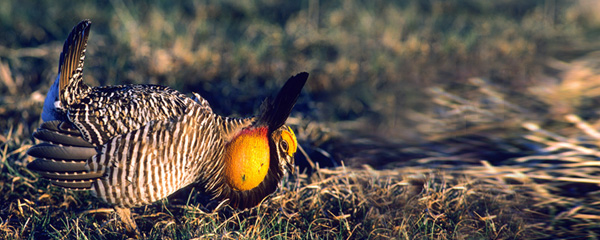
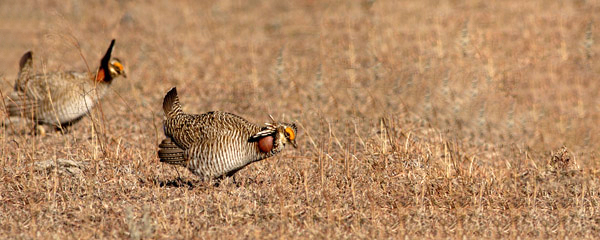
Private companies in five states have now enrolled more than 2.5 million acres in the Lesser Prairie-Chicken Range-wide Conservation Plan, representing oil and gas, pipelines, electric transmission and wind energy, resulting in nearly $15 million for habitat conservation over the next three years. Added to more than 1.3 million acres of oil and gas leases under conservation agreements in New Mexico, this brings the total industry commitment close to 4 million acres.
Range-wide plan enrollment now includes 14 electric transmission companies, representing most of the electric grid across the species’ range in New Mexico, Oklahoma, and Texas. Also, eight oil and gas companies have enrolled more than 2 million acres across all five states. And, two wind energy developments and one natural gas pipeline company have signed on, with more in the process of enrollment.
Last Friday, the U.S. Fish and Wildlife Service announced it had signed a Range-wide Oil and Gas Industry Candidate Conservation Agreement with Assurances (CCAA) with the western association, under the range-wide plan developed by WAFWA and state wildlife agencies in Colorado, Kansas, New Mexico, Oklahoma, and Texas. The service also announced an accompanying Environmental Assessment. The service has proposed listing the bird as threatened under the federal Endangered Species Act, with a final determination expected by March 31.
“Under the range-wide plan, a broad coalition of government, industry, agriculture and conservation interests is demonstrating unprecedented collaboration, showing we can take care of this bird and its prairie habitat without needing to list it,” said Bill Van Pelt, Western Association of Fish and Wildlife Agencies (WAFWA) grassland coordinator.
“When you consider all acreage enrolled in the range-wide plan, plus various CCAAs, Farm Bill programs, and other conservation programs across the lesser prairie-chicken’s range, the total area is about the size of the states of Vermont and New Hampshire combined. This is also approximately half the size of the species’ current range. We believe this sets a record for conservation delivery on predominantly private land for a species under listing consideration.”
The range-wide CCAA provides another option for oil and gas companies, which can also enroll directly in the range-wide plan. CCAAs are prelisting conservation tools, where enrollment must occur prior to a listing decision. Unlike the CCAA, enrollment under the range-wide plan can occur at any time before or after the listing decision.
Enrolling companies get regulatory assurances through a special USFWS rule or a CCAA permit, so that if the species is listed the companies have a pathway to continue operations and development in the region. The companies agree to pay modest enrollment fees, follow a list of guidelines to minimize impacts on the bird, and agree to pay for impacts they cannot avoid. The money goes to farmers, ranchers and landowners to protect and restore habitat for the bird. 
Complementing the range-wide plan, landowner CCAAs offer legal assurances for farmers and ranchers in New Mexico, Texas and Oklahoma. These cover a total of nearly 2.3 million acres across the three states. Landowners in Colorado and Kansas, who do not have access to a ranching CCAA, can enroll their lands under the RWP and receive the same assurances.
The range-wide plan includes habitat management goals and conservation practices to be applied throughout the lesser prairie-chicken’s range, guided by the Crucial Habitat Assessment Tool (CHAT) online database and mapping system.
The range-wide plan can be viewed on the WAFWA website. Industry representatives with questions about the plan may contact Sean Kyle, chairman of the Lesser Prairie Chicken Interstate Working Group, at sean.kyle@wafwa.org. Farmers, ranchers, and landowners may contact their local state fish and wildlife agency biologist to answer questions about enrollment in the plan.

Friday, November 15, 2013

PRAIRIE CHICKEN SEASON UNIQUE HUNTING OPPORTUNITY

Kansas harbors highest prairie chicken population in world
PRATT – What may be the most unique upland bird hunting opportunity in North America begins on
the third Saturday in November. The 2013 regular prairie chicken season opens Nov. 16 and runs through Jan. 31, 2014 in the Northwest and East units. It endsDec. 31, 2013 in the Southwest Unit. Kansas is home to lesser and greater prairie chickens, both iconic prairie grouse species of our Midwest grasslands.
In Kansas, the more numerous greater prairie chicken inhabits the tallgrass prairie of the Flint Hills, in east-central Kansas, and mixed grass prairies of the Smoky Hills, in northcentral and northwest Kansas. Less than 4 percent of the 400,000 square miles of tallgrass prairie that once covered North America still remain, and two-thirds of that is in the Kansas region known as the Flint Hills. This region in east-central Kansas still provides large, unbroken expanses of tallgrass prairie, thanks to the stewardship of private cattle ranchers, and a shallow layer of chert, or flint, that protects it from the plow.
The more rare lesser prairie chicken inhabits the shortgrass prairies of southwest Kansas. Because of habitat loss and population declines in four other states where lesser prairie chickens exist (Colorado, New Mexico, Oklahoma and Texas), Kansas is the only state where lesser prairie chickens can be hunted. In fact, the U.S. Fish and Wildlife Service (USFWS) will announce next spring whether or not the lesser prairie chicken will be added to the Threatened and Endangered Species List. To address habitat losses, wildlife agencies in the five states formed a working group that collaborated with the Western Association of Fish and Wildlife Agencies to develop a comprehensive management plan. State biologists hope the plan will dissuade the USFWS from listing the lesser prairie chicken, allowing state agencies to implement a variety of private land habitat enhancement programs designed to benefit lesser chickens.
Hunting lesser prairie chickens in Kansas has no impact on the population, and provides a truly unique upland bird hunting opportunity. The daily bag limit in the Southwest Unit is one prairie chicken per day with a possession limit of four.
Daily bag limit in the Northwest and East units is two prairie chickens per day, and the possession limit is eight. Most prairie chickens taken during the regular season are taken by pass shooting. Hunters position themselves along the edges of feed fields in the early morning or late evening hours and wait for chickens to fly in from the grasslands. Success depends on prior scouting, patience and luck. It also requires shooting skill because prairie chickens fly deceptively fast, especially with any type of tailwind.
In addition to a hunting license, unless exempt, prairie chicken hunters are required to have a $2.50 Prairie Chicken Permit. The special permit allows KDWPT to gain valuable management information from hunters who pursue prairie chickens.
The Smoky Hills region is expected to hold some of the highest densities and greatest hunting opportunities in the state for greater prairie chickens. Hunters may also find success in the Flint Hills, where reduced burning allowed for more residual grass cover for nesting compared to most years. For more details, view the 2013 Upland Bird Forecast atksoutdoors.com.

Monday, February 25, 2013

PUBLIC INPUT SOUGHT ON DRAFT LESSER PRAIRIE CHICKEN MANAGEMENT PLAN


Anyone interested in lesser prairie chicken management encouraged to attend

PRATT – The Kansas Department of Wildlife, Parks and Tourism (KDWPT) has been working with the Lesser Prairie Chicken Interstate Working Group to produce a draft Range-wide Conservation Plan for the Lesser Prairie Chicken. The plan addresses the decline of the lesser prairie chicken in Kansas, Oklahoma, New Mexico, Texas and Colorado and is intended to benefit the wildlife resources, people, and economies of these states by providing a framework for effective lesser prairie chicken management and habitat improvement. The ultimate goal is to increase the range-wide population of lesser prairie chickens. The draft plan emphasizes incentives and tools that encourage landowners to partner with agencies in conservation efforts while achieving their land use needs.

In December, the U.S. Fish and Wildlife Service announced a proposal to list the lesser prairie chicken as a threatened species under the Endangered Species act. A final decision will be made next fall. The Interstate Working Group’s management plan could influence the USFWS’s decision if it can show that lesser prairie chicken populations can be managed at sustainable levels.

Public meetings were held in southwest Kansas in November to gain input from landowners, producers and other stakeholders as the plan was being developed. Now that a draft plan has been assembled, three additional public meetings are scheduled to continue the dialog.

March 5: WaKeeney, 7 p.m.-9 p.m., WaKeeney City Library, 610 Russell Ave.
March 6: Lakin, 7 p.m.-9 p.m., Kearny County Library, 101 E. Prairie.
March 7: Greensburg, 7 p.m.-9 p.m., Community Center (by fairgrounds), 720 N Bay.
More information about the planning process can be found at the project website: http://www.ksre.k-state.edu/p.aspx?tabid=275

Friday, February 1, 2013

U.S. FISH AND WILDLIFE SERVICE SEEKS LESSER PRAIRIE CHICKEN COMMENTS


The U.S. Fish and Wildlife Service (USFWS) will conduct a public meeting in Garden City on Thursday, February 7, 2013 to gather public comments on the proposed listing of the lesser prairie chicken. The meeting will be conducted at Garden City Community College, 801 N. Campus Drive, and will begin at 6:30 p.m.
In November, the USFWS announced it was initiating a process to consider whether the lesser prairie chicken should be recognized as a threatened species under the Endangered Species Act based on scientific evidence that the species and its habitat are in decline. The USFWS will make a final determination on whether to add the lesser prairie chicken to the list based on the best available science. Members of the public and scientific community are encouraged to review and comment on the proposal during the 90-day public comment period.
The Kansas Department of Wildlife, Parks and Tourism (KDWPT) is participating in a five-state effort to develop a range-wide conservation plan to address the decline of the lesser prairie chicken in Kansas, Oklahoma, New Mexico, Texas and Colorado. The conservation plan is intended to benefit the wildlife resources, people, and economies of these states by providing a framework for effective lesser prairie chicken management and habitat improvement that will increase the range-wide population of lesser prairie chickens. The plan will emphasize incentives and tools that encourage landowners to partner with agencies in conservation efforts while achieving their land use needs.

Saturday, May 26, 2012

Public Health Advisory Issued for Portion of Arkansas River

English: Map of the Arkansas River watershed i...
Map of the Arkansas River watershed in the south-central United States. (Photo credit: Wikipedia)
Advisory extends from Lincoln Street Bridge in Wichita to Oklahoma state line
TOPEKA — The Kansas Department of Health and Environment (KDHE) has issued a public health advisory for a portion of the Arkansas River due to elevated levels of bacteria discovered during routine stream sampling by KDHE’s ambient water quality monitoring program. KDHE has also confirmed a report of a fish kill in the Arkansas River in areas where there is black, odiferous water.

The health advisory covers a the stretch of the Arkansas River from the Lincoln Street Bridge in central Wichita to the Oklahoma state line.

KDHE advises individuals to have no contact with the Arkansas River between the locations identified above until further notice. Residents are also advised to keep their pets and livestock from making contact with the water.

The cause has not been identified. KDHE is conducting an investigation and will follow up with additional water testing to determine when this notice can be lifted.

Sunday, May 22, 2011

“WANNA GO FISHING FOR MILLIONS?” CONTEST UNDER WAY

Tagged fish could net anglers big bucks; great Free Fishing Days opportunity

PRATT — The Kansas Department of Wildlife and Parks (KDWP) is participating in the “Wanna Go Fishing for Millions?” contest, which began May 14 and runs to July 14. The contest, sponsored by Cabela’s and Wanna Go Fishing TV, involves hundreds of fish that were tagged in 19 states in roughly 60 lakes, including the Sunflower State’s Milford, Glen Elder, Cheney, Cedar Bluff, Hillsdale, Clinton, Kanopolis, and El Dorado reservoirs. Anglers must register, which is free.

Registered anglers who catch a tagged fish will be directed to the contest website where they will find instructions on redeeming the tags for prizes. Among the winning fish are grand prize winners that may qualify for additional bonuses based on the winning angler using or wearing sponsors’ products when they catch a tagged fish. The largest payout could be as much as $2.2 million.

Colorado is the only neighboring state participating in the contest, so Kansas could draw quite a few anglers from its neighbors, as well as boost the numbers of residents who fish our waters. As of May 13, nearly 57,000 anglers had pre-registered from around the nation. KDWP staff expect an increase in the number of people visiting the contest lakes and associated parks, especially on Free Fishing Days, June 4-5, and the various Free Park Entrance Days (contact individual parks for detailed information).

For more information and to register, visit the contest website online atwww.cabelas.com/fishformillions or click on the contest ad on the KDWP home page, www.kdwp.state.ks.us. KDWP staff and members of their immediate household family are not eligible to participate in the contest.

Enhanced by Zemanta

Thursday, May 19, 2011

2010 Hunting Incidents Reported


Total an increase of five over 2009; one fatal, all avoidable
PRATT — The Kansas Department of Wildlife and Parks (KDWP) reports that there were 17 hunting incidents in Kansas in 2010, five more than the record low of 12 in 2009. One of the accidents was fatal.

The one fatal accident occurred in Dickinson County when two turkey hunters had finished hunting for the day and were walking across a plowed field to their vehicle. The shooter stated that he was carrying his 20-gauge shotgun in the high ready position when he heard a turkey gobble behind him. He turned to his left, toward the victim, and the shotgun discharged, striking the victim in the side of the neck. The victim died at the scene.
In an average year, about 50 percent of Kansas hunting accidents involve swinging on game while hunting upland birds. That figure held true last year, when eight of the 17 cases involved swinging on game. Although the single fatality involved careless gun handling, 2010 showed a drop in the number of careless handling incidents, a point stressed in KDWP’s hunter education courses.

“We place great emphasis on gun handling skills in our courses — always controlling the muzzle, keeping the finger out of the trigger guard and off the trigger, as well as the other rules of safe gun handling,” says Kent Barrett, statewide Hunter Education Program coordinator for KDWP. “We can only hope to prevent these unfortunate incidents from occurring in the future. In fact, they were all preventable. All of our instruction and all of our hunter education course activities included in our field days emphasize this point and constantly promote safe gun handling practices.”

Although there was an increase in 2010, the number of accidents is still very small compared to the number of hunters and hours spent afield. According to the latest available statistics in the U.S. Fish and Wildlife Service’s2006 National Survey of Fishing, Hunting, and Wildlife-Associated Recreation, 271,000 hunters spent more than 3 million man-days hunting in Kansas.

In addition to the official hunting incidents reported, three bowhunters fell from treestands, one fatally. In none of these incidents was the hunter wearing a restraint harness, as is taught in hunter education and bowhunter education courses.

“The simple use of a fall restraint system would have prevented these incidents from occurring,” Barrett notes. “Bowhunters need to remind themselves to use these safety devices.

“But the take away message from 2010 is that hunting is still incredibly safe,” he continues. “Studies consistently show that hunting is one of the safest outdoor activities, with only five injuries per 100,000 participants. With more 19 million hunters in the U.S., our volunteer hunter education instructors should rightfully feel pride in their efforts to educate students. They must be listening.”

As in past years, young hunters were involved in fewer incidents than more seasoned hunters; the average age of shooters involved in these incidents was 37.

Hunting is indeed safe. According to the National Safety Council, Injury Facts 2008 Edition, hunting is by far the safest sport. Figures show that while football players suffer 2,585 injuries per 100,000 participants, baseball players suffer 1,122 injuries per 100,000, and even billiards players suffer 15 injuries per 100,000 participants.

Enhanced by Zemanta

Wednesday, January 12, 2011

2011 FISHING REGULATIONS NOW AVAILABLE

Where to fish, how to fish legally, what’s new for 2011 included
PRATT — Printed copies of the 2011 Kansas Fishing Regulations Summarybooklet are now available at offices of the Kansas Department of Wildlife and Parks (KDWP) or wherever licenses are sold, the agency has announced. Copies may also be downloaded from the KDWP website, www.kdwp.state.ks.us. Click the “Fishing” icon at the top of the page, then “Fishing Regulations” in the left-hand column.
Among other things, the publication lists new regulations that took effect Jan. 1, 2011. From new regulations expanding handfishing for flathead catfish to weigh-in regulations for black bass tournaments, the booklet has everything the angler needs to know during the 2011 fishing year.
The booklet also provides the latest information about aquatic nuisance species (ANS) in Kansas waters. Two pages are dedicated to this subject, complete with detailed illustrations and tips on how to prevent the spread of ANS plants, mollusks, and fish.
Anglers who want to contact a district fisheries biologist will find a listing of names and phone numbers of the nearest biologist, as well as regional supervisors. A listing of natural resource officer contacts is also included.

Enhanced by Zemanta