Showing posts with label Endangered Species Act. Show all posts

Wednesday, July 8, 2015

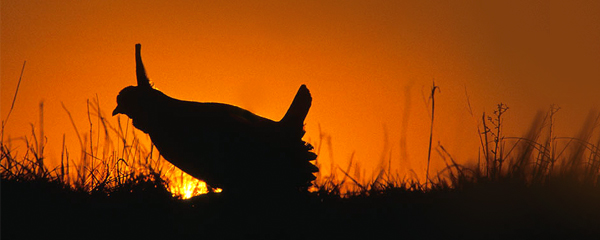
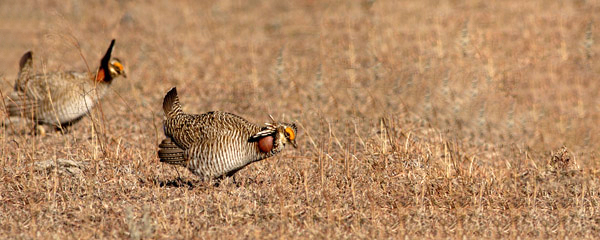
Lesser Prairie Chicken Numbers Increase Again

PRATT – The lesser prairie chicken population increased approximately 25 percent from 2014 to 2015, according to the recent range-wide aerial survey. Wildlife biologists with the Western Association of Fish and Wildlife Agencies (WAFWA) attribute the increase to abundant spring rainfall and ongoing efforts associated with the Lesser Prairie Chicken Range-wide Conservation Plan.
Increases were observed in three of the four ecoregions across five states – Colorado, Kansas, New Mexico, Oklahoma and Texas – where the species exists. The Sandsage Prairie Region of southeast Colorado showed the biggest gain – approximately 75 percent from a year ago. The Mixed Grass Prairie Region of the northeast Panhandle of Texas, northwest Oklahoma and southcentral Kansas showed an increase of approximately 30 percent, and the population in the Shortgrass Prairie Region of northwest Kansas grew by about 27 percent.
“An overall 25 percent increase in the lesser prairie chicken population across its five-state range is welcome news,” said Ross Melinchuk, chairman of WAFWA’s Lesser Prairie Chicken Initiative Council. “This year’s increase, on the heels of last year’s 20 percent increase, is evidence of the species’ ability to rapidly recover from downturns resulting from drought and poor range condition. With continued improvement in nesting and brood-rearing habitat associated with abundant rainfall and private landowner actions to conserve and restore their habitat, we are optimistic the species will recover to historic population levels.”
The only ecoregion with a continued downward population trend is the Shinnery Oak ecoregion of eastern New Mexico and western Texas. This ecoregion is still recovering from a prolonged period of drought. However, recent roadside surveys indicate lesser prairie chickens in this area are starting to respond to rainfall that occurred in late 2014 and early 2015.

“We’re confident that with continued moisture and drought relief, next year’s Shinnery Oak populations should continue to recover,” said Bill Van Pelt, WAFWA grassland coordinator.
The nonprofit WAFWA is coordinating efforts established under the Lesser Prairie Chicken Range-wide Conservation Plan, which is an initiative designed to engage private landowners and industry to conserve lesser prairie chicken habitat and minimize impacts to the species. To date, industry partners have committed $46 million in enrollment fees to pay for mitigation actions, and landowners across the range have agreed to conserve nearly 100,000 acres of habitat through 10-year and permanent conservation agreements.

Companies, landowners, farmers and ranchers may still enroll in the range-wide plan and receive regulatory assurances that their operations can continue under an accompanying Certificate of Participation. Participating companies can continue operations under certain restrictions while providing funds to conserve prairie chicken habitat. To date, about 180 oil, gas, wind, electric and pipeline companies have enrolled about 11 million acres across the five states. Enrollment fees are deposited with WAFWA and administered to fund conservation efforts by private landowners to benefit the lesser prairie chicken.

The lesser prairie chicken was listed as threatened under the Endangered Species Act in May 2014. The final listing rule allowed private industry to develop and impact habitat if enrolled and participating in WAFWA's range-wide plan, and it also provided various options that landowners can use to receive similar coverage. The range-wide plan provides incentives for landowners and industry to protect and restore habitat, which is important because they control much of the species’ range.

Organized in 1922, WAFWA represents 23 states and Canadian provinces, from Alaska to Texas and Saskatchewan to Hawaii – an area covering nearly 3.7 million square miles of some of North America's most wild and scenic country, inhabited by more than 1,500 premier wildlife species.

More information, including the range-wide plan, is available on the WAFWA website at www.wafwa.org.

Friday, March 14, 2014

LESSER PRAIRIE-CHICKEN RANGE-WIDE PLAN REACHES 2.5 MILLION ACRES IN FIVE STATES, INDUSTRY ENROLLMENT PROVIDES NEARLY $15 MILLION FOR HABITAT CONSERVATION

U.S. Fish and Wildlife Service Approves Oil and Gas Industry Candidate Conservation
Agreement with Assurances
Private companies in five states have now enrolled more than 2.5 million acres in the Lesser Prairie-Chicken Range-wide Conservation Plan, representing oil and gas, pipelines, electric transmission and wind energy, resulting in nearly $15 million for habitat conservation over the next three years. Added to more than 1.3 million acres of oil and gas leases under conservation agreements in New Mexico, this brings the total industry commitment close to 4 million acres.
Range-wide plan enrollment now includes 14 electric transmission companies, representing most of the electric grid across the species’ range in New Mexico, Oklahoma, and Texas. Also, eight oil and gas companies have enrolled more than 2 million acres across all five states. And, two wind energy developments and one natural gas pipeline company have signed on, with more in the process of enrollment.
Last Friday, the U.S. Fish and Wildlife Service announced it had signed a Range-wide Oil and Gas Industry Candidate Conservation Agreement with Assurances (CCAA) with the western association, under the range-wide plan developed by WAFWA and state wildlife agencies in Colorado, Kansas, New Mexico, Oklahoma, and Texas. The service also announced an accompanying Environmental Assessment. The service has proposed listing the bird as threatened under the federal Endangered Species Act, with a final determination expected by March 31.
“Under the range-wide plan, a broad coalition of government, industry, agriculture and conservation interests is demonstrating unprecedented collaboration, showing we can take care of this bird and its prairie habitat without needing to list it,” said Bill Van Pelt, Western Association of Fish and Wildlife Agencies (WAFWA) grassland coordinator.
“When you consider all acreage enrolled in the range-wide plan, plus various CCAAs, Farm Bill programs, and other conservation programs across the lesser prairie-chicken’s range, the total area is about the size of the states of Vermont and New Hampshire combined. This is also approximately half the size of the species’ current range. We believe this sets a record for conservation delivery on predominantly private land for a species under listing consideration.”
The range-wide CCAA provides another option for oil and gas companies, which can also enroll directly in the range-wide plan. CCAAs are prelisting conservation tools, where enrollment must occur prior to a listing decision. Unlike the CCAA, enrollment under the range-wide plan can occur at any time before or after the listing decision.
Enrolling companies get regulatory assurances through a special USFWS rule or a CCAA permit, so that if the species is listed the companies have a pathway to continue operations and development in the region. The companies agree to pay modest enrollment fees, follow a list of guidelines to minimize impacts on the bird, and agree to pay for impacts they cannot avoid. The money goes to farmers, ranchers and landowners to protect and restore habitat for the bird. 
Complementing the range-wide plan, landowner CCAAs offer legal assurances for farmers and ranchers in New Mexico, Texas and Oklahoma. These cover a total of nearly 2.3 million acres across the three states. Landowners in Colorado and Kansas, who do not have access to a ranching CCAA, can enroll their lands under the RWP and receive the same assurances.
The range-wide plan includes habitat management goals and conservation practices to be applied throughout the lesser prairie-chicken’s range, guided by the Crucial Habitat Assessment Tool (CHAT) online database and mapping system.
The range-wide plan can be viewed on the WAFWA website. Industry representatives with questions about the plan may contact Sean Kyle, chairman of the Lesser Prairie Chicken Interstate Working Group, at sean.kyle@wafwa.org. Farmers, ranchers, and landowners may contact their local state fish and wildlife agency biologist to answer questions about enrollment in the plan.

Wednesday, February 12, 2014

LESSER-PRAIRIE CHICKEN CONSERVATION PLAN LANDOWNER/PRODUCER SIGN-UP PERIOD OPEN

Western Association of Fish and Wildlife Agencies accepting applications throughFeb. 28

EMPORIA – Landowner/producers can apply to enroll their land in the Lesser-prairie Chicken Conservation Program through Feb 28, according to the Western Association of Fish and Wildlife Agencies (WAFWA). Those with land in the lesser prairie-chicken range willing to implement conservation practices beneficial to lesser-prairie chickens are eligible. Landowner/producers who are accepted will receive a sign-up incentive and payments for implementing conservation practices designed to maximize the value of their property to lesser-prairie chicken. Those practices include mechanical brush removal, prescribed grazing, and establishment and management of planted native grass stands. Only producers not currently enrolled in federal farm bill programs will be eligible to apply for five- and 10-year contract options.
The WAFWA will rank applications based on their value to lesser prairie-chickens and select the highest ranking offers for enrollment. Accepted landowner/producers located in the high-priority locations can receive payments of up to 125 percent of the estimated cost of implementing the conservation plan. If the species becomes federally listed, participating producers will be exempt from the take prohibition of the Endangered Species Act (ESA) if the take occurs while implementing the practices prescribed in their conservation plan.  Producers who are interested in the program should contact their local state wildlife agency office for more details or to complete an application. 
After the sign-up period is complete, the WAFWA will also be developing similar conservation plans for producers who just want to be exempted from the take prohibitions of the ESA. The management prescriptions in these plans won’t be as conservative, and landowners won’t receive payment for implementing them. However, if the species is listed, any take that occurs while implementing the prescribed practices will be exempt from the take prohibitions of the ESA.  Producers interested in this type of conservation plan should also contact their local state wildlife agency.
The WAFWA consists of 23 state and provincial wildlife agencies that have primary responsibility and authority for protecting and managing fish and wildlife in the western United States and Canada.  The state wildlife agencies in Kansas, Oklahoma, Texas, New Mexico, and Colorado are members of the WAFWA. Through the WAFWA, those five state wildlife agencies worked cooperatively over the last two years to produce the Lesser-prairie Chicken Range-wide Conservation Plan (RWP) as a means to preclude a federal listing of the species under the ESA. On October 23, 2013, the U.S. Fish and Wildlife Service (USFWS) endorsed the RWP as “a comprehensive conservation plan that reflects sound conservation design and strategy that, when implemented, will provide a net conservation benefit to the lesser prairie-chicken.” To date, the RWP is the only plan that has been endorsed by the USFWS and is the only pathway that has the potential to lead to a not warranted final decision. The amount of voluntary enrollment in the RWP will likely weigh heavily into the final listing decision that must be announced by the end of March.

Monday, April 15, 2013

FIVE-STATE LESSER PRAIRIE CHICKEN CONSERVATION PLAN SUBMITTED

Range-wide lesser prairie chicken conservation plan submitted to U.S. Fish and Wildlife Service in hopes of precluding a listing under the Endangered Species Act

PHOENIX, AZ. – The lesser prairie chicken is a grassland grouse species native and once common to parts of Colorado, New Mexico, Texas, Kansas and Oklahoma. However, declining lesser prairie chicken populations have brought state and federal agencies together in an attempt to better manage this iconic prairie species and its habitats. The result is a comprehensive range-wide lesser prairie chicken management draft plan.

Through a multi-state collaborative effort, with funding provided by a U.S. Fish and Wildlife Service (USFWS) grant and support from the Great Plains Landscape Conservation Cooperative, the five state wildlife agencies completed the draft plan and submitted it to the USFWS. The federal agency is currently deliberating its proposal to list the lesser prairie chicken as threatened and states hope the conservation plan will influence the final decision and preclude listing, according to the Western Association of Fish and Wildlife Agencies (WAFWA) Grassland Initiative.

The lesser prairie chicken has been considered a candidate under the Endangered Species Act (ESA) since 1998, and USFWS proposed it for listing as threatened in December 2012. A final rule for the lesser prairie chicken is scheduled to be issued September 30, 2013.

The WAFWA Grassland Initiative collaborated with the Lesser Prairie Chicken Interstate Working Group, which is composed of biologists from the five state fish and wildlife departments within the species’ range, and other partners to develop the range-wide conservation plan. This management plan describes population and habitat goals to secure the species into the future and identifies voluntary conservation programs and practices to be applied to accomplish these goals throughout the lesser prairie chicken’s range (http://kars.ku.edu/geodata/maps/sgpchat/).

"The U.S. Fish and Wildlife Service commends the Lesser Prairie Chicken Interstate Working Group and the Western Association of Fish and Wildlife Agencies for their tireless efforts to develop a range-wide conservation plan for the lesser prairie chicken." said Dr. Benjamin Tuggle, regional director for the USFWS’s Southwest Region. "In the next few weeks, the Service will reopen the comment period in order to allow the public the opportunity to provide additional comments on the lesser prairie chicken listing proposal and the range-wide conservation plan as it relates to the USFWS’s listing proposal."

“While we do not need a chicken on every acre, we do need to have the right acres to conserve the species,” says Bill Van Pelt, WAFWA’s Grassland Coordinator. “We feel we have created a plan under which we can partner with landowners and industry to incentivize good land management practices.”

Throughout the planning process, which started in April 2012, the state wildlife agencies have reached out to the public. The states have received feedback about two previous draft plans and are encouraged to hear the support for a state-led effort to conserve this species. Prior to finalizing the management plan, the state agencies are requesting additional public input. The Range-wide Conservation Plan for the Lesser Prairie Chicken is found onhttp://www.wafwa.org/html/rangewide_lpc_conservation_plan.shtml and the states will be accepting written comments on this third draft of the plan. Please send comments via email to janc@gci.net or by mail to Jan Caulfield Consulting, 114 S. Franklin St., Ste. 205, Juneau, AK 99801. The states are also exploring the use of webinars to reach the public. These webinars and the closing period on the comments will be announced on the WAFWA website and other media outlets.


“Historically, we saw habitat conditions like the ones we are observing now back in the 1930s, and we thought the species went extinct,” Van Pelt added. “However, it is our opinion that with existing habitat conservation programs being implemented through various Farm Bill programs and enrollments in existing conservation agreements, we are seeing lesser prairie chickens maintaining themselves on the landscape and even expanding into new areas in some parts of their range. By coordinating these existing efforts and others proposed under this range-wide plan, we are confident we will be able to conserve this species into the future. This plan is written broadly enough to allow anyone interested in conserving the lesser prairie chicken to assist the states with conserving this grassland icon.”


For more information, contact WAFWA Grassland Coordinator Bill Van Pelt at (602) 717-5066.

Monday, February 25, 2013

PUBLIC INPUT SOUGHT ON DRAFT LESSER PRAIRIE CHICKEN MANAGEMENT PLAN


Anyone interested in lesser prairie chicken management encouraged to attend

PRATT – The Kansas Department of Wildlife, Parks and Tourism (KDWPT) has been working with the Lesser Prairie Chicken Interstate Working Group to produce a draft Range-wide Conservation Plan for the Lesser Prairie Chicken. The plan addresses the decline of the lesser prairie chicken in Kansas, Oklahoma, New Mexico, Texas and Colorado and is intended to benefit the wildlife resources, people, and economies of these states by providing a framework for effective lesser prairie chicken management and habitat improvement. The ultimate goal is to increase the range-wide population of lesser prairie chickens. The draft plan emphasizes incentives and tools that encourage landowners to partner with agencies in conservation efforts while achieving their land use needs.

In December, the U.S. Fish and Wildlife Service announced a proposal to list the lesser prairie chicken as a threatened species under the Endangered Species act. A final decision will be made next fall. The Interstate Working Group’s management plan could influence the USFWS’s decision if it can show that lesser prairie chicken populations can be managed at sustainable levels.

Public meetings were held in southwest Kansas in November to gain input from landowners, producers and other stakeholders as the plan was being developed. Now that a draft plan has been assembled, three additional public meetings are scheduled to continue the dialog.

March 5: WaKeeney, 7 p.m.-9 p.m., WaKeeney City Library, 610 Russell Ave.
March 6: Lakin, 7 p.m.-9 p.m., Kearny County Library, 101 E. Prairie.
March 7: Greensburg, 7 p.m.-9 p.m., Community Center (by fairgrounds), 720 N Bay.
More information about the planning process can be found at the project website: http://www.ksre.k-state.edu/p.aspx?tabid=275

Sunday, February 3, 2013

TRAPPERS REACH SEASON QUOTA ON OTTERS


Kansas furharvesters have taken the season quota on river otters before the official end of the otter trapping season. The quota for 2012-2013 was met on Jan. 25. Trappers were allowed a grace period for notification that the quota was met, so all otters taken on or before Jan. 28 may be kept by furharvesters.
The 2012-2013 season was set for Nov. 14, 2012-March 31, 2013, or until 100 otters were taken. Trappers are limited to two otters per season and are required to report otters taken to KDWPT within 24 hours through a toll-free number. The pelt and skinned carcasses must be brought to KDWPT for tagging within four days of harvest. Skinned carcasses, including skulls, are retained by KDWPT so that age, reproductive output and other biological information can be determined.
Otters, once common along Kansas waterways, were extirpated by the turn of the century due to unregulated trapping and development. A modest reintroduction program relocated wild otters into Kansas in the early 1980s, and the population began recovering slowly. In recent years, Kansas Department of Wildlife, Parks and Tourism (KDWPT) biologists have monitored a healthy and growing population, so much so that a limited-quota trapping season was implemented in 2011-2012.
During the first otter trapping season in modern history, which ran Nov. 16, 2011-March 31, 2012, trappers were limited to two otters each, or until the statewide trapping quota of 100 otters was met. Last season, that quota was met on February 2.
Otters accidentally taken while trapping for other species after Jan. 28 must be reported to KDPWT prior to removal from the trap site. They may be reported to the toll free hotline at (855) 778-6887(RPT-OTTR) or to a local KDWPT natural resource officer or biologist. Inadvertent capture of otters shall not be deemed illegal if the capture is reported or if the animal is released unharmed. For more information, phone Matt Peek at 620-342-0658.

Friday, February 1, 2013

U.S. FISH AND WILDLIFE SERVICE SEEKS LESSER PRAIRIE CHICKEN COMMENTS


The U.S. Fish and Wildlife Service (USFWS) will conduct a public meeting in Garden City on Thursday, February 7, 2013 to gather public comments on the proposed listing of the lesser prairie chicken. The meeting will be conducted at Garden City Community College, 801 N. Campus Drive, and will begin at 6:30 p.m.
In November, the USFWS announced it was initiating a process to consider whether the lesser prairie chicken should be recognized as a threatened species under the Endangered Species Act based on scientific evidence that the species and its habitat are in decline. The USFWS will make a final determination on whether to add the lesser prairie chicken to the list based on the best available science. Members of the public and scientific community are encouraged to review and comment on the proposal during the 90-day public comment period.
The Kansas Department of Wildlife, Parks and Tourism (KDWPT) is participating in a five-state effort to develop a range-wide conservation plan to address the decline of the lesser prairie chicken in Kansas, Oklahoma, New Mexico, Texas and Colorado. The conservation plan is intended to benefit the wildlife resources, people, and economies of these states by providing a framework for effective lesser prairie chicken management and habitat improvement that will increase the range-wide population of lesser prairie chickens. The plan will emphasize incentives and tools that encourage landowners to partner with agencies in conservation efforts while achieving their land use needs.

Tuesday, June 19, 2012

FIRST RANGE-WIDE LESSER PRAIRIE CHICKEN AERIAL SURVEY CONCLUDED


FIRST RANGE-WIDE LESSER PRAIRIE CHICKEN AERIAL SURVEY CONCLUDED
June 14, 2012
New breeding grounds discovered in Kansas
EMPORIA — Surveys have now been concluded for the first range-wide assessment of lesser prairie chicken populations using common methods across portions of five states. The Lesser Prairie Chicken Interstate Working Group is composed of biologists from the state fish and wildlife agencies of Colorado, Kansas, New Mexico, Oklahoma, and Texas. The Working Group collaborated with federal agencies and West Ecosystems, Inc., of Laramie, Wyo., to conduct the large-scale, helicopter-based survey to locate lesser prairie chicken leks across the High Plains in all five states.
Leks, which are also referred to as gobbling grounds, are sites that the birds come to every spring for breeding. These surveys encompassed more than 300,000 square miles, and survey results will be used to produce the first statistically valid, five-state estimate of the number of leks by sometime later this summer.
The lesser prairie chicken has been considered a candidate under the Endangered Species Act (ESA) since 1998, and the U.S. Fish and Wildlife Service will release a proposed rule on the status of the bird under the ESA in September. Information from these surveys will be used as a baseline by these five state fish and wildlife agencies to monitor trends in prairie chicken populations and to target conservation programs in partnership with private landowners, oil and gas industries, and wind-energy and electric utilities.
“These surveys will be the basis for a range-wide lesser prairie chicken management plan that is being developed by the five states in collaboration with the Western Association of Fish and Wildlife Agencies Grassland Initiative,” said Jim Pitman, small game coordinator for the Kansas Department of Wildlife, Parks and Tourism. “The plan is expected to be completed by next March, and we are hopeful that it will preclude the need for the Fish and Wildlife Service to designate the lesser prairie chicken as a federally threatened or endangered species.”
The surveys this spring detected several previously unknown leks, despite the severe drought that occurred across the region last year. They also detected leks in Kansas that are beyond what was thought to be the northern extent of the historic range of the species. Lesser prairie chicken numbers have been largely increasing in Kansas for the last 15 years while populations have declined in parts of the southern portion of the range. Biologists believe this northward expansion may represent a shift in the population of the species caused by improved habitat from native grasses planted through the federal Conservation Reserve Program.

Sunday, March 18, 2012

AERIAL SURVEY TO SEARCH LESSER PRAIRIE CHICKEN RANGE

English: Lesser Prairie Chicken (Tympanuchus p...
Image via Wikipedia
Helicopters will be used to search for new breeding grounds; data may help prevent endangered species listing
PRATT — Kansas Department of Wildlife, Parks and Tourism (KDWPT) biologists are cooperating with the Western Association of Fish & Wildlife Agencies (WAFWA) to find new lesser prairie chicken breeding grounds, called “leks,” in western Kansas. WAFWA received funding to evaluate an aerial survey technique that can be used for uniform monitoring across the five-state range of the lesser prairie chicken.

During the survey this spring, surveyors will fly low-elevation transects in helicopters within several randomly chosen 10-square kilometer blocks throughout the lesser prairie chicken range, which includes portions of western Kansas, southeastern Colorado, western Oklahoma, north Texas, and eastern New Mexico. Field crews will train on March 29-31 in Trego County and conduct official survey work across all of western Kansas until the middle of May.

“Everyone in western Kansas is asked to be on the alert for prairie chicken leks,” says KDWPT small game coordinator Jim Pitman. “We are trying to acquire better information on the distribution and population of lesser prairie chickens to help guide an impending Endangered Species Act listing decision being developed by the U.S. Fish and Wildlife Service. This data, coupled with U.S. Department of Agriculture conservation efforts, provide us with the information that may help prevent listing of the lesser prairie chicken.

“If a lek is observed this spring, we are asking that it be reported to the nearest KDWPT biologist or law enforcement officer. We also have an online reporting database. This information is extremely important to the department because it will help us target conservation programs and provide site recommendations to energy developers.”

The work was contracted to Western Ecosystems Technology, Inc., of Cheyenne, Wyo., and the aerial survey protocol was developed by the Lesser Prairie Chicken Interstate Working Group, of which KDWPT is a partner.

Friday, June 17, 2011

GOVERNOR PROCLAIMS JUNE 20 AMERICAN EAGLE DAY IN KANSAS

Haliaeetus leucocephalus (bald eagle) landing ...Image via Wikipedia
June 20 proclamation presentation will recognize the bald eagle success story

TOPEKA — Governor Sam Brownback has declared Monday, June 20, as American Eagle Day in Kansas in recognition of the American bald eagle and its growing population in the Sunflower State. Brownback will present a signed proclamation to representatives of the Kansas Department of Wildlife and Parks on June 20 during a 10:30 a.m. ceremony at the Great Plains Nature Center, 6232 E 29th Street North (at the intersection of Woodlawn and 29th Street North), in Wichita. The public is invited to attend and admission is free. Naturalists from the Prairie Park Nature Center in Lawrence will be on hand with a live bald eagle.
According to Brownback, “The American bald eagle is a real conservation success story and one in which Kansas has played an important role. Bald eagles have become increasingly common in Kansas thanks to the efforts of the U.S. Fish and Wildlife Service; the U.S. Army Corps of Engineers; the Kansas Department of Wildlife and Parks; and the support of many state conservation organizations and dedicated individuals.”

In Kansas, the numbers of eaglets hatched annually has increased from two eaglets in one nest in 1989 — at Clinton Reservoir — to 69 eaglets from 34 nests in 2010. Most of the nest sites are in eastern and central Kansas.

Bald eagles typically nest near water in large trees and add material to the nest and use it in subsequent years. Usually, two eggs are laid, and it takes the young four to five years to develop adult plumage. Migrant eagles from the north often congregate around Kansas lakes, streams, and wetlands during the winter. They feed primarily on fish, waterfowl, mammals, and carrion.

Bald eagles became the national symbol in 1782, but the population declined sharply due habitat loss as human populations spread, widespread poaching, and DDT use after World War II. DDT accumulated in the eagles and caused the females to lay weak-shelled eggs, which broke during incubation.

By the 1970’s the population had dropped to about 2,000 birds with only 400 nesting pairs in the lower 48 states. After DDT was banned in 1972, concerted conservation efforts reversed the decline, and the eagle’s population has been slowly increasing. They are no longer listed as threatened or endangered under the federal Endangered Species Act or as threatened in Kansas. They’re still protected under two other federal Acts that protect bald and golden eagles, and migratory birds.

Enhanced by Zemanta

Wednesday, January 12, 2011

KDWP ANNOUNCES CHICKADEE CHECKOFF SMALL GRANTS PROGRAM APPLICATIONS

Small wildlife enhancement project application deadline Feb. 18
PRATT — The Kansas Department of Wildlife and Parks (KDWP) Chickadee Checkoff Program has funded hundreds of nongame species projects through the years. These range in scope from small species survey projects of $500 or less to efforts of $100,000 or more using matching federal funding sources such as the Endangered Species Act and the State Wildlife Grants Program.
This small grants program reserves $20,000 of annual contributions to the Chickadee Checkoff for small grant projects. As in the case for large projects as well, these small grant project proposals (for up to $5,000) must address elements in Kansas' Comprehensive Wildlife Conservation Plan (CWCP), "A Future for Kansas Wildlife," or identified elements in endangered species recovery plans and prioritized issues for this year’s small grants funding, which include the following:
  • refinement of bird and bat monitoring efforts, particularly related to wind power development and gray myotis bat populations in Kansas; and
  • characterization of the micro-habitat of the Scott optioservus riffle beetle (an endangered species found only at Scott State Park in Scott County).
For information on the Chickadee Checkoff Program, go to the KDWP website,www.kdwp.state.ks.us, then click “Other Services/Wildlife Diversity/Chickadee Checkoff.” More information on the Kansas CWCP may be found by clicking “Other Services/Kansas CWCP” on the KDWP website.
Applications should be no longer than two pages and include project title, name of applicant and contact information, purpose of the project, and how the project relates to the stated priorities and “A Future for Kansas Wildlife.”
Proposals may be submitted online or emailed to Ken Brunson, wildlife diversity coordinator, at ken.brunson@ksoutdoors.com or phone Brunson at 620-672-0792. The deadline for submission is Feb. 18. Requests may be made to fund a portion or all of a proposed project.

Enhanced by Zemanta

Wednesday, November 24, 2010

U.S. Fish and Wildlife Service Seeks Input on Developing Wind Energy Habitat Conservation Plan

Icon of Wind TurbinesImage via WikipediaThe U.S. Fish and Wildlife Service will host an open house Tuesday, December 7, 2010, to gather comments and answer questions about development of a Habitat Conservation Plan for the proposed High Prairie Wind Energy Facility near the town of Queen City in Schulyer County.  The open house will be from 5 pm to 7 pm at the Days Inn in Kirksville.

Representatives from the Service and from High Prairie Wind Energy, a subsidiary of Wind Capital Group, will be on hand at the open house to answer questions about the planning effort and to hear ideas and opinions about potential impacts of the project on the Indiana bat, the little brown bat and the northern bat.  The Indiana bat is listed as endangered under the Endangered Species Act, and all three species occur at the site.

High Prairie is working with the Service to develop a Habitat Conservation Plan to address possible effects from the project on the Indiana bat.  The plan will describe project features, natural resources, and measures High Prairie Wind Energy will implement to protect and conserve bats.

A Habitat Conservation Plan developed by High Prairie and approved by the Service would include measures for long-term conservation of Indiana bats and other bat species and will be used by High Prairie to apply for a Service permit to exempt an otherwise lawful activity (construction and operation of a wind energy facility) from the prohibition of take under the Endangered Species Act.   Take, under the Act, means harming, harassing, or killing endangered or threatened species.

As part of the Service's review of the plan, and High Prairie’s request for an incidental take permit, the Service will prepare an Environmental Assessment evaluating effects of the project.

The Service encourages participation in the open house to solicit information on issues, concerns, or other information that should be considered in the Environmental Assessment.  The forum will also serve as an opportunity to identify or provide information on historic or cultural resources that should be considered in the assessment.

High Prairie’s proposed project will consist of wind turbine generators, transformers at the base of each turbine, access roads, a project operations and maintenance building, and other infrastructure.  All project facilities and infrastructure will be placed on private land.

The Indiana bat was listed as endangered in 1967, under the precursor to the current Endangered Species Act, because of large population declines believed to be from disturbance of caves where bats hibernate during the winter.  The Indiana bat is found across much of the eastern and central United States.   From late fall through winter Indiana bats in Missouri hibernate in caves in the Ozarks and Ozark Border Natural Divisions.  During the spring and summer, Indiana bats use living, injured (e.g. split trunks and broken limbs from lightning strikes or wind), dead or dying trees for roosting throughout the state.  Indiana bats forage for flying insects (particularly moths) in and around floodplain, riparian and upland forests.

For more information on the Indiana bat and habitat conservation plans, visit the Service’s website at www.fws.gov/endangered

The mission of the U.S. Fish and Wildlife Service is working with others to conserve, protect and enhance fish, wildlife, plants and their habitats for the continuing benefit of the American people. We are both a leader and trusted partner in fish and wildlife conservation, known for our scientific excellence, stewardship of lands and natural resources, dedicated professionals and commitment to public service. For more information on our work and the people who make it happen, visit www.fws.gov.
Enhanced by Zemanta