Showing posts with label U.S. Fish. Show all posts

Saturday, August 10, 2013

DUCK BREEDING POPULATION ESTIMATES SHOW PROMISING NUMBERS

While just below last year’s record numbers, 2013 duck populations are still well above long-term averages
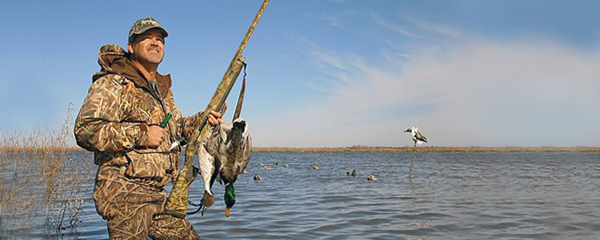
PRATT­– Duck populations are strong, according to the U.S. Fish and Wildlife Service (USFWS) 2013 Report on Trends in Duck Breeding Populations. The preliminary estimate of total duck populations from the traditional survey area (northcentral United States, southcentral and northern Canada, and Alaska) is 45.6 million birds­– a six percent decrease from last year’s estimate of 48.6 million birds, but a 33 percent increase from the long-term average. In addition to estimating duck populations, the survey also examines habitat conditions.
Habitat conditions during the 2013 survey were generally improved or similar to last year due to above-average precipitation, despite a delayed spring throughout most of the traditional survey area. Most of the Canadian portions of the traditional survey area were rated as good to excellent, in contrast to 2012 when drier conditions existed across northern Alberta and Saskatchewan. Although the U.S. prairies received record snowfall in April, habitat conditions were still rated only fair to poor, similar to last year. The total pond estimate (prairie Canada and the north-central United States combined) is 6.9 million, 24 percent higher than the 2012 estimate of 5.5 million ponds and 35 percent above the long-term average.
In the eastern survey area – eastern Ontario, Quebec, the Maritime Provinces and Maine – estimated mallard abundance is 500,000 birds. Habitat conditions across most of the eastern survey area generally were good with the exception of Maine and the southern Maritimes, which were rated only as fair.
The report also notes:
  • Estimated mallard abundance is 10.4 million birds, similar to the 2012 estimate of 10.6 million birds and 36 percent above the long-term average.
  • Blue-winged teal estimated abundance is 7.7 million. Although this is 16 percent below the 2012 estimate of 9.2 million, the blue-wing population is 60 percent above the long-term average. Similarly, the green-winged teal estimate of 3.1 million is 12 percent below last year, but still 51 percent above the long-term average.
  • The northern pintail estimate of 3.3 million is similar to the 2012 estimate of 3.5 million and 17 percent below the long-term average.
  • Estimated abundance of American wigeon is 2.6 million and 23 percent above the 2012 estimate and similar to the long-term average.
  • The combined lesser and greater scaup estimate of 4.2 million decreased 20 percent from last year and is 17 percent below the long-term average of 5 million.
  • The canvasback estimate of 787,000 is similar to the 2012 estimate and 37 percent above the long-term average.
The surveys are conducted by the USFWS and Canadian Wildlife Services’ Waterfowl Breeding Population and Habitat Survey, sampling more than 2 million square miles of waterfowl habitat across Alaska, the northcentral and northeastern United States and southcentral, eastern and northern Canada.
The information guides the USFWS waterfowl conservation programs under authority of the 1918 Migratory Bird Treaty Act. The USFWS then works in partnership with state biologists from the four flyways – the Atlantic, Mississippi, Central and Pacific – to establish regulatory frameworks for waterfowl hunting season lengths, dates and bag limits. 2013 Kansas duck hunting season dates and bag limits will be approved at the Aug. 1 commission meeting in Yates Center.
For more information about the U.S. Fish and Wildlife Service 2013 Report on Trends in Duck Breeding Populations, visitwww.fws.gov/migratorybirds.
For more information on Kansas waterfowl hunting, visit ksoutdoors.com and click “Hunting/Migratory Birds/Ducks.”

Wednesday, May 1, 2013

LOCAL COUPLE TO HOST FIELD DAY ON WILDLIFE HABITAT IMPROVEMENT


PRATT– The Kansas Forest Service (KFS) will host the 2013 Agroforestry Field Day May 8 on the farm of Dave and Mary Hendricks at I Road and 190 Ave, Wakeeney. Discussion topics will include tree health threats, creating mule deer habitat, lesser prairie chicken habitat, water quality concerns in western Kansas, managing for upland birds from the landowner’s perspective, windbreak renovation, assessment and funding projects, and creating a burn plan for prairie. Attendees will also get to hear from the Hendricks as they share their experience working with trees and shrubs in contemporary agricultural systems.

Windbreak Renovation, Assessment and Funding Projects
With the current drought stressing windbreaks throughout western Kansas, KFS foresters Jim Strine and Bob Atchison will provide tips on how to maintain and renovate older windbreaks and shelterbelts using one of the many windbreaks the Hendricks have on their property. Suggestions on row removal, selective thinning, watering and establishing additional tree rows will be provided. Participants will also receive the latest information on financial assistance available to implement windbreak renovation projects as well as the preliminary results of a windbreak assessment study on the size and condition of shelterbelts in the Smoky Hill region.
Lesser Prairie Chicken Habitat
In response to a U.S. Fish and Wildlife Service proposal to list the lesser prairie chicken as a threatened species, a rangewide management plan is being developed to assist landowners in enhancing grassland habitat. Mark Witecha, a Pheasants Forever Farm Bill biologist, will be on hand to discuss the habitat needs of this important species and suggest conservation practices that benefit lesser prairie chickens and other important grassland birds. Witecha will also inform participants of the services Pheasants Forever can offer to landowners.
Creating a Burn Plan for the Prairie
Burning the prairie is one of the most important activities landowners can do to ensure the health of grass and range lands and the flora and fauna that depend on them. Unfortunately many landowners are hesitant to burn and those that do sometimes do not plan adequately. Several windbreaks on the Hendricks farm have been lost to wildfire for that very reason. Michele Witecha, a KFS wildlife ecologist and rangeland fire specialist, will provide a session on how to develop a burn plan that accomplishes specific management interests while lowering the risk of wildfire potential.
Managing for Upland Birds from the Landowner’s Perspective
Last season hunters harvested an estimated 475,000 pheasants and this year numbers have been down by almost 50 percent. Randy Rodgers and Helen Hands, are both wildlife biologists who have applied their years of experience managing for upland bird habitat to their farm in Rush County. Winners of the 2012 Kansas Wildlife Federation’s Land and Soil Wildlife Conservationist award, Rodgers and Hands will
Conservationists Dave and Mary Hendricks
will host an agroforestry field day this May
provide both the landowner perspective and the professional wildlife biologist expertise to educate participants on how to improve habitat for upland birds.
Creating Mule Deer Habitat
Mule deer have a different set of habitat requirements compared to upland birds and are regular visitors to the Hendricks farm. Dave Hendricks will show participants how windbreaks can be used as a fawning area for mule deer and discuss how landowners can encourage mule deer habitat on their properties.
Tree Health Threats
Nikki Opbroek, KFS forest health specialist, will offer an update on potential health threats to trees and shrubs (including drought) and provide both diagnosis and control recommendations for the major tree problems people encounter in western Kansas. Foresters will also provide suggestions on appropriate tree and shrub species to plant in the Trego County area.
Water Quality Concerns in Western Kansas
Water quality and quantity issues have never been so relevant to western Kansas. Stacy Minson, K-State Research and Extension watershed specialist, will share her knowledge of the issues and offer suggestions to participants on practices they can implement to address these challenges.
The Hendricks have been chosen as the recipients of the 2013 Kansas Agroforestry Award by the Kansas Forestry Association and the Kansas Forest Service. The Kansas Agroforestry Award is presented to landowners who go above and beyond to implement agroforestry practices on their property such as riparian forest buffers and shelterbelts. The couple will be presented with an award the morning of the event.

The cost of attendance is $10. Lunch will be provided.
In the event of rain, the field day will be moved to the Trego County Fairgrounds in WaKeeney.
For more information, or to register for this event, call rural forestry coordinator Bob Atchison at(785) 532-3310, or visit www.kansasforests.org.

Monday, April 29, 2013

WEBINAR TO PROVIDE LESSER PRAIRIE CHICKEN UPDATE

Watch from home or visit one of 17 satellite sites to participate in webinar

PRATT – The potential listing of the lesser prairie chicken (LPC) as a threatened or endangered species by the U.S. Fish and Wildlife Service has raised concerns for many landowners and land managers. State and federal agencies have conducted numerous public meetings to provide information, as well as gain input from the public. To keep the information flowing and to address landowner concerns, the Kansas Department of Wildlife, Parks and Tourism (KDWPT) and Kansas State Research and Extension are hosting a webinar on April 30, 2013, beginning at 7 p.m.

Speakers from KDWPT, the Farm Services Agency and the Natural Resources Conservation Service will
provide background on the LPC listing status, as well as updates on the state planning effort, goals of the plan and priority areas. Detailed information on the conservation value of land and allocation of offset payments to landowners will be provided. State and federal programs specifically designed to improve habitat for LPC and what a proposed listing means to those enrolled in federal programs will be explained.

A webinar is an online communication technique that allows those with high-speed internet access to connect with the host site to view and hear the speakers on their home computer and chat via the internet with any questions or comments. Those who don’t have high-speed internet access can participate at one of the 17 satellite sites listed below. Staff will be onsite to transmit questions and comments to presenters.

To view from home, log on to: http://connect.ksre.ksu.edu/ksuasi

For more information please contact your local county extension agent or Charlie Lee (clee@ksu.edu or785-532-5734). Below are the satellite sites:

Ashland Community Building, 800 Main St., Ashland
Finney County Extension Office, 501 S. 9th St., Garden City
Western State Bank Expo Center, 11333 Hwy 283, Dodge City
Grant County Civic Center, Lawson Room, 1100 W. Patterson, Ulysses
4-H Building, 17002 W. Hwy 50, Cimarron
Hamilton County Extension Office, 520 N. Hamilton, Syracuse
4-H Building, S. Atkin St., Jetmore
Kiowa County Commons Conference Room, 320 S. Main, Greensburg
Courthouse Meeting Room, 710 W. 2nd, Oakley
Morton County Extension Office, 625 Colorado, Elkhart
Ness County 4-H Building, 105 S. Pennsylvania, Ness City
KDWPT Office, 512 SE 25th Ave., Pratt
Williams Carpenter Building, East Fairground Road, Scott City
Seward County Activity Building, 810 Stadium Road, Liberal
Sherman County 4-H Building, 417 Main Street, Goodland
Stevens County Courthouse, Memorial Hall, 200 E. 6th, Hugoton
Wakeeney Public Library, 610 Russell Ave., Wakeeney

Monday, April 15, 2013

FIVE-STATE LESSER PRAIRIE CHICKEN CONSERVATION PLAN SUBMITTED

Range-wide lesser prairie chicken conservation plan submitted to U.S. Fish and Wildlife Service in hopes of precluding a listing under the Endangered Species Act

PHOENIX, AZ. – The lesser prairie chicken is a grassland grouse species native and once common to parts of Colorado, New Mexico, Texas, Kansas and Oklahoma. However, declining lesser prairie chicken populations have brought state and federal agencies together in an attempt to better manage this iconic prairie species and its habitats. The result is a comprehensive range-wide lesser prairie chicken management draft plan.

Through a multi-state collaborative effort, with funding provided by a U.S. Fish and Wildlife Service (USFWS) grant and support from the Great Plains Landscape Conservation Cooperative, the five state wildlife agencies completed the draft plan and submitted it to the USFWS. The federal agency is currently deliberating its proposal to list the lesser prairie chicken as threatened and states hope the conservation plan will influence the final decision and preclude listing, according to the Western Association of Fish and Wildlife Agencies (WAFWA) Grassland Initiative.

The lesser prairie chicken has been considered a candidate under the Endangered Species Act (ESA) since 1998, and USFWS proposed it for listing as threatened in December 2012. A final rule for the lesser prairie chicken is scheduled to be issued September 30, 2013.

The WAFWA Grassland Initiative collaborated with the Lesser Prairie Chicken Interstate Working Group, which is composed of biologists from the five state fish and wildlife departments within the species’ range, and other partners to develop the range-wide conservation plan. This management plan describes population and habitat goals to secure the species into the future and identifies voluntary conservation programs and practices to be applied to accomplish these goals throughout the lesser prairie chicken’s range (http://kars.ku.edu/geodata/maps/sgpchat/).

"The U.S. Fish and Wildlife Service commends the Lesser Prairie Chicken Interstate Working Group and the Western Association of Fish and Wildlife Agencies for their tireless efforts to develop a range-wide conservation plan for the lesser prairie chicken." said Dr. Benjamin Tuggle, regional director for the USFWS’s Southwest Region. "In the next few weeks, the Service will reopen the comment period in order to allow the public the opportunity to provide additional comments on the lesser prairie chicken listing proposal and the range-wide conservation plan as it relates to the USFWS’s listing proposal."

“While we do not need a chicken on every acre, we do need to have the right acres to conserve the species,” says Bill Van Pelt, WAFWA’s Grassland Coordinator. “We feel we have created a plan under which we can partner with landowners and industry to incentivize good land management practices.”

Throughout the planning process, which started in April 2012, the state wildlife agencies have reached out to the public. The states have received feedback about two previous draft plans and are encouraged to hear the support for a state-led effort to conserve this species. Prior to finalizing the management plan, the state agencies are requesting additional public input. The Range-wide Conservation Plan for the Lesser Prairie Chicken is found onhttp://www.wafwa.org/html/rangewide_lpc_conservation_plan.shtml and the states will be accepting written comments on this third draft of the plan. Please send comments via email to janc@gci.net or by mail to Jan Caulfield Consulting, 114 S. Franklin St., Ste. 205, Juneau, AK 99801. The states are also exploring the use of webinars to reach the public. These webinars and the closing period on the comments will be announced on the WAFWA website and other media outlets.


“Historically, we saw habitat conditions like the ones we are observing now back in the 1930s, and we thought the species went extinct,” Van Pelt added. “However, it is our opinion that with existing habitat conservation programs being implemented through various Farm Bill programs and enrollments in existing conservation agreements, we are seeing lesser prairie chickens maintaining themselves on the landscape and even expanding into new areas in some parts of their range. By coordinating these existing efforts and others proposed under this range-wide plan, we are confident we will be able to conserve this species into the future. This plan is written broadly enough to allow anyone interested in conserving the lesser prairie chicken to assist the states with conserving this grassland icon.”


For more information, contact WAFWA Grassland Coordinator Bill Van Pelt at (602) 717-5066.

Friday, December 23, 2011

KANSAS LANDOWNER HONORED WITH NATIONAL FISH AND WILDLIFE STEWARDSHIP AWARD

Map of Kansas highlighting Barber County
Image via Wikipedia

Grassland restoration projects, educational efforts garner national attention
PRATT — The Association of Fish and Wildlife Agencies (AFWA) — the organization that represents North America’s fish and wildlife agencies — has honored the Alexander Ranch of Barber County with the 2011 National Private Lands Fish and Wildlife Stewardship Award. The award recognizes an individual- or family-run farm, ranch, or forest operation that has incorporated proactive conservation and environmental protection measures into its operation. The Alexander Ranch is owned and operated by Ted, Brian, and Mona Alexander.

The Alexander Ranch became eligible for the national award by winning the 2011 Kansas Wildlife Habitat Conservation Award. The national award program receives one nomination from each of the 56 states and territories represented by AFWA.

“The Alexanders’ decades of dedication to the improvement of native grasslands in an area once over-grazed and degraded by the encroachment of eastern redcedar deserves statewide recognition,” said Kansas Department of Wildlife, Parks and Tourism (KDWPT) wildlife biologist Chris Berens, who nominated the Alexander Ranch for the award. “Their management efforts created a diverse grassland that benefits livestock and a wide variety of wildlife species.”

The ranch covers more than 7,000 acres and has flourished as a custom grazing operation for the past 27 years. Partnering with several agencies, the Alexanders have leveraged resources to optimize the land’s environmental capabilities. Through these partnerships, the ranch operated on a rotational grazing system with three grazing cells, each split into many smaller paddocks, allowing 40-45 days post-grazing recovery time for the grass in each paddock. However, in the past two years, the Alexander Ranch experimented with a higher stocking rate, higher stock density, and herd impact along with a shorter grazing seasons — resulting in longer periods of grass recovery — which seems to be a success.

Additionally, a cooperative effort with the U.S. Fish and Wildlife Service’s Partners for Fish and Wildlife Program and KDWPT was key to many of the accomplishments on the ranch, which is home to several wildlife and aquatic species considered at-risk or in need of conservation. This partnership helped the Alexanders interseed forbs on old cropland acres previously converted to native grass, enhance water developments, restore riparian areas, and expand the grazing system.

The ranch has also entered into a “Candidate Conservation Agreement with Assurances” with the U.S. Fish and Wildlife Services. This voluntary agreement guarantees to address the conservation needs of a species before they become listed as endangered or threatened by specifying actions that will remove or reduce threats to the species.

“Any number of landowners could have won the National Private Lands Fish and Wildlife Stewardship Award based solely on habitat enhancements and other stewardship accomplishments on their ranches,” said Berens. “However, it’s the off-the-ranch activities that make the Alexanders stand out.”

One of the most notable is their willingness to share what they have learned throughout the years with other ranchers, either through one-on-one mentoring or through one of the many conservation organizations to which Ted and Brian belong or serve on the boards. Additionally, they have opened their ranch to training opportunities for public, state, and federal agency staff and have allowed many university students to conduct wildlife research, including the interaction of wildlife and grazing practices.

“The Alexander Ranch is a great example of how excellent ecosystem management can benefit both the producer and Kansas wildlife,” Berens added. “Congratulations and many thanks to the Alexander Ranch for their contributions to promoting wise working-land practices in Kansas.”