Showing posts with label Missouri. Show all posts

Friday, October 24, 2014

SO MANY SEASONS, SO LITTLE NOVEMBER

November marks the beginning of several hunting seasons in Kansas
PRATT – For most people, Christmas comes on Dec. 25, but for hunters and anglers, the best gifts arrive one month earlier. November marks the start of four hunting and fishing seasons that are a must-do in the Sunflower State, and if you’ve never partaken in these fall festivities, you may want to reconsider your plans this upcoming month.
TROUT FISHING: NOV. 1 - APRIL 15
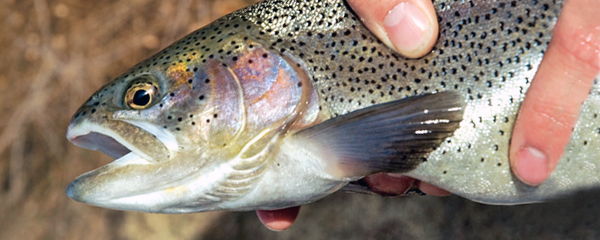
From Nov. 1, 2014-April 15, 2015, anglers can enjoy some of the best fishing opportunities in the state as nearly 30 public fishing areas will be stocked periodically with this special species.
Special permits apply, so consult the 2014 Fishing Regulations Summary for complete details on your favorite waters.
To view a complete trout stocking schedule for a specific location, visit ksoutdoors.com and click “Fishing /Special Fishing Programs for You / Trout Fishing Program.”
GOOSE HUNTING
If wild turkeys aren’t your idea of a hardy holiday bird, consider bagging a goose this season. Hunters can pursue geese during the following seasons:
Canada Geese
Season: Nov. 1-9, 2014 AND Nov. 12, 2014-Feb. 15, 2015
Daily bag limit: 6 (including Brant). Possession limit: 18.
White-Fronted Geese
  • Season: Nov. 1-Dec. 14, 2014 AND Jan. 17-Feb. 15, 2015
  • Daily bag limit: 2. Possession limit: 6.
Light Geese
  • Season: Nov. 1-9, 2014 AND Nov. 12, 2014-Feb. 15, 2015
  • Daily bag limit: 50. No possession limit.
PHEASANT AND QUAIL SEASON
Recent rains leading to increased brood-rearing habitat across the state have several areas harboring more birds this year. Consider taking a peek at the 2014 Upland Bird Forecast on ksoutdoors.com to locate your next hunting honey pot.
Pheasant
  • Regular Season: November 8, 2014 - January 31, 2015
  • Youth Season: November 1-2, 2014
  • Daily Bag Limit: 4 cocks in regular season, 2 cocks in youth season.
  • NOTE: Pheasants in possession for transportation must retain intact a foot, plumage, or some part that will determine sex.
Quail
  • Regular Season: November 8, 2014 - January 31, 2015
  • Youth Season: November 1-2, 2014
    • Daily Bag Limit: 8 in regular season, 4 in youth season.
SANDHILL CRANES
Although not as widely sought-after as geese and ducks, sandhill cranes are a challenging quarry to hunt. Consider experiencing this unique season this year.
  • Season: Nov. 5 2014-Jan 1, 2015
  • Daily bag limit: 3. Possession limit: 9.
All sandhill crane hunters must take an online crane identification test each year before obtaining the required federal permit to hunt. The test can be found by visiting ksoutdoors.com and clicking “Hunting / Migratory Birds/ Sandhill Crane.”
Quivira and Kirwin National Wildlife Refuge are closed to crane hunting.

Tuesday, March 4, 2014

TROUT SEASON RUNS THROUGH MID-APRIL

Kansas offers winter trout fishing at more than 30 public fishing lakes
PRATT ­– Kansas might not be the first state that comes to your mind when you think of trout
fishing, but don’t be fooled – the Sunflower State has created spectacular winter fishing opportunities by stocking more than 30 different public fishing locations with this spotted fish.
Through April 15, anglers can try their luck at trout fishing in both Type 1 and Type 2 waters. Type 1 waters stocked with trout require all anglers to possess a $12.50 trout permit, while Type 2 waters require only those fishing for or possessing trout to purchase the permit. The $12.50 permit is valid for the calendar year and can be purchased wherever licenses are sold and online at ksoutdoors.com.
Residents 16-74 years old, and all non-residents 16 and older must also have a valid fishing license. The daily creel limit is five trout unless otherwise posted. Anglers 15 and younger may fish without a trout permit, but are limited to two trout per day, or they may purchase a permit and take five trout per day. Possession limit for trout is 15.
Trout fishing at Mined Land Wildlife Area No. 30 (Cherokee County), where trout survive through the summer, requires a trout permit year-round. For a complete list of waters stocked with trout, as well as rules and regulations, consult the2014 Kansas Fishing Regulations Summary, or visit ksoutdoors.com.

Friday, July 12, 2013

Kansas Hunting News and More for July 12, 2013

Hunting News
You may wish to get your hunter education class scheduled if you need it for the http://goo.gl/877Z5.  Here you will find the class schedules and locations.
Fall hunting season.  If you were born on or after July 1, 1957 (ever wonder where they come up with dates like this?), you must have this to hunt in Kansas.  Kids 15 and under do not have to take the certification so long as under direct supervision of someone 18 or older who is certified.  More info at

On the Kansas deer hunting front, the KDWPT says they still have nonresident permits remaining in Deer Management Units 9, 10, 11, 13, and 14. As of a couple of days ago there were a little over 900 left. For more information visit http://goo.gl/kgefx.

As a reminder, Kansas hunters looking for public land have a new tool to use at Kansas Public Hunting Land.

Some areas that are not usually accessible to hunters will be open via drwaing.  These hunts see less pressure, more game, and higher success rates.  The application period begins on July 16th.  It closes August 11th.  There are literally hundreds these special hunts available.  For more information visit http://goo.gl/oHCva.

Sad 4th of July News
Five people died during the first week of July in drowing accidents around Kansas.  These kinds of accidents are needless, and following some basic safety rules, as well as obviously eliminating alcohol from the activity, would prevent the vas majority of them.  We are sorry for the victims and their families. For more details on this and some basic water safety rules, visit http://goo.gl/0LeV6


Sunday, April 7, 2013

2012 REPORT ON EPIZOOTIC HEMORRHAGIC DISEASE HELPS CLARIFY EXTENT OF OUTBREAK

A total of 1,274 deer were suspected of having Epizootic Hemorrhagic Disease (EHD) in 2012, and although considered to be one of the worst outbreaks in the state, data suggests that this disease had
Epizootic Hemorrhagic Disease helps clarify extent of outbreak
“patchy” impacts on populations within deer management units (DMU).

Seventeen deer from 16 counties were diagnosed with EHD in 2012, with 16 of the deer being EHDV-2 positive and one deer being EHDV-1 positive. Sick or dead deer found during the outbreak that exhibited symptoms or signs suggestive of EHD were designated as suspects and counted, making the total count 1,274, including the ones that were tested.

To put Kansas EHD mortality rates into perspective, surrounding states reported the following figures for 2012: Illinois – 2,925; Iowa – 2,974; Nebraska – 5,998; Missouri – 10,177.

The 16 counties with confirmed cases of EHD-infected deer in 2012 included Anderson, Atchison, Coffey, Cowley, Dickinson, Doniphan, Douglas, Franklin, Jackson, Jefferson, Leavenworth, Lyon, Marshall, Osage, Republic, and Wilson.

Despite the high mortality rate associated with this disease, deer populations typically recover within a few years following EHD die-offs. The deer population in eastern Kansas continues to be robust and "gaps" left by EHD will quickly fill in with deer moving in from adjacent, less affected areas.

Although the viral cause of EHD was not discovered until the late-1950s, reports of die-offs consistent with EHD date back to the 1890s. Large scale regional deer population decreases have not been observed, but this disease can have a significant effect upon the deer in a localized area because of the high mortality rate associated with it.

EHD is an acute, infectious, viral disease transmitted between animals by biting midges. EHD typically occurs in late summer and fall and is thought to be consistent with periods of biting midge abundance. Freezing temperatures usually greatly reduce these populations, bringing a sudden end to outbreaks, however active midge populations have been reported during winter in more mild climates.

Deer infected with EHD suffer from dehydration and high fever, causing them to seek water. Consequently, most deer that have fallen victim to this disease are found near the edges of rivers, ditches, and marshes.

There is no known effective treatment or control for EHD.

Other wildlife species in Kansas, such as mule deer, elk, and pronghorn, can also be infected with EHD virus but are less susceptible to the disease.

For more information, visit http://www.vet.uga.edu/scwds/pdfs/HD.pdf, orhttp://www.usask.ca/wcvm/herdmed/specialstock/deer/hemorrhagic/index.htm.

Friday, March 15, 2013

TROUT STOCKING PROGRAM PROVIDES VARIETY FOR ANGLERS

Anglers are encouraged to take advantage of special trout program


 In an effort to provide unique winter fishing opportunities, The Kansas Department of Wildlife, Parks and Tourism (KDWPT) provides trout fishing opportunities by stocking Kansas waters with thousands of harvestable-sized trout each year. From Nov. 1-April 15, anglers can catch this non-native species at 36 locations throughout the state.

Funded by state trout permit and federal aid dollars, the KDWPT trout program stocks as many as 180,000 rainbow trout and more than 3,500 brown trout annually.

Type 1 trout waters require a trout permit ($12.50) whether anglers are fishing for trout or not, while Type 2 waters require a trout permit for anglers fishing for trout. In addition to a trout permit (where required), residents 16-74, and non-residents 16 and older, must possess a valid fishing license.

The daily creel limit is five trout and the possession limit is 15. Youth 15 and under may keep up to two trout per day without a trout permit, or up to five trout per day with a permit. After April 15, anglers can trout fish without a permit anywhere in the state, excluding Mined Land Wildlife Area Unit #30 (Cherokee County) which requires a permit year-round. Season daily creel and possession limits will still apply after the season is closed.

Consult the 2013 Fishing Regulations Summary for a list of Type 1 and Type 2 trout waters.

Local governments may have their own trout stocking programs and may require a separate permit. Anglers are encouraged to contact their local city and county recreation departments for details.

For more information on the KDWPT trout program, including stocking locations and schedules, visitwww.ksoutdoors.com and click “Fishing/Special Fishing Programs for You/Trout Fishing Program.”

Tuesday, March 12, 2013

PADDLEFISH SPAWNING SEASON OFFERS BIG ANGLING OPPORTUNITIES


Warmer temperatures give way to a special snagging season
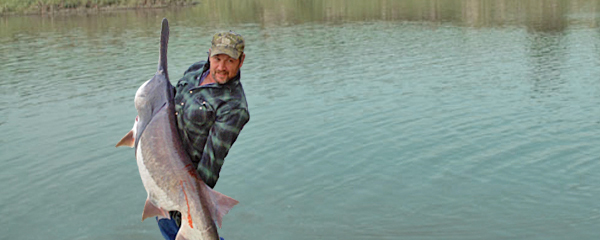
PRATT ­– A much-anticipated season for Kansas anglers draws near as paddlefish begin their annual spring spawning run. From Mar. 15-May 15, paddlefish permit-holders can snag up to six of these gentle giants from designated areas on the Neosho and Marais des Cygnes Rivers.

Paddlefish permits, which include six carcass tags, are $12.50 for anglers 16 and older, and $7.50 for youth 15 and younger.

Paddlefish may be taken inside Chetopa and Burlington city parks on the Neosho River, on the Neosho River at Iola downstream from the dam to the city limits, on the Marais des Cygnes River below Osawatomie Dam downstream to a posted boundary, and on the Marais des Cygnes River on the upstream boundary of Marais des Cygnes Wildlife Area downstream to the Kansas-Missouri border.

Paddlefish may be snagged using pole and line with not more than two single or treble hooks. Barbless hooks must be used in Chetopa City Park.

Catch and release is allowed in Burlington, Chetopa, and Iola except that once attached to a stringer, a fish becomes part of the daily creel limit. The daily creel limit for paddlefish is two, and the season limit is six. On the Missouri River (season: March 15-April 30), there is a 24-inch minimum length limit. On the Marias des Cygnes River there is a 34-inch minimum length limit.

Immediately upon harvest, anglers must sign a carcass tag, record the county, date and time of harvest, and attach the tag to the lower jaw of the paddlefish.

Paddlefish caught out of season or in non-snagging areas may be kept only if they are hooked in the mouth.

During this special season, nonsport fish (carp, drum, grass carp, threadfin and gizzard shad, goldfish, gar, suckers including carpsucker and buffalo, goldeye, and bowfin) may also be snagged in waters posted open to paddlefish snagging. There are no limits on nonsport fish.
For information, consult your 2013 Kansas Fishing Regulation Summary, or visit www.ksoutdoors.comand click “Fishing/Fishing-Regulations/Paddlefish-Snagging.”

Saturday, February 2, 2013

Animal killed by coyote hunters verified as wolf

Gray Wolf, Canis lupus
 (Photo credit: ArranET)

In December, coyote hunters in southwest Kansas killed an animal they thought was too big to be a coyote. The large male canine weighed more than 80 pounds, more than twice as much as a large coyote. The hunters called the local Kansas Department of Wildlife, Parks and Tourism (KDWPT) game warden, who contacted U.S. Fish and Wildlife Service (USFWS) agents. The USFWS confirmed through tissue testing that the animal was a full-blooded Great Lakes gray wolf.
Because wolves are still on the Threatened Species list for Kansas, the matter was turned over to the USFWS. Agents then took tissue samples for testing. While uncommon, there are wolf-dog hybrids available through the pet trade, and many of those hybrids are indistinguishable from full-blooded wolves by appearance.
This is the first documented wolf in Kansas since 1905. There have been several wolves killed in Missouri, most recently this past November when a deer hunter shot what he thought was a coyote. That animal, which tested as a full-blooded wolf, weighed 81 pounds.
Officials would still like to know how this wolf ended up in Kansas. However, questions about its origin may be difficult to answer.

Sunday, August 26, 2012

COAST GUARD ISSUES LOW WATER RIVER ADVISORY


Submerged structure, commercial vessels pose greater threat in low water
ST. LOUIS — Many waterways throughout the Midwest are experiencing lower than average water levels this year. This poses particular hazards to recreational boaters. Areas that were navigable in past months or years may be too shallow to operate in now. River structures such as dikes may be closer to the surface, posing potential grounding threats, and channel widths may be smaller than expected. This can affect all waters in the Mississippi drainage, including the Missouri and Kansas rivers in the Sunflower State.
As a result, the U.S. Coast Guard has issued a boating advisory for all waters in the drainage. Boaters should follow simple precautions while using these waters:
  • always have approved life jackets for everyone onboard;
  • operate in areas you are familiar with, at safe speeds;
  • do not operate near fleeting areas, commercial vessels, or barges — larger vessels and structures can create strong eddies, undertows, and wakes;
  • do not operate near underwater river structures, such as dikes;
  • have light and sound signaling devices onboard;
  • tell someone where you are going, when you will be there, and how to contact you to verify your safety; and
  • for boating safety tips and classes, contact your local Coast Guard Auxiliary for support or visit the Kansas Department of Wildlife, Parks and Tourism Boating Education website,ksoutdoors.com/news/Boating/Boating-Education.

Monday, March 12, 2012

PADDLEFISH SNAGGING SEASON OPENS MARCH 15


PADDLEFISH SNAGGING SEASON OPENS MARCH 15
March 8, 2012
Anglers should be aware of rules, areas open; season runs through May 15
PRATT — Many anglers in eastern Kansas look forward to March 15, when the Kansas paddlefish season opens, running through May 15 at specific locations. Once water temperatures near 60 degrees, paddlefish make the annual spawning run. Some snagging areas, such as the Neosho River in Chetopa, require a rise in the river level for paddlefish to be present, so significant rainfall is essential.
Paddlefish may be taken inside Chetopa and Burlington city parks on the Neosho River, on the Neosho River at Iola downstream from the dam to the city limits, on the Marais des Cygnes River below Osawatomie Dam downstream to a posted boundary, and on the Marais des Cygnes River on the upstream boundary of Marais des Cygnes Wildlife Area downstream to the Kansas-Missouri border.
Paddlefish may be snagged using pole and line with not more than two single or treble hooks. Barbless hooks must be used in Chetopa City Park. Catch and release is allowed in Burlington, Chetopa, and Iola except that once attached to a stringer, a fish becomes part of the daily creel limit. The daily creel limit for paddlefish is two, and the season limit is six. On the Missouri River (season: March 15-April 30), there is a 24-inch minimum length limit. There is a 34-inch minimum length limit on Marias des Cygnes River.
A paddlefish permit — $12.50 for those 16 and older, $7.50 for youth 15 and younger — includes six carcass tags. Immediately upon attaching a fish to a stringer, the angler must sign a carcass tag; record the county, date, and time of harvest; and attach the carcass tag to the lower jaw of the paddlefish taken. Anglers must stop snagging once the daily creel limit of two paddlefish is reached.
Paddlefish caught outside the paddlefish season or in non-snagging areas may be kept if they are hooked in the mouth only.
Nonsport fish (carp, drum, grass carp, threadfin and gizzard shad, goldfish, gar, suckers including carpsucker and buffalo, goldeye, and bowfin) may also be snagged in waters posted open to snagging during the paddlefish season. There are no limits on nonsport fish.

Wednesday, February 22, 2012

MARAIS DES CYGNES WILDLIFE AREA HAS BANNER YEAR

English: crop of File:Bgforhunting.jpg Taken b...
Image via Wikipedia

Record duck harvest recorded despite dry year
PLEASANTON — Marais des Cygnes Wildlife Area, near the Missouri border in Linn County, reported a record breaking-year for waterfowl hunters in the 2011-2012 season. Duck hunters reported harvesting more than 8,300 ducks during the 74-day season, shattering the old record of 6,220 in 1997. Duck hunters made 5,160 trips to the wildlife area, bagging an average of 1.6 ducks per hunter trip.
“The hunter success rate we had in the 2011-2012 season is particularly remarkable when one considers the hot, dry summer we had,” says area manager Karl Karrow. “Marsh vegetation that provides habitat for ducks does not produce well under the conditions we had during last year’s growing season, so we used additional management tools — notably pumping water to irrigate marsh plants during the summer — to provide good habitat. And relatively mild weather this winter didn’t freeze the wetlands. That was a huge factor.”
Nearly 70 percent of ducks harvested were mallards, a species prized by hunters. Green-winged teal were a distant second, comprising only 10 percent of ducks harvested.
“While this is great news for hunters,” Karrow adds, “this is also important to communities near the wildlife area. Most duck hunters come from outside of the local area, and traveling hunters spend money on gas, food, and other supplies at local stores. We saw hunters from North Carolina, Alabama, Iowa, and other states. Any activity that brings more than 5,000 visitors to the area helps the local economy.”
In addition to the regular duck season, early teal season and goose seasons provide opportunities for waterfowl hunters on Marais des Cygnes Wildlife Area. For more information, phone Karrow at 913-352-8941, or visit KDWPT’s website,ksoutdoors.com, and click on “Hunting/Where To Hunt In Kansas.”

Sunday, February 19, 2012

MOSSY OAK EVENT LURES MONSTER BUCK POACHING SUSPECT

Map of Kansas highlighting Shawnee County
Image via Wikipedia

Topeka man enters suspected illegally-taken deer in Monster Buck Contest
TOPEKA — On Jan. 27-29, Mossy Oak Properties of the Heartland presented the inaugural Monster Buck Classic (We are Kansas) event at the Kansas ExpoCentre in Topeka. The event was designed to promote deer hunting and outdoor recreation in Kansas and to provide Kansas hunters with the latest information and equipment related to deer hunting.
In addition, the event featured a Monster Buck Contest, open to all Kansas residents, in which hunters could enter officially-scored bucks, with prizes offered to the largest deer in typical and non-typical categories for both white-tailed and mule deer. Fortunately for all law-abiding hunters, the contest helped expose the suspected illegal shooting of a big buck.
One entry, which would have potentially been a new Kansas state record, drew suspicion of Kansas Department of Wildlife, Parks and Tourism (KDWPT) law enforcement officials, and after investigation, David V. Kent was charged with poaching the deer.
On Feb. 1, eight charges were filed against Kent by Osage County Attorney Brandon Jones in the District Court of Osage County, Fourth Judicial District, including criminal discharge of a firearm, criminal hunting, illegally hunting with an artificial light, hunting outside of legal hours, illegal hunting during a closed season, using an illegal caliber for taking big game, illegal hunting from a vehicle, and hunting without a valid deer permit.
Kent has been summoned to appear in Osage County District Court in Lyndon, Kan., on March 1, 2012, at 9 a.m.
“As a developer of the Mossy Oak Properties brand in Kansas, Oklahoma, Missouri, and Iowa, I strongly condemn this type of behavior,” said Brian D. Smith, CEO of Mossy Oak Properties of the Heartland and founder of the Kansas Big Buck Classic. “In fact, we believe in the stiffest penalties possible for poaching, and we played a strategic part in exposing this case. We cooperated 100 percent.”

Saturday, February 18, 2012

ASIAN CARP CAUGHT IN AUGUSTA CITY LAKE

Asian Carp in the Wabash River
Asian Carp in the Wabash River (Photo credit: LouisvilleUSACE)

Strange-looking fish puzzles anglers
AUGUSTA — On Jan. 25, anglers were taking advantage of a fish salvage order as Augusta City Lake was being drained for renovation. During a fish salvage, anglers can take sportfish with equipment not ordinarily allowed, such as seines, snagging rigs, bow and arrow, and gigs. Most of the prizes hauled in were large flathead catfish, but one angler snagged a fish estimated to weigh about 55 pounds that no one could identify. Officials with the Kansas Department of Wildlife, Parks and Tourism (KDWPT) became involved with the catch when a picture of the fish appeared on local television. It was immediately identified as an aquatic nuisance species (ANS), an Asian carp.
“This report supports our long-standing recommendation that fish should not be moved between waters,” said Jason Goeckler, KDWPT aquatic nuisance specialist. “Here is a case of a lake with Asian carp that we didn't even know about.”
Asian carp were imported to the U.S. in the 1970s for aquaculture purposes but escaped into Midwestern rivers and streams. Previously, they had been found only in the Kansas, Missouri, Big Blue, and Wakarusa rivers and Browning Oxbow Lake in northeastern Kansas. Officials believe that the fish was released into Augusta City Lake or waters above the lake.
Two species of Asian carp have been discovered in Kansas — bighead and silver carp. Both species have scaleless heads, and silver carp may grow to more than 60 pounds and as long as 4 feet. This fish, however, was a bighead carp, which may grow to more than 100 pounds. Both species have low-set eyes and a large upturned mouth without barbels (“whiskers”).
Asian carp directly compete with other fish for food resources, grow quickly, and feed voraciously. They can consume 40 percent of their body weight each day. Silver carp pose physical danger to boaters because of their leaping ability. Anyone boating in silver carp-infested waters should be aware that these large fish may jump into their boat.
Shortly after news reports of the Augusta City Lake Asian carp, KDWPT began receiving calls and emails.
“We want to thank the public for sending in reports,” Goeckler said. “Unfortunately we did not hear about this discovery prior to press-time. But the big news is that we received countless emails, calls, and online reports from the public. They shared our concern about the discovery, and their reports help us monitor these species.”
Anyone who catches an Asian carp should not release the fish back into any body of water. Anglers who catch Asian carp somewhere other than the Kansas, Missouri, Big Blue, and Wakarusa rivers should freeze the fish in a sealed plastic bag, note the date and location, and call the KDWPT Emporia Research Office at 620-342-0658 or emailjason.goeckler@ksoutdoors.com.

Thursday, January 26, 2012

UNIT 4 SPRING TURKEY APPLICATION DEADLINE FEB. 10

Wild Turkey (Meleagris gallopavo) and eight Chicks
Image via Wikipedia

500 permits available to adult residents; youth permits valid statewide
PRATT — While Kansas spring turkey permits are available to all hunters in most of the state, only 500 permits (residents only) will be issued for Unit 4, a western portion of the state bordered by highways I-70 on the north, U.S. 183 on the east, and U.S. 54 on the south. Fifty percent of these permits are reserved for applicants who qualify as landowner/tenants in that unit. Resident youth (age 16 and younger) turkey permits are valid statewide, including Unit 4.
Applications for Unit 4 permits must be received online or by phone at620-672-0728 no later than Feb. 10. Electronic applications are available at www.kdwpt.ks.us. There are no paper applications or mail-in forms. All draw applications must be submitted through the online application process or by phone.
Spring turkey permit and game tags fees are as follow:
  • Unit 4 Resident General permit­ — $27.50;
  • Unit 4 Resident Landowner/Tenant Permit — $17.50;
  • Unit 4 Preference Point — $6.50;
  • Resident General permit — $22.50;
  • Resident Combo permit/game tag (available through March 31) — $27.50;
  • Resident Youth permit — $12.50;
  • Resident Youth Combo permit/game tag (available through March 31) — $17.50;
  • Resident game tag — $12.50;
  • Landowner/Tenant permit — $12.50;
  • Landowner/Tenant Combo permit/game tag — $17.50 (available through March 31);
  • Nonresident General permit — $32.50;
  • Nonresident Combo permit/game tag (available through March 31) — $47.50; and
  • Nonresident game tag­ — $22.50.
A Spring Turkey Atlas showing all public hunting lands and spring Walk-In Hunting Access (WIHA) lands will be available at Kansas Department of Wildlife, Parks and Tourism (KDWPT) offices and the KDWPT website in late March. For more details on Kansas spring turkey hunting, go to the KDWPT website, www.kdwpt.state.ks.us, and click “Hunting/Turkey Information.”

Sunday, November 27, 2011

KANSAS CITY TO HOST PHEASANTS FOREVER'S 2012 NATIONAL CONVENTION FEB. 17-19

Bobwhite Quail, Colinus virginianus, male (abo...
Image via Wikipedia

Kansas City Convention Center site of Pheasant Fest & Quail Classic
KANSAS CITY, Mo. — For the first time, the nation's biggest event for pheasant and quail hunters and bird dog enthusiasts is coming to Kansas City. Pheasants Forever's National Pheasant Fest & Quail Classic will be held Feb. 17-19, 2012, at the Kansas City Convention Center in downtown Kansas City, Mo. The event will be sponsored by Cabela's, the World's Foremost Outfitter.
The annual convention has topped 20,000 in attendance each of the last six events. The Quail Classic portion of the 2012 event will be a first, representing the strong tradition of bobwhite quail hunting and conservation found in Kansas, Missouri, and across the Great Plains and southeast United States. Both the Kansas Department of Wildlife, Parks and Tourism and the Missouri Department of Conservation will participate in the event.
Kansas and Missouri are home to a combined 47 local Pheasants Forever chapters and 34 Quail Forever chapters. With more than 10,000 Pheasants Forever and/or Quail Forever members in the two states, Howard Vincent, Pheasants Forever, Inc.'s National President and CEO, says it's time to bring the organization's premiere event to Kansas City.
"Kansas is one of the elite states for pheasant hunting and wildlife habitat conservation, and Missouri has positioned itself as a clear leader in efforts to restore bobwhite quail populations," Vincent said. "Kansas City is the perfect meeting place to have fun celebrating both great game birds."
All things bird dog-related have been the biggest attractions at previous National Pheasant Fest events, and that's expected to be the case at the inaugural appearance in Kansas City. Approximately 40 different sporting dog breeds will be represented; dog training seminars will be held throughout the three-day weekend; and attendees will have the opportunity to meet face-to-face with breeders, trainers, and dog kennel and club representatives.
A "Youth Village" is another popular show attraction, where youth can participate in archery and air rifle ranges, a casting booth, laser shot, and more.
For more information, including exhibitor details, phone Brad Heidel, Pheasants Forever and Quail Forever's Director of Corporate and Special Event Sales at 651-209-4956 or email bheidel@pheasantsforever.org.

Wednesday, November 2, 2011

KDWPT OFFERS LANDOWNERS $$$ FOR PUBLIC FISHING ACCESS

Downtown Wichita & Century II Convention Cente...Image via Wikipedia
Nov. 3, 2011
KDWPT’s FISH program is currently enrolling ponds, streams, and river access for 2012
PRATT — Kansas landowners can make as much as $150 per acre on their farm ponds and $1,500 per mile on streams for allowing angler access eight months out of the year. Kansas Department of Wildlife, Parks and Tourism (KDWPT) fisheries biologists are preparing for the 2012 fishing season by conducting fall lake samplings, stocking fish, and working with landowners to enroll their waters in the Fishing Impoundments and Stream Habitats (FISH) program.

The FISH program solicits willing Kansas landowners to allow public access to their ponds, streams, and rivers from March 1 to Oct. 31, providing supplemental income for landowners while increasing public fishing opportunities. The FISH program offers to lease ponds for $75 to $150 per acre, depending on location and boating access availability. Some areas of the state lack public fishing opportunities, so this year, signup bonuses are available.

Kansas’ streams also provide great fishing opportunities, and the FISH program leases these for public access, as well. Stream lease amounts vary depending on fisheries quality but range from $500 to $1,500 per mile for fishing access. A new initiative of FISH is to garner public access for paddle sports like canoeing and kayaking, and landowners who also allow paddle sports could receive annual leases of $1,500 to $2,250 per mile. Funding is limited, and longer stretches of stream are preferred. Interested landowners should discuss joining with up- and downstream neighbors to increase chances of enrollment.

Kansas’ navigable rivers — the Kansas, Missouri, and Arkansas — are public waters. However, the public must have access to use these resources. To increase this access, FISH leases access sites. Big river access site lease rates range from $1,500 to $2,000 per year, depending on location.

These partnerships provide the public with many high-quality angling opportunities. Landowners receive additional income from their land, some liability protection, and increased law enforcement patrols. Some landowners also receive supplemental fish stockings and habitat improvements. KDWPT wants to significantly increase enrollment in 2012, so landowner incentives to participate are greater than ever before.

The FISH program provides the opportunity for willing landowners to partner with KDWPT to help expand fishing opportunities in Kansas. Landowners are compensated; landowner rights are protected; property is respected; fishing resources are wisely used; and the future conservation of the state’s natural resources is supported. Enrolling in the FISH program is a win for all involved.

Anyone who owns a pond, stream reach, or big river access and is interested in joining KDWPT to preserve this great outdoors heritage should considering enrolling in this program. Details — including program contact form, rates, sign-on bonus maps, program rules, and detailed benefits for landowners and anglers — may be found online at FISH.KSoutdoors.com.

Thursday, June 30, 2011

COAST GUARD CLOSES PORTION OF MISSOURI RIVER

Closure intended for safety of anglers and boaters
TOPEKA – The U.S. Coast Guard has closed the Missouri River to all vessel traffic, including vessels used for fishing and recreation, from mile marker 386 located downstream of Leavenworth, northward to mile marker 811, near Gavins’ Point Dam in Yankton, S. D. Mile marker 386 is about one-half river-mile downstream of the ADM/Growmark grain elevator facility located on the Kansas side of the river. The closure includes the entire length of the Kansas portion of the Missouri River northward from mile marker 386.
The closure is a result of consultations with the U.S. Army Corps of Engineers and the governors of Kansas, Iowa, Nebraska and Missouri.
“For their own safety and the safety of emergency personnel who could be called to their rescue, it is vital that people avoid the dangerous flooding conditions on the Missouri River,” said Robin Jennison, Secretary of the Kansas Department of Wildlife, Parks and Tourism (KDWPT).”
According to Captain Rob Ladner, a law enforcement supervisor with KDWPT, the swift floodwaters create unpredictable currents and carry large, hazardous debris. “The high water level hides submerged obstacles, making any kind of boating unsafe,” he added.
Information about flooding along the Missouri River is available from the Kansas Adjutant General’s Department, www.kansastag.gov; and the U.S. Coast Guard at www.FloodResponse2011.com. The Coast Guard also urges boaters to monitor VHF-FM channels 16 and 22 for any changes to the closure.

Enhanced by Zemanta

Wednesday, June 1, 2011

Governor Declares June Great Outdoors Month


Proclamation highlights benefits of outdoor recreation

TOPEKA — Gov. Sam Brownback wants Kansans to get out and have some fun this summer. To this end, Brownback recently proclaimed June “Great Outdoors Month.” His proclamation reads as follows:

“WHEREAS, Kansas citizens have a proud tradition of both safeguarding the environment and enjoying the outdoors; and
“WHEREAS, a clean and sustainable environment contributes to our quality of life; and
“WHEREAS, outdoor recreation promotes health, fitness, and environmental awareness; and
“WHEREAS, outdoor recreation is an ideal way to exercise and enjoy memorable experiences with family and friends; and
“WHEREAS, it is up to all of us to maintain and enhance our legacy of environmental stewardship and enjoyment of the great outdoors; and
"WHEREAS, it is our duty to leave a well-tended legacy to those who will follow us;”
“Now, therefore, I, Sam Brownback, Governor of the State of Kansas, do hereby proclaim June 2011 as Great Outdoors Month and June 12, 2011, as Great Outdoors Day in Kansas and urge all citizens to join in this observance by taking the time to enjoy our state’s various state parks and outdoor activities, to share them with family and friends, and to make outdoor activities a regular part of their lives.”

The Kansas Department of Wildlife and Parks offers 25 state parks, five nature centers, more than 40 state fishing lakes, and numerous wildlife areas for Kansans to enjoy and explore during the Great Outdoors Month. For more information on Kansas Department and Wildlife and Parks and outdoor opportunities, go online to www.kdwp.state.ks.us.

Enhanced by Zemanta

Wednesday, April 13, 2011

K-STATE DUCKS UNLIMITED CHAPTER IN “SWEET 16”

Student organization to hold banquet and dinner April 29
MANHATTAN — The Kansas State University Ducks Unlimited chapter (KSU DU) has recently been recognized as a “Sweet 16 Collegiate Chapter” by Ducks Unlimited (DU), placing them in the top 16 among 100 collegiate chapters nationally. DU adopted the NCAA Basketball Championship terminology because the announcement came during the recent tournament in March. The K-State chapter has more than 20 active committee members who hail from all parts of Kansas, as well as Texas and Missouri. Since the beginning of 2010, this chapter raised more $10,000 for wetland conservation.

“Chapters are ranked by the dollars they raise, and the highest-ranked chapter automatically wins,” says chapter spokesman Scott Alexander. “There are no upsets in this bracket. The only prize for making the Sweet 16 is being acknowledged in Ducks Unlimited, the national organization’s magazine. There’s no award ceremony, just pride and bragging rights.”

On April 29, KSU DU will host a dinner banquet at Purple Wave Auction Group in Manhattan. The doors will open at 6 p.m., with dinner at 7 p.m. and a live auction following.

“The chapter would strongly encourage everyone to come out and support their alma mater, the ducks, or both,” Alexander says. “Chances are there may be a young man or woman on the committee from your home town who would also appreciate your support. The K-State DU chapter is looking to make a run at the “Elite 8” for 2011, and a successful fundraising banquet would help that effort. The chapter is also looking for more committee members from the K-State student body.”

"The true reward for our efforts as a college chapter is knowing that we are contributing to DU's efforts and are helping to ensure that future generations can experience waterfowl migrations at least as numerous as what they are today," adds chapter president Patrick Mellard.

Those who are able to attend or have questions about the event should contact Mellard at pmellard@ksu.edu.


Enhanced by Zemanta