Showing posts with label USFWS. Show all posts

Sunday, August 18, 2013

WILDLIFE, PARKS AND TOURISM COMMISSION PUBLIC HEARING AUG. 29

Phone conference scheduled to approve last-minute changes to possession limits for migratory birds

PRATT – The Kansas Wildlife, Parks and Tourism Commission will conduct a public hearing through a telephone conference on Thursday, August 29, 2013. The call will begin at 10 a.m., and members of the public can listen online atksoutdoors.com, or attend a satellite location listed below, where public comments may be heard.
The last-minute hearing is necessary to incorporate changes to possession limits in migratory bird hunting regulations for the 2013 seasons. Other than the late migratory bird seasons, which were set Aug. 1, seasons and regulations for doves, sandhill cranes, snipe, rail and woodcock were approved earlier this year. However, when the U.S. Fish and Wildlife Service (USFWS) released frameworks for migratory bird hunting regulations in July, the possession limit for all migratory birds was increased from twice the daily bag limit to three times the daily bag limit. Because potential regulation changes must be given published notice 30 days prior to a public hearing, the impromptu commission meeting was scheduled for Aug. 29. Commissioners will vote on a recommendation to adopt the maximum possession limit of three times the daily bag limit for doves, sandhill cranes, snipe, rail and woodcock as allowed under the USFWS frameworks.
The public is encouraged to listen to or comment during the hearing at any of the following KDWPT locations: Office of the Secretary, 1020 S. Kansas Ave., Suite 200, Topeka; Pratt Operations Office, 512 SE 25th
Ave., Pratt; KDWPT Region 1 Office, 1426 Hwy 183 Alt., Hays; KDWPT Region 2 Office, 300 SW Wanamaker Rd., Topeka; KDWPT Region 3 Office, 1001 W. McArtor, Dodge City; KDWPT Region 4 Office, 6232 E. 29th
St. N, Wichita; Neosho County Community College, 800 W. 14th
St., Oak Room, No. 209, Chanute; KDWPT Kansas City Office, 8304 Hedge Lane Terrace, Shawnee; KDWPT Research and Survey Office, 1830 Merchant, Emporia.
If necessary, the Commission will recess on August 29, 2013, to reconvene August 30, 2013, at 9:00 a.m.
If notified in advance, the department will have an interpreter available for the hearing impaired. To request an interpreter call the Kansas Commission of Deaf and Hard of Hearing at 1-800-432-0698. Any individual with a disability may request other accommodations by contacting the Commission Secretary at (620) 672-5911.

The next commission meeting is scheduled for Thursday, October 17, 2013, Kansas Cosmosphere, 1100 N. Plum, Hutchinson.

Saturday, August 10, 2013

DUCK BREEDING POPULATION ESTIMATES SHOW PROMISING NUMBERS

While just below last year’s record numbers, 2013 duck populations are still well above long-term averages

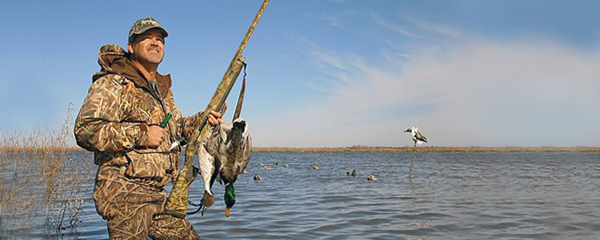
PRATT­– Duck populations are strong, according to the U.S. Fish and Wildlife Service (USFWS) 2013 Report on Trends in Duck Breeding Populations. The preliminary estimate of total duck populations from the traditional survey area (northcentral United States, southcentral and northern Canada, and Alaska) is 45.6 million birds­– a six percent decrease from last year’s estimate of 48.6 million birds, but a 33 percent increase from the long-term average. In addition to estimating duck populations, the survey also examines habitat conditions.
Habitat conditions during the 2013 survey were generally improved or similar to last year due to above-average precipitation, despite a delayed spring throughout most of the traditional survey area. Most of the Canadian portions of the traditional survey area were rated as good to excellent, in contrast to 2012 when drier conditions existed across northern Alberta and Saskatchewan. Although the U.S. prairies received record snowfall in April, habitat conditions were still rated only fair to poor, similar to last year. The total pond estimate (prairie Canada and the north-central United States combined) is 6.9 million, 24 percent higher than the 2012 estimate of 5.5 million ponds and 35 percent above the long-term average.
In the eastern survey area – eastern Ontario, Quebec, the Maritime Provinces and Maine – estimated mallard abundance is 500,000 birds. Habitat conditions across most of the eastern survey area generally were good with the exception of Maine and the southern Maritimes, which were rated only as fair.
The report also notes:
  • Estimated mallard abundance is 10.4 million birds, similar to the 2012 estimate of 10.6 million birds and 36 percent above the long-term average.
  • Blue-winged teal estimated abundance is 7.7 million. Although this is 16 percent below the 2012 estimate of 9.2 million, the blue-wing population is 60 percent above the long-term average. Similarly, the green-winged teal estimate of 3.1 million is 12 percent below last year, but still 51 percent above the long-term average.
  • The northern pintail estimate of 3.3 million is similar to the 2012 estimate of 3.5 million and 17 percent below the long-term average.
  • Estimated abundance of American wigeon is 2.6 million and 23 percent above the 2012 estimate and similar to the long-term average.
  • The combined lesser and greater scaup estimate of 4.2 million decreased 20 percent from last year and is 17 percent below the long-term average of 5 million.
  • The canvasback estimate of 787,000 is similar to the 2012 estimate and 37 percent above the long-term average.
The surveys are conducted by the USFWS and Canadian Wildlife Services’ Waterfowl Breeding Population and Habitat Survey, sampling more than 2 million square miles of waterfowl habitat across Alaska, the northcentral and northeastern United States and southcentral, eastern and northern Canada.
The information guides the USFWS waterfowl conservation programs under authority of the 1918 Migratory Bird Treaty Act. The USFWS then works in partnership with state biologists from the four flyways – the Atlantic, Mississippi, Central and Pacific – to establish regulatory frameworks for waterfowl hunting season lengths, dates and bag limits. 2013 Kansas duck hunting season dates and bag limits will be approved at the Aug. 1 commission meeting in Yates Center.
For more information about the U.S. Fish and Wildlife Service 2013 Report on Trends in Duck Breeding Populations, visitwww.fws.gov/migratorybirds.
For more information on Kansas waterfowl hunting, visit ksoutdoors.com and click “Hunting/Migratory Birds/Ducks.”

Monday, April 15, 2013

FIVE-STATE LESSER PRAIRIE CHICKEN CONSERVATION PLAN SUBMITTED

Range-wide lesser prairie chicken conservation plan submitted to U.S. Fish and Wildlife Service in hopes of precluding a listing under the Endangered Species Act

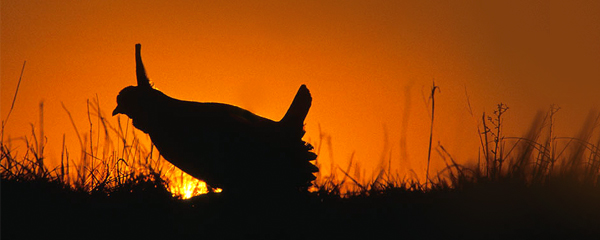
PHOENIX, AZ. – The lesser prairie chicken is a grassland grouse species native and once common to parts of Colorado, New Mexico, Texas, Kansas and Oklahoma. However, declining lesser prairie chicken populations have brought state and federal agencies together in an attempt to better manage this iconic prairie species and its habitats. The result is a comprehensive range-wide lesser prairie chicken management draft plan.

Through a multi-state collaborative effort, with funding provided by a U.S. Fish and Wildlife Service (USFWS) grant and support from the Great Plains Landscape Conservation Cooperative, the five state wildlife agencies completed the draft plan and submitted it to the USFWS. The federal agency is currently deliberating its proposal to list the lesser prairie chicken as threatened and states hope the conservation plan will influence the final decision and preclude listing, according to the Western Association of Fish and Wildlife Agencies (WAFWA) Grassland Initiative.

The lesser prairie chicken has been considered a candidate under the Endangered Species Act (ESA) since 1998, and USFWS proposed it for listing as threatened in December 2012. A final rule for the lesser prairie chicken is scheduled to be issued September 30, 2013.

The WAFWA Grassland Initiative collaborated with the Lesser Prairie Chicken Interstate Working Group, which is composed of biologists from the five state fish and wildlife departments within the species’ range, and other partners to develop the range-wide conservation plan. This management plan describes population and habitat goals to secure the species into the future and identifies voluntary conservation programs and practices to be applied to accomplish these goals throughout the lesser prairie chicken’s range (http://kars.ku.edu/geodata/maps/sgpchat/).

"The U.S. Fish and Wildlife Service commends the Lesser Prairie Chicken Interstate Working Group and the Western Association of Fish and Wildlife Agencies for their tireless efforts to develop a range-wide conservation plan for the lesser prairie chicken." said Dr. Benjamin Tuggle, regional director for the USFWS’s Southwest Region. "In the next few weeks, the Service will reopen the comment period in order to allow the public the opportunity to provide additional comments on the lesser prairie chicken listing proposal and the range-wide conservation plan as it relates to the USFWS’s listing proposal."

“While we do not need a chicken on every acre, we do need to have the right acres to conserve the species,” says Bill Van Pelt, WAFWA’s Grassland Coordinator. “We feel we have created a plan under which we can partner with landowners and industry to incentivize good land management practices.”

Throughout the planning process, which started in April 2012, the state wildlife agencies have reached out to the public. The states have received feedback about two previous draft plans and are encouraged to hear the support for a state-led effort to conserve this species. Prior to finalizing the management plan, the state agencies are requesting additional public input. The Range-wide Conservation Plan for the Lesser Prairie Chicken is found onhttp://www.wafwa.org/html/rangewide_lpc_conservation_plan.shtml and the states will be accepting written comments on this third draft of the plan. Please send comments via email to janc@gci.net or by mail to Jan Caulfield Consulting, 114 S. Franklin St., Ste. 205, Juneau, AK 99801. The states are also exploring the use of webinars to reach the public. These webinars and the closing period on the comments will be announced on the WAFWA website and other media outlets.


“Historically, we saw habitat conditions like the ones we are observing now back in the 1930s, and we thought the species went extinct,” Van Pelt added. “However, it is our opinion that with existing habitat conservation programs being implemented through various Farm Bill programs and enrollments in existing conservation agreements, we are seeing lesser prairie chickens maintaining themselves on the landscape and even expanding into new areas in some parts of their range. By coordinating these existing efforts and others proposed under this range-wide plan, we are confident we will be able to conserve this species into the future. This plan is written broadly enough to allow anyone interested in conserving the lesser prairie chicken to assist the states with conserving this grassland icon.”


For more information, contact WAFWA Grassland Coordinator Bill Van Pelt at (602) 717-5066.