Showing posts with label Texas. Show all posts

Friday, March 14, 2014

LESSER PRAIRIE-CHICKEN RANGE-WIDE PLAN REACHES 2.5 MILLION ACRES IN FIVE STATES, INDUSTRY ENROLLMENT PROVIDES NEARLY $15 MILLION FOR HABITAT CONSERVATION

U.S. Fish and Wildlife Service Approves Oil and Gas Industry Candidate Conservation
Agreement with Assurances
Private companies in five states have now enrolled more than 2.5 million acres in the Lesser Prairie-Chicken Range-wide Conservation Plan, representing oil and gas, pipelines, electric transmission and wind energy, resulting in nearly $15 million for habitat conservation over the next three years. Added to more than 1.3 million acres of oil and gas leases under conservation agreements in New Mexico, this brings the total industry commitment close to 4 million acres.
Range-wide plan enrollment now includes 14 electric transmission companies, representing most of the electric grid across the species’ range in New Mexico, Oklahoma, and Texas. Also, eight oil and gas companies have enrolled more than 2 million acres across all five states. And, two wind energy developments and one natural gas pipeline company have signed on, with more in the process of enrollment.
Last Friday, the U.S. Fish and Wildlife Service announced it had signed a Range-wide Oil and Gas Industry Candidate Conservation Agreement with Assurances (CCAA) with the western association, under the range-wide plan developed by WAFWA and state wildlife agencies in Colorado, Kansas, New Mexico, Oklahoma, and Texas. The service also announced an accompanying Environmental Assessment. The service has proposed listing the bird as threatened under the federal Endangered Species Act, with a final determination expected by March 31.
“Under the range-wide plan, a broad coalition of government, industry, agriculture and conservation interests is demonstrating unprecedented collaboration, showing we can take care of this bird and its prairie habitat without needing to list it,” said Bill Van Pelt, Western Association of Fish and Wildlife Agencies (WAFWA) grassland coordinator.
“When you consider all acreage enrolled in the range-wide plan, plus various CCAAs, Farm Bill programs, and other conservation programs across the lesser prairie-chicken’s range, the total area is about the size of the states of Vermont and New Hampshire combined. This is also approximately half the size of the species’ current range. We believe this sets a record for conservation delivery on predominantly private land for a species under listing consideration.”
The range-wide CCAA provides another option for oil and gas companies, which can also enroll directly in the range-wide plan. CCAAs are prelisting conservation tools, where enrollment must occur prior to a listing decision. Unlike the CCAA, enrollment under the range-wide plan can occur at any time before or after the listing decision.
Enrolling companies get regulatory assurances through a special USFWS rule or a CCAA permit, so that if the species is listed the companies have a pathway to continue operations and development in the region. The companies agree to pay modest enrollment fees, follow a list of guidelines to minimize impacts on the bird, and agree to pay for impacts they cannot avoid. The money goes to farmers, ranchers and landowners to protect and restore habitat for the bird. 
Complementing the range-wide plan, landowner CCAAs offer legal assurances for farmers and ranchers in New Mexico, Texas and Oklahoma. These cover a total of nearly 2.3 million acres across the three states. Landowners in Colorado and Kansas, who do not have access to a ranching CCAA, can enroll their lands under the RWP and receive the same assurances.
The range-wide plan includes habitat management goals and conservation practices to be applied throughout the lesser prairie-chicken’s range, guided by the Crucial Habitat Assessment Tool (CHAT) online database and mapping system.
The range-wide plan can be viewed on the WAFWA website. Industry representatives with questions about the plan may contact Sean Kyle, chairman of the Lesser Prairie Chicken Interstate Working Group, at sean.kyle@wafwa.org. Farmers, ranchers, and landowners may contact their local state fish and wildlife agency biologist to answer questions about enrollment in the plan.

Monday, April 15, 2013

FIVE-STATE LESSER PRAIRIE CHICKEN CONSERVATION PLAN SUBMITTED

Range-wide lesser prairie chicken conservation plan submitted to U.S. Fish and Wildlife Service in hopes of precluding a listing under the Endangered Species Act

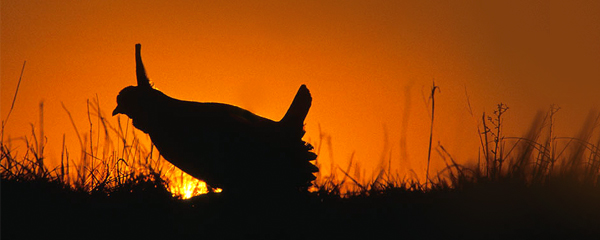
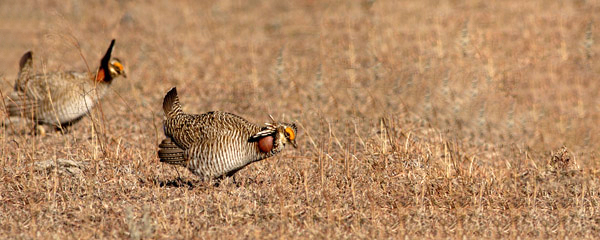
PHOENIX, AZ. – The lesser prairie chicken is a grassland grouse species native and once common to parts of Colorado, New Mexico, Texas, Kansas and Oklahoma. However, declining lesser prairie chicken populations have brought state and federal agencies together in an attempt to better manage this iconic prairie species and its habitats. The result is a comprehensive range-wide lesser prairie chicken management draft plan.

Through a multi-state collaborative effort, with funding provided by a U.S. Fish and Wildlife Service (USFWS) grant and support from the Great Plains Landscape Conservation Cooperative, the five state wildlife agencies completed the draft plan and submitted it to the USFWS. The federal agency is currently deliberating its proposal to list the lesser prairie chicken as threatened and states hope the conservation plan will influence the final decision and preclude listing, according to the Western Association of Fish and Wildlife Agencies (WAFWA) Grassland Initiative.

The lesser prairie chicken has been considered a candidate under the Endangered Species Act (ESA) since 1998, and USFWS proposed it for listing as threatened in December 2012. A final rule for the lesser prairie chicken is scheduled to be issued September 30, 2013.

The WAFWA Grassland Initiative collaborated with the Lesser Prairie Chicken Interstate Working Group, which is composed of biologists from the five state fish and wildlife departments within the species’ range, and other partners to develop the range-wide conservation plan. This management plan describes population and habitat goals to secure the species into the future and identifies voluntary conservation programs and practices to be applied to accomplish these goals throughout the lesser prairie chicken’s range (http://kars.ku.edu/geodata/maps/sgpchat/).

"The U.S. Fish and Wildlife Service commends the Lesser Prairie Chicken Interstate Working Group and the Western Association of Fish and Wildlife Agencies for their tireless efforts to develop a range-wide conservation plan for the lesser prairie chicken." said Dr. Benjamin Tuggle, regional director for the USFWS’s Southwest Region. "In the next few weeks, the Service will reopen the comment period in order to allow the public the opportunity to provide additional comments on the lesser prairie chicken listing proposal and the range-wide conservation plan as it relates to the USFWS’s listing proposal."

“While we do not need a chicken on every acre, we do need to have the right acres to conserve the species,” says Bill Van Pelt, WAFWA’s Grassland Coordinator. “We feel we have created a plan under which we can partner with landowners and industry to incentivize good land management practices.”

Throughout the planning process, which started in April 2012, the state wildlife agencies have reached out to the public. The states have received feedback about two previous draft plans and are encouraged to hear the support for a state-led effort to conserve this species. Prior to finalizing the management plan, the state agencies are requesting additional public input. The Range-wide Conservation Plan for the Lesser Prairie Chicken is found onhttp://www.wafwa.org/html/rangewide_lpc_conservation_plan.shtml and the states will be accepting written comments on this third draft of the plan. Please send comments via email to janc@gci.net or by mail to Jan Caulfield Consulting, 114 S. Franklin St., Ste. 205, Juneau, AK 99801. The states are also exploring the use of webinars to reach the public. These webinars and the closing period on the comments will be announced on the WAFWA website and other media outlets.


“Historically, we saw habitat conditions like the ones we are observing now back in the 1930s, and we thought the species went extinct,” Van Pelt added. “However, it is our opinion that with existing habitat conservation programs being implemented through various Farm Bill programs and enrollments in existing conservation agreements, we are seeing lesser prairie chickens maintaining themselves on the landscape and even expanding into new areas in some parts of their range. By coordinating these existing efforts and others proposed under this range-wide plan, we are confident we will be able to conserve this species into the future. This plan is written broadly enough to allow anyone interested in conserving the lesser prairie chicken to assist the states with conserving this grassland icon.”


For more information, contact WAFWA Grassland Coordinator Bill Van Pelt at (602) 717-5066.

Thursday, April 4, 2013

LOCAL COUPLE SHARES LIFE-LONG COMMITMENT TO CONSERVATION

The Nature Conservancy: Protecting nature. Pre...

The Nature Conservancy in Kansas, a nonprofit conservation organization dedicated to the protection of ecologically important lands and waters, received nearly $1 million dollars from the estate of John and Fran Peterson.

Devoted members of The Nature Conservancy, the Petersons first became involved with the organization in 1989. The first project they helped support was acquiring critical land at Cheyenne Bottoms, near Great Bend.

Later, in 1999, when the Kansas Chapter acquired 16,800 acres of predominately short grass prairie in Logan County, just a few miles from where John grew up, the Petersons stepped up once again and helped with the acquisition of that property.

"It would be difficult to overstate John and Frances Peterson's fierce loyalty and commitment to The Nature Conservancy's Kansas mission as evidenced by what they did with and for the conservancy during their lifetimes and through their estates.” said executor of the Petersons’ estate, John M. Solbach III. “They strongly believed in and wanted to be a part of the Kansas Nature Conservancy's legacy.”

John, a native of Logan County and Fran, a native of Texas, met and married in Washington D.C. The couple spent their working careers in Washington and upon their retirement, moved back to Kansas. John passed away in 2009, followed by Fran in 2012.

For more information, contact Shelby Stacy at sstacy@tnc.org or (785) 233-4400, or visitwww.nature.org.

Monday, February 25, 2013

PUBLIC INPUT SOUGHT ON DRAFT LESSER PRAIRIE CHICKEN MANAGEMENT PLAN


Anyone interested in lesser prairie chicken management encouraged to attend

PRATT – The Kansas Department of Wildlife, Parks and Tourism (KDWPT) has been working with the Lesser Prairie Chicken Interstate Working Group to produce a draft Range-wide Conservation Plan for the Lesser Prairie Chicken. The plan addresses the decline of the lesser prairie chicken in Kansas, Oklahoma, New Mexico, Texas and Colorado and is intended to benefit the wildlife resources, people, and economies of these states by providing a framework for effective lesser prairie chicken management and habitat improvement. The ultimate goal is to increase the range-wide population of lesser prairie chickens. The draft plan emphasizes incentives and tools that encourage landowners to partner with agencies in conservation efforts while achieving their land use needs.

In December, the U.S. Fish and Wildlife Service announced a proposal to list the lesser prairie chicken as a threatened species under the Endangered Species act. A final decision will be made next fall. The Interstate Working Group’s management plan could influence the USFWS’s decision if it can show that lesser prairie chicken populations can be managed at sustainable levels.

Public meetings were held in southwest Kansas in November to gain input from landowners, producers and other stakeholders as the plan was being developed. Now that a draft plan has been assembled, three additional public meetings are scheduled to continue the dialog.

March 5: WaKeeney, 7 p.m.-9 p.m., WaKeeney City Library, 610 Russell Ave.
March 6: Lakin, 7 p.m.-9 p.m., Kearny County Library, 101 E. Prairie.
March 7: Greensburg, 7 p.m.-9 p.m., Community Center (by fairgrounds), 720 N Bay.
More information about the planning process can be found at the project website: http://www.ksre.k-state.edu/p.aspx?tabid=275

Friday, February 1, 2013

U.S. FISH AND WILDLIFE SERVICE SEEKS LESSER PRAIRIE CHICKEN COMMENTS


The U.S. Fish and Wildlife Service (USFWS) will conduct a public meeting in Garden City on Thursday, February 7, 2013 to gather public comments on the proposed listing of the lesser prairie chicken. The meeting will be conducted at Garden City Community College, 801 N. Campus Drive, and will begin at 6:30 p.m.
In November, the USFWS announced it was initiating a process to consider whether the lesser prairie chicken should be recognized as a threatened species under the Endangered Species Act based on scientific evidence that the species and its habitat are in decline. The USFWS will make a final determination on whether to add the lesser prairie chicken to the list based on the best available science. Members of the public and scientific community are encouraged to review and comment on the proposal during the 90-day public comment period.
The Kansas Department of Wildlife, Parks and Tourism (KDWPT) is participating in a five-state effort to develop a range-wide conservation plan to address the decline of the lesser prairie chicken in Kansas, Oklahoma, New Mexico, Texas and Colorado. The conservation plan is intended to benefit the wildlife resources, people, and economies of these states by providing a framework for effective lesser prairie chicken management and habitat improvement that will increase the range-wide population of lesser prairie chickens. The plan will emphasize incentives and tools that encourage landowners to partner with agencies in conservation efforts while achieving their land use needs.

Tuesday, June 19, 2012

FIRST RANGE-WIDE LESSER PRAIRIE CHICKEN AERIAL SURVEY CONCLUDED


FIRST RANGE-WIDE LESSER PRAIRIE CHICKEN AERIAL SURVEY CONCLUDED
June 14, 2012
New breeding grounds discovered in Kansas
EMPORIA — Surveys have now been concluded for the first range-wide assessment of lesser prairie chicken populations using common methods across portions of five states. The Lesser Prairie Chicken Interstate Working Group is composed of biologists from the state fish and wildlife agencies of Colorado, Kansas, New Mexico, Oklahoma, and Texas. The Working Group collaborated with federal agencies and West Ecosystems, Inc., of Laramie, Wyo., to conduct the large-scale, helicopter-based survey to locate lesser prairie chicken leks across the High Plains in all five states.
Leks, which are also referred to as gobbling grounds, are sites that the birds come to every spring for breeding. These surveys encompassed more than 300,000 square miles, and survey results will be used to produce the first statistically valid, five-state estimate of the number of leks by sometime later this summer.
The lesser prairie chicken has been considered a candidate under the Endangered Species Act (ESA) since 1998, and the U.S. Fish and Wildlife Service will release a proposed rule on the status of the bird under the ESA in September. Information from these surveys will be used as a baseline by these five state fish and wildlife agencies to monitor trends in prairie chicken populations and to target conservation programs in partnership with private landowners, oil and gas industries, and wind-energy and electric utilities.
“These surveys will be the basis for a range-wide lesser prairie chicken management plan that is being developed by the five states in collaboration with the Western Association of Fish and Wildlife Agencies Grassland Initiative,” said Jim Pitman, small game coordinator for the Kansas Department of Wildlife, Parks and Tourism. “The plan is expected to be completed by next March, and we are hopeful that it will preclude the need for the Fish and Wildlife Service to designate the lesser prairie chicken as a federally threatened or endangered species.”
The surveys this spring detected several previously unknown leks, despite the severe drought that occurred across the region last year. They also detected leks in Kansas that are beyond what was thought to be the northern extent of the historic range of the species. Lesser prairie chicken numbers have been largely increasing in Kansas for the last 15 years while populations have declined in parts of the southern portion of the range. Biologists believe this northward expansion may represent a shift in the population of the species caused by improved habitat from native grasses planted through the federal Conservation Reserve Program.

Sunday, March 18, 2012

AERIAL SURVEY TO SEARCH LESSER PRAIRIE CHICKEN RANGE

English: Lesser Prairie Chicken (Tympanuchus p...
Image via Wikipedia
Helicopters will be used to search for new breeding grounds; data may help prevent endangered species listing
PRATT — Kansas Department of Wildlife, Parks and Tourism (KDWPT) biologists are cooperating with the Western Association of Fish & Wildlife Agencies (WAFWA) to find new lesser prairie chicken breeding grounds, called “leks,” in western Kansas. WAFWA received funding to evaluate an aerial survey technique that can be used for uniform monitoring across the five-state range of the lesser prairie chicken.

During the survey this spring, surveyors will fly low-elevation transects in helicopters within several randomly chosen 10-square kilometer blocks throughout the lesser prairie chicken range, which includes portions of western Kansas, southeastern Colorado, western Oklahoma, north Texas, and eastern New Mexico. Field crews will train on March 29-31 in Trego County and conduct official survey work across all of western Kansas until the middle of May.

“Everyone in western Kansas is asked to be on the alert for prairie chicken leks,” says KDWPT small game coordinator Jim Pitman. “We are trying to acquire better information on the distribution and population of lesser prairie chickens to help guide an impending Endangered Species Act listing decision being developed by the U.S. Fish and Wildlife Service. This data, coupled with U.S. Department of Agriculture conservation efforts, provide us with the information that may help prevent listing of the lesser prairie chicken.

“If a lek is observed this spring, we are asking that it be reported to the nearest KDWPT biologist or law enforcement officer. We also have an online reporting database. This information is extremely important to the department because it will help us target conservation programs and provide site recommendations to energy developers.”

The work was contracted to Western Ecosystems Technology, Inc., of Cheyenne, Wyo., and the aerial survey protocol was developed by the Lesser Prairie Chicken Interstate Working Group, of which KDWPT is a partner.

Wednesday, April 13, 2011

K-STATE DUCKS UNLIMITED CHAPTER IN “SWEET 16”

Student organization to hold banquet and dinner April 29
MANHATTAN — The Kansas State University Ducks Unlimited chapter (KSU DU) has recently been recognized as a “Sweet 16 Collegiate Chapter” by Ducks Unlimited (DU), placing them in the top 16 among 100 collegiate chapters nationally. DU adopted the NCAA Basketball Championship terminology because the announcement came during the recent tournament in March. The K-State chapter has more than 20 active committee members who hail from all parts of Kansas, as well as Texas and Missouri. Since the beginning of 2010, this chapter raised more $10,000 for wetland conservation.

“Chapters are ranked by the dollars they raise, and the highest-ranked chapter automatically wins,” says chapter spokesman Scott Alexander. “There are no upsets in this bracket. The only prize for making the Sweet 16 is being acknowledged in Ducks Unlimited, the national organization’s magazine. There’s no award ceremony, just pride and bragging rights.”

On April 29, KSU DU will host a dinner banquet at Purple Wave Auction Group in Manhattan. The doors will open at 6 p.m., with dinner at 7 p.m. and a live auction following.

“The chapter would strongly encourage everyone to come out and support their alma mater, the ducks, or both,” Alexander says. “Chances are there may be a young man or woman on the committee from your home town who would also appreciate your support. The K-State DU chapter is looking to make a run at the “Elite 8” for 2011, and a successful fundraising banquet would help that effort. The chapter is also looking for more committee members from the K-State student body.”

"The true reward for our efforts as a college chapter is knowing that we are contributing to DU's efforts and are helping to ensure that future generations can experience waterfowl migrations at least as numerous as what they are today," adds chapter president Patrick Mellard.

Those who are able to attend or have questions about the event should contact Mellard at pmellard@ksu.edu.


Enhanced by Zemanta