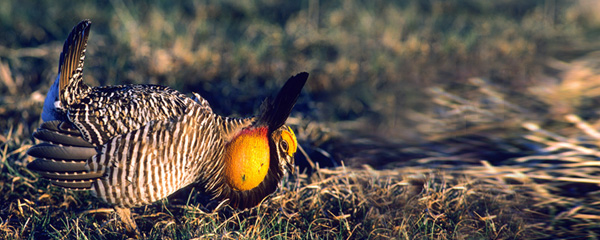
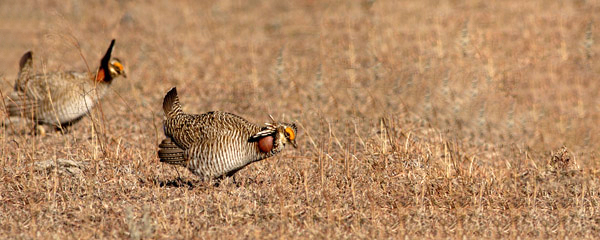
Showing posts with label Lesser Prairie Chicken. Show all posts

Sunday, May 15, 2016

Aerial Surveys Monitor Lesser Prairie Chicken Population Trends

PRATT – According to the Western Association of Fish and Wildlife Agencies (WAWFA), aerial surveys for lesser prairie chickens will begin March 17. The surveys, which will continue through mid-May, will be conducted by helicopter throughout the five-state lesser prairie chicken range. The surveys are conducted annually by WAFWA to ascertain population trends and how the bird is responding to management strategies identified in theLesser Prairie Chicken Range-wide Conservation Plan.
The range-wide plan is a collaborative effort of WAFWA and the state wildlife agencies of Texas, New Mexico, Oklahoma, Kansas and Colorado. It was developed to ensure conservation of the lesser prairie chicken with voluntary cooperation from landowners and industry. This plan allows agriculture producers and industry to continue operations while reducing impacts to the species and its grassland habitat.
“Working with the wildlife agencies of each of these five states, we’ve established a consistent methodology to conduct these aerial surveys,” explained Bill Van Pelt, WAFWA’s grassland coordinator. “This allows us to get the most accurate information possible so we can see how various management strategies for the bird are working on the ground.”
In previous years, some of the fly paths prompted calls, which is why WAFWA is getting the word out about the start of aerial survey work.
Last year’s aerial surveys brought good news: an abundance of spring rainfall in 2015, along with ongoing efforts associated with the range-wide plan and other conservation initiatives, helped increase the lesser prairie chicken population by approximately 25 percent from 2014 to 2015. Results from this year’s surveys will be available on July 1.
Despite last year’s encouraging news, the population is still low compared to historical numbers, and concern for the lesser prairie chicken and its habitat still exist. WAFWA is committed to continued successful implementation of the range-wide plan and the long-term recovery of this iconic grassland bird.
For more information about the lesser prairie chicken and the conservation work being done to support it, see the Lesser Prairie Chicken Range-wide Plan at www.wafwa.org.

Wednesday, July 8, 2015

Lesser Prairie Chicken Numbers Increase Again

PRATT – The lesser prairie chicken population increased approximately 25 percent from 2014 to 2015, according to the recent range-wide aerial survey. Wildlife biologists with the Western Association of Fish and Wildlife Agencies (WAFWA) attribute the increase to abundant spring rainfall and ongoing efforts associated with the Lesser Prairie Chicken Range-wide Conservation Plan.
Increases were observed in three of the four ecoregions across five states – Colorado, Kansas, New Mexico, Oklahoma and Texas – where the species exists. The Sandsage Prairie Region of southeast Colorado showed the biggest gain – approximately 75 percent from a year ago. The Mixed Grass Prairie Region of the northeast Panhandle of Texas, northwest Oklahoma and southcentral Kansas showed an increase of approximately 30 percent, and the population in the Shortgrass Prairie Region of northwest Kansas grew by about 27 percent.
“An overall 25 percent increase in the lesser prairie chicken population across its five-state range is welcome news,” said Ross Melinchuk, chairman of WAFWA’s Lesser Prairie Chicken Initiative Council. “This year’s increase, on the heels of last year’s 20 percent increase, is evidence of the species’ ability to rapidly recover from downturns resulting from drought and poor range condition. With continued improvement in nesting and brood-rearing habitat associated with abundant rainfall and private landowner actions to conserve and restore their habitat, we are optimistic the species will recover to historic population levels.”
The only ecoregion with a continued downward population trend is the Shinnery Oak ecoregion of eastern New Mexico and western Texas. This ecoregion is still recovering from a prolonged period of drought. However, recent roadside surveys indicate lesser prairie chickens in this area are starting to respond to rainfall that occurred in late 2014 and early 2015.

“We’re confident that with continued moisture and drought relief, next year’s Shinnery Oak populations should continue to recover,” said Bill Van Pelt, WAFWA grassland coordinator.
The nonprofit WAFWA is coordinating efforts established under the Lesser Prairie Chicken Range-wide Conservation Plan, which is an initiative designed to engage private landowners and industry to conserve lesser prairie chicken habitat and minimize impacts to the species. To date, industry partners have committed $46 million in enrollment fees to pay for mitigation actions, and landowners across the range have agreed to conserve nearly 100,000 acres of habitat through 10-year and permanent conservation agreements.

Companies, landowners, farmers and ranchers may still enroll in the range-wide plan and receive regulatory assurances that their operations can continue under an accompanying Certificate of Participation. Participating companies can continue operations under certain restrictions while providing funds to conserve prairie chicken habitat. To date, about 180 oil, gas, wind, electric and pipeline companies have enrolled about 11 million acres across the five states. Enrollment fees are deposited with WAFWA and administered to fund conservation efforts by private landowners to benefit the lesser prairie chicken.

The lesser prairie chicken was listed as threatened under the Endangered Species Act in May 2014. The final listing rule allowed private industry to develop and impact habitat if enrolled and participating in WAFWA's range-wide plan, and it also provided various options that landowners can use to receive similar coverage. The range-wide plan provides incentives for landowners and industry to protect and restore habitat, which is important because they control much of the species’ range.

Organized in 1922, WAFWA represents 23 states and Canadian provinces, from Alaska to Texas and Saskatchewan to Hawaii – an area covering nearly 3.7 million square miles of some of North America's most wild and scenic country, inhabited by more than 1,500 premier wildlife species.

More information, including the range-wide plan, is available on the WAFWA website at www.wafwa.org.

Monday, March 31, 2014

LESSER PRAIRIE-CHICKEN ADDED TO FEDERAL LIST OF THREATENED SPECIES

Kansas Department of Wildlife, Parks and Tourism (KDWPT) Secretary Robin Jennison reacted with
disappointment over the U.S. Fish and Wildlife Service’s decision Thursday to list the lesser prairie-chicken as threatened. Dan Ash, director of the U.S. Fish and Wildlife Service (USFWS), announced the decision last Thursday, citing habitat fragmentation, population declines, drought, and threats from development.

“This wasn’t the decision we hoped to hear,” Jennison said. “A lot of work went into a plan to show that state wildlife agencies could manage and conserve lesser prairie chickens without designating the species as threatened.”

For the past 18 months, KDWPT participated in the Lesser Prairie-Chicken Interstate Working Group, established by the Western Association of Fish and Wildlife Agencies (WAFWA). Wildlife biologists from agencies in Kansas, Texas, Oklahoma, New Mexico and Texas, as well as other partners, worked tirelessly to develop a Range-wide Lesser Prairie Chicken Plan (RWP) to conserve the species. Keith Sexson, KDWPT assistant secretary, was actively involved in the process and is pleased with the way state agencies worked together.

“The feeling among state wildlife agencies was that such a plan would benefit lesser prairie chickens through voluntary support from industry and private landowners, and perhaps dissuade the USFWS from listing the species,” said Sexson, KDWPT assistant secretary. “I’m proud of the effort and passion shown by our staff to help create this plan, and it demonstrates the ability for state fish and wildlife agencies to work together with industry and private landowners to deliver an approach that will result in positive conservation for the lesser prairie-chicken.”

While the USFWS endorsed the final version of the conservation plan, it didn’t prevent the final listing of the species.

“I believe the development and initial success of the range-wide plan shows that our staff have the expertise necessary to manage lesser prairie chickens and their habitats. I think we missed an opportunity to break out of the status quo in managing species in need of conservation,” Jennison said. “Had the final decision been ‘not warranted,’ the range-wide plan would have represented a groundbreaking new approach for the way these decisions are made. We have a plan that would have conserved prairie chickens and benefitted all stakeholders without the burdensome red tape and often times heavy-handed approach of the federal government.”

The final RWP is the result of an unprecedented effort and collaboration among state agencies, landowners and industry. The RWP is a comprehensive lesser prairie chicken conservation/management plan that provides a vehicle to bring industry, government and private landowners together to conserve the lesser prairie-chicken and its habitat. To date, more than $20 million has been committed by oil, gas, wind and electric transmission industries that will impact nearly 4 million acres, enhancing and developing critical lesser prairie-chicken habitat.

Information about the RWP is available on the WAFWA website, www.wafwa.org.

Friday, March 14, 2014

LESSER PRAIRIE-CHICKEN RANGE-WIDE PLAN REACHES 2.5 MILLION ACRES IN FIVE STATES, INDUSTRY ENROLLMENT PROVIDES NEARLY $15 MILLION FOR HABITAT CONSERVATION

U.S. Fish and Wildlife Service Approves Oil and Gas Industry Candidate Conservation
Agreement with Assurances
Private companies in five states have now enrolled more than 2.5 million acres in the Lesser Prairie-Chicken Range-wide Conservation Plan, representing oil and gas, pipelines, electric transmission and wind energy, resulting in nearly $15 million for habitat conservation over the next three years. Added to more than 1.3 million acres of oil and gas leases under conservation agreements in New Mexico, this brings the total industry commitment close to 4 million acres.
Range-wide plan enrollment now includes 14 electric transmission companies, representing most of the electric grid across the species’ range in New Mexico, Oklahoma, and Texas. Also, eight oil and gas companies have enrolled more than 2 million acres across all five states. And, two wind energy developments and one natural gas pipeline company have signed on, with more in the process of enrollment.
Last Friday, the U.S. Fish and Wildlife Service announced it had signed a Range-wide Oil and Gas Industry Candidate Conservation Agreement with Assurances (CCAA) with the western association, under the range-wide plan developed by WAFWA and state wildlife agencies in Colorado, Kansas, New Mexico, Oklahoma, and Texas. The service also announced an accompanying Environmental Assessment. The service has proposed listing the bird as threatened under the federal Endangered Species Act, with a final determination expected by March 31.
“Under the range-wide plan, a broad coalition of government, industry, agriculture and conservation interests is demonstrating unprecedented collaboration, showing we can take care of this bird and its prairie habitat without needing to list it,” said Bill Van Pelt, Western Association of Fish and Wildlife Agencies (WAFWA) grassland coordinator.
“When you consider all acreage enrolled in the range-wide plan, plus various CCAAs, Farm Bill programs, and other conservation programs across the lesser prairie-chicken’s range, the total area is about the size of the states of Vermont and New Hampshire combined. This is also approximately half the size of the species’ current range. We believe this sets a record for conservation delivery on predominantly private land for a species under listing consideration.”
The range-wide CCAA provides another option for oil and gas companies, which can also enroll directly in the range-wide plan. CCAAs are prelisting conservation tools, where enrollment must occur prior to a listing decision. Unlike the CCAA, enrollment under the range-wide plan can occur at any time before or after the listing decision.
Enrolling companies get regulatory assurances through a special USFWS rule or a CCAA permit, so that if the species is listed the companies have a pathway to continue operations and development in the region. The companies agree to pay modest enrollment fees, follow a list of guidelines to minimize impacts on the bird, and agree to pay for impacts they cannot avoid. The money goes to farmers, ranchers and landowners to protect and restore habitat for the bird. 
Complementing the range-wide plan, landowner CCAAs offer legal assurances for farmers and ranchers in New Mexico, Texas and Oklahoma. These cover a total of nearly 2.3 million acres across the three states. Landowners in Colorado and Kansas, who do not have access to a ranching CCAA, can enroll their lands under the RWP and receive the same assurances.
The range-wide plan includes habitat management goals and conservation practices to be applied throughout the lesser prairie-chicken’s range, guided by the Crucial Habitat Assessment Tool (CHAT) online database and mapping system.
The range-wide plan can be viewed on the WAFWA website. Industry representatives with questions about the plan may contact Sean Kyle, chairman of the Lesser Prairie Chicken Interstate Working Group, at sean.kyle@wafwa.org. Farmers, ranchers, and landowners may contact their local state fish and wildlife agency biologist to answer questions about enrollment in the plan.

Wednesday, February 12, 2014

LESSER-PRAIRIE CHICKEN CONSERVATION PLAN LANDOWNER/PRODUCER SIGN-UP PERIOD OPEN

Western Association of Fish and Wildlife Agencies accepting applications throughFeb. 28

EMPORIA – Landowner/producers can apply to enroll their land in the Lesser-prairie Chicken Conservation Program through Feb 28, according to the Western Association of Fish and Wildlife Agencies (WAFWA). Those with land in the lesser prairie-chicken range willing to implement conservation practices beneficial to lesser-prairie chickens are eligible. Landowner/producers who are accepted will receive a sign-up incentive and payments for implementing conservation practices designed to maximize the value of their property to lesser-prairie chicken. Those practices include mechanical brush removal, prescribed grazing, and establishment and management of planted native grass stands. Only producers not currently enrolled in federal farm bill programs will be eligible to apply for five- and 10-year contract options.
The WAFWA will rank applications based on their value to lesser prairie-chickens and select the highest ranking offers for enrollment. Accepted landowner/producers located in the high-priority locations can receive payments of up to 125 percent of the estimated cost of implementing the conservation plan. If the species becomes federally listed, participating producers will be exempt from the take prohibition of the Endangered Species Act (ESA) if the take occurs while implementing the practices prescribed in their conservation plan.  Producers who are interested in the program should contact their local state wildlife agency office for more details or to complete an application. 
After the sign-up period is complete, the WAFWA will also be developing similar conservation plans for producers who just want to be exempted from the take prohibitions of the ESA. The management prescriptions in these plans won’t be as conservative, and landowners won’t receive payment for implementing them. However, if the species is listed, any take that occurs while implementing the prescribed practices will be exempt from the take prohibitions of the ESA.  Producers interested in this type of conservation plan should also contact their local state wildlife agency.
The WAFWA consists of 23 state and provincial wildlife agencies that have primary responsibility and authority for protecting and managing fish and wildlife in the western United States and Canada.  The state wildlife agencies in Kansas, Oklahoma, Texas, New Mexico, and Colorado are members of the WAFWA. Through the WAFWA, those five state wildlife agencies worked cooperatively over the last two years to produce the Lesser-prairie Chicken Range-wide Conservation Plan (RWP) as a means to preclude a federal listing of the species under the ESA. On October 23, 2013, the U.S. Fish and Wildlife Service (USFWS) endorsed the RWP as “a comprehensive conservation plan that reflects sound conservation design and strategy that, when implemented, will provide a net conservation benefit to the lesser prairie-chicken.” To date, the RWP is the only plan that has been endorsed by the USFWS and is the only pathway that has the potential to lead to a not warranted final decision. The amount of voluntary enrollment in the RWP will likely weigh heavily into the final listing decision that must be announced by the end of March.

Friday, November 15, 2013

PRAIRIE CHICKEN SEASON UNIQUE HUNTING OPPORTUNITY

Kansas harbors highest prairie chicken population in world
PRATT – What may be the most unique upland bird hunting opportunity in North America begins on
the third Saturday in November. The 2013 regular prairie chicken season opens Nov. 16 and runs through Jan. 31, 2014 in the Northwest and East units. It endsDec. 31, 2013 in the Southwest Unit. Kansas is home to lesser and greater prairie chickens, both iconic prairie grouse species of our Midwest grasslands.
In Kansas, the more numerous greater prairie chicken inhabits the tallgrass prairie of the Flint Hills, in east-central Kansas, and mixed grass prairies of the Smoky Hills, in northcentral and northwest Kansas. Less than 4 percent of the 400,000 square miles of tallgrass prairie that once covered North America still remain, and two-thirds of that is in the Kansas region known as the Flint Hills. This region in east-central Kansas still provides large, unbroken expanses of tallgrass prairie, thanks to the stewardship of private cattle ranchers, and a shallow layer of chert, or flint, that protects it from the plow.
The more rare lesser prairie chicken inhabits the shortgrass prairies of southwest Kansas. Because of habitat loss and population declines in four other states where lesser prairie chickens exist (Colorado, New Mexico, Oklahoma and Texas), Kansas is the only state where lesser prairie chickens can be hunted. In fact, the U.S. Fish and Wildlife Service (USFWS) will announce next spring whether or not the lesser prairie chicken will be added to the Threatened and Endangered Species List. To address habitat losses, wildlife agencies in the five states formed a working group that collaborated with the Western Association of Fish and Wildlife Agencies to develop a comprehensive management plan. State biologists hope the plan will dissuade the USFWS from listing the lesser prairie chicken, allowing state agencies to implement a variety of private land habitat enhancement programs designed to benefit lesser chickens.
Hunting lesser prairie chickens in Kansas has no impact on the population, and provides a truly unique upland bird hunting opportunity. The daily bag limit in the Southwest Unit is one prairie chicken per day with a possession limit of four.
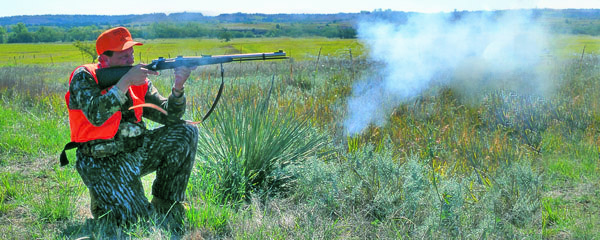
Daily bag limit in the Northwest and East units is two prairie chickens per day, and the possession limit is eight. Most prairie chickens taken during the regular season are taken by pass shooting. Hunters position themselves along the edges of feed fields in the early morning or late evening hours and wait for chickens to fly in from the grasslands. Success depends on prior scouting, patience and luck. It also requires shooting skill because prairie chickens fly deceptively fast, especially with any type of tailwind.
In addition to a hunting license, unless exempt, prairie chicken hunters are required to have a $2.50 Prairie Chicken Permit. The special permit allows KDWPT to gain valuable management information from hunters who pursue prairie chickens.
The Smoky Hills region is expected to hold some of the highest densities and greatest hunting opportunities in the state for greater prairie chickens. Hunters may also find success in the Flint Hills, where reduced burning allowed for more residual grass cover for nesting compared to most years. For more details, view the 2013 Upland Bird Forecast atksoutdoors.com.

Sunday, July 7, 2013

KDWPT BIOLOGIST RECEIVES AWARD FROM MIDWEST ASSOCIATION OF FISH AND WILDLIFE AGENCIES

PRATT ­– The Midwest Association of Fish and Wildlife Agencies (MAFWA)
recently recognized Kansas Department of Wildlife, Parks and Tourism (KDWPT) small game coordinator Jim Pitman as the 2013 “Wildlife Biologist of the Year.” Pitman was presented the award by KDWPT Assistant Secretary Keith Sexson at the June 27 Kansas Wildlife, Parks and Tourism Commission meeting.

Each year, MAFWA recognizes an individual who has shown an unparalleled initiative toward the better understanding of wildlife and their conservation, and Pitman couldn’t have been a better choice.

“It is a huge honor to be recognized my peers,” said Pitman. “A person's peers are usually the toughest critics, so winning an award from that group is the most meaningful recognition anyone could receive. I'm very appreciative of that recognition and humbled by it.”

Pitman’s most recent endeavor has been developing conservation strategies to address the potential listing of the lesser prairie chicken as a threatened or endangered species by the U.S. Fish and Wildlife Service.

Pitman is the second KDWPT biologist in recent years to receive this award from MAFWA. In 2011, KDWPT Big Game Program Coordinator Lloyd Fox was also named Wildlife Biologist of the Year.

Comprised of 13 state and 3 provincial Midwest fish and wildlife agencies, MAFWA is an organization that strives to provide a common forum for fish and wildlife agencies to share ideas, information, pool resources, and form action initiatives to better manage and conserve fish and wildlife resources.

For more information on MAFWA and Pitman’s award, visit www.mafwa.org.

Wednesday, May 1, 2013

LOCAL COUPLE TO HOST FIELD DAY ON WILDLIFE HABITAT IMPROVEMENT


PRATT– The Kansas Forest Service (KFS) will host the 2013 Agroforestry Field Day May 8 on the farm of Dave and Mary Hendricks at I Road and 190 Ave, Wakeeney. Discussion topics will include tree health threats, creating mule deer habitat, lesser prairie chicken habitat, water quality concerns in western Kansas, managing for upland birds from the landowner’s perspective, windbreak renovation, assessment and funding projects, and creating a burn plan for prairie. Attendees will also get to hear from the Hendricks as they share their experience working with trees and shrubs in contemporary agricultural systems.

Windbreak Renovation, Assessment and Funding Projects
With the current drought stressing windbreaks throughout western Kansas, KFS foresters Jim Strine and Bob Atchison will provide tips on how to maintain and renovate older windbreaks and shelterbelts using one of the many windbreaks the Hendricks have on their property. Suggestions on row removal, selective thinning, watering and establishing additional tree rows will be provided. Participants will also receive the latest information on financial assistance available to implement windbreak renovation projects as well as the preliminary results of a windbreak assessment study on the size and condition of shelterbelts in the Smoky Hill region.
Lesser Prairie Chicken Habitat
In response to a U.S. Fish and Wildlife Service proposal to list the lesser prairie chicken as a threatened species, a rangewide management plan is being developed to assist landowners in enhancing grassland habitat. Mark Witecha, a Pheasants Forever Farm Bill biologist, will be on hand to discuss the habitat needs of this important species and suggest conservation practices that benefit lesser prairie chickens and other important grassland birds. Witecha will also inform participants of the services Pheasants Forever can offer to landowners.
Creating a Burn Plan for the Prairie
Burning the prairie is one of the most important activities landowners can do to ensure the health of grass and range lands and the flora and fauna that depend on them. Unfortunately many landowners are hesitant to burn and those that do sometimes do not plan adequately. Several windbreaks on the Hendricks farm have been lost to wildfire for that very reason. Michele Witecha, a KFS wildlife ecologist and rangeland fire specialist, will provide a session on how to develop a burn plan that accomplishes specific management interests while lowering the risk of wildfire potential.
Managing for Upland Birds from the Landowner’s Perspective
Last season hunters harvested an estimated 475,000 pheasants and this year numbers have been down by almost 50 percent. Randy Rodgers and Helen Hands, are both wildlife biologists who have applied their years of experience managing for upland bird habitat to their farm in Rush County. Winners of the 2012 Kansas Wildlife Federation’s Land and Soil Wildlife Conservationist award, Rodgers and Hands will
Conservationists Dave and Mary Hendricks
will host an agroforestry field day this May
provide both the landowner perspective and the professional wildlife biologist expertise to educate participants on how to improve habitat for upland birds.
Creating Mule Deer Habitat
Mule deer have a different set of habitat requirements compared to upland birds and are regular visitors to the Hendricks farm. Dave Hendricks will show participants how windbreaks can be used as a fawning area for mule deer and discuss how landowners can encourage mule deer habitat on their properties.
Tree Health Threats
Nikki Opbroek, KFS forest health specialist, will offer an update on potential health threats to trees and shrubs (including drought) and provide both diagnosis and control recommendations for the major tree problems people encounter in western Kansas. Foresters will also provide suggestions on appropriate tree and shrub species to plant in the Trego County area.
Water Quality Concerns in Western Kansas
Water quality and quantity issues have never been so relevant to western Kansas. Stacy Minson, K-State Research and Extension watershed specialist, will share her knowledge of the issues and offer suggestions to participants on practices they can implement to address these challenges.
The Hendricks have been chosen as the recipients of the 2013 Kansas Agroforestry Award by the Kansas Forestry Association and the Kansas Forest Service. The Kansas Agroforestry Award is presented to landowners who go above and beyond to implement agroforestry practices on their property such as riparian forest buffers and shelterbelts. The couple will be presented with an award the morning of the event.

The cost of attendance is $10. Lunch will be provided.
In the event of rain, the field day will be moved to the Trego County Fairgrounds in WaKeeney.
For more information, or to register for this event, call rural forestry coordinator Bob Atchison at(785) 532-3310, or visit www.kansasforests.org.

Monday, April 15, 2013

FIVE-STATE LESSER PRAIRIE CHICKEN CONSERVATION PLAN SUBMITTED

Range-wide lesser prairie chicken conservation plan submitted to U.S. Fish and Wildlife Service in hopes of precluding a listing under the Endangered Species Act

PHOENIX, AZ. – The lesser prairie chicken is a grassland grouse species native and once common to parts of Colorado, New Mexico, Texas, Kansas and Oklahoma. However, declining lesser prairie chicken populations have brought state and federal agencies together in an attempt to better manage this iconic prairie species and its habitats. The result is a comprehensive range-wide lesser prairie chicken management draft plan.

Through a multi-state collaborative effort, with funding provided by a U.S. Fish and Wildlife Service (USFWS) grant and support from the Great Plains Landscape Conservation Cooperative, the five state wildlife agencies completed the draft plan and submitted it to the USFWS. The federal agency is currently deliberating its proposal to list the lesser prairie chicken as threatened and states hope the conservation plan will influence the final decision and preclude listing, according to the Western Association of Fish and Wildlife Agencies (WAFWA) Grassland Initiative.

The lesser prairie chicken has been considered a candidate under the Endangered Species Act (ESA) since 1998, and USFWS proposed it for listing as threatened in December 2012. A final rule for the lesser prairie chicken is scheduled to be issued September 30, 2013.

The WAFWA Grassland Initiative collaborated with the Lesser Prairie Chicken Interstate Working Group, which is composed of biologists from the five state fish and wildlife departments within the species’ range, and other partners to develop the range-wide conservation plan. This management plan describes population and habitat goals to secure the species into the future and identifies voluntary conservation programs and practices to be applied to accomplish these goals throughout the lesser prairie chicken’s range (http://kars.ku.edu/geodata/maps/sgpchat/).

"The U.S. Fish and Wildlife Service commends the Lesser Prairie Chicken Interstate Working Group and the Western Association of Fish and Wildlife Agencies for their tireless efforts to develop a range-wide conservation plan for the lesser prairie chicken." said Dr. Benjamin Tuggle, regional director for the USFWS’s Southwest Region. "In the next few weeks, the Service will reopen the comment period in order to allow the public the opportunity to provide additional comments on the lesser prairie chicken listing proposal and the range-wide conservation plan as it relates to the USFWS’s listing proposal."

“While we do not need a chicken on every acre, we do need to have the right acres to conserve the species,” says Bill Van Pelt, WAFWA’s Grassland Coordinator. “We feel we have created a plan under which we can partner with landowners and industry to incentivize good land management practices.”

Throughout the planning process, which started in April 2012, the state wildlife agencies have reached out to the public. The states have received feedback about two previous draft plans and are encouraged to hear the support for a state-led effort to conserve this species. Prior to finalizing the management plan, the state agencies are requesting additional public input. The Range-wide Conservation Plan for the Lesser Prairie Chicken is found onhttp://www.wafwa.org/html/rangewide_lpc_conservation_plan.shtml and the states will be accepting written comments on this third draft of the plan. Please send comments via email to janc@gci.net or by mail to Jan Caulfield Consulting, 114 S. Franklin St., Ste. 205, Juneau, AK 99801. The states are also exploring the use of webinars to reach the public. These webinars and the closing period on the comments will be announced on the WAFWA website and other media outlets.


“Historically, we saw habitat conditions like the ones we are observing now back in the 1930s, and we thought the species went extinct,” Van Pelt added. “However, it is our opinion that with existing habitat conservation programs being implemented through various Farm Bill programs and enrollments in existing conservation agreements, we are seeing lesser prairie chickens maintaining themselves on the landscape and even expanding into new areas in some parts of their range. By coordinating these existing efforts and others proposed under this range-wide plan, we are confident we will be able to conserve this species into the future. This plan is written broadly enough to allow anyone interested in conserving the lesser prairie chicken to assist the states with conserving this grassland icon.”


For more information, contact WAFWA Grassland Coordinator Bill Van Pelt at (602) 717-5066.

Wednesday, March 13, 2013

KANSAS WILDLIFE, PARKS AND TOURISM COMMISSION TO MEET IN TOPEKA


PRATT – The Kansas Wildlife, Parks and Tourism Commission will conduct a public meeting and hearing on Thursday, Mar. 21, at the Kansas Historical Society History Center, 6425 SW 6 Ave., in Topeka. The afternoon session will begin at 1:30 p.m. and recess at 5 p.m., and the evening session will begin at 7 p.m.

Public hearing to include big game legal equipment,
Secretary’s Orders for deer permits
The afternoon session will begin with time for public comments on non-agenda items, followed by a general discussion period on the following topics: Secretary’s remarks about agency and state fiscal status and an update on the 2013 legislative session. Other general discussion topics include, recognition for a retiring K-9 officer, a year-end review of tourism activities, a report on roadside maintenance for wildlife, a webless migratory bird report, early migratory bird seasons, furharvester regulations, Fort Riley deer and other considerations, and an update on the federal proposal to list the lesser prairie chicken.
The afternoon session will also include a workshop in preparation for potential regulatory action, covering preliminary recommendations on regulations. Topics include upland bird regulations, public lands regulations, camping and utility fees, antelope and elk regulations, and agritourism.

The commission will recess at 5 p.m., then reconvene at 7 p.m. at the same location for the public hearing. Commissioners will consider regulations pertaining to fees; big game legal taking equipment; deer season dates; Secretary’s Orders for limited deer permit quotas; legal equipment and taking methods for turkey; and turkey season, bag limit and permits.
Time will be available in both the afternoon and evening sessions for public comment on topics not on the agenda. If necessary, the commission will reconvene at the same location at 9 a.m., March 22, to complete unfinished business.

Live video and audio streaming of this meeting will be broadcast through the KDWPT website,ksoutdoors.com.

If notified in advance, the department will have an interpreter available for the hearing impaired. To request an interpreter, call the Kansas Commission for the Deaf and Hard of Hearing at 1-800-432-0698. Any individual with a disability may request other accommodations by contacting the Kansas Wildlife, Parks and Tourism Commission secretary at (620) 672-5911.

The next commission meeting is scheduled for April 25, 2013 at the Great Plains Nature Center in Wichita.

Monday, February 25, 2013

PUBLIC INPUT SOUGHT ON DRAFT LESSER PRAIRIE CHICKEN MANAGEMENT PLAN


Anyone interested in lesser prairie chicken management encouraged to attend

PRATT – The Kansas Department of Wildlife, Parks and Tourism (KDWPT) has been working with the Lesser Prairie Chicken Interstate Working Group to produce a draft Range-wide Conservation Plan for the Lesser Prairie Chicken. The plan addresses the decline of the lesser prairie chicken in Kansas, Oklahoma, New Mexico, Texas and Colorado and is intended to benefit the wildlife resources, people, and economies of these states by providing a framework for effective lesser prairie chicken management and habitat improvement. The ultimate goal is to increase the range-wide population of lesser prairie chickens. The draft plan emphasizes incentives and tools that encourage landowners to partner with agencies in conservation efforts while achieving their land use needs.

In December, the U.S. Fish and Wildlife Service announced a proposal to list the lesser prairie chicken as a threatened species under the Endangered Species act. A final decision will be made next fall. The Interstate Working Group’s management plan could influence the USFWS’s decision if it can show that lesser prairie chicken populations can be managed at sustainable levels.

Public meetings were held in southwest Kansas in November to gain input from landowners, producers and other stakeholders as the plan was being developed. Now that a draft plan has been assembled, three additional public meetings are scheduled to continue the dialog.

March 5: WaKeeney, 7 p.m.-9 p.m., WaKeeney City Library, 610 Russell Ave.
March 6: Lakin, 7 p.m.-9 p.m., Kearny County Library, 101 E. Prairie.
March 7: Greensburg, 7 p.m.-9 p.m., Community Center (by fairgrounds), 720 N Bay.
More information about the planning process can be found at the project website: http://www.ksre.k-state.edu/p.aspx?tabid=275

Friday, February 1, 2013

U.S. FISH AND WILDLIFE SERVICE SEEKS LESSER PRAIRIE CHICKEN COMMENTS


The U.S. Fish and Wildlife Service (USFWS) will conduct a public meeting in Garden City on Thursday, February 7, 2013 to gather public comments on the proposed listing of the lesser prairie chicken. The meeting will be conducted at Garden City Community College, 801 N. Campus Drive, and will begin at 6:30 p.m.
In November, the USFWS announced it was initiating a process to consider whether the lesser prairie chicken should be recognized as a threatened species under the Endangered Species Act based on scientific evidence that the species and its habitat are in decline. The USFWS will make a final determination on whether to add the lesser prairie chicken to the list based on the best available science. Members of the public and scientific community are encouraged to review and comment on the proposal during the 90-day public comment period.
The Kansas Department of Wildlife, Parks and Tourism (KDWPT) is participating in a five-state effort to develop a range-wide conservation plan to address the decline of the lesser prairie chicken in Kansas, Oklahoma, New Mexico, Texas and Colorado. The conservation plan is intended to benefit the wildlife resources, people, and economies of these states by providing a framework for effective lesser prairie chicken management and habitat improvement that will increase the range-wide population of lesser prairie chickens. The plan will emphasize incentives and tools that encourage landowners to partner with agencies in conservation efforts while achieving their land use needs.

Tuesday, June 19, 2012

FIRST RANGE-WIDE LESSER PRAIRIE CHICKEN AERIAL SURVEY CONCLUDED


FIRST RANGE-WIDE LESSER PRAIRIE CHICKEN AERIAL SURVEY CONCLUDED
June 14, 2012
New breeding grounds discovered in Kansas
EMPORIA — Surveys have now been concluded for the first range-wide assessment of lesser prairie chicken populations using common methods across portions of five states. The Lesser Prairie Chicken Interstate Working Group is composed of biologists from the state fish and wildlife agencies of Colorado, Kansas, New Mexico, Oklahoma, and Texas. The Working Group collaborated with federal agencies and West Ecosystems, Inc., of Laramie, Wyo., to conduct the large-scale, helicopter-based survey to locate lesser prairie chicken leks across the High Plains in all five states.
Leks, which are also referred to as gobbling grounds, are sites that the birds come to every spring for breeding. These surveys encompassed more than 300,000 square miles, and survey results will be used to produce the first statistically valid, five-state estimate of the number of leks by sometime later this summer.
The lesser prairie chicken has been considered a candidate under the Endangered Species Act (ESA) since 1998, and the U.S. Fish and Wildlife Service will release a proposed rule on the status of the bird under the ESA in September. Information from these surveys will be used as a baseline by these five state fish and wildlife agencies to monitor trends in prairie chicken populations and to target conservation programs in partnership with private landowners, oil and gas industries, and wind-energy and electric utilities.
“These surveys will be the basis for a range-wide lesser prairie chicken management plan that is being developed by the five states in collaboration with the Western Association of Fish and Wildlife Agencies Grassland Initiative,” said Jim Pitman, small game coordinator for the Kansas Department of Wildlife, Parks and Tourism. “The plan is expected to be completed by next March, and we are hopeful that it will preclude the need for the Fish and Wildlife Service to designate the lesser prairie chicken as a federally threatened or endangered species.”
The surveys this spring detected several previously unknown leks, despite the severe drought that occurred across the region last year. They also detected leks in Kansas that are beyond what was thought to be the northern extent of the historic range of the species. Lesser prairie chicken numbers have been largely increasing in Kansas for the last 15 years while populations have declined in parts of the southern portion of the range. Biologists believe this northward expansion may represent a shift in the population of the species caused by improved habitat from native grasses planted through the federal Conservation Reserve Program.