Showing posts with label Canada. Show all posts

Friday, October 24, 2014

SO MANY SEASONS, SO LITTLE NOVEMBER

November marks the beginning of several hunting seasons in Kansas
PRATT – For most people, Christmas comes on Dec. 25, but for hunters and anglers, the best gifts arrive one month earlier. November marks the start of four hunting and fishing seasons that are a must-do in the Sunflower State, and if you’ve never partaken in these fall festivities, you may want to reconsider your plans this upcoming month.
TROUT FISHING: NOV. 1 - APRIL 15
From Nov. 1, 2014-April 15, 2015, anglers can enjoy some of the best fishing opportunities in the state as nearly 30 public fishing areas will be stocked periodically with this special species.
Special permits apply, so consult the 2014 Fishing Regulations Summary for complete details on your favorite waters.
To view a complete trout stocking schedule for a specific location, visit ksoutdoors.com and click “Fishing /Special Fishing Programs for You / Trout Fishing Program.”
GOOSE HUNTING
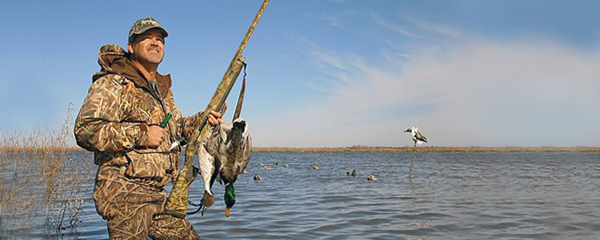
If wild turkeys aren’t your idea of a hardy holiday bird, consider bagging a goose this season. Hunters can pursue geese during the following seasons:
Canada Geese
Season: Nov. 1-9, 2014 AND Nov. 12, 2014-Feb. 15, 2015
Daily bag limit: 6 (including Brant). Possession limit: 18.
White-Fronted Geese
  • Season: Nov. 1-Dec. 14, 2014 AND Jan. 17-Feb. 15, 2015
  • Daily bag limit: 2. Possession limit: 6.
Light Geese
  • Season: Nov. 1-9, 2014 AND Nov. 12, 2014-Feb. 15, 2015
  • Daily bag limit: 50. No possession limit.
PHEASANT AND QUAIL SEASON
Recent rains leading to increased brood-rearing habitat across the state have several areas harboring more birds this year. Consider taking a peek at the 2014 Upland Bird Forecast on ksoutdoors.com to locate your next hunting honey pot.
Pheasant
  • Regular Season: November 8, 2014 - January 31, 2015
  • Youth Season: November 1-2, 2014
  • Daily Bag Limit: 4 cocks in regular season, 2 cocks in youth season.
  • NOTE: Pheasants in possession for transportation must retain intact a foot, plumage, or some part that will determine sex.
Quail
  • Regular Season: November 8, 2014 - January 31, 2015
  • Youth Season: November 1-2, 2014
    • Daily Bag Limit: 8 in regular season, 4 in youth season.
SANDHILL CRANES
Although not as widely sought-after as geese and ducks, sandhill cranes are a challenging quarry to hunt. Consider experiencing this unique season this year.
  • Season: Nov. 5 2014-Jan 1, 2015
  • Daily bag limit: 3. Possession limit: 9.
All sandhill crane hunters must take an online crane identification test each year before obtaining the required federal permit to hunt. The test can be found by visiting ksoutdoors.com and clicking “Hunting / Migratory Birds/ Sandhill Crane.”
Quivira and Kirwin National Wildlife Refuge are closed to crane hunting.

Saturday, August 30, 2014

WILDLIFE, PARKS AND TOURISM COMMISSION SETS WATERFOWL SEASONS

2014 duck and goose seasons set by Wildlife, Parks and Tourism Commission
GREAT BEND – On Thursday, August 21, the Kansas Wildlife, Parks and Tourism Commission heard 2014 duck and goose season recommendations, considered public comment and approved the following seasons.
DUCKS
High Plains Duck Zone: Oct. 11-Dec. 8, 2014 and Dec. 20, 2014-Jan. 25, 2015.
Low Plains Early Duck Zone: Oct. 11-Dec. 7, 2014 and Dec. 20, 2014-Jan. 4, 2015.
Low Plains Late Duck Zone: Nov. 1, 2014-Jan. 4, 2015 and Jan. 17-25, 2015.
Low Plains Southeast Duck Zone: Nov. 8-9, 2014 AND Nov. 15, 2014-Jan. 25, 2015.
Daily bag limit for ducks is six with the following species and sex restrictions: no more than five mallards, of which only two may be hens; three scaup; three wood ducks; two redheads; two pintails; and one canvasback. Possession limit is three times the daily bag limit. 
GEESE
Canada geese: Nov. 1-9, 2014 and Nov. 12, 2014-Feb. 15, 2015.
Daily bag limit on Canada geese is six; possession limit is 18.
Light Geese: Nov. 1-9, 2014 and Nov. 12, 2014-Feb. 15, 2015
Daily bag limit on light geese is 50 with no possession limit.
White-fronted geese: Nov. 1-Dec. 14, 2014 and Jan. 17-Feb. 15, 2015.
Daily bag limit for white-fronted geese is two and possession limit is six.
In other business, the Commission also approved a regulation allowing dogs on hand-held leashes to be used to trail dead or wounded big game animals.
The next commission meeting is scheduled for October 16, 2014 at Martinelli’s Restaurant Meeting Room, 158 S Santa Fe Ave., Salina.

Tuesday, February 11, 2014

SURVEY TRACKS BACKYARD FEATHERED-FRIENDS

Spotting backyard birds can be a relaxing and fun way to enjoy wildlife during the colder months
PRATT – Bird watchers around the state can participate in two essential studies on winter bird populations simply by keeping a watchful eye. The first study will begin with the Kansas Winter Bird Feeder Survey, Jan. 30–Feb. 2, followed by the 2014 Great Backyard Bird Count (GBBC) Feb. 14–17.
Participants of the Winter Bird Feeder Survey are asked to observe and record the number www.ksoutdoors.com, and mailing it in. Information gleaned from this survey will help the Kansas Department of Wildlife, Parks and Tourism (KDWPT) track songbird population trends and types of feed that are most attractive to backyard birds.
and species of birds visiting their backyard feeders on two consecutive days between Jan. 30 and Feb. 2. Watchers can report the results by downloading the survey form found on
During the two-day survey, birders are encouraged to record the times of day they observed birds, the number of each species seen, along with a description of their feeders using the form provided. Each species should be listed by the highest number seen together at any one time. For example, if 10 juncos are seen at 9 a.m., 11 at 12 p.m., and seven at 4 p.m., the number recorded would then be 11.
Following the Winter Bird Feeder Survey, birders can also participate in the GBBC beginning Feb. 14. Unlike the Winter Bird Feeder Survey where participants view birds at a feeder for any length of time, the annual GBBC asks participants to watch birds at any location for a minimum of 15 minutes. This effort aids in better defining bird ranges, populations, migration pathways, and habitat needs. Participants then tally the numbers of each species seen, and report their observations online at www.birdcount.org.
This will be the last year that Kansas has a separate Winter Bird Feeder Survey as future surveys will be integrated with the GBBC. This change will allow participants to enter their data online, eliminating mail-in data forms, and will also allow researchers better access to recorded data. In the future, participants and other Ebird users will also be able to view the data and interactive maps developed with the data entered online.
Global participation will be made possible by www.ebird.org, a real-time online checklist program that the Cornell Lab and Audubon are integrating into the GBBC for the first time this year. The four-day event will receive sightings from tens of thousands of participants who may record more than 600 bird species in the United States and Canada alone.
For more information regarding the Great Backyard Bird Count visit www.birdsource.org/gbbc/ or www.ebird.org.

Saturday, November 2, 2013

ENDANGERED SPECIES MAKES APPEARANCE IN KANSAS

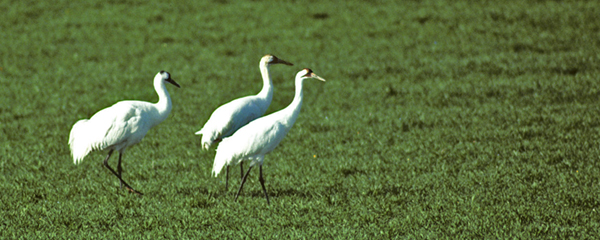
Whooping cranes are North America’s tallest bird, some reaching 5-feet when standing erect

PRATT – The first migrating whooping crane was spotted on Oct. 24 at Quivira National Wildlife Refuge, near Stafford in central Kansas. A rare and fantastic sight, this whooping crane is part of the only sustaining wild population estimated at 250 birds. Whooping cranes from this population will fly through the state in upcoming weeks, making their way to wintering grounds at Aransas National Wildlife Refuge on the Texas Gulf Coast.

Past records indicate that most whooping cranes will pass through Kansas between Oct. 17 and Nov. 10, usually travelling in small family groups. However, on November 9 2012, 18 whoopers were spotted together at Quivira as they migrated south from their Canadian nesting grounds at Wood Buffalo National Park in the Northwest Territories.

As part of a cooperative monitoring program supervised by the U.S. Fish and Wildlife Service, the Kansas Department of Wildlife, Parks and Tourism (KDWPT) encourages anyone who has spotted a whooper to contact their local natural resource officer or KDWPT office. Sighting information can be used to alert managers of key areas along the flyway — such as Quivira and Cheyenne Bottoms Wildlife Area in central Kansas — and to provide sighting records for the Whooping Crane Recovery Plan and for whooping crane research in the U.S. and Canada.

For more information, visit the U.S. Fish and Wildlife Service website at www.fws.gov/midwest/whoopingcrane.

Friday, October 25, 2013

MIGRATING WATERFOWL BRING FLOCKS OF HUNTING OPPORTUNITIES

Daily bag limits increased for dark and light geese for 2013 seasons

PRATT – “More is better” isn’t always true in a lot of instances, but for waterfowl hunters this season, “more” is a beautiful thing. New regulations now allow hunters to harvest greater quantities of waterfowl than ever before, increasing Canada geese bag limits from three to six birds, and light geese bag limits from 20 to 50 birds. Possession limits on all migratory birds was increased from two times the daily bag limit to three times the daily bag limit. The daily bag limit for ducks remained at six, but the number of scaup that may be included in the daily limit was reduced from three to two.

Oct. 26, 2013 is a big day for waterfowl hunters, marking the opening day of goose season, the first day of the Low Plains Late Zone season for ducks, and the first day of youth season in the Low Plains Southeast Zone. White-fronted geese may be hunted Oct. 26-Dec. 29, 2013 and Feb. 1-Feb. 9, 2014. The daily bag limit for white-fronted geese is two birds, and possession limit is six. Canada geese and light geese may be hunted Oct. 26-Nov. 3, 2013 AND Nov. 6-Feb. 9, 2014.The daily bag limit on Canada geese is six, possession limit is 18. The daily bag limit on light geese is 50, and there is no possession limit. The Low Plains Late Zone for ducks will run Oct. 26-Dec. 29, AND Jan. 18-Jan. 26, 2014. Following the Low Plains Late Zone, waterfowl hunters in the Low Plains Southeast Zone may hunt Nov. 2-3, 2013 AND Nov. 16, 2013-Jan. 26, 2014. Youth season the Low Plains Southeast Zone will run Oct. 26-27, 2013.

The daily bag limit for ducks is six, which may include no more than five mallards, of which only two may be hens; two redheads; three wood ducks; three scaup; two pintails; and two canvasbacks.

Following regular goose seasons, hunters may hunt light geese during a special conservation period Feb 10-April 30, 2014. During the Light Goose Conservation Order there is no bag or possession limit. In addition, hunters will be allowed to use unplugged shotguns and electronic calls and take light geese from one-half hour before sunrise to one-half hour after sunset during the period of the conservation order.

Although not as widely sought-after as geese and ducks, sandhill cranes may be hunted from Nov. 6 2013-Jan 2, 2014 with a valid federal permit. All sandhill crane hunters must take an online crane identification test each year before obtaining a permit. The test can be found by visiting ksoutdoors.com and clicking “Hunting / Migratory Birds / Sandhill Crane.” The daily bag limit on sandhill cranes is three birds, with a possession limit of nine. Quivira and Kirwin National Wildlife Refuge are closed to crane hunting.

For more information on migratory bird regulations, visit ksoutdoors.com.

Monday, September 9, 2013

COMMERCIAL PHEASANT PRODUCER TO SPEAK AT KSU

Bill MacFarlane aided in the creation of the Wildlife Management Degree program at KSU
PRATT ­– Bill MacFarlane, Owner and President of MacFarlane Pheasants, Inc., will share his knowledge of commercial pheasant production at Kansas State University, Sept. 12, 2013. The lecture will be held in room 1018 of the Throckmorton Plant Sciences Center at 6:30 p.m., preceded by refreshments at 6:00 p.m. There is no cost to attend, and the lecture is open to the public.
Shipping birds throughout the U.S. and Canada, MacFarlane Pheasants, Inc. is currently the largest pheasant farm in North America. Some of his clients even include Kansas’ very own Flint Oak Hunting Resort. Topics covered in MacFarlane’s presentation will include running a commercial pheasant farm, breeding and hatching processes, and the raising of pheasants.
“It’s quite an operation,” said MacFarlane. “I think this is a great way for students and the public to learn what it looks like to be in commercial pheasant production.”
Apart from his extensive hands-on experience with gamebirds, MacFarlane has also been an active member of the North American Gamebird Association for several years, where he has served as president for three separate terms.
MacFarlane’s plans for this year include the production of 1.6 million pheasant chicks and 200,000 partridge chicks, the selling of 425,000 adult pheasants, 100,000 chukar and redleg partridges, and 50,000 Hungarian partridges. MacFarlane also has plans to process 150,000 pheasants for food production in 2013. For more on MacFarlane Pheasants, Inc., visit www.pheasant.com.
For more on this event, contact Dr. Peg Althoff at (785) 532-1949.

Saturday, August 10, 2013

DUCK BREEDING POPULATION ESTIMATES SHOW PROMISING NUMBERS

While just below last year’s record numbers, 2013 duck populations are still well above long-term averages

PRATT­– Duck populations are strong, according to the U.S. Fish and Wildlife Service (USFWS) 2013 Report on Trends in Duck Breeding Populations. The preliminary estimate of total duck populations from the traditional survey area (northcentral United States, southcentral and northern Canada, and Alaska) is 45.6 million birds­– a six percent decrease from last year’s estimate of 48.6 million birds, but a 33 percent increase from the long-term average. In addition to estimating duck populations, the survey also examines habitat conditions.
Habitat conditions during the 2013 survey were generally improved or similar to last year due to above-average precipitation, despite a delayed spring throughout most of the traditional survey area. Most of the Canadian portions of the traditional survey area were rated as good to excellent, in contrast to 2012 when drier conditions existed across northern Alberta and Saskatchewan. Although the U.S. prairies received record snowfall in April, habitat conditions were still rated only fair to poor, similar to last year. The total pond estimate (prairie Canada and the north-central United States combined) is 6.9 million, 24 percent higher than the 2012 estimate of 5.5 million ponds and 35 percent above the long-term average.
In the eastern survey area – eastern Ontario, Quebec, the Maritime Provinces and Maine – estimated mallard abundance is 500,000 birds. Habitat conditions across most of the eastern survey area generally were good with the exception of Maine and the southern Maritimes, which were rated only as fair.
The report also notes:
  • Estimated mallard abundance is 10.4 million birds, similar to the 2012 estimate of 10.6 million birds and 36 percent above the long-term average.
  • Blue-winged teal estimated abundance is 7.7 million. Although this is 16 percent below the 2012 estimate of 9.2 million, the blue-wing population is 60 percent above the long-term average. Similarly, the green-winged teal estimate of 3.1 million is 12 percent below last year, but still 51 percent above the long-term average.
  • The northern pintail estimate of 3.3 million is similar to the 2012 estimate of 3.5 million and 17 percent below the long-term average.
  • Estimated abundance of American wigeon is 2.6 million and 23 percent above the 2012 estimate and similar to the long-term average.
  • The combined lesser and greater scaup estimate of 4.2 million decreased 20 percent from last year and is 17 percent below the long-term average of 5 million.
  • The canvasback estimate of 787,000 is similar to the 2012 estimate and 37 percent above the long-term average.
The surveys are conducted by the USFWS and Canadian Wildlife Services’ Waterfowl Breeding Population and Habitat Survey, sampling more than 2 million square miles of waterfowl habitat across Alaska, the northcentral and northeastern United States and southcentral, eastern and northern Canada.
The information guides the USFWS waterfowl conservation programs under authority of the 1918 Migratory Bird Treaty Act. The USFWS then works in partnership with state biologists from the four flyways – the Atlantic, Mississippi, Central and Pacific – to establish regulatory frameworks for waterfowl hunting season lengths, dates and bag limits. 2013 Kansas duck hunting season dates and bag limits will be approved at the Aug. 1 commission meeting in Yates Center.
For more information about the U.S. Fish and Wildlife Service 2013 Report on Trends in Duck Breeding Populations, visitwww.fws.gov/migratorybirds.
For more information on Kansas waterfowl hunting, visit ksoutdoors.com and click “Hunting/Migratory Birds/Ducks.”

Monday, July 23, 2012

DUCK POPULATIONS AT RECORD HIGHS

English: Lesser scaup pair from USFWS Source: ...
Lesser scaup pair
Trend continues for continent’s breeding ducks

WASHINGTON, DC — Although breeding habitat conditions have declined from previous years, the U.S. Fish and Wildlife Service’s (USFWS) 2012 "Trends in Duck Breeding Populations" report estimates breeding waterfowl numbers in North America's duck factory is at a record high. This year's estimate of 48.6 million breeding ducks is significantly higher than the 45.6 million birds estimated last year and 43 percent above the long-term average.

This annual report summarizes information about the status of duck populations and wetland habitats collected by wildlife biologists from the USFWS and the Canadian Wildlife Service for the “Waterfowl Breeding Population and Habitat Survey.” The survey samples more than 2 million square miles of waterfowl habitat across the United States and Canada.

Highlights from the survey in the northcentral United States, southcentral and northern Canada, and Alaska include the following population abundance estimates:

  • mallard -- 10.6 million, a 15 percent increase over 2011 and a 39 percent increase over the long-term average of 7.6 million;
  • gadwall -- 10 percent above the 2011 estimate and 96 percent above the long-term average;
  • American wigeon -- 3 percent above 2011, but remains 17 percent below the long-term average;
  • green-winged and blue-winged teal -- 3.5 million and 9.2 million, respectively, 20 percent and 3 percent above 2011 numbers. Both species continue to remain well above long-term averages by 74 percent and 94 percent, respectively;
  • northern shovelers -- 5.0 million, 8 percent above 2011 and 111 percent above the long-term average;
  • northern pintail -- 3.5 million, 22 percent below the 2011 estimate and 14 percent below the long-term average;
  • redhead -- unchanged from last year but 89 percent above the long-term average;
  • canvasback -- 0.8 million, 10 percent above last year's estimate and 33 percent above the long-term average; and
  • lesser and greater scaup -- 5.2 million, 21 percent above the 2011 estimate and 4 percent above the long-term average.

Habitat conditions observed across the survey areas during the 2012 Waterfowl Breeding Population and Habitat Survey were characterized by average to below-average moisture, especially in the southern portions, due primarily to a mild winter and an early spring.

The 2012 survey's estimate of ponds for the northcentral U.S. was 1.7 million, 49 percent below the 2011 estimate of 3.2 million and similar to the long-term average. Significant decreases in wetland numbers and conditions occurred in the U.S. Prairies during 2012. Nearly all of the northcentral U.S. habitat was rated as good to excellent in 2011; however, only the habitat in the coteau region of North and South Dakota was rated as good in 2012, and no areas were rated as excellent habitat this year. Severe wetland declines in western South Dakota and Montana resulted in mostly poor to fair habitat conditions.

The annual survey guides USFWS waterfowl conservation programs under authority of the 1918 Migratory Bird Treaty Act. The USFWS works in partnership with state biologists from the four flyways – the Atlantic, Mississippi, Central and Pacific – to establish regulatory frameworks for waterfowl hunting season lengths, dates, and bag limits, derived in part from the data gathered through this annual survey. Using these frameworks as guides, the Kansas Wildlife, Parks and Tourism Commission will establish the 2012-2013 waterfowl seasons and bag limits at its August 23 meeting. The meeting will be conducted at the Kansas Wetland Education Center, 592 NE K-156 Highway, Great Bend, with the afternoon session beginning at 1:30 p.m. Waterfowl seasons will be discussed at the Public Hearing portion of the meeting, which will begin at 7 p.m.

Saturday, September 17, 2011

MONARCHS PAINT SEPTEMBER SKY

Monarch butterflies matingImage via Wikipedia
Amazing migration covers thousands of miles; clusters often cover entire trees
PRATT — For those who love butterflies, September is the month to watch for masses of migrating monarchs in Kansas. The weather has cooled, and many people are seeing this regal butterfly in backyards, parks, and in the field. This familiar and popular insect species displays migratory behavior much like that of birds. Navigating on instinct, every monarch east of the Rocky Mountains flies toward a specific area of central Mexico to spend the winter.
Amazingly, several generations separate the southward-migrating monarchs from those that flew north the previous spring, so they do not have elders to guide them on this 1,000- to 3,000-mile journey. The monarchs that live north of Kansas begin moving south in late August. The trigger for their trek south is thought to be the declining angle of the sun as the days get shorter, and this "sun compass" also guides them as they travel.
As the migrating monarchs progress south, local monarchs join them, making the group larger. The observed peak for the Topeka-Kansas City area typically falls about the second or third week in September. The peak for the Wichita area may be a week or so later. On the right day in the right location, careful observers may see hundreds or even thousands of monarchs moving in a south-southwesterly direction on their journey to Mexico. During resting periods, tree branches may be so loaded with monarchs that branches bend and appear to be covered with orange and black leaves. Those lucky enough to have seen this display have witnessed one of nature's marvels.
Don't expect to see such gatherings in the same place every year. Monarch movement is strongly affected by prevailing weather patterns, so their migration routes vary annually. A good way to attract monarchs and help them refuel on their fall migration is to plant September-blooming plants around home. Asters, sunflowers, goldenrod, and sedum provide blossoms with nectar monarchs need.
The right habitat nearby may even attract overnight roosts of monarchs. They cease flying in the evening and look for sheltered sites in trees to cluster together for the night. These sites often have an easterly exposure, so the monarchs can warm up quickly in the morning sun and resume migration. Such overnight roosts are, in miniature, just like what may be seen at their over-wintering site in Mexico, where acres of trees are so blanketed with butterflies that the branches of trees bend low with their weight.
Monarchs head back north again in March, but they are seldom the same ones that went south the previous September. It is the first generation of their descendants, and they begin arriving around the second week of April. Nor are those that begin the migration the same butterflies that complete the spring migration. Spring migrating monarchs may only fly a few hundred miles, then lay eggs and die. These eggs hatch into caterpillars, pupate, complete metamorphosis into butterflies, and continue the migration. Thus, the spring migration is often a leapfrog of generations moving as far north as Canada. Some may end their northward migration in Kansas, as well, laying eggs and producing more monarchs throughout the summer in the Sunflower State.
Because the spring flight north is a dispersal with the purpose of laying eggs on newly emerging milkweed rather than the mass retreat from winter that occurs in the fall, large numbers of monarchs are not seen in spring.
For more information on monarch butterflies, including where to look for monarchs and their amazing migration, contact the Monarch Watch program at the University of Kansas online at www.monarchwatch.org.

Monday, June 20, 2011

OPERATION DRY WATER BRINGS FIELD SOBRIETY TESTS TO BOATERS

water ski skiing Eastern Cape South AfricaImage by moron noodle via Flickr
June 24-26 are awareness days; operations underway year-round
PRATT — Marine law enforcement officers from local, state, and federal boating agencies — including the Kansas Department of Wildlife and Parks (KDWP) — will be out in force June 24-26 for Operation Dry Water (ODW), an annual campaign focused on the detection and enforcement of boating under the influence (BUI). A secondary objective is to raise awareness among all boaters that it is unsafe as well as illegal to operate a boat under the influence of drugs and/or alcohol.

More than 17 percent of boating fatalities result from alcohol use, and KDWP has gotten tougher in recent years in enforcing laws against this high-risk behavior. Operating a recreational vessel with a blood alcohol concentration of .08 or higher is against Kansas state law. Boaters caught operating under the influence can find their voyage terminated and their vessel impounded. Additionally, penalties can include arrest, fines, and loss of boating privileges.

The effort is timed to give BUI enforcement high visibility before the Fourth of July, perhaps the busiest recreational boating weekend of summer. A new battery of testing standards will, for the first time, allow marine patrol officers to test boaters in a seated position and apply a percentage of probability that the subject is impaired at .08 blood alcohol concentration (BAC) or higher.

For more information on this annual event, go online tooperationdrywater.org.


Enhanced by Zemanta

Thursday, June 16, 2011

FLOODING FORCES CHANGE IN GLEN ELDER GEOCACHE COORDINATES

An example of container for geocaching game, C...Image via Wikipedia
Park manager snags, relocates floating geocache boxes

GLEN ELDER — Due to flooding at Glen Elder Reservoir, locations for Glen Elder State Park’s caches in the Kansas Department of Wildlife and Parks (KDWP) geocache contest have changed. The original sites are now under water, and may be for quite some time.

The park manager was able to retrieve floating geocache boxes and reset them, so geocachers can still participate in the contest. New coordinates for the first cache box are N 98° 30.065 W 98° 19.359. Geocachers with questions should phone the park office at 785-545-3345 or KDWP’s Pratt Operations Office at620-672-5911.

Now in its fourth year, the KDWP geocaching contest began May 27. From then until Nov. 1, the game is to find two hidden caches at each Kansas state park, as well as a few other locations. The coordinates of one cache at each site and the official statewide KDWP Geocaching Entry Form is posted on the KDWP website,www.kdwp.state.ks.us. (Click “Other Services/Outdoor Activities/Geocaching.”)

Participants use hand-held global positioning systems (GPS) to locate and open the first cache, where they will find the coordinates of the second. Upon finding the second cache, the participant signs a log sheet and takes a certificate. Participants who show the certificate to that park office will receive a park-specific location ink pen. Cachers must retain each certificate to turn in with the downloadable entry form for point verification toward prizes.

Enhanced by Zemanta