Showing posts with label United States Coast Guard. Show all posts

Thursday, August 28, 2014

BOATING SAFETY REMINDER FOR LABOR DAY WEEKEND

Safety key to successful holiday on busy lakes
PRATT – Labor Day weekend is the last big outdoor holiday at Kansas lakes, and the Kansas
Department of Wildlife, Parks and Tourism (KDWPT) reminds boaters that being safe on the water is key to an enjoyable weekend. Overall, boating is a very safe outdoor pursuit, but it only takes one small mistake or oversight for a fun day on the water to turn tragic.
Being safe on the water isn’t complicated. By following regulations and a few common-sense rules, boat operators can ensure that everyone in their party stays safe. The first rule is to have everyone onboard wear a life jacket. Accidents can happen quickly, anyplace or anytime on the water. Although every boat must have a life jacket on board for every person on the boat, Kansas law only requires those age 12 and younger to wear a life jacket at all times while on a boat. Those 13 and older are not required to wear a life jacket but must have one available that is easily accessible and fits properly. "Easily accessible" means the jackets must be within reach and in plain view. Life jackets stowed under seats or in storage compartments do not meet this requirement.
Life jackets, like seat belts in cars, must be worn to save lives. There are many excuses given for not wearing life jackets, but life jackets are no longer the orange, hot, bulky vests commonly thought of. New developments have produced smaller, sleeker, and more comfortable life jackets, leaving boaters with no reason not to wear them.
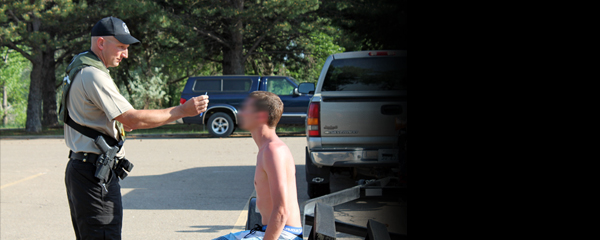
Another common sense safety rule on the water is to avoid alcohol or have a designated boat driver. Alcohol affects a person’s judgment and reflexes, and a high percentage of boating accidents are alcohol-related. And being outdoors on a warm sunny day exacerbates the effects of alcohol. KDWPT boating enforcement officers will be on the lookout for impaired boat operators. Operating a recreational vessel with a blood alcohol concentration of .08 or higher is against Kansas state law. Anyone caught operating a boat under the influence can have their vessel impounded and incur penalties including arrest, fines, and loss of boating privileges.
And finally, several recent incidents on Kansas lakes put boaters in danger unnecessarily. While it falls under “use common sense,” individuals were “lost” after being left to float on a large reservoir. Both had floatation devices and both survived, but it could have been worse. Never leave anyone floating in open water outside of designated swimming areas. Wave action can make a solitary swimmer almost impossible to see for other boaters and hard to find for anyone looking for them.
This Labor Day, have fun, stay safe and “Wear It Kansas.”

Monday, November 25, 2013

BOATING PREPAREDNESS IN COLD WEATHER A MUST

Boaters increase odds of survival during cold-weather incidents when armed with the right knowledge and tools
PRATT – A quick slip of the foot, a clothing snag on a limb, or even high winds can pose a big
risk for any boater, but add in freezing temperatures, and you may find yourself encountering a life or death situation. As colder temperatures make their way through the state, boaters are encouraged to arm themselves and their passengers with the tools and knowledge necessary to increase the odds of survival, should a boating incident occur.
As a rule of thumb, if the sum of the air and water temperatures added together equals less than 100 degrees and you fall into the water, you could be at risk for hypothermia. Hypothermia occurs when your body loses heat faster than it can produce it. Cold water can rob the body of heat 25 times faster than cold air, so time is of the upmost importance should a boater fall in the water. If a boater’s core body temperature drops below normal (98.6 degrees F), the risk of becoming hypothermic increases dramatically.
If you fall overboard, remember the “1-10-1” rule. After the initial shock of falling in wears off, you will experience about one minute of deep and uncontrolled breathing before your blood circulation is altered. Staying calm will be easier if you're wearing a life jacket because it will keep your head above the water line and help you avoid breathing in mouthfuls of water.
The ten minutes after falling into cold water are crucial to survival. During this time, blood flow will start moving away from hands and feet in order to keep the body’s core warm. The body instinctively attempts to keep vital organs warm and functioning in an effort to avoid organ failure and death. This change in blood circulation affects nerves and muscles farther away from the body’s core, limiting their ability to function. A self-rescue attempt must be made at this time. If possible, immediately get out of the water. Even if your boat is capsized and upside down, crawling onto the part of the boat that is still above water will increase your odds of survival. If you are not wearing a life jacket and can’t get out of the water, you will eventually lose the ability to tread water or swim due to the lack of response from your arms and legs. Using the Heat Escape Lessening Position (HELP) will keep your core warmer longer, and wearing a life jacket makes the HELP position just that much easier. In the HELP position, you just pull your legs up to your chest and hug your knees, keeping your body compact and surrounding your chest with protection. If other boaters are in the water with you, huddle together for warmth.
The last part of the “1-10-1” rule refers to a person’s level of consciousness after being in cold water for one hour. Most people will lose consciousness within one hour, but if you are wearing a life jacket, your face will remain above water, allowing you to breathe even if you become unconscious.
The Kansas Department of Wildlife, Parks and Tourism recommends as it does with any outdoor outing to always let someone know where you will be and what time they should expect you to be back. Always dress appropriately by wearing layers that can be removed if the weather warms, and avoid cotton clothing. Cotton will keep water trapped close to your body instead of wicking it away, ultimately taking it longer to dry. If you should find yourself soaking wet, never remove your clothing and shoes unless you have a dry set to change into. Although cold and wet, this clothing will provide your body with more insulation, keeping you warmer than you would normally be without clothing.
There are no guarantees when out in the water, but by wearing a life jacket, remembering the “1-10-1” rule, and always letting someone know where you are prior to leaving, you could potentially save not only your own life, but the life of another.

Monday, July 1, 2013

OPERATION DRY WATER ADDRESSES BOATERS UNDER THE INFLUENCE

Concentrated efforts to curb drinking and boating are slated for June 28-30

TOPEKA  Kansas Department of Wildlife, Parks, and Tourism (KDWPT) law enforcement officers will be on the lookout for boaters under the influence during Operation Dry Water June 28-30. Operation Dry Water is part of a national effort to reduce accidents and fatalities related to boating under the influence (BUI) of drugs and alcohol, and educate recreational boaters about the dangers of BUI.
KDWPT officers are responsible for patrolling Kansas waters and conducting boat accident investigations, boat safety inspections, BUI checks, safety programs, educational classes and other boating related activities. During Operation Dry Water, officers will be out in force looking for boaters whose blood alcohol content exceeds the state limit of 0.08. The weekend will include increased patrols, breathalyzer tests, life jacket checks, and boater education. Impaired
boaters can expect to be arrested or face other serious penalties. In Kansas, the consequences for BUI include fines, jail, and loss of boating privileges. During the 2012 Operation Dry Water, eight arrests were made for BUI offenses.

"We are dedicated to keeping boaters safe on our waters. Boating is a safe and enjoyable pastime when people stay alert and follow the rules,” said Kansas boating law administrator Major Dan Hesket. "Many factors contribute to the way alcohol affects a person on the water, such as the sun, wind, glare, dehydration and wave motion, causing a person to become intoxicated three times faster than on shore.”

BUI is a major problem across the nation. According to U.S. Coast Guard Recreational Boating Statistics 2012, alcohol is the primary contributing factor in recreational boating fatalities. Intoxicated boaters run a significantly increased risk of being involved in a fatal boating accident. During calendar year 2012, Kansas recorded 27 boat accidents, of which two resulted in a fatality, 12 resulted in injuries, and 13 involved only property damage. Property damages were estimated at $112,321.

Operation Dry Water 2013 is a joint program of KDWPT, the National Association of State Boating Law Administrators, and the U.S. Coast Guard.
For more information, visit www.operationdrywater.org, or ksoutdoors.com and click “Boating.”

Sunday, August 26, 2012

COAST GUARD ISSUES LOW WATER RIVER ADVISORY


Submerged structure, commercial vessels pose greater threat in low water
ST. LOUIS — Many waterways throughout the Midwest are experiencing lower than average water levels this year. This poses particular hazards to recreational boaters. Areas that were navigable in past months or years may be too shallow to operate in now. River structures such as dikes may be closer to the surface, posing potential grounding threats, and channel widths may be smaller than expected. This can affect all waters in the Mississippi drainage, including the Missouri and Kansas rivers in the Sunflower State.
As a result, the U.S. Coast Guard has issued a boating advisory for all waters in the drainage. Boaters should follow simple precautions while using these waters:
  • always have approved life jackets for everyone onboard;
  • operate in areas you are familiar with, at safe speeds;
  • do not operate near fleeting areas, commercial vessels, or barges — larger vessels and structures can create strong eddies, undertows, and wakes;
  • do not operate near underwater river structures, such as dikes;
  • have light and sound signaling devices onboard;
  • tell someone where you are going, when you will be there, and how to contact you to verify your safety; and
  • for boating safety tips and classes, contact your local Coast Guard Auxiliary for support or visit the Kansas Department of Wildlife, Parks and Tourism Boating Education website,ksoutdoors.com/news/Boating/Boating-Education.

Wednesday, May 30, 2012

LIFE JACKETS KEY TO CHILD SAFETY ON WATER

English: Standard universal life jacket Україн...
(Photo credit: Wikipedia)
National Safe Boating Week raises awareness of water safety issues prior to Memorial Day Weekend
TOPEKA — Whether part of a vacation or an ordinary summer day, boating can be fun for the entire family — as long as everyone remains safe. The U.S. Coast Guard reports that an estimated 85 percent of boating-related drownings could be prevented by the use of life jackets. Nationally, of the children who drowned while boating in 2003, more than 60 percent were not wearing life jackets, also known as personal flotation devices, or PFDs.
“On a boat, everyone should wear a life jacket at all times,” says Cherie Sage, state director of Safe Kids Kansas. “Look for a life jacket approved by the U.S. Coast Guard. Water wings and other inflatable swimming aids such as inner tubes do not prevent drowning.”
Safe Kids Kansas recommends that children ages 14 and younger wear PFDs not only on boats but near open bodies of water or when participating in water sports. Kansas law requires that all boats have one U.S. Coast Guard-approved, readily-accessible PFD for each person on board. (For details, look on the Kansas Department of Wildlife, Parks and Tourism [KDWPT] website, ksoutdoors.com, under “Boating.”) Anyone 12 years old or younger must wear a life jacket at all times when on board a boat.
Safe Kids Kansas urges parents and caregivers to wear life jackets on boats or other watercraft as well. According to a 2005 study by Safe Kids Worldwide, children are much more likely to practice safe habits when they witness similar behavior by parents and caregivers. “Your children will pick up and embrace your safety habits,” says Sage.
Safe Kids Kansas also reminds parents and caregivers to follow these safety rules:
  • always wear life jackets when in or around open bodies of water and on boats. Make sure the life jacket fits snugly. Have the child make a “touchdown” signal — if the life jacket hits the child’s chin or ears, it may be too big or the straps too loose;
  • enroll your kids in swimming lessons taught by a certified instructor, but don’t assume swimming lessons or life jackets make your child “drown proof”;
  • remember that any person ages 12 through 20 must have completed an approved boater education course before operating a vessel without direct supervision of an adult 18 or older who has completed the course or an adult who is 21 or older. No one younger than 12 may operate a vessel without supervision regardless of boater education certification;
  • avoid alcoholic beverages while boating;
  • when there are several adults present and children are swimming, designate an adult as the “water watcher” for a specific amount of time to prevent lapses in supervision;
  • install a carbon monoxide detector on inboard and cabin motorboats to alert you to dangerous levels of exhaust fumes; and
  • learn infant and child CPR. Many local hospitals, fire departments, Red Cross offices, and recreation departments offer CPR training.
National Safe Boating Week is an annual educational campaign coordinated by the National Safe Boating Council, www.safeboatingcouncil.org, running the week prior to Memorial Day. For more information about drowning and boating-related injuries, call Safe Kids Kansas at 785-296-0351 or visit www.safekids.org. For more information about safe boat operations, contact the Coast Guard Info line at (800) 368-5647 or visit www.uscgboating.org.
And don’t forget boating safety classes. Class schedules and a home study course may be found online at the KDWPT website, ksoutdoors.com, under “Boating/Education.”

Friday, October 28, 2011

COLD-WATER BOATING REQUIRES ADDED PRECAUTIONS

Life Jacket (PSF)Image via Wikipedia
Anglers and hunters can protect themselves against hypothermia
PRATT — While pleasure boaters have winterized and stored their watercraft, avid waterfowl hunters and cold-weather anglers are gearing up for fall hunting and fishing seasons. But fall can be a dangerous time on the water. Most single-boat accidents take place this time of year, and with water temperatures cooling, these accidents can be deadly.
One common mistake is overloading a small boat with people and equipment. Overloaded boats are unstable and can easily capsize or cause passengers to fall overboard into frigid water. Sudden immersion into cold water delivers a brutal shock to the body, triggering a spontaneous inhalation reflex — deadly if one’s head is under water. But wearing a life jacket can be enough to keep your head above water during an involuntary gasp, keeping lungs from filling with water.
In addition, the body loses heat 25 times faster in water than in air of the same temperature. Hypothermia begins with shivering and a loss of feeling in the extremities. Within minutes of being immersed in cold water, a person can become confused and lose muscle control. By keeping capsized boaters afloat, life jackets also enable them to conserve energy and get out of the water or be rescued.
The following simple steps can make a cold water boating expedition much safer:
  • always wear a life jacket — new styles and camouflage patterns, including float coats, make wearing a life jacket much more comfortable;
  • dress properly for the cold — layered clothing can provide insulation and trap air to hold warmth;
  • avoid cotton clothing — wool and many synthetic materials are good choices, but cotton wicks cold water in toward the body;
  • never boat alone; and
  • let family members or friends know where you’re going and when you plan to return.
Boating can be an excellent way to hunt or fish in cold weather, but be safe. Planning ahead for the possibility of a cold water accident can save a life.

Thursday, June 30, 2011

COAST GUARD CLOSES PORTION OF MISSOURI RIVER

Closure intended for safety of anglers and boaters
TOPEKA – The U.S. Coast Guard has closed the Missouri River to all vessel traffic, including vessels used for fishing and recreation, from mile marker 386 located downstream of Leavenworth, northward to mile marker 811, near Gavins’ Point Dam in Yankton, S. D. Mile marker 386 is about one-half river-mile downstream of the ADM/Growmark grain elevator facility located on the Kansas side of the river. The closure includes the entire length of the Kansas portion of the Missouri River northward from mile marker 386.
The closure is a result of consultations with the U.S. Army Corps of Engineers and the governors of Kansas, Iowa, Nebraska and Missouri.
“For their own safety and the safety of emergency personnel who could be called to their rescue, it is vital that people avoid the dangerous flooding conditions on the Missouri River,” said Robin Jennison, Secretary of the Kansas Department of Wildlife, Parks and Tourism (KDWPT).”
According to Captain Rob Ladner, a law enforcement supervisor with KDWPT, the swift floodwaters create unpredictable currents and carry large, hazardous debris. “The high water level hides submerged obstacles, making any kind of boating unsafe,” he added.
Information about flooding along the Missouri River is available from the Kansas Adjutant General’s Department, www.kansastag.gov; and the U.S. Coast Guard at www.FloodResponse2011.com. The Coast Guard also urges boaters to monitor VHF-FM channels 16 and 22 for any changes to the closure.

Enhanced by Zemanta