Showing posts with label Conservation Reserve Program. Show all posts

Wednesday, June 8, 2016

New Habitat First Program Offers Wildlife Habitat Assistance

Habitat First is a new program developed by the Kansas Department of Wildlife, Parks and Tourism’s (KDWPT) Wildlife Division for private landowners interested in developing or enhancing wildlife habitat on their land. Under the program, district wildlife biologists will deliver the following services to interested landowners:
            -Technical assistance: planning, land management support, and habitat development tools
            -Financial assistance: cost-share and sign-on incentives for habitat improvements
            -Equipment loans: native grass drills, tree planters, fabric machines, prescribed burn equipment, and root plows
            -USDA programs: assistance with Environmental Quality Incentive Program applications benefiting wildlife, Conservation Reserve Program enrollment, and management
Standardized practices and rates make the program easy to explain and understand. Habitat management plans can be tailored to the property and to landowner preferences.
Visit ksoutdoors.com/Private-Lands, call 620-672-5911 or contact the nearest KDWPT office to learn more.

Saturday, August 29, 2015

KDWPT Receives $2.7 Million Grant For Public Access on Private Lands

PRATT – On August 17, 2015, Agriculture Secretary Tom Vilsack announced that the U.S. Department of Agriculture (USDA) awarded $20 million in grants to 15 states to improve and increase wildlife habitat and public access for recreational opportunities on privately-owned and operated farm, ranch and forest lands. The Kansas Department of Wildlife, Parks and Tourism (KDWPT) received a $2.7 million grant, the largest amount awarded to the 15 states. The grant is funded under the Voluntary Public Access and Habitat Incentives Program (VPA-HIP), which is administered by the USDA’s Natural Resource Conservation Service (NRCS).  

According to Jake George, KDWPT Private Land Programs Coordinator, the funds will be used over a three-year period to lease private land for hunting and fishing access and to help landowners improve habitat on those properties. Program promotion and outreach will occur this fall, with initial enrollment beginning late-spring to early-summer of 2016.
“We were very pleased to once again be awarded VPA-HIP grant funding,” George said. “Currently, KDWPT’s Walk-in Hunting Access and FISH programs have more than 1 million acres of enrolled properties and agreements with nearly 2,300 Kansas landowners, providing numerous public hunting and fishing opportunities across the state. This additional funding will allow for further expansion and improvement of the already successful access and habitat management programs offered to Kansas landowners through KDWPT.”

With respect to hunting, the focus for the funds will be on enrolling new or recently enrolled Conservation Reserve Program (CRP) properties. Participating landowners must be willing to allow public hunting access on the property for the duration of the CRP contract and enroll in wildlife-friendly conservation practices. Landowners are encouraged to enroll or re-enroll their properties in CRP between the continuous signup and the general CRP signup, which begins Dec. 1, 2015. KDWPT expects to add an estimated 40,000 to 60,000 new acres of quality access properties over the next three years.
KDWPT will also use the funds to improve fishing and paddle sports access, enrolling prime stream reaches, as well as quality privately-owned impoundments. Public access to these streams would provide a multitude of angling opportunities and open up recreational paddle sports access, which is limited in the state because most of the 10,000 miles of streams and rivers in Kansas are privately owned.

“This project with the Kansas Department of Wildlife, Parks, and Tourism shows how good partnerships and land management will lead to sustainable recreational and economic opportunities for years to come. Connecting outdoor recreation to private lands conservation is good for wildlife, people, and rural economies,” said Eric B. Banks, state conservationist for the Natural Resources Conservation Service.

For more information on VPA-HIP and other FSA programs, visit www.fsa.usda.gov/vpa.

Friday, March 7, 2014

KANSAS RECOGNIZED FOR USE OF NATIVE GRASSES IN CRP

Group Achievement Award presented to Kansas federal agriculture agencies

WICHITA – The National Bobwhite Technical Committee (NBTC) recently bestowed their Group Achievement Award to the Natural Resources Conservation Service (NRCS) and Farm Service Agency (FSA) in Kansas. The award reflects achievements of groups of individuals or organizations that have had a measureable positive impact on wild bobwhite quail populations. The NBTC consists of the nation’s top bobwhite biologists, researchers, resource managers and conservation groups who are dedicated to restoring native bobwhite quail populations. 
With this award, the NBTC is praising the Kansas offices of NRCS and FSA for their unique implemenation of the Conservation Reserve Program (CRP), which became part of the Farm Bill in 1985. CRP pays private landowners to take highly-erodible farmland out of production and plant it to grass. In the program’s early stages, Kansas policy makers were faced with critical decisions about the types of grasses that would be required in a state with such a wide diversity of soil types. Those policy makers determined the most beneficial cover for CRP would be mixes of warm-season, native grasses, the same grasses found in our native prairies. Looking back, it appears to have been one of those moments in time where all the stars aligned and policy was developed that would have major implications for the future of wildlife and other natural resources in Kansas.
The decision was not met with unanimous support. Other states wanted consistency across state lines and were pushing the use of Old World bluestems, which were cheap and relativity easy to establish. Native grasses were more expensive and practical experience in establishing those grasses was lacking. Many assumed the CRP program would not be around long enough to warrant the cost of expensive grass mixes only to see the land broken out again in the future. But staff in Kansas NRCS offices reasoned that establishing a mix of native grasses would provide the producer greater options for future use once the contracts expired. Kansas Department of Wildlife, Parks and Tourism staff knew the value of native grasses to wildlife and the department’s field biologists had been working with private landowners to establish native grasses through wildlife habitat enhancement programs. A seed company in western Kansas was already selling native plant materials and had experience developing mixes for various parts of the state.
With agreement among technical staff across agency lines in Kansas and private industry ready to meet the needs of producers, administrators within NRCS and FSA strongly backed the decision to use natives, ensuring long-term benefits for many Kansas wildlife species.
During the late 1990s, KDWPT began documenting the presence of the lesser prairie chicken in portions of their historic range where they had not been seen for more than 60 years. This significant re-occupation was due to nesting cover provided by native grasses in CRP. FSA and its partners in Kansas had been targeting CRP enrollment within the historic range of the lesser prairie chicken since 1996 by establishing Conservation Priority Areas. Since that time, increases in pheasant and quail populations have also been observed in those same areas. That portion of western Kansas is one of the only places in North America where quail populations have trended upward over the last couple of decades.
In making this award to NRCS and FSA, the NBTC also wanted to recognize individuals who were instrumental in making the “first native first” policy a reality nearly 30 years ago. Those individuals include James Habiger, former NRCS state conservationist, Jess Crockford, former NRCS state range conservationist, Bob Higgins and Rich Hager, former NRCS biologists, Al Schmatter, former FSA Conservation Program Manager, Bob Wood and Charles Lee, former KDWPT agriculture liaisons and Sharp Brothers Seed Company of Healy Kansas.

Saturday, June 15, 2013

NEW LEASE RATES AVAILABLE FOR WALK-IN HUNTING ACCESS LAND

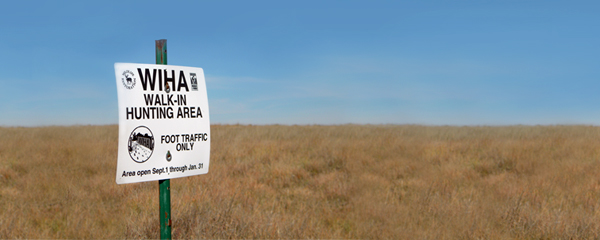
Since its inception in 1995, the Walk-In Hunting Access (WIHA) program has been making private land available for public hunting through lease agreements between the Kansas Department of Wildlife, Parks and Tourism (KDWPT) and
Whether a landowner possesses 80 or 1,000 acres,
WIHA can be an integral part of a land’s profitability
Kansas landowners. This has provided hunters with access to more than 1 million acres of land not normally available while still leaving the land in private ownership.

New this fall, landowners who own or lease 80 or more contiguous acres of land can take advantage of higher rate payments and additional acreage ranges. Payment rates are often negotiable and based on the number of acres possessed, the quality of habitat, and length of the lease access period.

Land used for the WIHA program is typically Conservation Reserve Program (CRP) acres, but land with similar qualities and hunting opportunities, such as native rangeland, weedy wheat stubble, milo stubble, riparian areas, and wetland areas are also considered for enrollment.

Applications are accepted year-round, however landowners wishing to participate in the fall 2013 season dates will need to enroll by July 15.

For more information, including a list of current rates, contact your nearest KDWPT office or visit ksoutdoors.com.

Tuesday, July 24, 2012

KDWPT ACCEPTING APPLICATIONS FOR PRIVATE LAND GRANTS

Zea mays (field) + Vitis vinifera subsp. vinif...
(Photo credit: HermannFalkner/sokol)
Program provides technical assistance and financial incentives to enhance wildlife habitat on private land; Oct. 1 application deadline
 
PRATT — The Kansas Department of Wildlife, Parks and Tourism (KDWPT) is now accepting applications for State Wildlife Grants (SWG), which are awarded to qualified private landowners to enhance wildlife habitat on their land. Since its inception, the SWG Private Landowner Program has funded more than $1.4 million to complete 60 private land habitat projects. Projects include removing invasive woody plants from native mixed-grass prairie, constructing alternate watering facilities to help with native short-grass prairie management, conversion of cool season grass to native grass and forbs, and construction of perimeter fencing on expiring CRP fields to help maintain those fields in native grass. These projects will improve more than 20,346 acres of habitat that will benefit wildlife considered Species of Greatest Conservation Need (SGCG) in Kansas.

In the past, KDWPT received $586,000 of SWG funds from the U.S. Fish and Wildlife Service to aid in the protection and management of priority habitats for SGCG in Kansas. In June 2012, the department received an additional $205,000 in SWG funds to further continue this private landowner habitat conservation work.
To be eligible, applications must address issues and strategies identified in the Kansas Comprehensive Wildlife Conservation Plan. Applications will be scored based on established criteria to ensure all applicants are considered fairly and that the highest-ranking projects are selected. Proposals with potential to score highest will specifically address restoration and enhancement activities that will contribute to 1) development or maintenance of large grassland blocks capable of supporting area-sensitive wildlife species; 2) restoration or maintenance of areas supporting high densities of playa lakes surrounded by grasslands; and 3) restoration or enhancement of streams and associated riparian buffers.

Applications are being accepted immediately with a deadline of Oct. 1. Those landowners receiving funding will be required to match a minimum of 25 percent of total project costs. This match can either be a cash contribution from a non-federal source or contributions of labor, materials, or equipment use. Applications will be accepted until available funds have been committed.

Interested landowners should contact any KDWPT regional office or a private lands biologist for application materials or to schedule a consultation concerning a proposed project. Questions regarding program administration can be addressed to Roger Wolfe, KDWPT Region 2 Office, 300 SW Wanamaker Road, Topeka, Kansas 66606; phone 785-271-7388. Persons with special communication needs may use the Kansas Relay Center, 1-800-766-3777.

Friday, July 13, 2012

PHEASANTS FOREVER RECEIVES 640-ACRE LAND CONTRIBUTION

Fruits of the hunt!
Fruits of the hunt! (Photo credit: Wikipedia)
Retired Air Force Colonel Rob Peterson honors father’s memory with donation
CIMARRON — Rob Peterson, 53, of Colorado Springs, has donated his 640-acre property near Cimarron to Pheasants Forever and Quail Forever as part of the organization’s Grassroots Conservation Campaign. The donation provides a place for future hunters and conservationists to enjoy forever. Peterson, a long-time Pheasants Forever member and Pikes Peak Colorado Pheasants Forever chapter co-chair, noted that his father’s passion for the outdoors and the time they spent hunting and fishing are the main reasons to make Pheasants Forever the recipient of his gift.
A retired U.S. Air Force Colonel, Peterson grew up in Minnesota where he hunted and fished with his father, Robert Peterson, Sr. “We spent a lot of time in the outdoors,” Peterson said. “The success of the hunt was not always a big deal to us. It was the experience of spending time together that we valued most.”
Those outdoor experiences are what shaped his dream of honoring his father’s memory. In 2010, during one of the last conversations Peterson had with his father, he told his dad of his plan to dedicate a piece of land in his memory, so his outdoor legacy could live forever. Shortly after this conversation, his father lost his battle with cancer.
The property is currently being converted to productive wildlife habitat. “Habitat is my vision because I realize if we don’t have the habitat, the upland hunting is going to dry up,” Peterson said. “If we don’t have the habitat, we can’t ensure there will be an opportunity for young people to hunt 20, 30, 40 years from now.”
Peterson credited Pheasants Forever’s Farm Bill biologist program for providing expert guidance with grassland restoration through the federal Conservation Reserve Enhancement Program (CREP). Pheasants Forever development officer Jordan Martincich helped execute the gift through the organization’s Grassroots Conservation Campaign.
Peterson will continue managing and enjoying the property throughout his lifetime. Upon his passing, Pheasants Forever will oversee the property for wildlife habitat and public use. In addition to the land gift, Peterson has donated a significant portion of his estate to Pheasants Forever with the goal of furthering the outdoor traditions that both he and his father enjoyed.
For more information on Pheasants Forever’s Grassroots Conservation Campaign and how Pheasants Forever can help you leave your legacy, phone Martincich at 816-560-1070.

Tuesday, June 19, 2012

FIRST RANGE-WIDE LESSER PRAIRIE CHICKEN AERIAL SURVEY CONCLUDED


FIRST RANGE-WIDE LESSER PRAIRIE CHICKEN AERIAL SURVEY CONCLUDED
June 14, 2012
New breeding grounds discovered in Kansas
EMPORIA — Surveys have now been concluded for the first range-wide assessment of lesser prairie chicken populations using common methods across portions of five states. The Lesser Prairie Chicken Interstate Working Group is composed of biologists from the state fish and wildlife agencies of Colorado, Kansas, New Mexico, Oklahoma, and Texas. The Working Group collaborated with federal agencies and West Ecosystems, Inc., of Laramie, Wyo., to conduct the large-scale, helicopter-based survey to locate lesser prairie chicken leks across the High Plains in all five states.
Leks, which are also referred to as gobbling grounds, are sites that the birds come to every spring for breeding. These surveys encompassed more than 300,000 square miles, and survey results will be used to produce the first statistically valid, five-state estimate of the number of leks by sometime later this summer.
The lesser prairie chicken has been considered a candidate under the Endangered Species Act (ESA) since 1998, and the U.S. Fish and Wildlife Service will release a proposed rule on the status of the bird under the ESA in September. Information from these surveys will be used as a baseline by these five state fish and wildlife agencies to monitor trends in prairie chicken populations and to target conservation programs in partnership with private landowners, oil and gas industries, and wind-energy and electric utilities.
“These surveys will be the basis for a range-wide lesser prairie chicken management plan that is being developed by the five states in collaboration with the Western Association of Fish and Wildlife Agencies Grassland Initiative,” said Jim Pitman, small game coordinator for the Kansas Department of Wildlife, Parks and Tourism. “The plan is expected to be completed by next March, and we are hopeful that it will preclude the need for the Fish and Wildlife Service to designate the lesser prairie chicken as a federally threatened or endangered species.”
The surveys this spring detected several previously unknown leks, despite the severe drought that occurred across the region last year. They also detected leks in Kansas that are beyond what was thought to be the northern extent of the historic range of the species. Lesser prairie chicken numbers have been largely increasing in Kansas for the last 15 years while populations have declined in parts of the southern portion of the range. Biologists believe this northward expansion may represent a shift in the population of the species caused by improved habitat from native grasses planted through the federal Conservation Reserve Program.

Saturday, May 12, 2012

KDWPT SIGNING WALK-IN HUNTING CONTRACTS

KDWPT SIGNING WALK-IN HUNTING CONTRACTS
May 10, 2012

Signup deadline July 15 for landowners; new counties eligible for incentive payments

PRATT — Landowners interested in the Kansas Department of Wildlife, Parks and Tourism’s (KDWPT) Walk-In Hunting Access Program (WIHA) — which pays landowners to allow public hunting access on their land — are reminded that the deadline for enrollment is July 15. The WIHA program, which began in 1995, has grown to include more than 1 million acres and nearly 3,000 contracts with Kansas landowners.

Almost anyone who owns, leases, or manages 80 contiguous acres of land with suitable wildlife habitat can qualify. A little more than half the land enrolled in WIHA is federal Conservation Reserve Program (CRP) grass, but other lands are also considered, including native rangeland, weedy wheat stubble, milo stubble, and riparian and wetland areas.
After receiving applications, KDWPT biologists evaluate wildlife habitat on the applicants' land. Payment rates are based on the size and location of tracts and the number of months the landowner will open the land to hunting. A 50-percent additional incentive payment is offered for WIHA in the following urban counties: Butler, Coffey, Cowley, Douglas, Franklin, Harvey, Jackson, Jefferson, Johnson, Kingman, Leavenworth, Lyon, Miami, Osage, Ottawa, Reno, Saline, Sedgwick, Shawnee, Sumner, Wabaunsee, and Wyandotte.

Counties that have had historically low or are declining in program participation are also eligible for the 50-percent additional incentive payment. The following counties are eligible under this criteria: Allen, Anderson, Atchison, Barber, Barton, Bourbon, Brown, Chase, Chautauqua, Cherokee, Clay, Cloud, Crawford, Dickinson, Doniphan, Elk, Ellsworth, Geary, Greenwood, Harper, Jewell, Labette, Lincoln, Linn, Marion, Marshall, McPherson, Mitchell, Montgomery, Morris, Nemaha, Neosho, Pottawatomie, Pratt, Republic, Rice, Riley, Stafford, Washington, Wilson, and Woodson.
Once enrolled, the property is posted with signs indicating access dates, and a map of the tract will be included in a free atlas provided by KDWPT. Natural resource officers periodically patrol WIHA properties. In addition, state law provides protection to private individuals who lease their land to the state for recreational purposes from liability for damages or injuries resulting from ordinary negligence.

Lease options include open periods running Sept. 1-Jan. 31 and Nov. 1-Jan. 31, with the option to run through March 31 in areas where habitat and hunt opportunities are appropriate. A popular spin-off is the Spring Turkey WIHA Program, with lease dates from April 1- May 31. For more information, phone 620-672-5911.

Wednesday, February 1, 2012

TURKEY FEDERATION SUPPORTS KANSAS QUAIL INITIATIVE

line art drawing
Image via Wikipedia

Effort will concentrate on two” focal areas” in eastern Kansas
PRATT — The Kansas Department of Wildlife, Parks and Tourism (KDWPT) is introducing a new five-year initiative — the Kansas Quail Initiative — aimed at improving habitat conditions for bobwhite quail, an upland species that has declined throughout much of its range. The National Wild Turkey Federation (NWTF) Kansas State Chapter was the first conservation group to provide financial support for this important conservation effort, committing $12,500. The NWTF also will help deliver and promote the program by helping locate interested landowners and assisting with habitat improvements.
The NWTF has 33 chapters in Kansas with more 2,800 members. More than $885,715 has been raised and spent by Kansas chapters on projects within the state.
"It was a no-brainer for the Kansas State Chapter to step up and become the first conservation organization to support the Quail Initiative," said Todd Adolph, NWTF Kansas State Chapter president. "We have a positive working relationship with KDWPT, and I expect this initiative will be a big success."
The Kansas Quail Initiative aims to increase quail populations by 50 percent in five years within “focal areas.” A northern focal area includes portions of Lyon, Osage, and Wabaunsee counties, and a southern focal area includes parts of Neosho and Labette counties.
KDWPT biologists identified these regions as areas with high restoration potential, and they both contain sizable amounts of public land that can be used for core habitat improvements.
"The fact that the NWTF has committed to this initiative shows that we’re not just about turkeys, and that our volunteers understand the urgency to conserve habitat for quail" said Jared McJunkin, NWTF conservation field western region supervisor.
For private landowners in the focal areas, this initiative will increase available cost-share assistance to 100 percent of the estimated costs of implementing quail-friendly practices on their property. KDWPT is committed to spending as much as $100,000 per year on private land habitat improvements in the focal areas for each of the five years of this initiative.
KDWPT also will emphasize the voluntary public access and habitat improvement program in these focal areas to promote enrollment in continuous Conservation Reserve Program practices.
To become an NWTF member, or for more information about the NWTF, go online to www.nwtf.org or phone (800) THE-NWTF.

Wednesday, July 20, 2011

DUCK POPULATION AT ALL-TIME HIGH

Anas discors (Blue-winged Teal), St Mary's Wet...Image via WikipediaPRATT — Duck hunters will find plenty to cheer about in the U. S. Fish and Wildlife Service’s (USFWS) annual breeding population and habitat survey, released in early July. Conducted each May by USFWS and the Canadian Wildlife Service, this year’s survey reveals the second-highest pond count and a record 45.6 million ducks, the most since the survey was started in 1955. Blue-winged teal, shovelers, and redheads soared to record levels, and mallard, pintail, canvasback, and gadwall numbers rose substantially from 2010.
Across the U.S. side of the region, the last three years have been the wettest since pond counts began. The 3.2 million ponds inventoried in the U.S. this spring were the most on record. The 4.9 million ponds in prairie Canada were 43 percent more than the long-term average, which dates back to 1955, and brings the total pond count across the traditional survey area to 8.1 million, second only to the 8.3 million recorded in 1974.
Not surprisingly, all that water attracted a record number of ducks. The 12.5 million breeding ducks that settled in the eastern half of the Dakotas was the most ever and was 172 percent above average.
The Canadian prairies got drenched this year and also attracted significantly more ducks than last year. Alberta saw a 60-percent jump in pond numbers and 66 percent more ducks; Manitoba was 72 percent wetter with 41 percent more ducks; and Saskatchewan’s pond count rose 18 percent and attracted 56 percent more ducks.
Species reaching all-time highs include blue-winged teal at a whopping 8.9 million, northern shovelers at 4.6 million, and redheads at 1.4 million. Mallards improved to 9.2 million; pintails jumped to 4.4 million, the highest level since 1980; gadwalls rose to 3.3 million; canvasbacks climbed to 692,000, and scaup improved slightly to 4.3 million. Only American wigeon and green-winged teal saw declines although green-winged teal are still well above their long-term average.
The following chart reveals the changes in number of ponds from last year, as well as the changes in numbers of the 10 most common duck species in the Central Flyway, as well as the change from long-term averages.

Species 2011 (millions) 2010 % Change from 2010 % Change long-term ave.
May Ponds (U.S. & Can.) 8.132* 6.665 +22 +62
Total Ducks 45.554* 40.895 +11 +35
Mallard 9.183* 8.430 +9 +22
Gadwall 3.257 2.977 +9 +80
American Wigeon 2.084 2.425 -14 -20
Green-winged teal 2.900 3.476 -17 +47
Blue-winged teal 8.948* 6.329 +41 +91
Northern shoveler 4.641 4.057 +14 +98
Northern Pintail 4.429* 3.509 +26 +10
Redhead 1.356 1.064 +27 +106
Canvasback 0.692 0.585 +18 +21
Scaup 4.319 4.244 +2 -15

*Indicates significant change from 2010
An uninterrupted wet cycle that began in the U.S. in 1994, millions of acres of dense nesting cover provided by the Conservation Reserve Program (CRP), and an outbreak of mange that has kept fox numbers in check are factors contributing unprecedented duck numbers in recent years.
The importance of CRP on the U.S. side of the “duck factory” becomes more apparent with each passing breeding season. For the third year in a row, more pintails settled in the eastern Dakotas (1.5 million) than in prairie Saskatchewan (1.1 million). Pintail numbers in the eastern Dakotas were a whopping 209 percent higher than average. The 8.9 million blue-wings were the most ever, and 61 percent of those ducks set up housekeeping on the U.S. side of the region. Redheads have also taken advantage of nesting conditions in the U.S. The 1.4 million breeders recorded this year set yet another record, and 654,000 of them — 241 percent more than average — settled in the U.S. Northern shovelers also set a record at 4.6 million, 98 percent higher than the long-term average. Shoveler numbers actually dropped across the eastern Dakotas, but rose dramatically in the prairie provinces and the western Dakotas.
The mallard breeding population rose less than some observers expected, still a very respectable 9.2 million, with 3.4 million of those in the U.S. Surveyors counted 18 percent more canvasbacks than a year ago; gadwalls were the third highest ever; and scaup climbed to the highest level since 1999, which is still 15 percent below average.
Species of concern are the American wigeon, which fell 14 percent from last year to 2.1 million and is now 20 percent below average, and green-winged teal, off 17 percent to 2.9 million but still 47 percent higher than average.
While the USFWS Fall Flight Forecast has yet to be completed, the number of nesting ducks bodes well for strong numbers once birds migrate south in the fall. Kansas hunters only need to hope for rain to ensure that birds stop as they migrate south this fall.

Wednesday, July 6, 2011

KDWPT FINDS LESSER PRAIRIE CHICKENS OUTSIDE CURRENT RANGE

Lesser Prairie Chicken (Tympanuchus pallidicin...Image via Wikipedia
Computer modeling system reveals previously unknown breeding grounds
PRATT — The Kansas Department of Wildlife, Parks and Tourism (KDWPT) recently used Maximum Entropy (MaxEnt) modeling software to target searches for lesser prairie chicken leks (breeding grounds) outside their current range in northwest Kansas. MaxEnt modeling can identify areas with a high probability of lek occurrence by analyzing presence-only data (not absence data), making it an ideal method for analyzing lek survey data.
"We used MaxEnt to identify areas that had a relatively high probability of occurrence outside the lesser’s known range and targeted those areas to survey," says Jim Pitman, small game coordinator for KDWPT. "Finding chickens outside the known range allows us to more accurately delineate the range and better target conservation programs to ensure they are being implemented in areas where chickens have the best chance to benefit."
The targeted surveys were successful in locating new lek sites and resulted in KDWPT extending the historic lesser prairie chicken range 30 miles north. Despite high winds making it difficult to detect leks, the biologists found both lesser and greater prairie chickens and greater/lesser prairie chicken hybrids, called "guessers," present on 11 leks well outside the current known range of the species. They also located 23 leks occupied solely by greater prairie chickens and three leks in which species composition could not be identified.
To determine the probability of lek occurrence, the MaxEnt model compares a given set of landscape characteristics at known lek sites to areas where lek occurrence is unknown. The landscape characteristics include features that could influence lek site selection by the lesser prairie chicken, such as vegetation type, anthropogenic features, and elevation. The results showed that both biological type — such as vegetation — and anthropogenic features — such as highways — were important in predicting where leks occur.
To identify areas for new lek surveys, the MaxEnt results were filtered to include only areas with a high probability of lek occurrence that overlapped native grassland or CRP in Ellis, Trego, Graham, Sheridan, Rawlins, and Thomas counties. These high-probability areas were then connected creating 15- to 20-mile routes that biologists could search.
Historically, the lesser prairie chicken was found throughout western Kansas, but over time its range receded due to habitat loss and degradation. The federal Conservation Reserve Program is given much credit for the species’ apparent stability in western Kansas, and the new software model is helping identify the extent of that stability, or perhaps even growth.
"MaxEnt is working really well, and we feel comfortable that this model is doing a good job of predicting where lessers occur," Pitman explains. "Since we don’t have the manpower to survey every square inch of potential range, MaxEnt will be very useful for targeting our surveys, and most importantly, conservation programs in the future."
Because of the success of the KDWPT MaxEnt model, the Western Governors Association (WGA) is supporting state wildlife agencies from Kansas, Oklahoma, Texas, New Mexico, and Colorado in developing a range-wide lesser prairie chicken support system that incorporates MaxEnt modeling results, along with other products.

Enhanced by Zemanta

Thursday, May 26, 2011

PHEASANTS FOREVER ADDS TWO FARM BILL WILDLIFE BIOLOGISTS FOR KANSAS

Biologists will help improve pheasant, quail, and lesser prairie chicken habitat
ST. PAUL, Minn. — Pheasants Forever (PF) and Quail Forever (QF) have announced the addition of two new Farm Bill wildlife biologist positions in Kansas. Kirby Calhoun will cover Dickinson, Clay, Ottawa, and nearby counties, while Mark Witecha will cover Ness, Lane, Hodgeman, and nearby counties. The positions were created in partnership with the Kansas division of the U.S. Department of Agriculture's Natural Resources Conservation Service (NRCS) and the Kansas Department of Wildlife and Parks.

PF's Farm Bill biologists provide-on-the ground technical assistance to farmers who implement federal Farm Bill conservation programs, such as the Environmental Quality Incentives Program and the Conservation Reserve Program. They also assist farmers with various programs and practices recommended by PF and partner organizations.

"I am really excited about the additions to the growing Kansas Pheasants Forever and Quail Forever team," said Steve Riley, PF and QU Farm Bill wildlife biologist manager. "They come with some great experience, and both are just finishing up their master’s degrees. They will definitely help us achieve our habitat goals."
Calhoun will complete his master’s degree in wildlife management from Texas A&M University this year. Previous to this, Calhoun spent 2010 working for the U.S. Forest Service as a wildlife biologist. He has four years of military experience and is a decorated Army veteran. Calhoun will work out of the NRCS Center in Abilene and can be reached at 785-263-1351.

Witecha previously interned at the Aldo Leopold Foundation near his home in southcentral Wisconsin. He will join Pheasants Forever in early June after finishing his master's of science degree at Texas A&M, Kingsville, where he has been studying the effects of wildfire and drought on the abundance, movement, and species richness of small mammals. Witecha will be based out of the Ness City Service Center and can be reached at 785-263-1351.
Enhanced by Zemanta

Friday, May 13, 2011

KDWP OFFERS LANDOWNERS WALK-IN HUNTING ACCESS CONTRACTS

Signup deadline July 15

PRATT — Landowners interested in the Kansas Department of Wildlife and Parks’ (KDWP) Walk-In Hunting Access Program (WIHA) — which pays landowners to allow public hunting access on their land — are reminded that the deadline for enrollment is July 15. The WIHA program, which began in 1995, has grown to include more than 1 million acres and nearly 3,000 contracts with Kansas landowners.
Almost anyone who owns, leases, or manages 80 contiguous acres of land with suitable wildlife habitat can qualify. A little more than half the land enrolled in WIHA is federal Conservation Reserve Program (CRP) grass, but other lands are also considered,including native rangeland, weedy wheat stubble, milo stubble, and riparian and wetland areas.
After receiving applications, KDWP biologists evaluate wildlife habitat on the applicants' land. Payment rates are based on the size and location of tracts and the number of months the landowner will open the land to hunting. A 50-percent additional incentive payment is offered for WIHA in the following urban counties: Butler, Coffey, Cowley, Douglas, Franklin, Harvey, Jackson, Jefferson, Johnson, Kingman, Leavenworth, Lyon, Miami, Osage, Ottawa, Reno, Saline, Sedgwick, Shawnee, Sumner, Wabaunsee, and Wyandotte.
Counties that have had historically low program participation are also eligible for the 50-percent additional incentive payment. The following counties are considered to have historically low program enrollment: Allen, Anderson, Atchison, Barber, Barton, Bourbon, Brown, Chase, Chautauqua, Cherokee, Clay, Cloud, Crawford, Dickinson, Doniphan, Elk, Ellsworth, Geary, Greenwood, Harper, Labette, Linn, Marion, McPherson, Montgomery, Morris, Neosho, Pottawatomie, Pratt, Rice, Riley, Stafford, Wilson, and Woodson.
Once enrolled, the property is posted with signs indicating access dates, and a map of the tract will be included in a free atlas provided by KDWP. Natural resource officers periodically patrol WIHA properties. In addition, state law provides protection to private individuals who lease their land to the state for recreational purposes from liability for damages or injuries resulting from ordinary negligence.
Lease options include open periods running Sept. 1-Jan. 31 and Nov. 1-Jan. 31, with the option to run through March 31 in areas where habitat and hunt opportunities are appropriate. A popular spin-off is the Spring Turkey WIHA Program, with lease dates from April 1- May 31. For more information, phone 620-672-5911.


Enhanced by Zemanta

Wednesday, April 27, 2011

THE 29TH PRAIRIE GROUSE TECHNICAL COUNCIL IN HAYS OCT. 4-6

Greater Prairie Chicken (Tympanuchus cupido)Image via Wikipedia Annual event to feature experts from throughout prairie grouse range
HAYS — On Oct. 4-6, the Kansas Department of Wildlife and Parks (KDWP) will host the 29th meeting of the Prairie Grouse Technical Council (PGTC) at Fort Hays State University in Hays. Prairie grouse conservationists from across the country — both professional and amateur — will gather to share knowledge, data, and appreciation of prairie grouse populations throughout their range.

The prairie grouse family includes sage grouse, lesser and greater prairie chicken, Attwater’s prairie chicken, and sharp-tailed grouse. The meeting location is near an expanding population of lesser and greater prairie chickens — the only place in the world where these two species overlap in range — and hybridization has been documented in this area.

Participants will have the opportunity to see the impact of Farm Bill programs, such as the Conservation Reserve Program (CRP), on prairie grouse populations in western Kansas.

For professional biologists attending, abstracts for the meeting are now being accepted. The deadline for receipt of abstracts is Aug. 15. Authors will be notified by Sept. 1 if their submissions have been accept or not. Presentation of abstracts should be limited to 15 minutes. Speakers will be notified of the day, time, and location of their presentations. Email abstracts to Jim Pitman (jim.pitman@ksoutdoors.com) in Microsoft Word or plain text format. Those who do not have email may fax abstracts to 620-342-6248 or mail them to Jim Pitman, c/o KDWP, 1830 Merchant, Emporia, KS 66801.

State biologists attending are asked to submit reports on the status of prairie grouse in their states. Reports will include information on hunting and harvest of prairie grouse species by state (if applicable), population trends, conservation programs, and recent or ongoing research activities.

The meeting will include presentation of the Hamerstrom Award for the 29th PGTC Conference, and nominations for this award are now being accepted. This award was established in honor of Fred and Fran Hamerstrom, pioneers of prairie grouse research and management. The award recognizes “individuals and organization who have made significant contributions in prairie grouse research, management or other support programs that have enhanced the welfare of one or more species of prairie grouse in a particular state or region.” The deadline for nominations is Sept. 4.

In addition to the various prairie grouse reports, the event will feature presentations by experts in the field, field trips, educational meetings, and a banquet and auction.

For more information or to register, phone David Dahlgren at 785-628-8614 or email dave.dahlgren@ksoutdoors.com, or phone Pitman at 620-342-0658 or email him at jim.pitman@ksoutdoors.com. Questions regarding the technical program should go to Pitman; all other logistical questions for the meeting should go to Dahlgren.
Enhanced by Zemanta