Showing posts with label Land tenure. Show all posts

Monday, December 14, 2015

Landowners Earn Income For Allowing Fishing Access

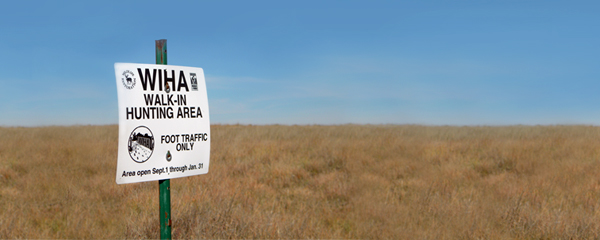
PRATT – The Kansas Department of Wildlife, Parks and Tourism’s (KDWPT) Fishing Impoundments and Stream Habitats Program (F.I.S.H.) pays landowners to allow fishing access to their private ponds and streams. F.I.S.H. is patterned after the hugely popular Walk-In Hunting Access program (WIHA), and both programs were designed to increase access to quality hunting and fishing opportunities across Kansas. Because more than 97 percent of Kansas land is privately owned, providing hunting and fishing access to private land is a KDWPT priority.
The F.I.S.H program leases private waters from landowners and opens them to public fishing. Landowners participating in F.I.S.H. receive payments for the use of their land, and anglers are in turn provided with a place to fish that might not have been available otherwise. The enrollment deadline for 2016 is December 15, 2015.
Special regulations are in place for F.I.S.H. properties, and KDWPT officials periodically patrol the areas. Violators will be ticketed or arrested for vandalism, littering or failing to comply with fishing regulations. Access is limited to foot traffic, except on roads designated by the landowner in the case of very large tracts of land. Additionally, under this program some landowners are eligible for fish stocking, habitat management, fence crossers, cattle guards, rock boat ramps, or rocked parking areas.
Each year, KDWPT publishes a fishing atlas, featuring maps that show each body of water enrolled in the program, boating allowance, and fish species available. Most F.I.S.H. sites are open for public access from March 1 to October 31, but some contracts pay landowners more to allow year-round access.
Pond Leasing
Privately-owned ponds are leased by the acre with base lease rates ranging from $75 to $125 /acre/year, depending on where the pond is located. Boating allowance bonuses are available, as well. Ponds allowing carry-in boats are eligible for an additional $10/acre/year, and properties allowing all boats access (adequate launching site must be present) are eligible for an additional $25/acre/year.
Stream Leasing
Annual lease rates for stream fishing access range from $500 to $1,500/mile/year, depending on the quality of the fisheries.
River Access Leasing
The Kansas, Arkansas, and Missouri rivers are considered navigable waters and are open to public use between the ordinary high-water marks. However, adjacent land is often privately owned, and public access points are limited. To increase public access to these rivers, the F.I.S.H. program leases access sites from willing landowners. Landowners with adequate launch facilities receive $1,500/site/year. If the site is within 10 river miles of any other public access site, a landowner can receive $2,000/site/year.
For more information on enrolling your water in the F.I.S.H. program, contact your nearest KDWPT office, or the Pratt Operations office at (620) 672-5911. You can also learn more about F.I.S.H. at www.ksoutdoors.com.

Saturday, November 30, 2013

LANDOWNER PERMISSION A MUST WHEN HUNTING PRIVATE LAND

Hunters must ask for permission before hunting on private land
PRATT – Hunters can face serious penalties for hunting on private land without landowner
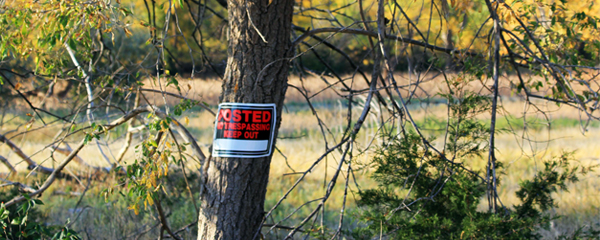
permission, and however tempting a trophy-sized buck, or a pond covered in greenheads may be, the consequences will always outweigh the perceived reward. With firearm season just around the corner, the Kansas Department of Wildlife, Parks and Tourism (KDWPT) reminds all hunters that it is illegal to hunt on private land, posted or not, without the owner's permission. Whether someone actually enters private land without permission or shoots onto it from the road or another landowner's property without permission, it is illegal.
Trespassing affects more than just the immediate parties involved. The perception of the hunting community as a whole and our hunting heritage are just a couple pieces of the puzzle affected by illegal hunting practices. Because trespassing harms landowner-hunter relations — and because the penalties for trespassing can be severe — hunters should be aware of the following trespass issues:
  • landowner permission should be obtained before pursuing wounded game onto private property. If the landowner cannot be found, contact a local natural resource officer or sheriff's office;
  • hunting from roads or railways without legal permission is a form of trespassing called criminal hunting;
  • conviction of trespass or criminal hunting may prevent the convicted person from enjoying hunting privileges in other states. KDWPT is a member of the Wildlife Violator Compact, that includes 34 other states. Under this compact, anyone who has had hunting, fishing, or furharvesting privileges revoked or suspended in a member state cannot hunt, trap, or fish in other member states;
  • conviction of simple criminal hunting can result in a maximum fine of $500, plus court costs, and one month in jail on the first conviction. Additionally, the court can suspend or revoke license privileges for up to a year. A second conviction requires at least a one-year suspension of privileges in addition to any fines or jail time;
  • if big game or turkey hunting is involved, the penalties get stiffer. Upon first conviction, the law states that the violator "shall not be fined less than $500 nor more than $1,000 or be imprisoned in the county jail for not more than six months, or both." The law requires fifth and subsequent conviction penalties of a minimum $1,000 fine and minimum 90 days in jail;
  • criminal trespassing is when the violator does not leave property when told;
  • it is illegal to hunt on land posted with written permission signs or marked with purple paint without having written permission on one's person;
  • in any of these cases, hunting privileges may also be revoked; and
  • by law, all hunters must have permission whether the land is posted or not.
Kansas’ wildlife resources should not only be revered, but respected. Before a hunter contemplates hunting on private land without landowner permission, the long term and widespread affect those actions will have on the future of Kansas hunting should be considered.
If you witness trespassing or illegal hunting, report it to your local natural resource officer, sheriff's office, or call the Operation Game Thief toll-free hotline at 1-877-426-3843. A list of phone numbers for all natural resource officers, listed by counties they cover, can be found in the 2013 Kansas Hunting & Furharvesting Regulations Summaryavailable wherever licenses are sold, or online at www.ksoutdoors.com.

Saturday, June 15, 2013

NEW LEASE RATES AVAILABLE FOR WALK-IN HUNTING ACCESS LAND

Since its inception in 1995, the Walk-In Hunting Access (WIHA) program has been making private land available for public hunting through lease agreements between the Kansas Department of Wildlife, Parks and Tourism (KDWPT) and
Whether a landowner possesses 80 or 1,000 acres,
WIHA can be an integral part of a land’s profitability
Kansas landowners. This has provided hunters with access to more than 1 million acres of land not normally available while still leaving the land in private ownership.

New this fall, landowners who own or lease 80 or more contiguous acres of land can take advantage of higher rate payments and additional acreage ranges. Payment rates are often negotiable and based on the number of acres possessed, the quality of habitat, and length of the lease access period.

Land used for the WIHA program is typically Conservation Reserve Program (CRP) acres, but land with similar qualities and hunting opportunities, such as native rangeland, weedy wheat stubble, milo stubble, riparian areas, and wetland areas are also considered for enrollment.

Applications are accepted year-round, however landowners wishing to participate in the fall 2013 season dates will need to enroll by July 15.

For more information, including a list of current rates, contact your nearest KDWPT office or visit ksoutdoors.com.

Wednesday, May 1, 2013

LOCAL COUPLE TO HOST FIELD DAY ON WILDLIFE HABITAT IMPROVEMENT


PRATT– The Kansas Forest Service (KFS) will host the 2013 Agroforestry Field Day May 8 on the farm of Dave and Mary Hendricks at I Road and 190 Ave, Wakeeney. Discussion topics will include tree health threats, creating mule deer habitat, lesser prairie chicken habitat, water quality concerns in western Kansas, managing for upland birds from the landowner’s perspective, windbreak renovation, assessment and funding projects, and creating a burn plan for prairie. Attendees will also get to hear from the Hendricks as they share their experience working with trees and shrubs in contemporary agricultural systems.

Windbreak Renovation, Assessment and Funding Projects
With the current drought stressing windbreaks throughout western Kansas, KFS foresters Jim Strine and Bob Atchison will provide tips on how to maintain and renovate older windbreaks and shelterbelts using one of the many windbreaks the Hendricks have on their property. Suggestions on row removal, selective thinning, watering and establishing additional tree rows will be provided. Participants will also receive the latest information on financial assistance available to implement windbreak renovation projects as well as the preliminary results of a windbreak assessment study on the size and condition of shelterbelts in the Smoky Hill region.
Lesser Prairie Chicken Habitat
In response to a U.S. Fish and Wildlife Service proposal to list the lesser prairie chicken as a threatened species, a rangewide management plan is being developed to assist landowners in enhancing grassland habitat. Mark Witecha, a Pheasants Forever Farm Bill biologist, will be on hand to discuss the habitat needs of this important species and suggest conservation practices that benefit lesser prairie chickens and other important grassland birds. Witecha will also inform participants of the services Pheasants Forever can offer to landowners.
Creating a Burn Plan for the Prairie
Burning the prairie is one of the most important activities landowners can do to ensure the health of grass and range lands and the flora and fauna that depend on them. Unfortunately many landowners are hesitant to burn and those that do sometimes do not plan adequately. Several windbreaks on the Hendricks farm have been lost to wildfire for that very reason. Michele Witecha, a KFS wildlife ecologist and rangeland fire specialist, will provide a session on how to develop a burn plan that accomplishes specific management interests while lowering the risk of wildfire potential.
Managing for Upland Birds from the Landowner’s Perspective
Last season hunters harvested an estimated 475,000 pheasants and this year numbers have been down by almost 50 percent. Randy Rodgers and Helen Hands, are both wildlife biologists who have applied their years of experience managing for upland bird habitat to their farm in Rush County. Winners of the 2012 Kansas Wildlife Federation’s Land and Soil Wildlife Conservationist award, Rodgers and Hands will
Conservationists Dave and Mary Hendricks
will host an agroforestry field day this May
provide both the landowner perspective and the professional wildlife biologist expertise to educate participants on how to improve habitat for upland birds.
Creating Mule Deer Habitat
Mule deer have a different set of habitat requirements compared to upland birds and are regular visitors to the Hendricks farm. Dave Hendricks will show participants how windbreaks can be used as a fawning area for mule deer and discuss how landowners can encourage mule deer habitat on their properties.
Tree Health Threats
Nikki Opbroek, KFS forest health specialist, will offer an update on potential health threats to trees and shrubs (including drought) and provide both diagnosis and control recommendations for the major tree problems people encounter in western Kansas. Foresters will also provide suggestions on appropriate tree and shrub species to plant in the Trego County area.
Water Quality Concerns in Western Kansas
Water quality and quantity issues have never been so relevant to western Kansas. Stacy Minson, K-State Research and Extension watershed specialist, will share her knowledge of the issues and offer suggestions to participants on practices they can implement to address these challenges.
The Hendricks have been chosen as the recipients of the 2013 Kansas Agroforestry Award by the Kansas Forestry Association and the Kansas Forest Service. The Kansas Agroforestry Award is presented to landowners who go above and beyond to implement agroforestry practices on their property such as riparian forest buffers and shelterbelts. The couple will be presented with an award the morning of the event.

The cost of attendance is $10. Lunch will be provided.
In the event of rain, the field day will be moved to the Trego County Fairgrounds in WaKeeney.
For more information, or to register for this event, call rural forestry coordinator Bob Atchison at(785) 532-3310, or visit www.kansasforests.org.

Wednesday, November 28, 2012

F.I.S.H. PAYS LANDOWNERS TO ALLOW FISHING ACCESS

Enrolled private waters can benefit from fish stocking and habitat management
PRATT--The Kansas Department of Wildlife, Parks and Tourism’s F.I.S.H. Program, which stands for Fishing Impoundments and Stream Habitats, was patterned after the very successful Walk-In Hunting Access Program with a goal of increasing public fishing opportunities in Kansas. First introduced to Kansas anglers and landowners in 1998, F.I.S.H. leases private waters from landowners for public fishing. Landowners participating in F.I.S.H. receive payments, and F.I.S.H. provides anglers with a place to fish while leaving the land in private ownership. The deadline for landowners to enroll for 2013 is December 15, 2012.
Special regulations are in place for F.I.S.H. properties, and KDWPT officials periodically patrol the areas. Violators will be ticketed or arrested for vandalism, littering or failing to comply with fishing regulations. Access is limited to foot traffic, except on roads designated by the landowner in the case of very large tracts of land. Additionally, under this program some landowners are eligible for fish stocking, habitat management, fence crossers, cattle guards, rock boat ramps, or rocked parking areas.
Each year, KDWPT publishes a fishing atlas featuring maps that show each body of water enrolled in the program, boating allowance, and fish species available. F.I.S.H. sites are open for public access from March 1 to October 31 or year-round. Landowners allowing year-round access receive a 10 percent lease increase.
Pond Leasing
The program leases privately-owned ponds for public access by the acre. Base lease rates range from $75-$125 per/acre/year, depending on where the pond is located in. Boating allowance bonuses are available as well. Ponds allowing carry-in boats only will receive an additional $10/acre/year and properties allowing all boats access (adequate launching site must be present) will receive an additional $25/acre/year.
Stream Leasing
Another focus of the F.I.S.H. program is to increase access to streams for fishing and paddlesports. Depending on the quality of the stream's fishery, annual lease rates for fishing access range from $500 to $1,500/mile. Stream stretches that allow paddlesport access could receive an additional annual payment of $500-$750/mile. To be eligible for the additional paddlesports payment, the stream stretch must be at least one-mile, with put-in and take-out spots (bonus applies only between put-in and take-out spots), and signed up for a long-term lease (minimum five years).
Big River Access Leasing
The Kansas, Arkansas, and Missouri Rivers are considered navigable waters and are open to public access. However, public land access points are limited. To increase public access to these rivers, the F.I.S.H. program leases access sites from willing landowners. Landowners with adequate launch facilities, can annually receive $1,500/site. If the site is within 10 river miles of any other public access site a landowner can annually receive $2,000/site.
For more information about enrolling your water in the F.I.S.H. program contact your nearest KDWPT office, or the Operations office in Pratt, 620-672-5911. You can also learn more about F.I.S.H. at www.ksoutdoors.com.
This program is made possible by the Wildlife and Sport Fish Restoration Act, the sale of fishing licenses, and the Farm Bill.

Tuesday, July 24, 2012

KDWPT ACCEPTING APPLICATIONS FOR PRIVATE LAND GRANTS

Zea mays (field) + Vitis vinifera subsp. vinif...
(Photo credit: HermannFalkner/sokol)
Program provides technical assistance and financial incentives to enhance wildlife habitat on private land; Oct. 1 application deadline
 
PRATT — The Kansas Department of Wildlife, Parks and Tourism (KDWPT) is now accepting applications for State Wildlife Grants (SWG), which are awarded to qualified private landowners to enhance wildlife habitat on their land. Since its inception, the SWG Private Landowner Program has funded more than $1.4 million to complete 60 private land habitat projects. Projects include removing invasive woody plants from native mixed-grass prairie, constructing alternate watering facilities to help with native short-grass prairie management, conversion of cool season grass to native grass and forbs, and construction of perimeter fencing on expiring CRP fields to help maintain those fields in native grass. These projects will improve more than 20,346 acres of habitat that will benefit wildlife considered Species of Greatest Conservation Need (SGCG) in Kansas.

In the past, KDWPT received $586,000 of SWG funds from the U.S. Fish and Wildlife Service to aid in the protection and management of priority habitats for SGCG in Kansas. In June 2012, the department received an additional $205,000 in SWG funds to further continue this private landowner habitat conservation work.
To be eligible, applications must address issues and strategies identified in the Kansas Comprehensive Wildlife Conservation Plan. Applications will be scored based on established criteria to ensure all applicants are considered fairly and that the highest-ranking projects are selected. Proposals with potential to score highest will specifically address restoration and enhancement activities that will contribute to 1) development or maintenance of large grassland blocks capable of supporting area-sensitive wildlife species; 2) restoration or maintenance of areas supporting high densities of playa lakes surrounded by grasslands; and 3) restoration or enhancement of streams and associated riparian buffers.

Applications are being accepted immediately with a deadline of Oct. 1. Those landowners receiving funding will be required to match a minimum of 25 percent of total project costs. This match can either be a cash contribution from a non-federal source or contributions of labor, materials, or equipment use. Applications will be accepted until available funds have been committed.

Interested landowners should contact any KDWPT regional office or a private lands biologist for application materials or to schedule a consultation concerning a proposed project. Questions regarding program administration can be addressed to Roger Wolfe, KDWPT Region 2 Office, 300 SW Wanamaker Road, Topeka, Kansas 66606; phone 785-271-7388. Persons with special communication needs may use the Kansas Relay Center, 1-800-766-3777.

Saturday, May 12, 2012

KDWPT SIGNING WALK-IN HUNTING CONTRACTS

KDWPT SIGNING WALK-IN HUNTING CONTRACTS
May 10, 2012

Signup deadline July 15 for landowners; new counties eligible for incentive payments

PRATT — Landowners interested in the Kansas Department of Wildlife, Parks and Tourism’s (KDWPT) Walk-In Hunting Access Program (WIHA) — which pays landowners to allow public hunting access on their land — are reminded that the deadline for enrollment is July 15. The WIHA program, which began in 1995, has grown to include more than 1 million acres and nearly 3,000 contracts with Kansas landowners.

Almost anyone who owns, leases, or manages 80 contiguous acres of land with suitable wildlife habitat can qualify. A little more than half the land enrolled in WIHA is federal Conservation Reserve Program (CRP) grass, but other lands are also considered, including native rangeland, weedy wheat stubble, milo stubble, and riparian and wetland areas.
After receiving applications, KDWPT biologists evaluate wildlife habitat on the applicants' land. Payment rates are based on the size and location of tracts and the number of months the landowner will open the land to hunting. A 50-percent additional incentive payment is offered for WIHA in the following urban counties: Butler, Coffey, Cowley, Douglas, Franklin, Harvey, Jackson, Jefferson, Johnson, Kingman, Leavenworth, Lyon, Miami, Osage, Ottawa, Reno, Saline, Sedgwick, Shawnee, Sumner, Wabaunsee, and Wyandotte.

Counties that have had historically low or are declining in program participation are also eligible for the 50-percent additional incentive payment. The following counties are eligible under this criteria: Allen, Anderson, Atchison, Barber, Barton, Bourbon, Brown, Chase, Chautauqua, Cherokee, Clay, Cloud, Crawford, Dickinson, Doniphan, Elk, Ellsworth, Geary, Greenwood, Harper, Jewell, Labette, Lincoln, Linn, Marion, Marshall, McPherson, Mitchell, Montgomery, Morris, Nemaha, Neosho, Pottawatomie, Pratt, Republic, Rice, Riley, Stafford, Washington, Wilson, and Woodson.
Once enrolled, the property is posted with signs indicating access dates, and a map of the tract will be included in a free atlas provided by KDWPT. Natural resource officers periodically patrol WIHA properties. In addition, state law provides protection to private individuals who lease their land to the state for recreational purposes from liability for damages or injuries resulting from ordinary negligence.

Lease options include open periods running Sept. 1-Jan. 31 and Nov. 1-Jan. 31, with the option to run through March 31 in areas where habitat and hunt opportunities are appropriate. A popular spin-off is the Spring Turkey WIHA Program, with lease dates from April 1- May 31. For more information, phone 620-672-5911.

Wednesday, January 25, 2012

PHEASANT FEST TO FOCUS ON LANDOWNER HABITAT

Quail
Image via Wikipedia

Pheasants Forever national meeting in Kansas City Feb. 17-19
KANSAS CITY, Mo. — Kansas landowners — and those from across the country — will receive free land-use management consultation at Pheasants Forever's National Pheasant Fest and Quail Classic 2012, in the Kansas City Convention Center Feb. 17-19. The Landowner Habitat Help Room, sponsored by Best Buy and Geek Squad, will feature the latest technology to evaluate landowner needs.

A dozen work stations featuring large-screen monitors will provide a detailed look at each landowner’s property. The room is designed to give farmers and landowners site-specific information about conservation programs they can implement on their land. Biologists use aerial photography, topography, and soil information for individual planning. Landowners just need to bring the legal description of their property (township, range, and section). Through one-on-one consultations with leading wildlife experts, landowners have the opportunity to learn about conservation and habitat options on their land available through federal, state, and local programs.

Accompanied by trained Pheasants Forever or Quail Forever biologists or partnering biologists from the Missouri Department of Conservation; the Kansas Department of Wildlife, Parks and Tourism; or the U.S. Department of Agriculture, landowners will be educated on ways they can improve their acres for wildlife and even what local, state, and federal conservation programs that qualify for enrollment.

"Your next wildlife habitat project starts at Pheasant Fest," says Steve Riley, Farm Bill wildlife biologist manager for Pheasants Forever and Quail Forever. "The Landowner Habitat Help Room is one of the many ways Pheasants Forever's premiere event goes beyond a trade show and becomes an interactive event where wildlife habitat is the main focus, and a lasting impact is made."

With the most current streaming data available, the Landowner Habitat Help Room will offer topographic and aerial maps on any piece of property in the entire country. For more information, phone Brad Heidel at 651-209-4956 or email bheidel@pheasantsforever.org, or phone Rehan Nana at 651-209-4973 or mail rnana@pheasantsforever.org.

Wednesday, January 12, 2011

LANDOWNERS: STATE WILDLIFE GRANTS NOW BEING ACCEPTED

Kansas Historical Marker at Big Basin Prairie ...Image via Wikipedia
Program provides technical assistance and financial incentives to enhance wildlife habitat on private land in Kansas; March 31 deadline
PRATT — Kansas Department of Wildlife and Parks (KDWP) officials have announced the State Wildlife Grant (SWG) Private Landowner Program has, to date, awarded $235,444 of SWG funds to 22 private landowners. Projects funded include removing invasive woody plants from native mixed-grass prairie, constructing alternate watering facilities to help with native short-grass prairie management, and construction of perimeter fencing on expiring CRP fields to help maintain those fields in native grass. These projects will improve more than 5,000 acres of habitat for “species of greatest conservation need” (SGCN) in Kansas.
KDWP originally received $400,000 of SWG funds from the U.S. Fish and Wildlife Service to aid in the protection and management of priority habitats for SGCN, so applications are still being accepted, with a deadline of March 31. This is the third sign-up for this project during which KDWP may distribute the remaining $164,556 from the original $400,000 of SWG funds and an additional $83,000 in non-federal funds to private landowners interested in implementing habitat projects.
Those landowners receiving funding will be required to match a minimum of 25 percent of total project costs. This match can either be a cash contribution from a non-federal source or contributions of labor, materials, or equipment use.
Applications will be accepted until available funds have been committed.
To be eligible, applications must address issues and strategies identified in the Kansas Comprehensive Wildlife Conservation Plan, found on the KDWP website,www.kdwp.state.ks.us, under “Other Services/Kansas CWCP/Kansas CWCP.” Applications will be scored based on established criteria to ensure all applicants are considered fairly and that the highest ranking projects are selected. Higher priority consideration will be given to proposals that specifically address restoration and enhancement activities that will contribute to the development or maintenance of large grassland blocks capable of supporting area-sensitive wildlife species, the restoration or maintenance of areas supporting high densities of playa lakes surrounded by grasslands, and the restoration or enhancement of streams and associated riparian buffers.
Interested landowners should contact any KDWP regional office or private lands biologist for application materials or to schedule a consultation concerning a proposed project. Questions regarding program administration can be addressed to Roger Wolfe, KDWP Region 2 Office, 300 SW Wanamaker Road, Topeka, KS 66606, or by phoning 785-271-7388. Persons with special communication needs may use the Kansas Relay Center, 1-800-766-3777.

Enhanced by Zemanta