Showing posts with label Chicken. Show all posts

Friday, September 6, 2013

EARLY PRAIRIE CHICKEN SEASON REQUIRES LEGWORK

Early season prairie chicken hunters can cover miles in a day’s hunt

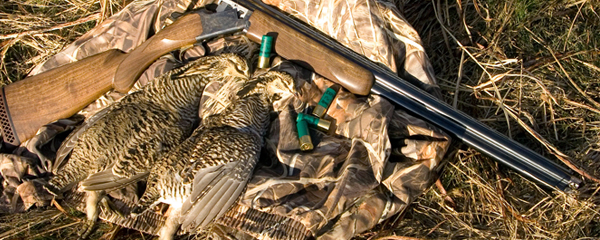
PRATT ­– The early prairie chicken season (Northwest and East units), Sept. 15 - Oct. 15, 2013, gives bird hunters a unique opportunity to walk up greater prairie chickens and work bird dogs long before traditional upland bird seasons open. The early season was established to provide additional hunting opportunity for this tallgrass prairie icon and let hunters enjoy a true one-of-a-kind grassland hunt.
The traditional prairie chicken season is Nov. 16-Jan. 31, 2014 in the East and Northwest units, and Nov. 16-Dec. 31 in the Southwest Unit, and during this season, most prairie chickens are taken by pass shooting. Hunters scout feed fields near large tracts of native prairie for feeding prairie chickens, and then take up stations around feed fields well before sunrise. As the sun crests the horizon, prairie chickens will lift out of the prairies and fly to feed. Hunters lucky enough to be positioned in just the right spot may get shots. However, prairie chickens are strong fliers and challenging quarry for expert wingshots. Prairie chickens rarely flush within shotgun range of walking hunters during the regular season.
During the early season, flocks of young birds are more likely to hold for walking hunters and pointing dogs. However, prairie chickens are truly birds of the prairie, and hunters will walk many miles of grassland to find birds. While it can seem like finding a needle in a haystack, the unique hunting opportunity, scenery and connection to the prairie keeps hunters coming back.
All prairie chicken hunters must have a $2.50 prairie chicken permit in addition to a hunting license. Permits may be purchased wherever licenses are sold and online. Information provided by hunters at the time of purchase will help biologists estimate prairie chicken harvest and hunting pressure.
During the early season, the daily bag limit for prairie chickens in the East and Northwest zones is 2, and the possession limit is 8. For more information and a map of prairie chicken hunting zones, go to www.ksoutdoors.com.

Sunday, April 8, 2012

PRAIRIE CHICKEN SPRING DANCE A BIRDERS DELIGHT

Tympanuchus cupido English: A male Greater Pra...
 (Photo credit: Wikipedia)

April 5, 2012
From March through May, male chickens dance, fight, and call to attract mates
PRATT — Each spring, one of the most extraordinary mating rituals in all of nature occurs right here in Kansas — the courtship of the prairie grouse, more commonly known as the prairie chicken. On specific sites in otherwise indistinguishable tracts of natural prairie landscape, groups of male chickens gather at dusk and dawn in elaborate dances designed to attract females.
These areas — called leks, or booming grounds — are actually formed in fall when the order of dominance is established among the males. At this time, mature males gather in these relatively high, flat areas and attempt to establish their own small territories as close to the center of the lek as possible, where activity will be highest in spring. Although young males visit the lek, they are kept to the edges and seldom given the opportunity to establish their own territories.

While the fall activity is important and interesting, it is the spring lekking, or “booming,” activity that most fascinates naturalists, both professional and amateur. Beginning in March and lasting through the end of May, male chickens display an incredible array of vocalizations and maneuvers to win the right to mate.

Avid bird watchers and novices alike are mesmerized by this site, and it’s not difficult to find a place to witness it. For a list of prairie chicken viewing opportunities, visit the Natural Kansas website www.naturalkansas.org/birding.htm#PCV or phone the Kansas Department of Wildlife, Parks and Tourism’s Emporia Office at 620-342-0658 or the Pratt Operations Office at 620-672-5911.

In the mating ritual, the male chicken's tail is elevated; horn-like feathers (called pinnae) on the neck are raised over the head; and the wings are lowered with the primary feathers spread. The bird stamps its feet while moving forward or in circles, and this is followed by a series of rapid tail snaps and fans. At the same time as the tail is clicked open and shut, a whoom-AH-oom sound is given as the bright orange air sacs on the neck of the greater prairie chicken (orange to plume in the lesser) are inflated for maximum exposure. The lesser prairie chicken exhibits similar behavior, but the sound is higher-pitched, and the air sacs are a reddish color.

A second major display is flutter-jumping with associated cackling calls. The male jumps several feet into the air, flies forward, and lands. In so doing, the bird advertises its presence as well as the location of the lek. Flutter-jumping is typical of the peripheral males when females are near the center of the display ground.

A female will typically fly to the edge of a lek and walk slowly toward the center. When the hen enters a male’s territory, the male's behavior changes greatly. Lekking is performed with high frequency and extreme posturing. The male will display in circles around the female, showing all aspects of its plumage. At the peak of this performance, the dancer often spreads his wings and lays his head flat to the ground, as if bowing to the hen. If suitably impressed, the hen will stoop low to the ground, signaling that she is ready to mate.

Occasionally, fights break out among competing males. This is mostly ritual, as well, involving short jumps; striking with feet, beak, and wings; and face-offs in which the competitors whine and attempt to stare each other down. Injuries do occur but are seldom serious.

With its large, colorful air sacs, horn-like pinnae, and feathers growing all the way to its feet, the prairie chicken is one of the most beautiful birds in Kansas. And its mating ritual makes it one of the most fascinating birds to watch. Kansans are lucky to have the largest population of prairie chickens in the world, so viewing opportunities are good.

Two species of prairie chicken can be found in Kansas. The greater prairie chicken, the most populous, can be found throughout portions of northcentral and eastern Kansas, especially in the Flint Hills region. The lesser prairie chicken, which is slightly smaller and has reddish-orange air-sacs, can be found in pockets of native sandsage and shortgrass prairie in western Kansas. The lesser prairie chicken male produces a higher-pitched, bubbly sound, or "gobble," leading to the term "gobbling grounds" for their leks. On a quiet spring morning, the sounds of both species can carry as far as 2 miles across the open prairie.

Wednesday, July 6, 2011

KDWPT FINDS LESSER PRAIRIE CHICKENS OUTSIDE CURRENT RANGE

Lesser Prairie Chicken (Tympanuchus pallidicin...Image via Wikipedia
Computer modeling system reveals previously unknown breeding grounds
PRATT — The Kansas Department of Wildlife, Parks and Tourism (KDWPT) recently used Maximum Entropy (MaxEnt) modeling software to target searches for lesser prairie chicken leks (breeding grounds) outside their current range in northwest Kansas. MaxEnt modeling can identify areas with a high probability of lek occurrence by analyzing presence-only data (not absence data), making it an ideal method for analyzing lek survey data.
"We used MaxEnt to identify areas that had a relatively high probability of occurrence outside the lesser’s known range and targeted those areas to survey," says Jim Pitman, small game coordinator for KDWPT. "Finding chickens outside the known range allows us to more accurately delineate the range and better target conservation programs to ensure they are being implemented in areas where chickens have the best chance to benefit."
The targeted surveys were successful in locating new lek sites and resulted in KDWPT extending the historic lesser prairie chicken range 30 miles north. Despite high winds making it difficult to detect leks, the biologists found both lesser and greater prairie chickens and greater/lesser prairie chicken hybrids, called "guessers," present on 11 leks well outside the current known range of the species. They also located 23 leks occupied solely by greater prairie chickens and three leks in which species composition could not be identified.
To determine the probability of lek occurrence, the MaxEnt model compares a given set of landscape characteristics at known lek sites to areas where lek occurrence is unknown. The landscape characteristics include features that could influence lek site selection by the lesser prairie chicken, such as vegetation type, anthropogenic features, and elevation. The results showed that both biological type — such as vegetation — and anthropogenic features — such as highways — were important in predicting where leks occur.
To identify areas for new lek surveys, the MaxEnt results were filtered to include only areas with a high probability of lek occurrence that overlapped native grassland or CRP in Ellis, Trego, Graham, Sheridan, Rawlins, and Thomas counties. These high-probability areas were then connected creating 15- to 20-mile routes that biologists could search.
Historically, the lesser prairie chicken was found throughout western Kansas, but over time its range receded due to habitat loss and degradation. The federal Conservation Reserve Program is given much credit for the species’ apparent stability in western Kansas, and the new software model is helping identify the extent of that stability, or perhaps even growth.
"MaxEnt is working really well, and we feel comfortable that this model is doing a good job of predicting where lessers occur," Pitman explains. "Since we don’t have the manpower to survey every square inch of potential range, MaxEnt will be very useful for targeting our surveys, and most importantly, conservation programs in the future."
Because of the success of the KDWPT MaxEnt model, the Western Governors Association (WGA) is supporting state wildlife agencies from Kansas, Oklahoma, Texas, New Mexico, and Colorado in developing a range-wide lesser prairie chicken support system that incorporates MaxEnt modeling results, along with other products.

Enhanced by Zemanta

Wednesday, April 13, 2011

PRAIRIE CHICKENS DANCE TO RHYTHM OF SPRING

Konza Prairie, in the Flint HillsImage via Wikipedia
Male chickens dance and “boom” to attract mates in elaborate ritual on the prairie
PRATT — Each spring, one of the most extraordinary rituals in all of nature occurs right here in Kansas — the courtship of the prairie chicken. The large expanses of natural prairie in Kansas may be awe-inspiring to humans, but to the prairie chicken, some patches are special. These are the mating grounds — called “leks” — where male chickens gather at dusk and dawn in elaborate rituals designed to attract females.
These areas, also called booming grounds, are actually formed in fall when the order of dominance is established among males. At this time, mature males gather in these relatively high, flat areas and attempt to establish small territories as close to the center of the lek as possible, where activity will be highest in spring. Although young males visit the lek, they are kept to the edges and are seldom given the opportunity to establish their own territories.

While the fall activity is important and interesting, it is the spring booming activity that attracts anyone fascinated by nature. Beginning in March and lasting through the end of May, male chickens display an incredible array of vocalizations and maneuvers to attract a female’s attention.

In the mating ritual, the male chicken's tail is elevated; horn-like feathers (called pinnae) on the neck are raised over the head; and the wings are lowered with the primary feathers spread. The bird stamps its feet while moving forward or in circles, and this is followed by a series of rapid tail snaps and fans. At the same time as the tail is clicked open and shut, a whoom-AH-oom sound is given as bright orange air sacs on the neck inflate for maximum exposure.

A second major display is flutter-jumping with associated cackling calls. The male jumps several feet into the air, flies forward, and lands. In so doing, the bird advertises its presence as well as the location of the lek. Flutter-jumping is a common tactic of peripheral males when females are near the center of the display ground.

A female will typically fly to the edge of a lek and walk slowly toward the center. When the hen enters a male’s territory, the male's behavior changes greatly. The ritual is performed with high frequency and extreme posturing. The male will display in circles around the female, showing all aspects of its plumage. At the peak of this performance, the dancer often spreads his wings and lays its head flat to the ground, as if bowing to the hen. If suitably impressed, the hen will flatten to the ground, signaling a willingness to mate.
Occasionally, fights break out among competing males. This is mostly ritual, as well, involving short jumps; striking with feet, beak, and wings; and face-offs in which the competitors whine and attempt to stare each other down. Injuries do occur but are seldom serious.

With its large, colorful air sacs, horn-like pinnae, and feathers growing all the way to its feet, the prairie chicken is one of the most beautiful and unusual birds in Kansas. And its mating ritual makes it one of the most fascinating birds to watch. Kansans are lucky to have the largest population of prairie chickens in the world, so viewing opportunities are good.

Two species of prairie chicken can be found in Kansas. The greater prairie chicken, by far the most populous, can be found throughout portions of northcentral and eastern Kansas, especially in the Flint Hills region. The lesser prairie chicken, which is slightly smaller and has red air-sacs instead of orange, can be found in pockets of native sandsage prairie in the southwest. The lesser prairie chicken male produces a higher-pitched, bubbly sound, or "gobble," leading to the term "gobbling grounds" for their leks. On a quiet spring morning, the sounds of both species can carry as far as two miles across the open prairie.

For a list of prairie chicken viewing opportunities, visit the Natural Kansas website www.naturalkansas.org/birding.htm#PCV or phone the Kansas Department of Wildlife and Parks Emporia Office at 620-342-0658 or the Pratt Operations Office at 620-672-5911.


Enhanced by Zemanta