Showing posts with label Pheasant. Show all posts

Saturday, October 31, 2015

Youth Pheasant and Quail Season Prime Opportunity

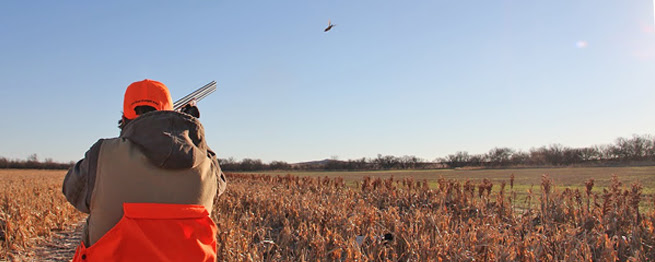
PRATT – Two days, November 7-8, 2015, should be marked on every young hunter’s calendar. The youth pheasant and quail season allows all youth 16 and younger to hunt, under the supervision of an adult 18 or older, for pheasants and quail statewide. The daily bag limits during the youth season are 2 rooster pheasants per day and 4 quail per day. All state and federal lands normally open to public hunting are open, and all Walk-in Hunting Access lands are open. Hunting pressure is generally light, ensuring high-quality and productive hunting opportunities for youth.
The Kansas Department of Wildlife, Parks and Tourism established youth hunting seasons through Pass It On, the department’s hunter recruitment program. Special youth seasons are set for spring turkey, deer, waterfowl, pheasants and quail. The youth seasons open before regular season openers, giving young hunters first crack. Setting youth seasons separate from regular seasons allows mentors to work with young hunters without giving up their traditional hunts.
Resident youth 15 and younger do not need a hunting license, and while Hunter Education certification is not required when hunting under adult supervision, it is highly recommended. Sixteen-year-old residents and all nonresidents must have hunting licenses. The adult mentor may not hunt; however the youth season can provide a great opportunity to scout potential hunting areas and get dogs primed before the regular opener.
With improved pheasant and quail populations predicted this fall, the youth season will provide a fantastic opportunity to introduce a youngster to the hunting tradition. For many veteran hunters, that experience is more rewarding than the hunt itself.

Friday, October 10, 2014

PHEASANTS FOREVER TO HOST YOUTH UPLAND HUNT OCT. 18

The hunt is held in memory of Darrell Brown and Lavern Stieben
HAYS – It’s easy to let a hectic schedule get in the way of making time for the outdoors, and Oct. 18, 2014. There is no cost to participate. 
all too often youth miss out on experiencing one of Kansas’ greatest assets – its hunting heritage. In an effort to introduce youth to the long-standing tradition of upland bird hunting, The Smoky Hill Pheasants Forever Chapter #424, Kansas Department of Wildlife, Parks and Tourism (KDWPT), and the Hunting Heritage Group invite hunters age 12-18 to participate in the 9th Annual Darrell Brown-Lavern Stieben Memorial Youth Upland Hunt
The hunt will take place at Hays City Sportsman Club, 5810 230th Ave., Hays, where each hunter will have the opportunity to harvest at least four birds while hunting over experienced pointing dogs. 
Apart from the hunt, participants will also learn about hunting with pointing dogs; field safety; how hunting dogs are trained; gun handling; how to clean and prepare birds; and what makes good upland bird habitat. The D.A.R.E. (Drug Abuse Resistance Education) program will also be incorporated into the event.
Special hunts such as this are part of Pass It On, KDWPT’s hunter recruitment and retention program. This program addresses the need to recruit new hunters and retain existing hunters to ensure the future of hunting.  
For more information, and to register for this hunt, contact Shayne Wilson at (785) 628-1415, Monday through Friday, 8 a.m.-5 p.m.

Sunday, September 21, 2014

2014 KANSAS UPLAND BIRD HUNTING FORECAST NOW AVAILABLE

2014 Upland bird forecast shows improvements in pheasant, quail, prairie chicken populations
PRATT – A copy of the 2014 Kansas Upland Bird Forecast is now available and from the looks of things, upland bird hunters will see improved populations this fall. Although below-average harvests areksoutdoors.com and click “Hunting,” then “Upland Birds.”
expected this year, hunters should see more birds and have more opportunities than the 2013 season. To view the entire forecast, visit
PHEASANT
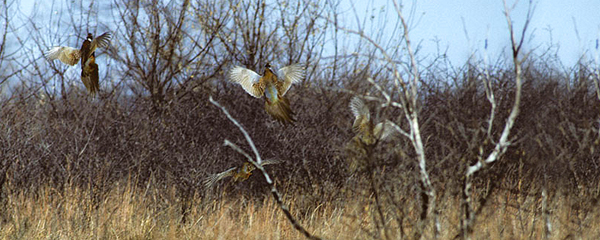
After three consecutive years of statewide declines, spring breeding populations for pheasant stabilized in 2014. The only region showing a significant decrease was the Northern High Plains. Summer brood counts show an increase of 70 percent when compared to 2013. This increase should offer improved hunting opportunities, and the best hunting this year will likely be in the Smoky Hills region. Kansas still contains one of the best pheasant populations among states and the fall harvest will again be among the best in the country; however, Kansas will again have a below-average pheasant harvest this fall.
Regular Season: Nov. 8, 2014 - January 31, 2015; Youth Season: November 1-2, 2014. Daily Bag Limit: 4 cocks in regular season, 2 cocks in youth season.
QUAIL
Roadside surveys for quail showed a statewide increase of 50 percent compared to 2013. However, statewide populations are still below historic averages, and Kansas will likely have a below-average quail harvest this fall. Populations in much of the central and western portions of the state have not fully recovered from the drought. While opportunities will be better throughout most of the state this year, the best opportunities will likely remain in the eastern third of the state, particularly in the Flint Hills region.
Regular Season: November 8, 2014 - January 31, 2015; Youth Season: November 1-2, 2014. Daily Bag Limit: 8 in regular season, 4 in youth season.
PRAIRIE CHICKEN
Prairie chicken populations are generally up where the appropriate habitat exists. Hunting opportunities should be improved throughout the greater prairie chicken hunting unit; however, the best opportunities this fall will be in the Smoky Hills Region.
Early Season (Greater Prairie Chicken Unit): Sept. 15 - Oct. 15, 2014; Regular Season (Greater Prairie Chicken Unit): Nov. 15, 2014 - Jan. 31, 2015. Daily Bag Limit: 2. Southwest Unit closed to all prairie chicken hunting.
To view the complete forecast, including detailed regional information, visit ksoutdoors.com and click “Hunting / Upland Birds.”

Thursday, January 23, 2014

YOUTH AND WOMEN’S PHEASANT HUNT DRAWS 35 PARTICIPANTS

Female hunters made up over a third of the participants at this annual hunt
BELOIT ­– Thirty-five new hunters with limited experience came from all across the state to get a taste of what pheasant hunting can be like. Hunters ranged in age from 11 to 55, and out of those 35 hunters, an impressive number of 11 participants were female. The event is organized by Kansas Department of Wildlife, Parks and Tourism staff from the Glen Elder Wildlife Area and volunteers from the Pass It On – Outdoor Mentors, Inc. of Wichita.
This year hunters were joined by 10 celebrities and hometown heroes who served as hunting mentors. Celebrity hunters included former NFL players Mark Arneson, Jerry Holloway, Mel Gray, and Eric Williams; former professional drag racer Guy Caster; youth Crappiemasters champion John Gilotte; and national go-cart racing youth champions Brody and Nolan Pope. Hero-celebrities from the Kansas National Guard included LTC Damon Frizzell from Gardner and SSGT Casey Pennock from Manhattan.
The day began before sunrise in the basement of Hopewell Church at Glen Elder State Park with a biscuits and gravy breakfast. Following breakfast the young hunters were briefed on safety procedures and then divided into five hunting groups. Each hunting group had celebrities, a hunt captain, and at least three bird dogs. Groups hunted in either Glen Elder State Park or in one of the refuge areas on Glen Elder Wildlife Area surrounding the lake where public hunting is generally not allowed.

Every group saw a good number of pheasants within shooting range and almost all of the hunters got multiple shot opportunities at the tough birds. Only the youth and celebrities hunted in each group and each youth was “shadowed” by a parent or other adult mentor throughout the morning. While afield, participants also enjoyed seeing lots of deer, geese, ducks, bald eagles, as well as several other wildlife species.
Hunters bagged a combined total of eight roosters, with every group harvesting at least one bird. The morning of the hunt, participant Cassandra Kinzie even managed to pull off a “double” on two roosters that flushed together, making quite a present for the young lady who celebrated her birthday that day.
At lunch, groups returned to the church basement for a meal provided by the Waconda Lake Association. Hunting stories were shared and one youth hunter from each group was recognized and presented with an additional prize for demonstrating excellent safety skills while they hunted. A longest tail feather contest was also held for the successful youth hunters. After lunch, several hunters took part in a trap shoot held in Glen Elder State Park. Within a couple hours, trap shooters managed to burn up about 1,500 rounds of target ammo and blue rock that was provided as part of the event.
The day’s events concluded in the evening with a Hunter’s Banquet held at Memorial Hall in Downs where each youth hunter received a prize package, and attendees learned about the importance of quality habitat for pheasants and the importance of getting more kids involved in hunting. Meet and greets with celebrity hunters concluded the evening.
“This event would not be possible without the generous support of over 30 businesses and individuals that stepped up as sponsors from the local communities surrounding Waconda Lake,” said Glen Elder Wildlife Area Manager, Chris Lecuyer. “These sponsors allow the day-long event to be offered to participants absolutely free of charge and their donations of prizes, food, services, and financial contributions continue to make the event a bigger success every year, so thank you.”
For information, contact the Glen Elder Area Office at (785) 545-3345.

Friday, November 8, 2013

KANSAS PHEASANT AND QUAIL SEASONS GENERATE EXCITEMENT

Hunters return each fall to reconnect with land, friends, family and hunting traditions
PRATT – The Kansas pheasant and quail seasons openSaturday, Nov. 9, 2013-Jan. 31, 2014and you can bet avid bird hunters will be in the field. It’s a time-honored tradition where spending time with
friends and family, renewing acquaintances with landowners, and experiencing the Kansas countryside becomes more important than the number of birds bagged.
While the extended severe drought was broken this summer in many parts of the state, rains came too late to have significant impacts on pheasant nesting and brood survival success. The forecast for most of the traditional pheasant regions in Kansas predicts below average bird numbers. Rains have improved habitat conditions in many areas, and if the trend continues, nesting and brood habitat will be much better this spring.
There are pockets with decent pheasant numbers in the northcentral and northwestern regions of Kansas. Hunters will have to work to find birds, and they may have to travel within the regions to locate these pockets.
Quail populations in eastern Kansas have improved and some of the best quail hunting will be found in the Flint Hills and southeast regions of the state.
For more details on the pheasant, quail and prairie chicken forecast for 2013, go to www.ksoutdoors.com. A copy of the2013 Kansas Hunting and Furharvesting Regulations Summary and the 2013 Kansas Hunting Atlas can be downloaded, as well. Printed publications are available wherever licenses are sold. More than 1 million acres are enrolled in the Walk-In Hunting Access (WIHA) program, and the atlas includes maps showing all WIHA tracts, as well as all state and federal public hunting lands.
Pheasant and quail hunters should remember that they must have permission to hunt private land, whether that land is posted or not. Land marked with purple paint requires written permission from the landowner. All resident hunters age 16-74 must have a Kansas resident hunting license, and all hunters born on or after July 1, 1957 must have completed an approved hunter education course. Youth 15 and younger may hunt without hunter education as long as they are under the direct supervision of an adult. Hunters 16 and older may purchase an apprentice license that is a one-time purchase and allows them to hunt without hunter education while also under adult supervision. A resident hunting license is $20.50. A resident youth multi-year license, valid from age 16-21, is available for $42.50. Resident hunters age 65-74 can purchase an annual hunting license for $11.50 or a lifetime combination hunt/fish license for $42.50. A nonresident hunting license is $72.50 for hunters 16 and older and $37.50 for youth hunters 15 and younger.
While hunting is one of the safest outdoor activities, simple safety precautions will ensure you have a safe and enjoyable hunt. Most hunting-related incidents in Kansas occur when a hunter swinging on game fires and hits another hunter in the line of fire. Maintaining safe zones of fire, keeping track of other hunters in your party, and wearing blaze orange clothing can help prevent this type of incident. Other safety rules include: always point your shotgun’s muzzle in a safe direction; keep your safety on until right before you shoot; know your target and what is beyond, and transport your shotgun unloaded and in a case.

Friday, November 1, 2013

NOV. 2-3 YOUTH UPLAND BIRD SEASON

Youth hunters may hunt pheasant and quail free of competition during this special season

PRATT – The beginning of November marks one of Kansas’ most prized hunting seasons - pheasant and quail - and for hunters age 16 and younger, a jump-start on the regular season can mean the difference between a decent hunt and an unforgettable season. Nov. 2-3 is the Kansas youth pheasant and quail season, which will be open to youth hunters under adult supervision.

Established as part of the Kansas Department of Wildlife, Parks and Tourism’s Pass It On program, the youth season provides young hunters and their mentors the opportunity to be in the field before the crowds of opening day. Public lands and Walk-In Hunting Access lands are open, and hunting pressure is usually light. Adult mentors may not hunt during the two-day youth season, but they can pass on their hunting knowledge without giving up their own opening-day.

Resident youth 15 and younger do not need anything other than an adult supervisor to hunt during the youth season, although a hunter education certificate is recommended. Hunters age 16 will need a hunting license and a hunter education certificate, unless they purchase an apprentice license, which is a one-time deferral of the hunter education requirement. However, adult supervision is required at all times for an apprentice license holder, even during the regular season.

Daily bag limits during the youth pheasant and quail season are half those of the regular season; two rooster pheasants and four quail.

Resident youth age 16-21 also have the privilege of qualifying for a multi-year hunting license at $42.50 and a multi-year combination hunting/fishing license at $72.50. A great bargain, this multi-year hunting license is valid through the year the hunter turns 21.

For more information, including where to hunt and to view the current upland bird forecast, visit ksoutdoors.com/hunting.

Monday, September 9, 2013

COMMERCIAL PHEASANT PRODUCER TO SPEAK AT KSU

Bill MacFarlane aided in the creation of the Wildlife Management Degree program at KSU
PRATT ­– Bill MacFarlane, Owner and President of MacFarlane Pheasants, Inc., will share his knowledge of commercial pheasant production at Kansas State University, Sept. 12, 2013. The lecture will be held in room 1018 of the Throckmorton Plant Sciences Center at 6:30 p.m., preceded by refreshments at 6:00 p.m. There is no cost to attend, and the lecture is open to the public.
Shipping birds throughout the U.S. and Canada, MacFarlane Pheasants, Inc. is currently the largest pheasant farm in North America. Some of his clients even include Kansas’ very own Flint Oak Hunting Resort. Topics covered in MacFarlane’s presentation will include running a commercial pheasant farm, breeding and hatching processes, and the raising of pheasants.
“It’s quite an operation,” said MacFarlane. “I think this is a great way for students and the public to learn what it looks like to be in commercial pheasant production.”
Apart from his extensive hands-on experience with gamebirds, MacFarlane has also been an active member of the North American Gamebird Association for several years, where he has served as president for three separate terms.
MacFarlane’s plans for this year include the production of 1.6 million pheasant chicks and 200,000 partridge chicks, the selling of 425,000 adult pheasants, 100,000 chukar and redleg partridges, and 50,000 Hungarian partridges. MacFarlane also has plans to process 150,000 pheasants for food production in 2013. For more on MacFarlane Pheasants, Inc., visit www.pheasant.com.
For more on this event, contact Dr. Peg Althoff at (785) 532-1949.

Saturday, November 24, 2012

15th ANNUAL PHEASANT HUNT FOR YOUTH

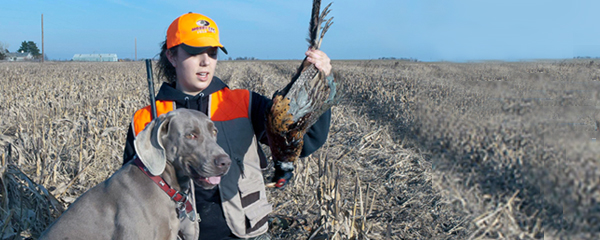
Fruits of the hunt!

Special hunt open to youth and women by application
PRATT--The Kansas Department of Wildlife, Parks and Tourism (KDWPT) and Pass It On – Outdoor Mentors, Inc. is sponsoring their annual pheasant hunting event for youth and women Dec. 8 at Waconda Lake, also known as Glen Elder Reservoir. The event will begin at 7:15 a.m. on Saturday with breakfast at the Hopewell Church basement in Glen Elder State Park. Breakfast will be followed by a pre-hunt safety talk before participants are divided into hunting groups. The hunters, guides, and mentors will then head out to various hunting areas around the lake. A noon meal will be provided by the Waconda Lake Association.
Women of any age and youth 11–16 are eligible and encouraged to apply for this hunt. This hunt is geared toward providing a comfortable and positive hunting environment for new or inexperienced hunters. Previous hunting experience is not required, and shotguns and ammunition can be provided. To apply, contact the Glen Elder Area Office at 785-545-3345 (8:00 a.m. – 4:30 p.m. weekdays) by December 3, 2012. Forty applicants will be selected to participate in the Saturday hunt. If there are more applicants, an additional hunt may be scheduled for Sunday morning, December 9.
A free trap shoot will also be offered on Saturday afternoon from 1:30 pm – 4:00 pm. The trap shoot, which will be held just west of the KDWPT Glen Elder Area Office, is open to the public and is intended for new and beginning shooters.
Another unique aspect of this event is that each group of pheasant hunters will get to hunt alongside a special guest who has been invited to serve as a hunting mentor for their group. This list is currently being put together, but these individuals may be professional athletes, television personalities, or military personnel that have recently returned from deployment.
There will be a hunter’s banquet on Saturday night at 6:00 p.m. at Memorial Hall in Downs. The banquet will include a meal, prizes for the hunters, and more opportunity for the hunters to interact with the special guests. All participants are invited to attend and will be asked to RSVP for the banquet when they sign up for the hunt.
For more information, contact Chris Lecuyer at the KDWPT Glen Elder Area Office 785-545-3345.

Wednesday, February 15, 2012

PHEASANT FEST OFFERS FREE ADMITTANCE TO MILITARY

Common Pheasant
Image via Wikipedia

National event free with military ID on Feb. 17-19
KANSAS CITY, Mo. — Pheasants Forever and Quail Forever has announced that all active military personnel will receive free admission to its National Pheasant Fest & Quail Classic when the event comes to the Kansas City Convention Center’s Bartle Hall on Feb. 17, 18, and 19.
Active duty personnel who present their U.S. Military ID cards will receive free entrance to event from 1 p.m. to 9 p.m. on Friday, 9 a.m. to 6 p.m. on Saturday, and 10 a.m. to 5 p.m. on Sunday. This will be the show’s first time in Kansas City and the first time free admission has been extended to military members.
“Men and women of the military make the ultimate commitment to their country,” says Joe Duggan, Pheasants Forever’s vice president of corporate relations. “They sacrifice a lot to serve, including time they might otherwise have spent hunting, fishing, and enjoying the outdoors. This is a small token of our appreciation, and we hope to see many service members on the floor, so we can personally thank them for standing up for this nation and its wildlife and natural resources.”
The National Pheasant Fest & Quail Classic is the country's largest event for upland bird hunters, sport dog owners, and wildlife habitat conservationists, combining a national outdoor tradeshow, wildlife habitat seminar series, and family event complete with puppies, tractors, shotguns, and art. The event is presented by Cabela's.

Saturday, December 24, 2011

WACONDA LAKE YOUTH/WOMEN PHEASANT HUNT A BIG SUCCESS

English: Pheasant Pheasant in a field near Sim...
Image via Wikipedia

Boys and girls hunt with celebrities and soldiers
GLEN ELDER — “There were 18 happy and tired kids — both girls and boys — leaving the Waconda Lake [Glen Elder Reservoir] area and heading home on the night of Saturday, Dec. 10,” said Chris Lecuyer, Glen Elder Wildlife Area manager.

These new hunters had just wrapped up a full day of activities after participating in the 14th Annual 2011 Waconda Lake Youth, Women, and Celebrity Pheasant Hunt. The event is co-sponsored by the Kansas Department of Wildlife, Parks and Tourism (KDWPT) and Pass It On – Outdoor Mentors, Inc., of Wichita.

“We began before sunrise with a biscuits and gravy breakfast served by the Waconda Struttin’ Dusters Chapter of the National Wild Turkey Federation,” Lecuyer said. “The youngsters listened to a quick talk concerning regulations and safety, and then we introduced them to celebrities and heroes who would join them for the hunt.

Celebrities included John Gillotte, the 2010 National Youth Crappiemasters Champion; Wayne Hubbard, creator and host of Urban American Outdoors TV show; and Guy Caster, former professional drag race car driver. The youth were also joined by four true heroes, soldiers who had been wounded in action, including Colonel Phil McCune and Colonel Tom Kurlick from the Fort Riley Warrior Transition Battalion, and Captain Aaron Isaacson and Second Lieutenant Chad Blow from the Kansas National Guard of Topeka.
Near-perfect morning weather greeted the hunters after breakfast. They were divided into three groups to hunt for the rest of the morning. Several non-hunting adults, parents, and family members went with each group to serve as mentors for the inexperienced hunters. The groups hunted in portions of Glen Elder State Park and the refuges of Glen Elder Wildlife Area.

“Generally, public hunting is not allowed in these parts of the Waconda Lake property except for special events such as this,” Lecuyer explained. “The young hunters were definitely up to our challenge, and the groups managed to bag 16 roosters in just three hours of hunting. Many of the young hunters harvested their first-ever pheasants, and nearly everyone had the opportunity to take a shot or two at the tough birds. A couple of the kids actually harvested multiple birds, and even Colonel Kurlick got his first pheasant.”
A hamburger, hot dog, and chili lunch was served at noon by volunteers from the Waconda Lake Association. The association also sponsored a prize contest for the youth with the longest tail feather from their bird. Devin Basnatt’s 22 1/2 inch tail feather won by more than 1 inch.

After lunch, a trap shoot was held near the Glen Elder Area Office. Three shooting stations were available for the participants to hone their shooting skills. A few of the young hunters and their mentors decided to continue hunting during the afternoon at other locations on the wildlife area.

The day’s events concluded in the evening with a barbeque brisket supper at Memorial Hall in Downs. After the meal, each young hunter received a prize package and heard a few words and got autographs from the celebrities. Attendees also listened to information about youth and mentor hunting opportunities, the importance of recruiting new hunters, and the work of conservation organizations.

This year’s youth participants were Bryce Nichols – Beloit; Rhiley Kaser – Osborne; Bryce Griffin, Andrea Howard, Noah Bradley, Matt Parks, and Cole Sauber – Salina; Cody Heiland – Topeka; Ryan and Megan Richards – Stillwell; Marcus Florence – Olathe; Derek McCarthy – Kansas City, Brandon Regester, Dylan Brittain, Nick Miller, and Jakhai Adams – Wichita; and Devin Basnatt and Sabian Dolvig – Rose Hill.

“We couldn’t have done this without donations from of a host of local businesses,” Lecuyer said. “And a special thanks goes out to all the volunteers and mentors who gave their time to the kids. Almost 50 adults gave up a substantial portion of their day or weekend to help these young hunters.”

KDWPT and Pass It On – Outdoor Mentors believe that offering youth opportunities such as the Waconda Lake Youth, Women, and Celebrity Pheasant Hunt is vitally important to ensure both the development of future hunting generations and well-rounded young people. For information about future special hunts at Glen Elder, phone (785) 545-3345.

Thursday, November 3, 2011

NOVEMBER USHERS UPLAND OPENERS

Konza Prairie, in the Flint HillsImage via Wikipedia
Pheasant, quail, and prairie chicken bring family and friends together

PRATT — For many hunters, Kansas pheasant and quail hunting ranks right up there with Thanksgiving and Christmas — and often coincides. Family and friends who may not have seen each other for a year or more get together and enjoy the outdoors, camaraderie, and putting meat on the table in a time-honored tradition. This winter, pheasant and quail seasons run Nov. 12-Jan. 31, 2012, and while the forecast for bird numbers is down from recent years, the excitement of rekindling old relationships still runs high.

Although good numbers of pheasants and quail will be found in some areas, severe drought and record high temperatures throughout much of the birds’ range last spring and summer resulted in fewer birds overall. Generally, the best pheasant hunting in 2011 will be north of I-70 in western Kansas and the best quail hunting will be in the central part of the state. Details can be found in Upland Bird Regional Forecast on the Kansas Department of Wildlife, Parks and Tourism’s (KDWPT) website,www.kdwpt.ks.us, under “Hunting/Upland Birds.”

KDWPT reminds all hunters to avoid standing crops. While most crops have been harvested already, some fields remain uncut, even as late as mid-November. Hunters are asked to stay out of standing crop fields because most farmers do not want these fields disturbed until after harvest. Permission is required to hunt private land, whether it is posted or not.

The season on Kansas’ third upland bird — the prairie chicken — runs Nov. 19-Jan. 31 in the Northwest and East units and Nov. 19-Dec. 31 in the Southwest Unit. The best greater prairie chicken hunting should be in native grasslands from the northern Flint Hills westward throughout the Smoky Hills along the I-70 corridor.

The daily bag limit on pheasants is four roosters, and the daily bag on quail is eight birds. The daily bag limit on prairie chicken in the East and Northwest units is two, and the daily bag in the Southwest Unit is one. The possession limit on all three upland species is four times the daily bag limit.

A valid Kansas hunting license is required of all residents ages 16 through 64. Nonresidents must purchase a $72.50 nonresident hunting license, except that those nonresidents younger than 16 may purchase a youth nonresident license for $37.50. Anyone born on or after July 1, 1957, must have completed a certified hunter education course, except that youth 15 and younger may hunt under direct adult supervision without hunter education certification. Youth 12 through 15 may hunt without adult supervision if they have completed a certified hunter education course. Anyone 16 or older may purchase a one-time deferral of hunter education, called an “apprentice hunting license,” for the same price as a regular hunting license. This license is valid only through the calendar year in which it is purchased, and the holder must be under the direct supervision of a licensed adult 18 or older. A hunting license and hunter education are not required while hunting one’s own land.

For complete hunting regulation information, consult the 2011 Kansas Hunting and Furharvesting Regulations Summary, available wherever licenses are sold or online atwww.kdwpt.state.ks.us.

Friday, October 21, 2011

YOUTH PHEASANT AND QUAIL SEASON NOV. 5-6

Oct. 20, 2011

Youth pheasant and quail season Nov. 5-6; regular season opens Nov. 12

PRATT — Do you know a kid who has never been quail or pheasant hunting but might really like the opportunity? Whether it’s a niece or nephew, son or daughter, or just a young friend, the Kansas Department of Wildlife, Parks, and Tourism (KDWPT) asks you to make a date with a youngster for Nov. 5-6 — the Kansas youth pheasant and quail season. The season is a chance to honor the hunting tradition and “Pass It On” to youth, and many adult hunters also see this as time to stretch their legs, scout fields, and work dogs. But youth are the focus.


During these two days, youth 16 and younger may hunt under the supervision of an adult 18 or older, but the adult may not hunt. It’s a great time to get kids out before the birds are stirred up, improving the opportunity of bagging game in uncrowded conditions. The daily bag limits during this season are two rooster pheasants and four quail (half the regular season limit).


For those who don’t have access to private land to hunt, KDWPT maintains wildlife areas and more than one million acres of Walk-In Hunting Access lands throughout the state. For more information on these areas, go the KDWPT website, www.kdwpt.ks.us, and click “Hunting/Where to Hunt in Kansas.” Explore public wildlife areas throughout the state and download the 2011 Kansas Hunting Atlas, also available in printed form at most license vendors. For information on where the best bird hunting may be found, click on “Hunting/Upland Birds” and go the Upland Bird Regional Forecast.


So there’s no excuse; take a kid pheasant and quail hunting Nov. 5 and 6, and enjoy yourself. If you’re an avid upland bird hunter, you may be back the following Saturday, Nov. 12, when resident and nonresident hunters hit the field for the opening of the regular pheasant and quail seasons, which run through Jan. 31, 2012. Prairie chicken season opens the following Saturday, Nov. 19. This season runs through Jan. 31, 2012, in the Northwest (north of I-70 and west of U.S. 281) and East (all Kansas east of U.S. 281) units. In the Southwest Unit (south of I-70 and west of U.S. 281), prairie chicken season runs Nov. 19 through Dec. 31.


The Kansas Department of Wildlife and Parks (KDWP) reminds all hunters to avoid standing crops during upland game bird seasons. Although most milo is expected to be harvested before the seasons open this year, some milo and other crops may not, and most farmers do not want these unharvested fields disturbed. Permission is required to hunt private land, whether it is posted or not.


During the regular seasons, the daily bag limit on pheasants is four roosters, and the daily bag on quail is eight birds of either sex. The daily bag limit on prairie chicken in the East and Northwest units is two, and the daily bag in the Southwest Unit is one. The possession limit on all three species is four times the daily bag limit.


A valid Kansas hunting license is required of all residents ages 16 through 64. Nonresidents must purchase a $72.50 nonresident hunting license, except that those nonresidents younger than 16 may purchase a youth nonresident license for $37.50. Anyone born on or after July 1, 1957, must have completed a certified hunter education course, except that youth 15 and younger may hunt under direct adult supervision without hunter education certification. Youth 12 through 15 may hunt without adult supervision (during the regular season only) if they have completed a certified hunter education course. Anyone 16 or older may purchase a one-time deferral of hunter education, called an “apprentice hunting license,” for the same price as a regular hunting license. This license is valid only through the calendar year in which it is purchased, and the holder must be under the direct supervision of a licensed adult 18 or older. A hunting license and hunter education are not required while hunting one’s own land.


For complete hunting regulation information, consult the2011 Kansas Hunting and Furharvesting Regulations Summary, available wherever licenses are sold or online at the KDWP website under “Hunting/Hunting Regulations.”


“If you were fortunate enough to have been introduced to hunting at an early age, you know the magic,” says KDWPT Information Production Section chief Mike Miller. “It rests in your memories forever, and it drives a basic desire to experience the outdoors each fall. Hunting is a valued natural heritage, but it’s one that must be passed on from one generation to the next. Hunter numbers are decreasing, and younger generations are in danger of missing these treasured experiences. And fewer hunters reduces the financial, social, and political support needed for effective wildlife management. We hope everyone 18 or older who likes to hunt will take a youngster hunting this fall.”

Sunday, September 25, 2011

HEAT AND DROUGHT IMPACT 2011 UPLAND BIRD FORECAST

Flint HillsImage by kswx_29 via Flickr
While some areas of central, northcentral, and northwest Kansas may offer good hunting, drought and heat have reduced bird numbers
PRATT — Kansas upland bird hunters enjoyed a banner season in 2010, but this summer’s heat and drought in parts of the state have hurt upland bird prospects for 2011. The Kansas Department of Wildlife, Parks and Tourism (KDWPT) has released its 2011 Kansas Upland Bird Forecast, and although good numbers of pheasants and quail will be found in some areas, severe drought and record high temperatures throughout much of the birds’ range resulted in fewer birds overall.
Generally, the best pheasant hunting in 2011 will be north of I-70 in western Kansas, the best quail hunting will be in the central part of the state, and the best greater prairie chicken hunting should be in native grasslands from the northern Flint Hills westward throughout the Smoky Hills.
Central and western Kansas had a relatively mild 2010-2011 winter, and over-winter survival was very high for upland game throughout most of the state. Breeding populations in central and western areas neared all time highs, especially for pheasant. However, drought that began in the summer of 2010 and persisted through the 2011 nesting season (May through July) and the summer hampered growth of wheat — primary nesting habitat for pheasants — especially in western Kansas. Areas in northwest and northcentral parts of the state received rain in May, which improved nesting conditions in those areas but likely hurt nest success where rainfall was excessive. In July and August, some severe hailstorms hit these areas, possibly decreasing chick survival in localized areas.
The southern half of the state endured prolonged drought through the rest of the summer. Southwest and southcentral Kansas had particularly bad reproductive conditions for pheasants, quail, and prairie chickens.
So what does this mean for Kansas upland bird hunters this fall? Here’s the statewide breakdown by species.

Pheasants
Unfortunately, drought through much of the state hampered pheasant reproduction this year. A substantial number of hens nest in winter wheat in the primary pheasant range (western Kansas). This year, much of western Kansas, especially southwest, had much-reduced wheat production. Nest success was likely much lower in these areas due to poor vegetative structure. Additionally, earlier wheat harvest dates due to poor growing conditions likely caused losses to nests or young broods. Thus, like many other pheasant states, Kansas will experience a substantial decline in the pheasant population this year.
The timing and quantity of early summer precipitation also plays a direct role in game bird productivity. Success of nests and survival of young is generally best when rain comes slowly and in near average amounts during May and June. Most of the areas in Kansas’ primary pheasant range did not meet that prescription this year and had little or no precipitation. Additionally, a few areas where there was reproductive success (northwest and northcentral Kansas) received heavy rainfall and/or hail during the peak reproductive period. Although these storms were often localized, in some counties they occurred multiple times. Counties affected by hail include portions of Norton, Graham, and Rooks.
Compared to 2010, pheasant numbers will be considerably lower throughout their range. This will especially be true in northeastern, southwestern, and southcentral Kansas. In those parts of northwestern and northcentral Kansas not affected by severe summer storms, pheasant numbers will be relatively good compared to other areas of the state but still down from last year.
Quail
The bobwhite breeding population in 2011 was generally stable compared to 2010, except for southwestern Kansas, where there were severe declines. However, 2011 summer brood surveys indices were down throughout much of the state for quail, indicating a general decline. There were some indications of higher reproductive success in the northcentral, southcentral, and southeast parts of Kansas although good areas may be spotty.
Because quail breed later than pheasants and prairie chickens, early summer moisture may have provided better conditions for nesting and brood-rearing in central and eastern Kansas. In past years, heavy precipitation and flooding associated with summer storms has negatively impacted bobwhite productivity in many parts of central and eastern Kansas. Fortunately, these conditions were absent this year. Counties that reported higher quail reproductive success are Pratt, Reno, Woodson, Phillips, and Rooks.
The best quail hunting will be found throughout the central part of the state. However, extreme southcentral Kansas experienced prolonged drought, likely hampering reproduction. Quail numbers declined considerably in southwestern and northeastern Kansas, and opportunities will likely be limited in those areas. Bobwhite numbers in far northwestern Kansas continue to improve, but that portion of the state is at the fringe of the bird’s range, and densities will still be low compared to central Kansas. Although southeast Kansas may see an improvement in reproduction this year, numbers remain far below historic levels in that region.
Prairie Chicken
Kansas is home to greater and lesser prairie chickens. Both species require a landscape of predominately native grass. Lesser prairie chickens are found in westcentral and southwestern Kansas in native prairie and nearby stands of native grass within the Conservation Reserve Program (CRP). Greater prairie chickens are found primarily in the tallgrass and mixed grass prairies in the eastern one-third and northern half of the state.
The spring prairie chicken lek survey indicated that the lesser prairie chicken breeding population was similar to last year, except at the northern extent of their range in westcentral Kansas, where there were increases. This area is occupied by both greater and lesser prairie chickens. Nesting and brood rearing conditions for lesser prairie chickens were generally not good this summer throughout most of their range due to drought in southcentral and southwest Kansas. It is likely that populations will be down from last year, and the best hunting will be in the central and northern portions of the lesser prairie chicken range.
Greater prairie chicken breeding populations were generally down in the eastern parts of the state (Flint Hills), but up considerably in the northcentral (Smoky Hills) and northwest (grasslands in the northern High Plains) parts of Kansas. In the core of the Flint Hills of eastern Kansas, the majority of occupied habitat was burned again this spring, leaving little nesting cover. While periodic burning is essential to prevent woody encroachment into the prairie, burning the same acreage annually in early spring greatly reduces the potential for successful nesting, even when weather is favorable.
Conditions were comparatively better for production throughout the northern Flint Hills due to less spring burning and more rainfall. Conditions were good for production throughout most of the Smoky Hills region that spans across northcentral and northwest Kansas. The best greater prairie chicken hunting should again be found in native grasslands from the northern Flint Hills westward throughout the Smoky Hills.
A detailed 2011 Kansas Upland Bird Hunting Forecast is available online at the KDWPT website,www.kdwpt.state.ks.us. Click "Hunting/Upland Birds/Upland Bird Regional Forecast" for the complete report.
The following table includes the upland birds seasons for 2011. Possession limits are four times the daily bag limits.

SeasonOpen DatesDaily BagOpen Areas
Prairie chicken (Early)Sep. 15 –Oct. 152East of Hwy. 281
Youth PheasantNov. 5-62Statewide
Youth QuailNov. 5-64Statewide
PheasantNov. 12 – Jan. 314Statewide
QuailNov. 12 - Jan. 318Statewide
Prairie chicken
East and Northwest Units
Nov. 19 –Jan. 312North of I-70 & east of Hwy. 281
Prairie chicken
Southwest Unit
Nov. 19 –Dec. 311South of I-70 & west of Hwy. 281

Friday, July 22, 2011

PHEASANTS FOREVER NAMES NEW REPRESENTATIVE FOR WESTERN KANSAS

PheasantImage via Wikipedia Jacobs sees Kansas as national model for upland habitat and conservation
ELLIS — Pheasants Forever has named Tony Jacobs of Wichita as the organization’s new regional representative for western Kansas. Jacobs will raise funds for wildlife habitat and conservation education working with local, state, and federal natural resources agencies on behalf of Kansas Pheasants Forever and Quail Forever chapters.
Jacobs looks to grow Pheasants Forever’s presence in Kansas, which is currently home to more than 50 Pheasants Forever and Quail Forever chapters and nearly 7,000 Pheasants Forever and/or Quail Forever members. Due in part to strides made by Pheasants Forever, Quail Forever, and their partners, Kansas is recognized as a national leader in upland hunting opportunities. Jacobs, a lifelong pheasant hunter, wants to continue this trend by working with regional and national partners to improve and increase the amount of quality habitat for both upland birds and upland hunters.
"This state has such a great hunting heritage, so it’s important that we get out on the ground and provide more high-quality habitat for pheasants and quail populations," Jacobs says. "It’s an uphill battle in a lot of the country, but here in Kansas we have the opportunity to showcase what is possible when time, talent, and resources are dedicated to wildlife and habitat conservation. I am very proud to be a part of the nation's leading upland conservation organization, and I look forward to fostering, promoting, and growing the Pheasants Forever and Quail Forever mission.”
Pheasants Forever empowers county and local chapters with the responsibility to determine how 100 percent of their locally-raised conservation funds will be spent. As a result, chapter volunteers are able to see the fruits of their efforts locally while belonging to a larger national organization with a voice in federal and state conservation policy.
Jacobs earned a B.S. in hospitality management from Kansas State University and a master’s degree in business administration from Friends University. He will work out of his office in Ellis and can be reached at 785-764-6240.

Thursday, July 14, 2011

SURVEY SUGGESTS NESTING PHEASANT NUMBERS STABLE

PheasantImage via Wikipedia Western Kansas has one of strongest breeding populations in history; breeding season drought may offset good news
PRATT — Following the outstanding 2010-2011 pheasant season, spring surveys revealed good pheasant populations going into the 2011 nesting season. From April 25-May 15, the Kansas Department of Wildlife, Parks and Tourism (KDWPT) conducted its annual spring survey of pheasants. As the mating season approaches, roosters increase crowing, and KDWP staff drive established routes to listen for the birds. Pheasant routes are set up along 20-mile transects, with at least 2 miles between each of 11 stops. At stops, observers listen for two minutes and count all the audible two-note crows heard from male pheasants. The average number of crows per stop across each management region is calculated and used to assess how population numbers have changed from previous years.
Observers start listening at the first stop along each route beginning 45 minutes before sunrise and progressing along the route until all 11 stops have been surveyed. Noise interference is taken into consideration, and data is censored if the observer feels noise is inhibiting their ability to count crows. Data from this survey, combined with the summer brood count survey in August and a rural mail carrier survey, helps determine the outlook for the fall pheasant hunting season.
All 62 established routes were surveyed this year, and an average of 20.5 crows were counted per station, an apparent increase of 17 percent from 2010, which is not considered statistically different.
The spring pheasant survey results can represent two important life stages for pheasant populations in Kansas. Changes in spring survey indices can reflect over-winter survival for a population. Often, winter can be a bottleneck for some upland game populations. However, in western Kansas, winters are often much more mild than more northern latitudes, and pheasant survival is usually high throughout much of the state. When this is the case, spring surveys can also reflect the reproductive success of the previous breeding season.
In the 2010 breeding season, pheasant productivity was high across most of the state, which carried over to the 2011 Pheasant Crow Count because of a fairly mild winter for Kansas’ best pheasant range. The southcentral and northeastern parts of the state showed declines, likely due to poor productivity last summer as a result of less than ideal weather conditions in those areas. Northeast Kansas has also had some severe winters recently, which has suppressed populations.
Overall, western Kansas has one of the strongest pheasant breeding populations in its history this year, which is reflected by the extremely high crow counts for 2011. However, extreme drought has created unfavorable breeding season conditions across most of southwestern and southcentral Kansas. Thus, the 2011 fall pheasant population will likely be down substantially from last fall in those areas. Conditions appear to have been much more favorable for productivity in other regions of the state, but it is still too early to make accurate predictions about the fall population in those areas.
Across Kansas’ pheasant range, those areas with good interspersion of grassland and cropland showed the highest densities of pheasants again this spring. Many of the hens in these regions use green wheat for nesting, and the condition of the wheat crop usually has a strong influence on pheasant productivity. The wheat crop was generally poor across western Kansas this year, which meant less vertical structure for nest concealment and an early harvest date. The early harvest likely increased direct mortality of nests and young from farm equipment. Additionally, the ongoing drought in that region will also negatively affect chick survival because dry conditions reduce the availability of insects, which are the primary food source for those developing young.
KDWPT’s late summer brood surveys in July and August will provide better projections of fall populations.

Tuesday, November 23, 2010

GLEN ELDER YOUTH

Military veterans and celebrities to take part in event; Dec. 10 application deadline
GLEN ELDER — On Dec. 18-19, the Kansas Department of Wildlife and Parks (KDWP) and Pass It On – Outdoor Mentors, Inc., will sponsor their annual pheasant hunt for youth and women at Glen Elder Reservoir. The event will begin early on both Saturday and Sunday mornings with a hunter breakfast followed by a pre-hunt safety meeting. Groups of hunters, guides, and mentors will then go to various areas around Glen Elder Reservoir and hunt until noon. A noon meal will also be provided for hunt participants each day.
Women of any age and youth ages 11 through 16 are eligible for this hunt, which is geared toward providing a comfortable and positive hunting environment for new or inexperienced hunters. Previous hunting experience is not required, and some shotguns and ammunition will be provided to applicants who do not have access to their own equipment.
A free trap shoot will be offered on Saturday afternoon from 1:30 p.m. to 4 p.m. west of the Glen Elder Area Office. While designed for new and beginning shooters, the shoot will be open to anyone.
One highlight of this event is that each group will hunt pheasants with a military veteran and celebrity. This guest list is currently being developed, but these individuals may be former athletes, TV personalities, or servicemen and women have recently returned from deployment.
For more information and applications, phone the Glen Elder Area Office at 785-545-3345 (8 a.m.-4:30 p.m. weekdays) by Friday, Dec. 10. Forty applicants will be selected to participate in one of the morning hunts.

Family-Outdoors...a website designed to help folks enjoy the outdoors

Enhanced by Zemanta