Showing posts with label Bird. Show all posts

Wednesday, December 16, 2015

Get In The Christmas Bird Count Spirit

PRATT – It is the most wonderful time of the year, especially if you enjoy birdwatching. Christmas Bird Count traditions provide a great way to spend time outdoors, learn about birds and enjoy the camaraderie of like-minded birders. And the best part: it’s free.
Birders of all skill levels are welcome to the events, where groups will spend time canvassing established circular census areas, recording species and numbers of birds observed. Information recorded at events is entered into regional and national databases and can show population and migration trends. Some Christmas Bird Counts have been conducted for more than 100 years, and more than 2,000 events are conducted across the U.S. each year, so databases are extensive. There are usually more than 50 events conducted in Kansas each winter between Dec. 13 and January 9.
To learn more about Kansas Christmas Bird Count locations, go to the Kansas Ornithological Society’s (KOS) website, www.ksbirds.org. You’ll find a list of events scheduled to date, along with locations and contact information. To learn more about Audubon-sponsored events go to www.audubon.org.
All you need to participate is clothing appropriate for traipsing outdoors on a mid-winter day, a pair of binoculars, and a good field guide. Spotting scopes are handy if large wetlands or reservoirs are included in the census area. Add in a little adventurous spirit and some good friends and you have the recipe for a great day in the Kansas outdoors.

Saturday, October 31, 2015

Youth Pheasant and Quail Season Prime Opportunity

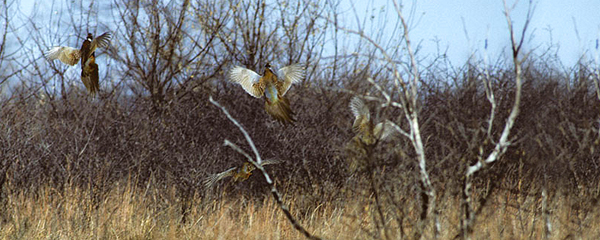
PRATT – Two days, November 7-8, 2015, should be marked on every young hunter’s calendar. The youth pheasant and quail season allows all youth 16 and younger to hunt, under the supervision of an adult 18 or older, for pheasants and quail statewide. The daily bag limits during the youth season are 2 rooster pheasants per day and 4 quail per day. All state and federal lands normally open to public hunting are open, and all Walk-in Hunting Access lands are open. Hunting pressure is generally light, ensuring high-quality and productive hunting opportunities for youth.
The Kansas Department of Wildlife, Parks and Tourism established youth hunting seasons through Pass It On, the department’s hunter recruitment program. Special youth seasons are set for spring turkey, deer, waterfowl, pheasants and quail. The youth seasons open before regular season openers, giving young hunters first crack. Setting youth seasons separate from regular seasons allows mentors to work with young hunters without giving up their traditional hunts.
Resident youth 15 and younger do not need a hunting license, and while Hunter Education certification is not required when hunting under adult supervision, it is highly recommended. Sixteen-year-old residents and all nonresidents must have hunting licenses. The adult mentor may not hunt; however the youth season can provide a great opportunity to scout potential hunting areas and get dogs primed before the regular opener.
With improved pheasant and quail populations predicted this fall, the youth season will provide a fantastic opportunity to introduce a youngster to the hunting tradition. For many veteran hunters, that experience is more rewarding than the hunt itself.

Friday, May 22, 2015

Man Discovers Rare Tropical Bird at Scott State Park

Chris Lituma, a post-doctoral research associate at the University of Tennessee’s Institute of Agriculture, had no idea a fleeting trip to Kansas would result in a monumental discovery. 

Lituma was leading a group of students through a multi-state field study, including a stop in Scott City. Friend, and Kansas-native, Mike Hudson, had recommended Scott State Park just north of Scott City to Lituma as a good place to go birdwatching – a hobby of Lituma’s for the past 11 years. Upon arrival, Lituma began helping students identify the various birds, but one bird in particular was no ordinary migrant.

“The students asked me ‘hey, what’s this bird?’ and I briefly looked at it and assumed it was a black-headed grosbeak,” said Lituma.

Students then looked up the grosbeak in a field guide to find it was not the same bird they were looking at.

“At that point, I took another look at the bird and almost immediately realized this was no grosbeak, this was something very special; something rare.”

Lituma thumbed through one of his field guides but was unable to find the family of birds he thought the bird belonged to. He then grabbed a National Geographic field guide and was able to narrow his identification down to three birds. After a brief discussion with the students, everyone was in agreement that they were looking at a piratic flycatcher.

Hailing from as far as Argentina, piratic flycatchers are tropical birds belonging to the genusLegatusand are the only species to hold this classification. They are strongly migratory birds, and have been known to fly out of range, but rarely as far as North America. According to the American Birding Association (ABA), less than 10 of these birds have been recorded in the U.S. If Lituma’s sighting is accepted by the ABA, it will be the first record for Kansas and the farthest northerly record of the bird, as well.

Scott State park manager, Greg Mills, said the sighting has brought in nearly 75 birders from 13 states, including Virginia.

Although the bird has yet to be seen at the park again sinceitslast sighting at 12:30 p.m. on Sunday, May 10, experts believe the bird could still be in theSunflowerState.

Thursday, January 22, 2015

2015 GREAT BACKYARD BIRD COUNT BEGINS FEB. 13

Fifteen minutes or more of bird watching is all participants need to participate

PRATT – In lieu of conducting the Backyard Bird Feeder Survey this year, bird watchers around the state are asked to participate in the annual Great Backyard Bird Count (GBBC) taking place Feb. 13-16. The GBBC is an annual four-day event that engages bird watchers of all ages in counting birds. Participants are asked to count numbers and species of birds from any location for as little as 15 minutes on one or more days of the event and report their sightings online at www.birdcount.org.  Anyone can take part in the count, from beginning bird watchers to experts, and there is no cost to participate.

It’s free, fun and each checklist submitted during the GBBC helps researchers at the Cornell Lab of Ornithology and other bird conservation organizations learn more about population trends and distribution of various songbird species. 
Visit www.birdcount.org for more information.

Tuesday, September 23, 2014

KANSAS ORNITHOLOGICAL SOCIETY FALL MEETING

Members of the public are welcome to join in on the feathery fun
PRATT – The Kansas Ornithological Society (KOS) will hold its fall meeting October 3-5 in Salina. This informative and fun gathering is open to everyone and will include an informal, come-and-go reception at Lakewood Discovery Center on Friday from 6 p.m. - 9 p.m. On Saturday a paper session and business meeting will run 9 a.m. - 4:40 p.m., followed by the annual banquet from 6 p.m. - 9 p.m. On Sunday, all-day field trips will start at 7 a.m.
The paper session and business meeting will take place at the Sams Hall of Fine Arts on Kansas Wesleyan University campus, where students involved in bird research will have the opportunity to present their results. Time will also be allotted for non-professional birders wishing to share information on less-formal bird observations and research. Following lunch, participants can enjoy a Birdwatchers’ Hour where photographers of all skill levels can showcase their images of birds from Kansas and around the world. During the business meeting, KOS members will vote on new officers and board of directors for 2015, receive a fiscal update on KOS, and address any changes regarding bylaws or rules of operation, if necessary.
The annual banquet is scheduled at the Salina Country Club and will feature an awards ceremony and keynote speaker, Al Batt, a contributing columnist for Birdwatcher’s Digest.
Sunday will conclude the three-day event with all-day field trips led by local experts. Participants will depart from Lakewood Middle School (across from Lakewood Discovery Center) at 7 a.m. Destinations include: Salina, Ottawa State Fishing Lake, Kanopolis Reservoir, McPherson State Fishing Lake and Abilene. A list of species compiled for these areas and a lunch will be provided for all pre-paid participants.
For more information, or to register, visit www.ksbirds.org, or contact Mike Rader atmike.rader@ksoutdoors.com or (620) 672-0708.

Friday, April 11, 2014

SPRING TURKEY SEASON RUNS THROUGH MAY 31

Firearm hunters can hit the field April 9
PRATT –  A lot of work goes into prepping for a spring turkey hunt, from scouting roosting April 9 when the regular spring turkey season opens. Following the archery-only/ youth/disabled season, April 1-8, turkey hunters can hit the field with shotgun or archery equipment to take their shot at a spring turkey, or two. And thanks to equipment changes established last year, hunters may now use any gauge shotgun or muzzleloading shotgun with shot sizes No. 2 through No. 9 and crossbows to fill their spring turkey tags.
sights and sighting in shotguns, to mastering the perfect “cluck” and “purr” call. And all that hard work will pay off on
For hunters age 15 and younger, filling a tag has never been more affordable. Thanks to reduced youth permit pricing, resident youth hunters can now enjoy taking their shot at a spring turkey for just 7.50, and nonresident youth for 12.50.
Other 2014 Spring turkey permits can be purchased at the following prices:
  • Resident Permit: $22.50
  • Landowner/Tenant Permit: $12.50
  • Resident Turkey Game Tag: $12.50
  • Nonresident Permit: $32.50
  • Nonresident Turkey Game Tag: $22.50
A turkey permit or game tag is valid for one bearded turkey. Any individual who has purchased a spring turkey permit is also eligible for one spring turkey game tag. Spring game tags are valid for Units 1, 2, 3, 5 and 6.
Hunters who drew a Unit 4 (southwest Kansas) spring turkey permit earlier this year may also use their Unit 4 permit in adjacent Units 1, 2 and 5.
Regardless of where you choose to hunt this spring, it’s not guaranteed you’ll fill a tag, but rest assured the opportunity is out there. For information on where you opportunity may await, consult the 2014 Spring Turkey Hunting Atlas, or visit www.ksoutdoors.com and click “Hunting / Turkey Information.”

Thursday, March 6, 2014

KANSAS BIRDING BIG YEAR IS BIG SUCCESS

A Kansas bird count of 319 species sets the standard for 2014 competition
PRATT ­– The first annual Kansas Birding Big Year, which began last April, came to an end Dec. 31, 2013. Fifty-four participants signed up for the inaugural competition. First place winner in the adult division, James Malcom of Topeka, spotted and identified 319 bird species, setting quite the benchmark for future competitors. There are three age categories: youth (18 and under), adult (18-64), and senior (65 and older), with most participants entering the adult age category.
Results for each age category are as follows:
Adult DIVISION
1st place ­– James Malcom of Topeka – 319 species (overall high total)
2nd place – Jeff Calhoun of Dodge City – 314 species
3rd place – Matt Gearheart of Shawnee – 284 species
Youth DIVISION
1st place – Sam Schermerhorn of Wamego – 152 species
2nd place – Joshua Keating of Milford –98 species
3rd place – Jacob Keating of Milford – with 86 species
Senior DIVISION
1st place – Earl (Mick) McHugh of Shawnee Mission – 255 species
2nd place – Dan Larson of Berryton – 200 species
3rd place – Judith Collins of Salina –174 species
Designed to get more folks outdoors and watching birds, the Kansas Birding Big Year competition came about after Kansas Department of Wildlife, Parks and Tourism Secretary Robin Jennison saw the popular movie “The Big Year,” depicting avid bird watchers trying to see as many species as they could in a single calendar year. Secretary Jennison thought it would be a fun and interesting way to get Kansans interested in bird watching, so the competition took flight and continues to gain altitude and popularity as we soar into it’s second year.
Prizes were provided courtesy of sponsors, including Cabela’s, Bonner Springs, Bass Pro Shops, Olathe,Walmart, Pratt, Bushnell Optics, Overland Park, JanSport, Alameda, Calif., and Acorn Naturalists of Tustin, Calif. In addition to receiving prizes, winners from each age group will also receive an original matted and framed pencil drawing of a native Kansas bird species, drawn and donated by Dr. Robert Penner of Ellinwood. Penner is the land steward for the Nature Conservancy at Cheyenne Bottoms and also serves as the Avian Projects Coordinator for Kansas.
Although the 2014 competition began Jan. 1, there is still plenty of time to sign up and participate; simply visitksoutdoors.com and click “Services,” “Education,” then “Birding Big Year Competition” and start recording.

Tuesday, February 11, 2014

SURVEY TRACKS BACKYARD FEATHERED-FRIENDS

Spotting backyard birds can be a relaxing and fun way to enjoy wildlife during the colder months
PRATT – Bird watchers around the state can participate in two essential studies on winter bird populations simply by keeping a watchful eye. The first study will begin with the Kansas Winter Bird Feeder Survey, Jan. 30–Feb. 2, followed by the 2014 Great Backyard Bird Count (GBBC) Feb. 14–17.
Participants of the Winter Bird Feeder Survey are asked to observe and record the number www.ksoutdoors.com, and mailing it in. Information gleaned from this survey will help the Kansas Department of Wildlife, Parks and Tourism (KDWPT) track songbird population trends and types of feed that are most attractive to backyard birds.
and species of birds visiting their backyard feeders on two consecutive days between Jan. 30 and Feb. 2. Watchers can report the results by downloading the survey form found on
During the two-day survey, birders are encouraged to record the times of day they observed birds, the number of each species seen, along with a description of their feeders using the form provided. Each species should be listed by the highest number seen together at any one time. For example, if 10 juncos are seen at 9 a.m., 11 at 12 p.m., and seven at 4 p.m., the number recorded would then be 11.
Following the Winter Bird Feeder Survey, birders can also participate in the GBBC beginning Feb. 14. Unlike the Winter Bird Feeder Survey where participants view birds at a feeder for any length of time, the annual GBBC asks participants to watch birds at any location for a minimum of 15 minutes. This effort aids in better defining bird ranges, populations, migration pathways, and habitat needs. Participants then tally the numbers of each species seen, and report their observations online at www.birdcount.org.
This will be the last year that Kansas has a separate Winter Bird Feeder Survey as future surveys will be integrated with the GBBC. This change will allow participants to enter their data online, eliminating mail-in data forms, and will also allow researchers better access to recorded data. In the future, participants and other Ebird users will also be able to view the data and interactive maps developed with the data entered online.
Global participation will be made possible by www.ebird.org, a real-time online checklist program that the Cornell Lab and Audubon are integrating into the GBBC for the first time this year. The four-day event will receive sightings from tens of thousands of participants who may record more than 600 bird species in the United States and Canada alone.
For more information regarding the Great Backyard Bird Count visit www.birdsource.org/gbbc/ or www.ebird.org.

Friday, November 8, 2013

KANSAS PHEASANT AND QUAIL SEASONS GENERATE EXCITEMENT

Hunters return each fall to reconnect with land, friends, family and hunting traditions
PRATT – The Kansas pheasant and quail seasons openSaturday, Nov. 9, 2013-Jan. 31, 2014and you can bet avid bird hunters will be in the field. It’s a time-honored tradition where spending time with
friends and family, renewing acquaintances with landowners, and experiencing the Kansas countryside becomes more important than the number of birds bagged.
While the extended severe drought was broken this summer in many parts of the state, rains came too late to have significant impacts on pheasant nesting and brood survival success. The forecast for most of the traditional pheasant regions in Kansas predicts below average bird numbers. Rains have improved habitat conditions in many areas, and if the trend continues, nesting and brood habitat will be much better this spring.
There are pockets with decent pheasant numbers in the northcentral and northwestern regions of Kansas. Hunters will have to work to find birds, and they may have to travel within the regions to locate these pockets.
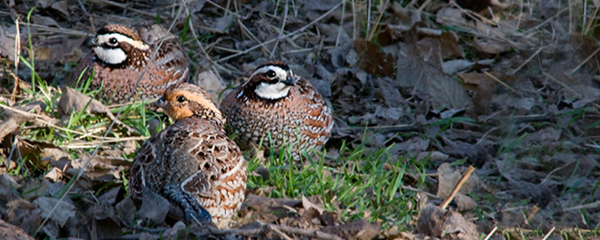
Quail populations in eastern Kansas have improved and some of the best quail hunting will be found in the Flint Hills and southeast regions of the state.
For more details on the pheasant, quail and prairie chicken forecast for 2013, go to www.ksoutdoors.com. A copy of the2013 Kansas Hunting and Furharvesting Regulations Summary and the 2013 Kansas Hunting Atlas can be downloaded, as well. Printed publications are available wherever licenses are sold. More than 1 million acres are enrolled in the Walk-In Hunting Access (WIHA) program, and the atlas includes maps showing all WIHA tracts, as well as all state and federal public hunting lands.
Pheasant and quail hunters should remember that they must have permission to hunt private land, whether that land is posted or not. Land marked with purple paint requires written permission from the landowner. All resident hunters age 16-74 must have a Kansas resident hunting license, and all hunters born on or after July 1, 1957 must have completed an approved hunter education course. Youth 15 and younger may hunt without hunter education as long as they are under the direct supervision of an adult. Hunters 16 and older may purchase an apprentice license that is a one-time purchase and allows them to hunt without hunter education while also under adult supervision. A resident hunting license is $20.50. A resident youth multi-year license, valid from age 16-21, is available for $42.50. Resident hunters age 65-74 can purchase an annual hunting license for $11.50 or a lifetime combination hunt/fish license for $42.50. A nonresident hunting license is $72.50 for hunters 16 and older and $37.50 for youth hunters 15 and younger.
While hunting is one of the safest outdoor activities, simple safety precautions will ensure you have a safe and enjoyable hunt. Most hunting-related incidents in Kansas occur when a hunter swinging on game fires and hits another hunter in the line of fire. Maintaining safe zones of fire, keeping track of other hunters in your party, and wearing blaze orange clothing can help prevent this type of incident. Other safety rules include: always point your shotgun’s muzzle in a safe direction; keep your safety on until right before you shoot; know your target and what is beyond, and transport your shotgun unloaded and in a case.

Saturday, October 12, 2013

2013 KANSAS UPLAND BIRD FORECAST NOW AVAILABLE

Despite drought during the reproductive season, some upland game hunters may experience a memorable harvest this fall

PRATT – The 2013 Upland Bird Forecastis now available for viewing online at ksoutdoors.com, and although population levels are projected to be less than favorable, upland bird hunters willing to travel to northern Kansas, may find a silver lining to the season.
Since extreme drought conditions persisted in most of the state again this year, ideal vegetation conditions were scarce going into the breeding season. This left most upland game birds without sufficient brood rearing cover and insect abundance, and thus led to a lower than average chick survival rate. Although the precipitation that fell across much of the state in late summer came too late to improve the upcoming season, biologists anticipate upland bird hunters may see enhanced conditions and a potential for better production next summer as vegetation conditions continue to improve.
As with any forecast, predictions are general and regional in nature. Although survey data indicate below average bird populations, hunters willing to work will likely find pockets with adequate bird numbers. Going from poor to fair hunting can often be as simple as driving 30 miles.
Listed below are statewide summaries on pheasant, quail, and prairie chickens. For the full forecast, including region-specific summaries, visit ksoutdoors.com and click “Hunting / Upland Birds / Upland Bird Regional Forecast.” For a printed copy of the 2013 Upland Bird Forecast, 2013 Kansas Hunting and Furharvesting Regulations Summary, and 2013 Kansas Hunting Atlas, call (620) 672-5911.
PHEASANT – Pheasant populations in Kansas continue to suffer from the extended drought. Breeding populations dropped across their range from 2012 to 2013 resulting in less adult hens in the population to start the 2013 nesting season. However, opportunities will still exist to harvest roosters in the Sunflower State, especially for those willing to work for their birds. Though the drought has taken its toll, Kansas still has one of the best pheasant populations and the fall harvest will again be among the best in the country. The best areas this year will likely be pockets in northwest and northcentral Kansas.
QUAIL – The statewide bobwhite breeding population decreased in 2013 compared to 2012, but there is some variation across the state. Areas east of the Flint Hills showed improved productivity this year. Populations have rebounded over the last two years in eastern Kansas, but overall populations are still below historic averages. The best quail hunting will likely be found within the Flint Hills and southeast regions.
PRAIRIE CHICKEN – The spring prairie chicken lek survey indicated that most populations remained stable or declined slightly from last year. Areas within the Flint Hills and southcentral regions fared the best, while areas in the northern and western regions, where the drought was most severe, experienced the sharpest declines. Many areas in the Flint Hills were not burned this spring due to drought conditions. This resulted in slightly more residual grass cover for nesting compared to recent years. There have been some reports of prairie chicken broods in these areas, and hunting will likely be somewhat improved compared to recent years.
Upland Game Bird Seasons
PHEASANT
  • Regular: November 9, 2013 - January 31, 2014
  • Youth: November 2-3, 2013
  • Area Open: Statewide
  • Daily Bag Limit: 4 cocks in regular season, 2 cocks in youth season
  • NOTE: Pheasants in possession for transportation must retain intact a foot, plumage, or some part that will determine sex.
QUAIL
  • Regular: November 9, 2013 - January 31, 2014
  • Youth: November 2-3, 2013
  • Area Open: Statewide
  • Daily Bag Limit: 8 in regular season, 4 in youth season
PRAIRIE CHICKEN (Permit required)
  • Early (East and Northwest zones): Sept. 15 - Oct. 15, 2013
  • Daily Bag Limit: 2 (single species or in combination)
  • Regular (East and Northwest zones): Nov. 16, 2013 - Jan. 31, 2014
  • Daily Bag Limit: 2 (single species or in combination)
  • Southwest Zone: Nov. 16 - Dec. 31, 2013
  • Daily Bag Limit: 1

Friday, September 6, 2013

EARLY PRAIRIE CHICKEN SEASON REQUIRES LEGWORK

Early season prairie chicken hunters can cover miles in a day’s hunt

PRATT ­– The early prairie chicken season (Northwest and East units), Sept. 15 - Oct. 15, 2013, gives bird hunters a unique opportunity to walk up greater prairie chickens and work bird dogs long before traditional upland bird seasons open. The early season was established to provide additional hunting opportunity for this tallgrass prairie icon and let hunters enjoy a true one-of-a-kind grassland hunt.
The traditional prairie chicken season is Nov. 16-Jan. 31, 2014 in the East and Northwest units, and Nov. 16-Dec. 31 in the Southwest Unit, and during this season, most prairie chickens are taken by pass shooting. Hunters scout feed fields near large tracts of native prairie for feeding prairie chickens, and then take up stations around feed fields well before sunrise. As the sun crests the horizon, prairie chickens will lift out of the prairies and fly to feed. Hunters lucky enough to be positioned in just the right spot may get shots. However, prairie chickens are strong fliers and challenging quarry for expert wingshots. Prairie chickens rarely flush within shotgun range of walking hunters during the regular season.
During the early season, flocks of young birds are more likely to hold for walking hunters and pointing dogs. However, prairie chickens are truly birds of the prairie, and hunters will walk many miles of grassland to find birds. While it can seem like finding a needle in a haystack, the unique hunting opportunity, scenery and connection to the prairie keeps hunters coming back.
All prairie chicken hunters must have a $2.50 prairie chicken permit in addition to a hunting license. Permits may be purchased wherever licenses are sold and online. Information provided by hunters at the time of purchase will help biologists estimate prairie chicken harvest and hunting pressure.
During the early season, the daily bag limit for prairie chickens in the East and Northwest zones is 2, and the possession limit is 8. For more information and a map of prairie chicken hunting zones, go to www.ksoutdoors.com.

Wednesday, June 5, 2013

BIRDING BIG YEAR COMPETITION SIGN-UP STILL OPEN

Black-Bellied Whistling Duck, Birding Center, ...

It’s not too late to sign up for the Kansas Birding Big Year competition

PRATT – Birders can still sign up for the 2013 Kansas Birding Big Year, a competition where participants attempt to observe as many species of birds as they can within the borders of Kansas. Unlike other “big year” competitions that span the U.S. in a calendar year, participants in the Kansas Birding Big Year can compete any time now through Dec. 31, 2013.

“The real driving force behind this competition is getting folks into the Kansas outdoors to enjoy nature and the fun wildlife watching opportunities available,” said KDWPT wildlife education coordinator Mike Rader. “We also hope this competition will help show folks just how many different kinds of birds either migrate through or call Kansas home.”

Participants can compete in one of three categories: youth (16 and under), adult (17-64), and senior (65 and up) by logging their data into the online service, eBird, available on the Cornell University web site, www.ebird.org. Winners from each category will receive prizes to be awarded next January. Event sponsors include Acorn Naturalists, Cabela's, Bass Pro Shops, Bushnell, and Walmart.

Participants must register for the competition, at http://ksoutdoors.com/birding-big-year or by emailing Rader at mike.rader@ksoutdoors.com. To compete, birders will submit their list totals online. Birds must be observed within Kansas boundaries, and must be species accepted by the Kansas Bird Records Committee of the Kansas Ornithological Society. Qualified birds must be alive, wild and unrestrained, and diagnostic field marks must be seen, and/or heard and documented by the recorder.

Sunday, December 9, 2012

CHRISTMAS BIRD COUNTS READY TO SOAR

Kansas Ornithological Society Christmas Bird Count runs Dec. 9-Jan. 13, 2013
PRATT — The long tradition of Christmas bird counts provide people interested in birds opportunities to make new acquaintances, renew old friendships, and learn more about birds and birdwatching in Kansas. The counts also provide important information about bird migration and population trends.
Christmas bird counts have been conducted for more than 100 years, and more than 2,000 counts are held across the nation each year. Kansas averages 50 counts per year, with more than 40 scheduled so far this year and others yet to be announced. Many counts are concentrated in the eastern and southern parts of the state, but in recent years, more have been conducted in western Kansas — such as Elkhart and Ulysses — providing additional opportunities to participate.
Christmas bird counts are conducted in circular census areas with a 7.5 mile radius. This is consistent from count-to-count and year-to-year, always surveying the same location, ensuring data collected is comparable for population trends over time.
Count events are easy to prepare for; the best tools being a pair of binoculars, a good field guide, and appropriate clothing and footwear for possible extreme weather. For those counting in an area with a lake, a good spotting scope can be extremely helpful in identifying birds at a distance. It’s also a good idea to study species expected in your location.
There are many count compilers in Kansas who send data to the Kansas Ornithological Society (KOS), and these counts are free. The KOS will accept data collected on counts conducted from Dec. 9 through Jan. 13, 2013. The official Audubon Christmas Bird Count period is Dec. 14 to Jan. 5 every year and this year, there is no longer a $5 fee for field participants.
Information about Kansas Christmas bird counts can be found at the KOS website, www.ksbirds.org. For details, just click “2012-2013 Kansas Christmas Bird Counts.” For more information about Audubon Christmas Bird Counts in Kansas, go to birds.audubon.org/christmas-bird-count.

Saturday, November 24, 2012

15th ANNUAL PHEASANT HUNT FOR YOUTH

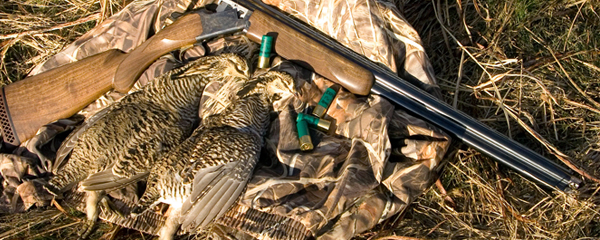
Fruits of the hunt!

Special hunt open to youth and women by application
PRATT--The Kansas Department of Wildlife, Parks and Tourism (KDWPT) and Pass It On – Outdoor Mentors, Inc. is sponsoring their annual pheasant hunting event for youth and women Dec. 8 at Waconda Lake, also known as Glen Elder Reservoir. The event will begin at 7:15 a.m. on Saturday with breakfast at the Hopewell Church basement in Glen Elder State Park. Breakfast will be followed by a pre-hunt safety talk before participants are divided into hunting groups. The hunters, guides, and mentors will then head out to various hunting areas around the lake. A noon meal will be provided by the Waconda Lake Association.
Women of any age and youth 11–16 are eligible and encouraged to apply for this hunt. This hunt is geared toward providing a comfortable and positive hunting environment for new or inexperienced hunters. Previous hunting experience is not required, and shotguns and ammunition can be provided. To apply, contact the Glen Elder Area Office at 785-545-3345 (8:00 a.m. – 4:30 p.m. weekdays) by December 3, 2012. Forty applicants will be selected to participate in the Saturday hunt. If there are more applicants, an additional hunt may be scheduled for Sunday morning, December 9.
A free trap shoot will also be offered on Saturday afternoon from 1:30 pm – 4:00 pm. The trap shoot, which will be held just west of the KDWPT Glen Elder Area Office, is open to the public and is intended for new and beginning shooters.
Another unique aspect of this event is that each group of pheasant hunters will get to hunt alongside a special guest who has been invited to serve as a hunting mentor for their group. This list is currently being put together, but these individuals may be professional athletes, television personalities, or military personnel that have recently returned from deployment.
There will be a hunter’s banquet on Saturday night at 6:00 p.m. at Memorial Hall in Downs. The banquet will include a meal, prizes for the hunters, and more opportunity for the hunters to interact with the special guests. All participants are invited to attend and will be asked to RSVP for the banquet when they sign up for the hunt.
For more information, contact Chris Lecuyer at the KDWPT Glen Elder Area Office 785-545-3345.

Saturday, April 28, 2012

HOW TO AGE SPRING TOM TURKEYS

A few simple measurements can provide approximate age of birds
PRATT — The regular Kansas spring turkey season runs through May 31, and many hunters have already bagged a big gobbler. Proud hunters often compare the size of their birds, and this can lead to many friendly arguments. But another, less tangible question often puzzles turkey hunters: How old is that bird?
Many myths surround this subject. Some say that any bird over 20 pounds is at least three years old. Others say that a 9-inch beard is a sure sign that your turkey is at least 4 years old. Still others claim that a sharp spur 3/4-inch long indicates a three-year-old bird. What’s the truth?
Biologists with the Kansas Department of Wildlife, Parks and Tourism provide information that would seem to settle much of the debate about a turkey’s age. First of all, many things can affect the weight of a bird, so weight is not a factor. Spur and beard length, however, are important factors in determining a turkey’s age. Use the following rules of thumb to determine approximate age of your bird, keeping in mind that these are approximations for this region of the country and that habitat and other factors may affect these guidelines:
Spur Length = Age of Turkey
1/2 inch or less = 1 year (jake)
1/2-7/8 inch and blunt = 2 years
7/8-1 inch = 2+ years
1+ inch and sharp = 3+ years
1 ¼ + = 4 years
Beard Length = Age of Turkey
3-5 inches = 1 year
6-9 inches with amber tip = 2 years
10+ inches = 3+ years
To differentiate juvenile and adult birds from a distance, look at the tail fan while the bird is strutting. A bird with longer feathers in the middle or on the side of the fan is a juvenile while uniform length in tail feathers indicates an adult bird. With a harvested bird, you can distinguish adult from juvenile by examining the two outermost primary wing feathers — those longest feathers on the end of the wing. On adult birds, these two primaries will be rounded and have white barring extending to the very end. On juvenile birds, these feathers will be much more pointed and have no barring near the tip.
Of course, any tom turkey is a prize, and the opportunity to watch and hunt these fascinating birds is one of the most exciting outdoor activities of spring. The turkey season is long, running from early April through the end of May each year, so Kansas should offer the avid hunter many opportunities yet to come this spring.

Thursday, April 19, 2012

WILDLIFE, PARKS AND TOURISM COMMISSION MEETING APRIL 26 IN WICHITA

Picture of The Keeper of the Plains in Wichita...
 (Photo credit: Wikipedia)
Public hearing on fall turkey, antelope, and elk seasons; workshop on early migratory birds, prairie chickens, more
WICHITA — The Kansas Wildlife, Parks and Tourism Commission will conduct a public meeting and hearing on Thursday, April 26, at the Great Plains Nature Center Auditorium, 6232 East 29th Street North in Wichita. The afternoon session will begin at 1:30 p.m. and recess at 5 p.m., and the evening session will begin at 7 p.m.
The afternoon session will begin with time for public comments on non-agenda items, followed by a general discussion period on the following topics:
  • Secretary’s remarks;
  • 2011 legislative update;
  • Hunter/Angler Recruitment and Retention Program update, Pass It On Program;
  • fishing regulations;
  • hand fishing harvest analysis;
  • potential changes in deer regulations 2013; and
  • late migratory bird seasons.
The afternoon will also include a workshop session, in preparation for potential future regulatory action, covering preliminary recommendations on the following regulations:

  • early migratory bird seasons;
  • webless migratory birds;
  • commercial mussel harvest;
  • prairie chicken seasons;
  • falconry regulations;
  • public land regulations; and
  • KAR 115-25-9a — deer open season, bag limit, permits, and additional considerations.
The commission will recess at 5 p.m., then reconvene at 7 p.m. at the same location for a public hearing on the following regulations:
  • KAR 115-25-5 — turkey fall season, bag limit, and permits;
  • KAR 115-25-7 — antelope open season, bag limit, and permits; and
  • KAR 115-25-8 — elk open season, bag limit, and permits.
Time will be set aside in both the afternoon and evening sessions for public comment on topics that are not on the agenda. If necessary, the commission will recess on April 26 and reconvene at the same location at 9 a.m., April 27, to complete unfinished business.
Live video and audio streaming of this meeting will be broadcast through the KDWP website, ksoutdoors.com.
If notified in advance, the department will have an interpreter available for the hearing impaired. To request an interpreter, call the Kansas Commission for the Deaf and Hard of Hearing at 1-800-432-0698. Any individual with a disability may request other accommodations by contacting the Kansas Wildlife, Parks and Tourism Commission secretary at 620-672-5911.
The next commission meeting is scheduled for Thursday, June 21, at Cabela's, 10300 Cabela Dr. in Kansas City, Kan.

Sunday, April 8, 2012

PRAIRIE CHICKEN SPRING DANCE A BIRDERS DELIGHT

Tympanuchus cupido English: A male Greater Pra...
 (Photo credit: Wikipedia)

April 5, 2012
From March through May, male chickens dance, fight, and call to attract mates
PRATT — Each spring, one of the most extraordinary mating rituals in all of nature occurs right here in Kansas — the courtship of the prairie grouse, more commonly known as the prairie chicken. On specific sites in otherwise indistinguishable tracts of natural prairie landscape, groups of male chickens gather at dusk and dawn in elaborate dances designed to attract females.
These areas — called leks, or booming grounds — are actually formed in fall when the order of dominance is established among the males. At this time, mature males gather in these relatively high, flat areas and attempt to establish their own small territories as close to the center of the lek as possible, where activity will be highest in spring. Although young males visit the lek, they are kept to the edges and seldom given the opportunity to establish their own territories.

While the fall activity is important and interesting, it is the spring lekking, or “booming,” activity that most fascinates naturalists, both professional and amateur. Beginning in March and lasting through the end of May, male chickens display an incredible array of vocalizations and maneuvers to win the right to mate.

Avid bird watchers and novices alike are mesmerized by this site, and it’s not difficult to find a place to witness it. For a list of prairie chicken viewing opportunities, visit the Natural Kansas website www.naturalkansas.org/birding.htm#PCV or phone the Kansas Department of Wildlife, Parks and Tourism’s Emporia Office at 620-342-0658 or the Pratt Operations Office at 620-672-5911.

In the mating ritual, the male chicken's tail is elevated; horn-like feathers (called pinnae) on the neck are raised over the head; and the wings are lowered with the primary feathers spread. The bird stamps its feet while moving forward or in circles, and this is followed by a series of rapid tail snaps and fans. At the same time as the tail is clicked open and shut, a whoom-AH-oom sound is given as the bright orange air sacs on the neck of the greater prairie chicken (orange to plume in the lesser) are inflated for maximum exposure. The lesser prairie chicken exhibits similar behavior, but the sound is higher-pitched, and the air sacs are a reddish color.

A second major display is flutter-jumping with associated cackling calls. The male jumps several feet into the air, flies forward, and lands. In so doing, the bird advertises its presence as well as the location of the lek. Flutter-jumping is typical of the peripheral males when females are near the center of the display ground.

A female will typically fly to the edge of a lek and walk slowly toward the center. When the hen enters a male’s territory, the male's behavior changes greatly. Lekking is performed with high frequency and extreme posturing. The male will display in circles around the female, showing all aspects of its plumage. At the peak of this performance, the dancer often spreads his wings and lays his head flat to the ground, as if bowing to the hen. If suitably impressed, the hen will stoop low to the ground, signaling that she is ready to mate.

Occasionally, fights break out among competing males. This is mostly ritual, as well, involving short jumps; striking with feet, beak, and wings; and face-offs in which the competitors whine and attempt to stare each other down. Injuries do occur but are seldom serious.

With its large, colorful air sacs, horn-like pinnae, and feathers growing all the way to its feet, the prairie chicken is one of the most beautiful birds in Kansas. And its mating ritual makes it one of the most fascinating birds to watch. Kansans are lucky to have the largest population of prairie chickens in the world, so viewing opportunities are good.

Two species of prairie chicken can be found in Kansas. The greater prairie chicken, the most populous, can be found throughout portions of northcentral and eastern Kansas, especially in the Flint Hills region. The lesser prairie chicken, which is slightly smaller and has reddish-orange air-sacs, can be found in pockets of native sandsage and shortgrass prairie in western Kansas. The lesser prairie chicken male produces a higher-pitched, bubbly sound, or "gobble," leading to the term "gobbling grounds" for their leks. On a quiet spring morning, the sounds of both species can carry as far as 2 miles across the open prairie.