Showing posts with label Bird migration. Show all posts

Thursday, April 24, 2014

KANSAS WILDLIFE, PARKS AND TOURISM COMMISSION EXAMINES EARLY MIGRATORY BIRD SEASONS

The 2014 antelope season was approved by the commission at the April 17 meeting
WICHITA – Kansas Department of Wildlife, Parks and Tourism (KDWPT) Commissioners heard several topics covering the gamut during the April 17 meeting and public hearing held at the Great Plains Nature Center in Wichita, including discussion of upcoming migratory bird seasons.
During the workshop session, KDWPT migratory game bird program manager, Tom Bidrowski, presented staff recommendations for the upcoming early migratory bird seasons. This item will be presented as a public hearing item for approval at the June 19 meeting in Pittsburg. The June 19 meeting in Pittsburg will take place at the Lamplighter Inn & Suites, 4020 Parkview Dr., at 1 p.m.
Commissioners also discussed the late migratory bird seasons, which will be workshopped at the June 19 meeting and voted on at the August meeting. The August 21 meeting will be conducted in Great Bend at the Kansas Wetlands Education Center.
During the public hearing portion of the April 17 meeting, commissioners approved recommendations for the 2014-2015 antelope seasons as follows:
Firearm & Muzzleloader permit application deadline: June 13, 2014
Archery permit deadline: Oct. 30, 2014
2014 Antelope Season Dates:
  • Archery:  Sept. 20 - Sept. 28 and Oct. 11 - Oct. 31, 2014
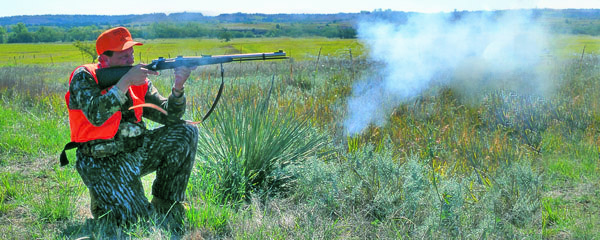
  • Muzzleloader-only:  Sept 29 - Oct. 2, 2014 (Muzzleloader-only permit holders may also hunt during the firearm season.)
  • Firearm:  Oct. 3 - Oct. 6, 2014
Shooting Hours: One-half hour before sunrise to one-half hour after sunset. 
For more information on the 2014-2015 antelope season, visit ksoutdoors.com and click “Hunting / Big Game Information / Antelope.”

Sunday, March 16, 2014

KANSAS WILDLIFE, PARKS AND TOURISM COMMISSION TO MEET IN TOPEKA MARCH 20

Commission to hear free park entrance and fishing days, big game season recommendations
PRATT – The Kansas Historical Society History Center, 6425 SW 6th Ave., Topeka, will be March 20, 2014. The afternoon session will begin at 1:00 p.m. and recess at 5 p.m., with the evening session reconvening at 6:30 p.m.
the site of the Kansas Wildlife, Parks and Tourism Commission public meeting and hearing
The afternoon session will begin with time for public comments on non-agenda items, followed by a general discussion period. Topics covered in the general discussion include: Secretary’s remarks regarding agency and state fiscal status and an update on the 2014 legislature, a briefing on tourism’s 2014 marketing plans, webless migratory birds, early migratory bird seasons, Fort Riley deer, the use of dogs to track wounded deer, coyote hunting during firearm deer season, hunting the same day a deer or turkey permit is purchased, and an update on the potential federal listing of lesser prairie chickens. 
During the afternoon session, commissioners will workshop items that were covered under general discussion at the January meeting. Workshop topics, which will be discussed for potential regulatory action at a future meeting, include regulations pertaining to upland birds, regulations regarding public lands, the five-year review of Kansas threatened and endangered species lists, and regulations pertaining to antelope season, bag limit, and permits. 
The commission will recess at 5 p.m., then reconvene at 6:30 p.m. at the same location for the public hearing. The public hearing will be focused on free park entrance and free fishing days; elk season, bag limit and permit; and deer season, including bag limit, and permits.
Time will be available in both the afternoon and evening sessions for public comment on topics not on the agenda. If necessary, the commission will reconvene at the same location at 9 a.m., March 21, to complete any unfinished business.
A commercial-free version of live video and audio streaming of commission meetings will be broadcast through the Kansas Department of Wildlife, Parks and Tourism website, ksoutdoors.com.
If notified in advance, the department will have an interpreter available for the hearing impaired. To request an interpreter, call the Kansas Commission for the Deaf and Hard of Hearing at 1-800-432-0698. Any individual with a disability may request other accommodations by contacting the Kansas Wildlife, Parks and Tourism Commission secretary at (620) 672-5911.
The next commission meeting is scheduled for April 17, 2014 at the Great Plains Nature Center, 6232 East 29th St. N., Wichita.

Friday, October 25, 2013

MIGRATING WATERFOWL BRING FLOCKS OF HUNTING OPPORTUNITIES

Daily bag limits increased for dark and light geese for 2013 seasons

PRATT – “More is better” isn’t always true in a lot of instances, but for waterfowl hunters this season, “more” is a beautiful thing. New regulations now allow hunters to harvest greater quantities of waterfowl than ever before, increasing Canada geese bag limits from three to six birds, and light geese bag limits from 20 to 50 birds. Possession limits on all migratory birds was increased from two times the daily bag limit to three times the daily bag limit. The daily bag limit for ducks remained at six, but the number of scaup that may be included in the daily limit was reduced from three to two.

Oct. 26, 2013 is a big day for waterfowl hunters, marking the opening day of goose season, the first day of the Low Plains Late Zone season for ducks, and the first day of youth season in the Low Plains Southeast Zone. White-fronted geese may be hunted Oct. 26-Dec. 29, 2013 and Feb. 1-Feb. 9, 2014. The daily bag limit for white-fronted geese is two birds, and possession limit is six. Canada geese and light geese may be hunted Oct. 26-Nov. 3, 2013 AND Nov. 6-Feb. 9, 2014.The daily bag limit on Canada geese is six, possession limit is 18. The daily bag limit on light geese is 50, and there is no possession limit. The Low Plains Late Zone for ducks will run Oct. 26-Dec. 29, AND Jan. 18-Jan. 26, 2014. Following the Low Plains Late Zone, waterfowl hunters in the Low Plains Southeast Zone may hunt Nov. 2-3, 2013 AND Nov. 16, 2013-Jan. 26, 2014. Youth season the Low Plains Southeast Zone will run Oct. 26-27, 2013.

The daily bag limit for ducks is six, which may include no more than five mallards, of which only two may be hens; two redheads; three wood ducks; three scaup; two pintails; and two canvasbacks.

Following regular goose seasons, hunters may hunt light geese during a special conservation period Feb 10-April 30, 2014. During the Light Goose Conservation Order there is no bag or possession limit. In addition, hunters will be allowed to use unplugged shotguns and electronic calls and take light geese from one-half hour before sunrise to one-half hour after sunset during the period of the conservation order.

Although not as widely sought-after as geese and ducks, sandhill cranes may be hunted from Nov. 6 2013-Jan 2, 2014 with a valid federal permit. All sandhill crane hunters must take an online crane identification test each year before obtaining a permit. The test can be found by visiting ksoutdoors.com and clicking “Hunting / Migratory Birds / Sandhill Crane.” The daily bag limit on sandhill cranes is three birds, with a possession limit of nine. Quivira and Kirwin National Wildlife Refuge are closed to crane hunting.

For more information on migratory bird regulations, visit ksoutdoors.com.

Wednesday, August 28, 2013

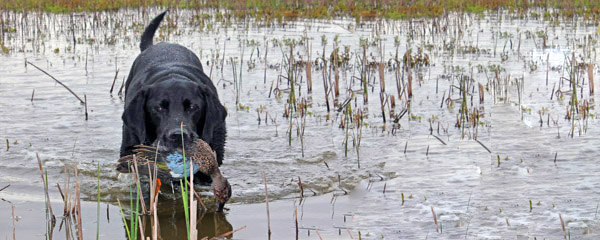
TEAL SEASON KICKS OFF SEPT. 7

Teal may be the smallest duck, but they are a fast and challenging quarry for waterfowl hunters
PRATT ­– It’s waders and whistles, it’s the sound of the marsh waking up, it’s what Sept. 7, waterfowl hunters will be waiting.
thousands of hunters around the state have been waiting for – it‘s teal season. An early migrant, teal are the first waterfowl to pass through Kansas each fall, and come
Using U.S. Highway 283 as a dividing line, Kansas is split up into two teal hunting zones: Low Plains and High Plains. The Low Plains Zone (anything east of U.S. Highway 283) will kick off the season Sept. 7, and run through Sept. 22, while the High Plains Zone (anything west of U.S. Highway 283) will open Sept. 14 and end Sept. 22.
As if recent rains filling the marshes weren’t enough of a bonus for early season waterfowl hunters, regulations now allow hunters to take six of these puddle ducks in a daily bag limit, a two-bird increase from the traditional early teal season daily bag of four. Also new this year, migratory bird possession limits have increased to three times the daily bag limit.
All hunters participating in teal season who are required to have a hunting license must also possess a Kansas HIP permit and State Waterfowl Permit. All hunters 16 and older must have a Federal Waterfowl Stamp. Hunters age 65-74 are reminded that they now need the state HIP permit and State Waterfowl Permit, in addition to the Federal Waterfowl Stamp. Kansas HIP permits and State Waterfowl Stamps can be purchased online at ksoutdoors.com, and Federal Waterfowl Stamps can be purchased at your local U.S. Post Office and Kansas Department of Wildlife, Parks, and Tourism regional offices.
For more information on migratory bird regulations, visit ksoutdoors.com and click “Hunting / Migratory Birds.”

Sunday, August 18, 2013

WILDLIFE, PARKS AND TOURISM COMMISSION PUBLIC HEARING AUG. 29

Phone conference scheduled to approve last-minute changes to possession limits for migratory birds

PRATT – The Kansas Wildlife, Parks and Tourism Commission will conduct a public hearing through a telephone conference on Thursday, August 29, 2013. The call will begin at 10 a.m., and members of the public can listen online atksoutdoors.com, or attend a satellite location listed below, where public comments may be heard.
The last-minute hearing is necessary to incorporate changes to possession limits in migratory bird hunting regulations for the 2013 seasons. Other than the late migratory bird seasons, which were set Aug. 1, seasons and regulations for doves, sandhill cranes, snipe, rail and woodcock were approved earlier this year. However, when the U.S. Fish and Wildlife Service (USFWS) released frameworks for migratory bird hunting regulations in July, the possession limit for all migratory birds was increased from twice the daily bag limit to three times the daily bag limit. Because potential regulation changes must be given published notice 30 days prior to a public hearing, the impromptu commission meeting was scheduled for Aug. 29. Commissioners will vote on a recommendation to adopt the maximum possession limit of three times the daily bag limit for doves, sandhill cranes, snipe, rail and woodcock as allowed under the USFWS frameworks.
The public is encouraged to listen to or comment during the hearing at any of the following KDWPT locations: Office of the Secretary, 1020 S. Kansas Ave., Suite 200, Topeka; Pratt Operations Office, 512 SE 25th
Ave., Pratt; KDWPT Region 1 Office, 1426 Hwy 183 Alt., Hays; KDWPT Region 2 Office, 300 SW Wanamaker Rd., Topeka; KDWPT Region 3 Office, 1001 W. McArtor, Dodge City; KDWPT Region 4 Office, 6232 E. 29th
St. N, Wichita; Neosho County Community College, 800 W. 14th
St., Oak Room, No. 209, Chanute; KDWPT Kansas City Office, 8304 Hedge Lane Terrace, Shawnee; KDWPT Research and Survey Office, 1830 Merchant, Emporia.
If necessary, the Commission will recess on August 29, 2013, to reconvene August 30, 2013, at 9:00 a.m.
If notified in advance, the department will have an interpreter available for the hearing impaired. To request an interpreter call the Kansas Commission of Deaf and Hard of Hearing at 1-800-432-0698. Any individual with a disability may request other accommodations by contacting the Commission Secretary at (620) 672-5911.

The next commission meeting is scheduled for Thursday, October 17, 2013, Kansas Cosmosphere, 1100 N. Plum, Hutchinson.

Wednesday, March 13, 2013

KANSAS WILDLIFE, PARKS AND TOURISM COMMISSION TO MEET IN TOPEKA


PRATT – The Kansas Wildlife, Parks and Tourism Commission will conduct a public meeting and hearing on Thursday, Mar. 21, at the Kansas Historical Society History Center, 6425 SW 6 Ave., in Topeka. The afternoon session will begin at 1:30 p.m. and recess at 5 p.m., and the evening session will begin at 7 p.m.

Public hearing to include big game legal equipment,
Secretary’s Orders for deer permits
The afternoon session will begin with time for public comments on non-agenda items, followed by a general discussion period on the following topics: Secretary’s remarks about agency and state fiscal status and an update on the 2013 legislative session. Other general discussion topics include, recognition for a retiring K-9 officer, a year-end review of tourism activities, a report on roadside maintenance for wildlife, a webless migratory bird report, early migratory bird seasons, furharvester regulations, Fort Riley deer and other considerations, and an update on the federal proposal to list the lesser prairie chicken.
The afternoon session will also include a workshop in preparation for potential regulatory action, covering preliminary recommendations on regulations. Topics include upland bird regulations, public lands regulations, camping and utility fees, antelope and elk regulations, and agritourism.

The commission will recess at 5 p.m., then reconvene at 7 p.m. at the same location for the public hearing. Commissioners will consider regulations pertaining to fees; big game legal taking equipment; deer season dates; Secretary’s Orders for limited deer permit quotas; legal equipment and taking methods for turkey; and turkey season, bag limit and permits.
Time will be available in both the afternoon and evening sessions for public comment on topics not on the agenda. If necessary, the commission will reconvene at the same location at 9 a.m., March 22, to complete unfinished business.

Live video and audio streaming of this meeting will be broadcast through the KDWPT website,ksoutdoors.com.

If notified in advance, the department will have an interpreter available for the hearing impaired. To request an interpreter, call the Kansas Commission for the Deaf and Hard of Hearing at 1-800-432-0698. Any individual with a disability may request other accommodations by contacting the Kansas Wildlife, Parks and Tourism Commission secretary at (620) 672-5911.

The next commission meeting is scheduled for April 25, 2013 at the Great Plains Nature Center in Wichita.

Thursday, April 19, 2012

WILDLIFE, PARKS AND TOURISM COMMISSION MEETING APRIL 26 IN WICHITA

Picture of The Keeper of the Plains in Wichita...
 (Photo credit: Wikipedia)
Public hearing on fall turkey, antelope, and elk seasons; workshop on early migratory birds, prairie chickens, more
WICHITA — The Kansas Wildlife, Parks and Tourism Commission will conduct a public meeting and hearing on Thursday, April 26, at the Great Plains Nature Center Auditorium, 6232 East 29th Street North in Wichita. The afternoon session will begin at 1:30 p.m. and recess at 5 p.m., and the evening session will begin at 7 p.m.
The afternoon session will begin with time for public comments on non-agenda items, followed by a general discussion period on the following topics:
  • Secretary’s remarks;
  • 2011 legislative update;
  • Hunter/Angler Recruitment and Retention Program update, Pass It On Program;
  • fishing regulations;
  • hand fishing harvest analysis;
  • potential changes in deer regulations 2013; and
  • late migratory bird seasons.
The afternoon will also include a workshop session, in preparation for potential future regulatory action, covering preliminary recommendations on the following regulations:

  • early migratory bird seasons;
  • webless migratory birds;
  • commercial mussel harvest;
  • prairie chicken seasons;
  • falconry regulations;
  • public land regulations; and
  • KAR 115-25-9a — deer open season, bag limit, permits, and additional considerations.
The commission will recess at 5 p.m., then reconvene at 7 p.m. at the same location for a public hearing on the following regulations:
  • KAR 115-25-5 — turkey fall season, bag limit, and permits;
  • KAR 115-25-7 — antelope open season, bag limit, and permits; and
  • KAR 115-25-8 — elk open season, bag limit, and permits.
Time will be set aside in both the afternoon and evening sessions for public comment on topics that are not on the agenda. If necessary, the commission will recess on April 26 and reconvene at the same location at 9 a.m., April 27, to complete unfinished business.
Live video and audio streaming of this meeting will be broadcast through the KDWP website, ksoutdoors.com.
If notified in advance, the department will have an interpreter available for the hearing impaired. To request an interpreter, call the Kansas Commission for the Deaf and Hard of Hearing at 1-800-432-0698. Any individual with a disability may request other accommodations by contacting the Kansas Wildlife, Parks and Tourism Commission secretary at 620-672-5911.
The next commission meeting is scheduled for Thursday, June 21, at Cabela's, 10300 Cabela Dr. in Kansas City, Kan.

Saturday, September 17, 2011

MONARCHS PAINT SEPTEMBER SKY

Monarch butterflies matingImage via Wikipedia
Amazing migration covers thousands of miles; clusters often cover entire trees
PRATT — For those who love butterflies, September is the month to watch for masses of migrating monarchs in Kansas. The weather has cooled, and many people are seeing this regal butterfly in backyards, parks, and in the field. This familiar and popular insect species displays migratory behavior much like that of birds. Navigating on instinct, every monarch east of the Rocky Mountains flies toward a specific area of central Mexico to spend the winter.
Amazingly, several generations separate the southward-migrating monarchs from those that flew north the previous spring, so they do not have elders to guide them on this 1,000- to 3,000-mile journey. The monarchs that live north of Kansas begin moving south in late August. The trigger for their trek south is thought to be the declining angle of the sun as the days get shorter, and this "sun compass" also guides them as they travel.
As the migrating monarchs progress south, local monarchs join them, making the group larger. The observed peak for the Topeka-Kansas City area typically falls about the second or third week in September. The peak for the Wichita area may be a week or so later. On the right day in the right location, careful observers may see hundreds or even thousands of monarchs moving in a south-southwesterly direction on their journey to Mexico. During resting periods, tree branches may be so loaded with monarchs that branches bend and appear to be covered with orange and black leaves. Those lucky enough to have seen this display have witnessed one of nature's marvels.
Don't expect to see such gatherings in the same place every year. Monarch movement is strongly affected by prevailing weather patterns, so their migration routes vary annually. A good way to attract monarchs and help them refuel on their fall migration is to plant September-blooming plants around home. Asters, sunflowers, goldenrod, and sedum provide blossoms with nectar monarchs need.
The right habitat nearby may even attract overnight roosts of monarchs. They cease flying in the evening and look for sheltered sites in trees to cluster together for the night. These sites often have an easterly exposure, so the monarchs can warm up quickly in the morning sun and resume migration. Such overnight roosts are, in miniature, just like what may be seen at their over-wintering site in Mexico, where acres of trees are so blanketed with butterflies that the branches of trees bend low with their weight.
Monarchs head back north again in March, but they are seldom the same ones that went south the previous September. It is the first generation of their descendants, and they begin arriving around the second week of April. Nor are those that begin the migration the same butterflies that complete the spring migration. Spring migrating monarchs may only fly a few hundred miles, then lay eggs and die. These eggs hatch into caterpillars, pupate, complete metamorphosis into butterflies, and continue the migration. Thus, the spring migration is often a leapfrog of generations moving as far north as Canada. Some may end their northward migration in Kansas, as well, laying eggs and producing more monarchs throughout the summer in the Sunflower State.
Because the spring flight north is a dispersal with the purpose of laying eggs on newly emerging milkweed rather than the mass retreat from winter that occurs in the fall, large numbers of monarchs are not seen in spring.
For more information on monarch butterflies, including where to look for monarchs and their amazing migration, contact the Monarch Watch program at the University of Kansas online at www.monarchwatch.org.

Wednesday, December 15, 2010

YOUTH WATERFOWL HUNTS SCHEDULED FOR MEADE STATE PARK

Male mallard duckImage via Wikipedia
Four January events planned; Dec. 31 application deadline
MEADE — In January, Lake Meade State Park and the Kansas Department of Wildlife and Parks will host four youth waterfowl hunts. Hunts will take place on a Saturday and will begin in the early morning. All participants will be required to attend a pre-hunt meeting.
Youth ages 8 through 15 are eligible for this hunt, which is designed to introduce waterfowl hunting to new or inexperienced hunters. KDWP employees will be on hand to assist in each hunt, which will include as few as two hunters. Previous hunting experience is not required, and arrangements will be provided to applicants who do not have access to their own equipment. An adult parent or guardian will be required to attend, but the adult may not hunt.
To participate, submit a 4-inch by 6-inch card with the name of youth, the name of parent or guardian attending, address, and phone number to Meade State Park, 13051 V Rd., Meade, KS 67864. All Applications must be post marked by Dec. 31. For more information, phone the Meade State Park Office at 620-873-2572 (8 a.m.-5 p.m., Monday-Friday).

Enhanced by Zemanta