Showing posts with label Greater Prairie Chicken. Show all posts

Monday, March 24, 2014

KANSAS WETLANDS EDUCATION CENTER OFFERS PRAIRIE CHICKEN LEK TOURS

Lek tours draw people from around the world each year to the Great Plains
GREAT BEND – While most people are still snug in their beds, prairie chickens are busy
putting on a show that is critical to their survival. Each spring, just before dawn, male prairie chickens can be seen strutting around on communal mating grounds known as “leks,” where they fight, sing, and dance to win the affections of females. Only the most extravagant displays will do, and only the best males will get to mate.
Kansas prairies are the stronghold of both species of prairie chickens, the greater and the lesser. The greaters inhabit the tallgrass and mid-grass prairies of the Flinthills in east-central Kansas and the Smoky Hills of northcentral Kansas. Lesser prairie chickens inhabit the shortgrass prairies of southwest and west-central Kansas.
“On a still morning on the prairie, the greater prairie chicken’s song, called a boom, can be heard over a mile away,” said Kansas Wetlands Education Center (KWEC) manager Curtis Wolf. “It is one of the most comical and unique natural phenomenons people can watch.”
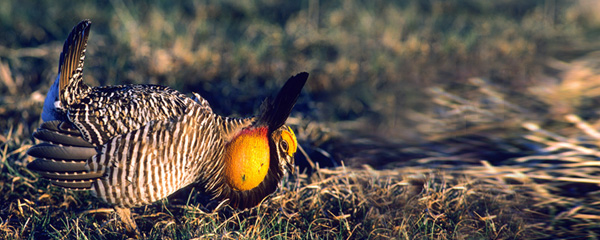
Male greater prairie chickens boom by expelling air from sacks on their throats called timpani. When inflated, the orange timpani are all part of the elaborate display that includes rapid foot stomping, booming, clucking and posturing. The dancing is periodically stopped when the birds rush to invisible boundary lines to defend their display territory against other dancing birds.
The KWEC at Cheyenne Bottoms, 10 miles northeast of Great Bend on K-156 Highway, invites you to come and witness this wonderful show during a greater prairie chicken lek tour. Tours are available to the public, age 12 and older, by reservation, April 1-30. The cost is $25 per person and reservations must be made at least two days in advance by calling the KWEC at (877) 243-9268. Tours are not available on all days and are limited to seven people, so interested parties are encouraged to inquire about availability.
Participants will meet and leave from the KWEC between 5:30-5:45 a.m., depending on the time of sunrise. Staff will drive participants to a local greater prairie chicken lek, where a trailer blind has been set up. From the blind, participants will be able to observe the prairie chickens on the lek, while a guide provides information about these interesting birds and their incredible spectacle. Participants should plan on being in the blind for at least three hours with no facilities.
For more information, or to schedule a tour, call the KWEC at (877) 243-9268.
For a list of other prairie chicken viewings offered throughout the state, visit www.naturalkansas.org/birding.htm.

Friday, November 15, 2013

PRAIRIE CHICKEN SEASON UNIQUE HUNTING OPPORTUNITY

Kansas harbors highest prairie chicken population in world
PRATT – What may be the most unique upland bird hunting opportunity in North America begins on
the third Saturday in November. The 2013 regular prairie chicken season opens Nov. 16 and runs through Jan. 31, 2014 in the Northwest and East units. It endsDec. 31, 2013 in the Southwest Unit. Kansas is home to lesser and greater prairie chickens, both iconic prairie grouse species of our Midwest grasslands.
In Kansas, the more numerous greater prairie chicken inhabits the tallgrass prairie of the Flint Hills, in east-central Kansas, and mixed grass prairies of the Smoky Hills, in northcentral and northwest Kansas. Less than 4 percent of the 400,000 square miles of tallgrass prairie that once covered North America still remain, and two-thirds of that is in the Kansas region known as the Flint Hills. This region in east-central Kansas still provides large, unbroken expanses of tallgrass prairie, thanks to the stewardship of private cattle ranchers, and a shallow layer of chert, or flint, that protects it from the plow.
The more rare lesser prairie chicken inhabits the shortgrass prairies of southwest Kansas. Because of habitat loss and population declines in four other states where lesser prairie chickens exist (Colorado, New Mexico, Oklahoma and Texas), Kansas is the only state where lesser prairie chickens can be hunted. In fact, the U.S. Fish and Wildlife Service (USFWS) will announce next spring whether or not the lesser prairie chicken will be added to the Threatened and Endangered Species List. To address habitat losses, wildlife agencies in the five states formed a working group that collaborated with the Western Association of Fish and Wildlife Agencies to develop a comprehensive management plan. State biologists hope the plan will dissuade the USFWS from listing the lesser prairie chicken, allowing state agencies to implement a variety of private land habitat enhancement programs designed to benefit lesser chickens.
Hunting lesser prairie chickens in Kansas has no impact on the population, and provides a truly unique upland bird hunting opportunity. The daily bag limit in the Southwest Unit is one prairie chicken per day with a possession limit of four.
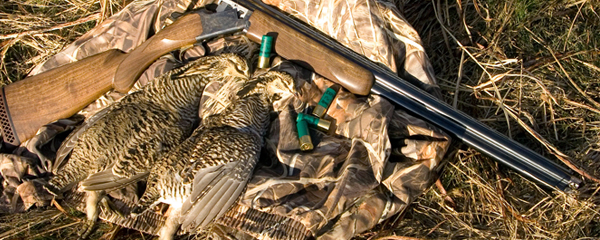
Daily bag limit in the Northwest and East units is two prairie chickens per day, and the possession limit is eight. Most prairie chickens taken during the regular season are taken by pass shooting. Hunters position themselves along the edges of feed fields in the early morning or late evening hours and wait for chickens to fly in from the grasslands. Success depends on prior scouting, patience and luck. It also requires shooting skill because prairie chickens fly deceptively fast, especially with any type of tailwind.
In addition to a hunting license, unless exempt, prairie chicken hunters are required to have a $2.50 Prairie Chicken Permit. The special permit allows KDWPT to gain valuable management information from hunters who pursue prairie chickens.
The Smoky Hills region is expected to hold some of the highest densities and greatest hunting opportunities in the state for greater prairie chickens. Hunters may also find success in the Flint Hills, where reduced burning allowed for more residual grass cover for nesting compared to most years. For more details, view the 2013 Upland Bird Forecast atksoutdoors.com.

Saturday, October 12, 2013

2013 KANSAS UPLAND BIRD FORECAST NOW AVAILABLE

Despite drought during the reproductive season, some upland game hunters may experience a memorable harvest this fall

PRATT – The 2013 Upland Bird Forecastis now available for viewing online at ksoutdoors.com, and although population levels are projected to be less than favorable, upland bird hunters willing to travel to northern Kansas, may find a silver lining to the season.
Since extreme drought conditions persisted in most of the state again this year, ideal vegetation conditions were scarce going into the breeding season. This left most upland game birds without sufficient brood rearing cover and insect abundance, and thus led to a lower than average chick survival rate. Although the precipitation that fell across much of the state in late summer came too late to improve the upcoming season, biologists anticipate upland bird hunters may see enhanced conditions and a potential for better production next summer as vegetation conditions continue to improve.
As with any forecast, predictions are general and regional in nature. Although survey data indicate below average bird populations, hunters willing to work will likely find pockets with adequate bird numbers. Going from poor to fair hunting can often be as simple as driving 30 miles.
Listed below are statewide summaries on pheasant, quail, and prairie chickens. For the full forecast, including region-specific summaries, visit ksoutdoors.com and click “Hunting / Upland Birds / Upland Bird Regional Forecast.” For a printed copy of the 2013 Upland Bird Forecast, 2013 Kansas Hunting and Furharvesting Regulations Summary, and 2013 Kansas Hunting Atlas, call (620) 672-5911.
PHEASANT – Pheasant populations in Kansas continue to suffer from the extended drought. Breeding populations dropped across their range from 2012 to 2013 resulting in less adult hens in the population to start the 2013 nesting season. However, opportunities will still exist to harvest roosters in the Sunflower State, especially for those willing to work for their birds. Though the drought has taken its toll, Kansas still has one of the best pheasant populations and the fall harvest will again be among the best in the country. The best areas this year will likely be pockets in northwest and northcentral Kansas.
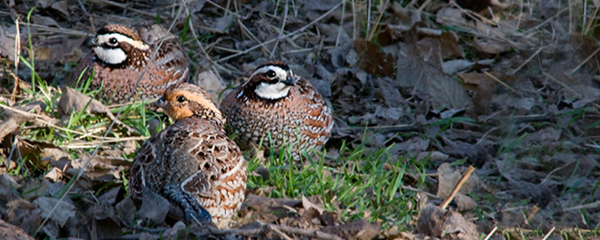
QUAIL – The statewide bobwhite breeding population decreased in 2013 compared to 2012, but there is some variation across the state. Areas east of the Flint Hills showed improved productivity this year. Populations have rebounded over the last two years in eastern Kansas, but overall populations are still below historic averages. The best quail hunting will likely be found within the Flint Hills and southeast regions.
PRAIRIE CHICKEN – The spring prairie chicken lek survey indicated that most populations remained stable or declined slightly from last year. Areas within the Flint Hills and southcentral regions fared the best, while areas in the northern and western regions, where the drought was most severe, experienced the sharpest declines. Many areas in the Flint Hills were not burned this spring due to drought conditions. This resulted in slightly more residual grass cover for nesting compared to recent years. There have been some reports of prairie chicken broods in these areas, and hunting will likely be somewhat improved compared to recent years.
Upland Game Bird Seasons
PHEASANT
  • Regular: November 9, 2013 - January 31, 2014
  • Youth: November 2-3, 2013
  • Area Open: Statewide
  • Daily Bag Limit: 4 cocks in regular season, 2 cocks in youth season
  • NOTE: Pheasants in possession for transportation must retain intact a foot, plumage, or some part that will determine sex.
QUAIL
  • Regular: November 9, 2013 - January 31, 2014
  • Youth: November 2-3, 2013
  • Area Open: Statewide
  • Daily Bag Limit: 8 in regular season, 4 in youth season
PRAIRIE CHICKEN (Permit required)
  • Early (East and Northwest zones): Sept. 15 - Oct. 15, 2013
  • Daily Bag Limit: 2 (single species or in combination)
  • Regular (East and Northwest zones): Nov. 16, 2013 - Jan. 31, 2014
  • Daily Bag Limit: 2 (single species or in combination)
  • Southwest Zone: Nov. 16 - Dec. 31, 2013
  • Daily Bag Limit: 1

Friday, September 6, 2013

EARLY PRAIRIE CHICKEN SEASON REQUIRES LEGWORK

Early season prairie chicken hunters can cover miles in a day’s hunt

PRATT ­– The early prairie chicken season (Northwest and East units), Sept. 15 - Oct. 15, 2013, gives bird hunters a unique opportunity to walk up greater prairie chickens and work bird dogs long before traditional upland bird seasons open. The early season was established to provide additional hunting opportunity for this tallgrass prairie icon and let hunters enjoy a true one-of-a-kind grassland hunt.
The traditional prairie chicken season is Nov. 16-Jan. 31, 2014 in the East and Northwest units, and Nov. 16-Dec. 31 in the Southwest Unit, and during this season, most prairie chickens are taken by pass shooting. Hunters scout feed fields near large tracts of native prairie for feeding prairie chickens, and then take up stations around feed fields well before sunrise. As the sun crests the horizon, prairie chickens will lift out of the prairies and fly to feed. Hunters lucky enough to be positioned in just the right spot may get shots. However, prairie chickens are strong fliers and challenging quarry for expert wingshots. Prairie chickens rarely flush within shotgun range of walking hunters during the regular season.
During the early season, flocks of young birds are more likely to hold for walking hunters and pointing dogs. However, prairie chickens are truly birds of the prairie, and hunters will walk many miles of grassland to find birds. While it can seem like finding a needle in a haystack, the unique hunting opportunity, scenery and connection to the prairie keeps hunters coming back.
All prairie chicken hunters must have a $2.50 prairie chicken permit in addition to a hunting license. Permits may be purchased wherever licenses are sold and online. Information provided by hunters at the time of purchase will help biologists estimate prairie chicken harvest and hunting pressure.
During the early season, the daily bag limit for prairie chickens in the East and Northwest zones is 2, and the possession limit is 8. For more information and a map of prairie chicken hunting zones, go to www.ksoutdoors.com.

Sunday, April 15, 2012

KANSAS BIRDING FESTIVAL AT WAKEFIELD APRIL 27-29

Konza Prairie 2005 photo by Edwin Olson Catego...
 (Photo credit: Wikipedia)

Birdwatching, wetland and prairie chicken lek tours, seminars to be featured; April 13 registration deadline
WAKEFIELD — On April 25-27, the Kansas Birding Festival will be held near Wakefield. The three-day event will feature seminars on birds and birdwatching, guided field trips, food, and much more. This area is rich in birding opportunities during the latter part of April. Native birds inhabit the area year round, and this is the prime season for migrating birds. Combine this with Milford Reservoir and Wetlands and the native prairie, and you have one of the best locations in America for watching birds.

On Friday, April 27, the event will begin at the Wakefield Methodist Church Community Center with registration and guided field trips to the Milford Wetlands, the Republican River Bottoms, and the Kansas Landscape Arboretum.

The event on Saturday will begin with breakfast from 4 a.m. to 5:45 a.m., followed by guided field trips, including a prairie chicken lek at Fort Riley, the Konza Prairie, the Landscape Arboretum, the Milford Wetlands, and the Republican River Bottoms.

After an 11:30 a.m.-1:30 p.m. lunch break, events will include optional free time to bird watch and seminars, including “Greater Prairie Chickens in Kansas,” by Dr. Brett Sandercock; “Shorebird Identification,” by Suzanne Fellows; and “Grassland Birds,” by Eugene Young. At 7 p.m., a banquet will be held with a keynote address by wildlife photographer Judd Patterson.

On Sunday, April 29, breakfast will again be served from 4 a.m.-5:45 a.m. This will be followed by the field trip options.

Fees and pre-registration are required. For more information, phone Chuck Otte at 785-238-4161 or 785-238-8800 or Vanessa Avara at 785-238-3108, email cotte@ksu.edu, or go online to www.kansasbirdingfestival.org.

Sunday, April 8, 2012

PRAIRIE CHICKEN SPRING DANCE A BIRDERS DELIGHT

Tympanuchus cupido English: A male Greater Pra...
 (Photo credit: Wikipedia)

April 5, 2012
From March through May, male chickens dance, fight, and call to attract mates
PRATT — Each spring, one of the most extraordinary mating rituals in all of nature occurs right here in Kansas — the courtship of the prairie grouse, more commonly known as the prairie chicken. On specific sites in otherwise indistinguishable tracts of natural prairie landscape, groups of male chickens gather at dusk and dawn in elaborate dances designed to attract females.
These areas — called leks, or booming grounds — are actually formed in fall when the order of dominance is established among the males. At this time, mature males gather in these relatively high, flat areas and attempt to establish their own small territories as close to the center of the lek as possible, where activity will be highest in spring. Although young males visit the lek, they are kept to the edges and seldom given the opportunity to establish their own territories.

While the fall activity is important and interesting, it is the spring lekking, or “booming,” activity that most fascinates naturalists, both professional and amateur. Beginning in March and lasting through the end of May, male chickens display an incredible array of vocalizations and maneuvers to win the right to mate.

Avid bird watchers and novices alike are mesmerized by this site, and it’s not difficult to find a place to witness it. For a list of prairie chicken viewing opportunities, visit the Natural Kansas website www.naturalkansas.org/birding.htm#PCV or phone the Kansas Department of Wildlife, Parks and Tourism’s Emporia Office at 620-342-0658 or the Pratt Operations Office at 620-672-5911.

In the mating ritual, the male chicken's tail is elevated; horn-like feathers (called pinnae) on the neck are raised over the head; and the wings are lowered with the primary feathers spread. The bird stamps its feet while moving forward or in circles, and this is followed by a series of rapid tail snaps and fans. At the same time as the tail is clicked open and shut, a whoom-AH-oom sound is given as the bright orange air sacs on the neck of the greater prairie chicken (orange to plume in the lesser) are inflated for maximum exposure. The lesser prairie chicken exhibits similar behavior, but the sound is higher-pitched, and the air sacs are a reddish color.

A second major display is flutter-jumping with associated cackling calls. The male jumps several feet into the air, flies forward, and lands. In so doing, the bird advertises its presence as well as the location of the lek. Flutter-jumping is typical of the peripheral males when females are near the center of the display ground.

A female will typically fly to the edge of a lek and walk slowly toward the center. When the hen enters a male’s territory, the male's behavior changes greatly. Lekking is performed with high frequency and extreme posturing. The male will display in circles around the female, showing all aspects of its plumage. At the peak of this performance, the dancer often spreads his wings and lays his head flat to the ground, as if bowing to the hen. If suitably impressed, the hen will stoop low to the ground, signaling that she is ready to mate.

Occasionally, fights break out among competing males. This is mostly ritual, as well, involving short jumps; striking with feet, beak, and wings; and face-offs in which the competitors whine and attempt to stare each other down. Injuries do occur but are seldom serious.

With its large, colorful air sacs, horn-like pinnae, and feathers growing all the way to its feet, the prairie chicken is one of the most beautiful birds in Kansas. And its mating ritual makes it one of the most fascinating birds to watch. Kansans are lucky to have the largest population of prairie chickens in the world, so viewing opportunities are good.

Two species of prairie chicken can be found in Kansas. The greater prairie chicken, the most populous, can be found throughout portions of northcentral and eastern Kansas, especially in the Flint Hills region. The lesser prairie chicken, which is slightly smaller and has reddish-orange air-sacs, can be found in pockets of native sandsage and shortgrass prairie in western Kansas. The lesser prairie chicken male produces a higher-pitched, bubbly sound, or "gobble," leading to the term "gobbling grounds" for their leks. On a quiet spring morning, the sounds of both species can carry as far as 2 miles across the open prairie.

Sunday, September 25, 2011

HEAT AND DROUGHT IMPACT 2011 UPLAND BIRD FORECAST

Flint HillsImage by kswx_29 via Flickr
While some areas of central, northcentral, and northwest Kansas may offer good hunting, drought and heat have reduced bird numbers
PRATT — Kansas upland bird hunters enjoyed a banner season in 2010, but this summer’s heat and drought in parts of the state have hurt upland bird prospects for 2011. The Kansas Department of Wildlife, Parks and Tourism (KDWPT) has released its 2011 Kansas Upland Bird Forecast, and although good numbers of pheasants and quail will be found in some areas, severe drought and record high temperatures throughout much of the birds’ range resulted in fewer birds overall.
Generally, the best pheasant hunting in 2011 will be north of I-70 in western Kansas, the best quail hunting will be in the central part of the state, and the best greater prairie chicken hunting should be in native grasslands from the northern Flint Hills westward throughout the Smoky Hills.
Central and western Kansas had a relatively mild 2010-2011 winter, and over-winter survival was very high for upland game throughout most of the state. Breeding populations in central and western areas neared all time highs, especially for pheasant. However, drought that began in the summer of 2010 and persisted through the 2011 nesting season (May through July) and the summer hampered growth of wheat — primary nesting habitat for pheasants — especially in western Kansas. Areas in northwest and northcentral parts of the state received rain in May, which improved nesting conditions in those areas but likely hurt nest success where rainfall was excessive. In July and August, some severe hailstorms hit these areas, possibly decreasing chick survival in localized areas.
The southern half of the state endured prolonged drought through the rest of the summer. Southwest and southcentral Kansas had particularly bad reproductive conditions for pheasants, quail, and prairie chickens.
So what does this mean for Kansas upland bird hunters this fall? Here’s the statewide breakdown by species.

Pheasants
Unfortunately, drought through much of the state hampered pheasant reproduction this year. A substantial number of hens nest in winter wheat in the primary pheasant range (western Kansas). This year, much of western Kansas, especially southwest, had much-reduced wheat production. Nest success was likely much lower in these areas due to poor vegetative structure. Additionally, earlier wheat harvest dates due to poor growing conditions likely caused losses to nests or young broods. Thus, like many other pheasant states, Kansas will experience a substantial decline in the pheasant population this year.
The timing and quantity of early summer precipitation also plays a direct role in game bird productivity. Success of nests and survival of young is generally best when rain comes slowly and in near average amounts during May and June. Most of the areas in Kansas’ primary pheasant range did not meet that prescription this year and had little or no precipitation. Additionally, a few areas where there was reproductive success (northwest and northcentral Kansas) received heavy rainfall and/or hail during the peak reproductive period. Although these storms were often localized, in some counties they occurred multiple times. Counties affected by hail include portions of Norton, Graham, and Rooks.
Compared to 2010, pheasant numbers will be considerably lower throughout their range. This will especially be true in northeastern, southwestern, and southcentral Kansas. In those parts of northwestern and northcentral Kansas not affected by severe summer storms, pheasant numbers will be relatively good compared to other areas of the state but still down from last year.
Quail
The bobwhite breeding population in 2011 was generally stable compared to 2010, except for southwestern Kansas, where there were severe declines. However, 2011 summer brood surveys indices were down throughout much of the state for quail, indicating a general decline. There were some indications of higher reproductive success in the northcentral, southcentral, and southeast parts of Kansas although good areas may be spotty.
Because quail breed later than pheasants and prairie chickens, early summer moisture may have provided better conditions for nesting and brood-rearing in central and eastern Kansas. In past years, heavy precipitation and flooding associated with summer storms has negatively impacted bobwhite productivity in many parts of central and eastern Kansas. Fortunately, these conditions were absent this year. Counties that reported higher quail reproductive success are Pratt, Reno, Woodson, Phillips, and Rooks.
The best quail hunting will be found throughout the central part of the state. However, extreme southcentral Kansas experienced prolonged drought, likely hampering reproduction. Quail numbers declined considerably in southwestern and northeastern Kansas, and opportunities will likely be limited in those areas. Bobwhite numbers in far northwestern Kansas continue to improve, but that portion of the state is at the fringe of the bird’s range, and densities will still be low compared to central Kansas. Although southeast Kansas may see an improvement in reproduction this year, numbers remain far below historic levels in that region.
Prairie Chicken
Kansas is home to greater and lesser prairie chickens. Both species require a landscape of predominately native grass. Lesser prairie chickens are found in westcentral and southwestern Kansas in native prairie and nearby stands of native grass within the Conservation Reserve Program (CRP). Greater prairie chickens are found primarily in the tallgrass and mixed grass prairies in the eastern one-third and northern half of the state.
The spring prairie chicken lek survey indicated that the lesser prairie chicken breeding population was similar to last year, except at the northern extent of their range in westcentral Kansas, where there were increases. This area is occupied by both greater and lesser prairie chickens. Nesting and brood rearing conditions for lesser prairie chickens were generally not good this summer throughout most of their range due to drought in southcentral and southwest Kansas. It is likely that populations will be down from last year, and the best hunting will be in the central and northern portions of the lesser prairie chicken range.
Greater prairie chicken breeding populations were generally down in the eastern parts of the state (Flint Hills), but up considerably in the northcentral (Smoky Hills) and northwest (grasslands in the northern High Plains) parts of Kansas. In the core of the Flint Hills of eastern Kansas, the majority of occupied habitat was burned again this spring, leaving little nesting cover. While periodic burning is essential to prevent woody encroachment into the prairie, burning the same acreage annually in early spring greatly reduces the potential for successful nesting, even when weather is favorable.
Conditions were comparatively better for production throughout the northern Flint Hills due to less spring burning and more rainfall. Conditions were good for production throughout most of the Smoky Hills region that spans across northcentral and northwest Kansas. The best greater prairie chicken hunting should again be found in native grasslands from the northern Flint Hills westward throughout the Smoky Hills.
A detailed 2011 Kansas Upland Bird Hunting Forecast is available online at the KDWPT website,www.kdwpt.state.ks.us. Click "Hunting/Upland Birds/Upland Bird Regional Forecast" for the complete report.
The following table includes the upland birds seasons for 2011. Possession limits are four times the daily bag limits.

SeasonOpen DatesDaily BagOpen Areas
Prairie chicken (Early)Sep. 15 –Oct. 152East of Hwy. 281
Youth PheasantNov. 5-62Statewide
Youth QuailNov. 5-64Statewide
PheasantNov. 12 – Jan. 314Statewide
QuailNov. 12 - Jan. 318Statewide
Prairie chicken
East and Northwest Units
Nov. 19 –Jan. 312North of I-70 & east of Hwy. 281
Prairie chicken
Southwest Unit
Nov. 19 –Dec. 311South of I-70 & west of Hwy. 281