Friday, November 8, 2013

KANSAS PHEASANT AND QUAIL SEASONS GENERATE EXCITEMENT

Hunters return each fall to reconnect with land, friends, family and hunting traditions
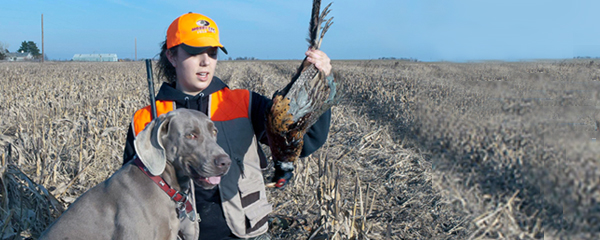
PRATT – The Kansas pheasant and quail seasons openSaturday, Nov. 9, 2013-Jan. 31, 2014and you can bet avid bird hunters will be in the field. It’s a time-honored tradition where spending time with
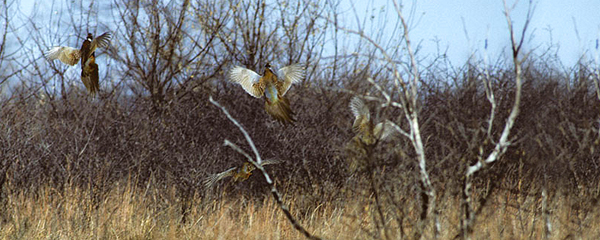
friends and family, renewing acquaintances with landowners, and experiencing the Kansas countryside becomes more important than the number of birds bagged.
While the extended severe drought was broken this summer in many parts of the state, rains came too late to have significant impacts on pheasant nesting and brood survival success. The forecast for most of the traditional pheasant regions in Kansas predicts below average bird numbers. Rains have improved habitat conditions in many areas, and if the trend continues, nesting and brood habitat will be much better this spring.
There are pockets with decent pheasant numbers in the northcentral and northwestern regions of Kansas. Hunters will have to work to find birds, and they may have to travel within the regions to locate these pockets.
Quail populations in eastern Kansas have improved and some of the best quail hunting will be found in the Flint Hills and southeast regions of the state.
For more details on the pheasant, quail and prairie chicken forecast for 2013, go to www.ksoutdoors.com. A copy of the2013 Kansas Hunting and Furharvesting Regulations Summary and the 2013 Kansas Hunting Atlas can be downloaded, as well. Printed publications are available wherever licenses are sold. More than 1 million acres are enrolled in the Walk-In Hunting Access (WIHA) program, and the atlas includes maps showing all WIHA tracts, as well as all state and federal public hunting lands.
Pheasant and quail hunters should remember that they must have permission to hunt private land, whether that land is posted or not. Land marked with purple paint requires written permission from the landowner. All resident hunters age 16-74 must have a Kansas resident hunting license, and all hunters born on or after July 1, 1957 must have completed an approved hunter education course. Youth 15 and younger may hunt without hunter education as long as they are under the direct supervision of an adult. Hunters 16 and older may purchase an apprentice license that is a one-time purchase and allows them to hunt without hunter education while also under adult supervision. A resident hunting license is $20.50. A resident youth multi-year license, valid from age 16-21, is available for $42.50. Resident hunters age 65-74 can purchase an annual hunting license for $11.50 or a lifetime combination hunt/fish license for $42.50. A nonresident hunting license is $72.50 for hunters 16 and older and $37.50 for youth hunters 15 and younger.
While hunting is one of the safest outdoor activities, simple safety precautions will ensure you have a safe and enjoyable hunt. Most hunting-related incidents in Kansas occur when a hunter swinging on game fires and hits another hunter in the line of fire. Maintaining safe zones of fire, keeping track of other hunters in your party, and wearing blaze orange clothing can help prevent this type of incident. Other safety rules include: always point your shotgun’s muzzle in a safe direction; keep your safety on until right before you shoot; know your target and what is beyond, and transport your shotgun unloaded and in a case.

Thursday, November 7, 2013

State Trails Advisory Board to Meet

Group will discuss trail project grant applications
PRATT – The Kansas Department of Wildlife, Parks and Tourism Trails Advisory Board will hold a Wednesday, December 4, 2013, at the Great Plains Nature Center, 6232 E. 29
public meeting
th Street N, Wichita, for the purpose of hearing and discussing grant applications previously submitted for funding under the Recreational Trails Fund Act. The meeting will begin at 1:00 p.m. in the auditorium. Signs on the premises will provide directions to the meeting room.

Persons interested in commenting on applications should attend this meeting. Grant applicants are encouraged to attend and discuss their proposals. Time for comments will be limited. Final decisions about proposals will not be made at this meeting. The Board will evaluate and make recommendations after reviewing all applications.

The National Recreational Trail Fund Act provides funding assistance for acquisition, development, rehabilitation and maintenance of both motorized and non-motorized recreational trails.

For more information, contact Kathy Pritchett, Trail Grant Coordinator, Kansas Department of Wildlife, Parks and Tourism, 512 SE 25th Avenue, Pratt, Kansas 67124, at 620-672-5911. If notified in advance, the department will have an interpreter available for the hearing impaired. To request an interpreter, call the TDD Service at 1-800-766-3777. An individual with a disability may request other accommodations by contacting Kathy Pritchett at 620-672-5911.

Saturday, November 2, 2013

ENDANGERED SPECIES MAKES APPEARANCE IN KANSAS

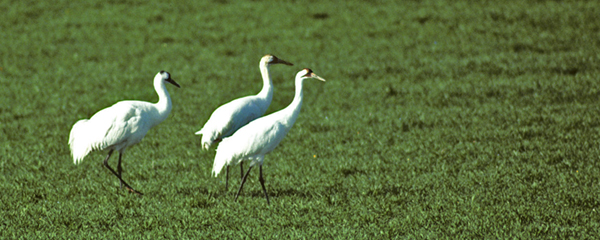
Whooping cranes are North America’s tallest bird, some reaching 5-feet when standing erect

PRATT – The first migrating whooping crane was spotted on Oct. 24 at Quivira National Wildlife Refuge, near Stafford in central Kansas. A rare and fantastic sight, this whooping crane is part of the only sustaining wild population estimated at 250 birds. Whooping cranes from this population will fly through the state in upcoming weeks, making their way to wintering grounds at Aransas National Wildlife Refuge on the Texas Gulf Coast.

Past records indicate that most whooping cranes will pass through Kansas between Oct. 17 and Nov. 10, usually travelling in small family groups. However, on November 9 2012, 18 whoopers were spotted together at Quivira as they migrated south from their Canadian nesting grounds at Wood Buffalo National Park in the Northwest Territories.

As part of a cooperative monitoring program supervised by the U.S. Fish and Wildlife Service, the Kansas Department of Wildlife, Parks and Tourism (KDWPT) encourages anyone who has spotted a whooper to contact their local natural resource officer or KDWPT office. Sighting information can be used to alert managers of key areas along the flyway — such as Quivira and Cheyenne Bottoms Wildlife Area in central Kansas — and to provide sighting records for the Whooping Crane Recovery Plan and for whooping crane research in the U.S. and Canada.

For more information, visit the U.S. Fish and Wildlife Service website at www.fws.gov/midwest/whoopingcrane.

Friday, November 1, 2013

NOV. 2-3 YOUTH UPLAND BIRD SEASON

Youth hunters may hunt pheasant and quail free of competition during this special season

PRATT – The beginning of November marks one of Kansas’ most prized hunting seasons - pheasant and quail - and for hunters age 16 and younger, a jump-start on the regular season can mean the difference between a decent hunt and an unforgettable season. Nov. 2-3 is the Kansas youth pheasant and quail season, which will be open to youth hunters under adult supervision.

Established as part of the Kansas Department of Wildlife, Parks and Tourism’s Pass It On program, the youth season provides young hunters and their mentors the opportunity to be in the field before the crowds of opening day. Public lands and Walk-In Hunting Access lands are open, and hunting pressure is usually light. Adult mentors may not hunt during the two-day youth season, but they can pass on their hunting knowledge without giving up their own opening-day.

Resident youth 15 and younger do not need anything other than an adult supervisor to hunt during the youth season, although a hunter education certificate is recommended. Hunters age 16 will need a hunting license and a hunter education certificate, unless they purchase an apprentice license, which is a one-time deferral of the hunter education requirement. However, adult supervision is required at all times for an apprentice license holder, even during the regular season.

Daily bag limits during the youth pheasant and quail season are half those of the regular season; two rooster pheasants and four quail.

Resident youth age 16-21 also have the privilege of qualifying for a multi-year hunting license at $42.50 and a multi-year combination hunting/fishing license at $72.50. A great bargain, this multi-year hunting license is valid through the year the hunter turns 21.

For more information, including where to hunt and to view the current upland bird forecast, visit ksoutdoors.com/hunting.

PUBLIC BUFFALO AUCTION NOV. 20

Buffalo from Maxwell Wildlife Refuge herd are available for purchase

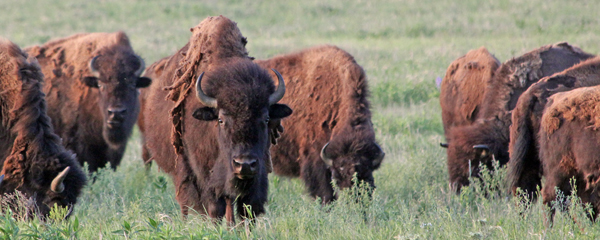
PRATT – The Kansas Department of Wildlife, Parks and Tourism (KDWPT) will auction off surplus buffalo at the Maxwell Wildlife Refuge onWednesday, November 20, 2013 beginning at 11 a.m. Those interested in bidding are encouraged to arrive early to receive a bidder number. The auction is open to the public, and lunch and concessions will be served.
Each fall, surplus buffalo are sold as available habitat can support only a finite number of animals. This year, a total of 60 buffalo will be auctioned, including seven cows, 13 yearling heifers, eight heifer calves, 13 yearling bulls, eight two-year-old bulls, eight bull calves, and three three-year-old bulls. Bison over 1-year-old will be brucellosis and tuberculosis tested and accompanied by a health certificate. Heifer calves will be vaccinated for brucellosis and certificates issued. Prices paid per animal range from several hundred dollars to several thousand, depending on market demand, condition, sex and age of the animal.
Cash and personal checks (if accompanied by a notarized authorization letter from the issuing bank) will be accepted. KDWPT reserves the right to reject any or all bids. Buyers must pick up the bison the day of the sale or make arrangements with the refuge manager prior to the sale. Animals become the buyer’s responsibility upon settlement on sale day. Load-out assistance is available until dusk the day of the sale. Stock racks and trailers should be covered or lined because bison transport best in dark conditions.
The sale will be outside and will take place rain or shine, so attendees are encouraged to dress accordingly. For more information, contact Maxwell Wildlife Refuge manager Cliff Peterson at (620) 628-4592, or KDWPT’s Region 4 Office in Wichita at (316) 683-8069.

Thursday, October 31, 2013

APPLICATIONS BEING ACCEPTED FOR COMMISSION BIG GAME PERMITS

Eligible non-profits can enter to draw a deer, elk, or antelope permit for fundraising

PRATT ­– At the upcoming Jan. 9 Kansas Wildlife, Parks and Tourism commission meeting at Southwestern College in Winfield, seven lucky wildlife conservation groups will be drawn from a pool of applicants to receive a big game permit voucher. These vouchers can then be sold to the highest bidder to raise money for the organization’s conservation efforts, with 15 percent of the sales going directly back to the chapter, and 85 percent going to the Kansas Department of Wildlife, Parks and Tourism (KDWPT) to be spent on mutually agreed-upon projects.
Any Kansas-based nonprofit organization that actively promotes wildlife conservation and the hunting and fishing heritage is eligible to apply now through Jan. 1, 2014. Only one permit per organization will be awarded; however, individual chapters of the same organization may receive permits. A chapter or organization is eligible to receive only one Commission Big Game permit in a three-year period. To apply, organizations must submit an application that includes a copy of their 501(c)(3) nonprofit status, articles of incorporation, and mission statement, as well as the organization’s preference for an elk, antelope or deer permit. Applications can be downloaded from KDWPT’s website,www.ksoutdoors.com; enter “2013 Commission Big Game Permit” in the search box. Mail applications to Sheila Kemmis, Commission Secretary, Kansas Department of Wildlife, Parks and Tourism, 512 SE 25 Ave., Pratt, KS 67124.
A total of seven permits may be issued, including one elk, one antelope and up to seven deer, depending upon the preferences of the drawn organizations. Organizations that draw a permit must first pay KDWPT the permit fee, and then they will be issued a voucher. The final recipient of the voucher then remits the voucher to KDWPT’s licensing section for the actual big game permit. Permits may be issued to resident or nonresident hunters, and are valid in management units and seasons listed on the permits.
If Kansas Hunters Feeding the Hungry (KSHFH) receives a permit, not less than 15 percent of the funds raised is remitted to KDWPT with 85 percent staying with KFHFH.

Saturday, October 26, 2013

TROUT SEASON KICKS OFF NOVEMBER 1

More than 200,000 trout will be stocked in select waters throughout the state this season

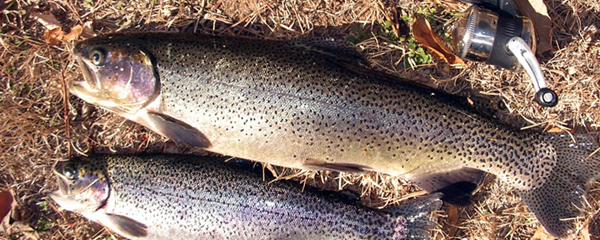
PRATT ­– Outside temperatures may be cooling down, but for trout anglers, fishing season is about to heat up. From Nov. 1, 2013-April 15, 2014, anglers can enjoy some of the best fishing opportunities in the state as nearly 30 public fishing areas will be stocked periodically with this special species. Throughout a five-month period beginning Nov. 1 and endingMarch 31, over 202,000 trout will be stocked in select waters.
In Kansas, there are two types of trout waters: On Type 1 waters all anglers age 16 and older fishing during the trout season are required to have a trout permit, and on Type 2 waters anglers 16 and older who are fishing for or in possession of trout are required to have a trout permit. Anglers 15 and younger can fish for trout without a trout permit, but they may only keep two trout per day. The daily creel limit for anglers with a trout permit is five per day unless posted otherwise. All anglers age 16-74 must also have a Kansas fishing license. New for 2014, anglers fishing for trout in Meade State Fishing Lake will be required to purchase a trout permit.
Anglers fishing in ponds and lakes after April 15 may catch trout without a trout permit, but the limit of 5 trout a day and 15 in possession is still enforced. This does not include the waters that are stocked year-round, such as the Mined Land Wildlife Area Unit #30 (Cherokee County), which requires a trout permit year-round.
Some local governments in areas such as Topeka and Kansas City have their own trout stocking programs, which may require a fee, but the state permit is not required. Local city and county recreation departments should have details.
Trout waters and the total number of trout stocked at each throughout the season are listed below. To view a complete stocking schedule for a specific location, visit ksoutdoors.com and click “Fishing / Special Fishing Programs for You / Trout Fishing Program.”
Region 1
Webster Reservoir Stilling Basin: 10,500
Bellville City Lake (Rocky Pond): 7,500
Glen Elder State Park Pond: 3,300
Kanopolis Seep Stream: 8,500
Cedar Bluff Stilling Basin: 4,250
Salina - Lakewood Lake: 6,000
*At this time Smoky Gardens (Sherman County) has water and will be stocked as water quality improves.
*At this time the Solomon River above Webster is dry and will not be stocked.
Region 2
Ft. Riley - Moon Lake: 9,000
Ft. Riley - Cameron Springs: 12,000
Topeka - Auburndale Park Stream: 1,505
Tuttle Creek - Willow Lake: 12,900
Clinton State Park - Lake Henry: 5,075
Holton - Elkhorn Lake: 3,000
Atchison City Lake #1: 3,000
Shawnee Co. - Lake Shawnee: 14,000
Region 3
Scott State Fishing Lake: 8,860
Cimarron Grassland Pits: 5,800
Pratt - Centennial Pond: 4,000
Great Bend - Stone Lake: 6,650
Dodge City - Lake Charles: 5,080
Syracuse - Sam's Pond: 2,500
*At this time Sandsage Bison Range and Wildlife Area is dry and will not be stocked.
Region 4
El Dorado State Park - River Area: 6,350
Sedgwick Co. - Vic's Lake: 14,076
Sedgwick Co. - Slough Creek: 10,944
Hutchinson - Dillon Nature Center: 5,785
Wichita - KDOT East Lake: 8,172
Region 5
Mined Land Wildlife Area - Unit #30: 15,895
Ft. Scott - Gunn Park East Lake: 4,725
Garnett - Crystal Lake: 3,000