Monday, August 19, 2013

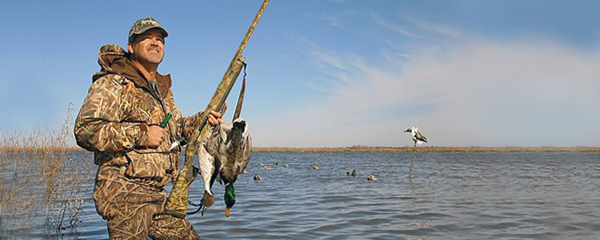
SPECIALLY MANAGED FIELDS ATTRACT DOVES AND HUNTERS

Designated dove fields on public lands require non-toxic shot
PRATT – On many Kansas Department of Wildlife, Parks and Tourism (KDWPT) public

wildlife areas, managers have been working all summer to attract doves. Specific crops have been planted and managed, and if Mother Nature cooperates the dove hunting on these fields can be fantastic.
On many areas, these practices have been followed for several years; however, there are some changes for the 2013 season. The biggest change is that on designated dove fields, hunters will be restricted to non-toxic shot. Dove harvest has been high on many fields, and they draw large number of hunters for the first few days of the dove season. This kind of hunting pressure on small fields results in a large amount of lead shot being concentrated in a small area. Lead is toxic, especially to birds, so the non-toxic regulation has been implemented.
The fields requiring non-toxic shot will be designated with signs, and non-toxic shot is required for all shotgun hunting on these fields as long as the signs are in place. The following wildlife areas may have designated non-toxic shot fields:NORTHWEST – Jamestown WA, Glen Elder WA, Ottawa WA, Smoky Hill WA, and Wilson WA. NORTHEAST – Kansas River WA, Tuttle Creek WA, Clinton WA, Perry WA, Milford WA, Noe WA, and Hillsdale WA. SOUTHCENTRAL – Cheney WA, El Dorado WA, and Marion WA. SOUTHEAST – Dove Flats WA, Elk City WA, Fall River WA, La Cygne WA, Mined Land WA, Spring River WA, Toronto WA, and Woodson WA.
Hunters can see which wildlife areas have managed dove fields by going to www.ksoutdoors.com, clicking on “Hunting,” then “Migratory Birds” and “Doves.” Narratives for each area under the “Managed Dove Hunting Areas On KDWPT Public Lands” heading provide field locations, crop types and any special restrictions in place.
Dove hunting on these specially managed fields can be so good they will attract many hunters. Common courtesy and strict safety procedures must be followed to ensure everyone has a safe and enjoyable hunt. Always keep plenty of space between hunting parties, be conscious of where you are shooting and where your shot will drop, and never take shots at low flying birds.
The 2013 season for mourning, white-winged, Eurasian collared and ringed turtle doves is open Sept. 1-Oct. 31 and Nov. 2-10. The daily bag limit for mourning and white-winged doves, single species or in combination is 15. The possession limit is 45. There is no limit on Eurasian collared and ringed turtle doves, but any taken in addition to a daily bag limit of mourning and white-winged doves must have a fully-feathered wing attached while being transported. A Kansas Harvest Information Program permit is required to hunt doves. An extended exotic dove season for Eurasian and ringed turtle doves will open Nov. 20-Feb. 28, 2014. There is no daily bag limit, but a fully-feathered wing must remain attached while the birds are transported.

Sunday, August 18, 2013

WILDLIFE, PARKS AND TOURISM COMMISSION PUBLIC HEARING AUG. 29

Phone conference scheduled to approve last-minute changes to possession limits for migratory birds

PRATT – The Kansas Wildlife, Parks and Tourism Commission will conduct a public hearing through a telephone conference on Thursday, August 29, 2013. The call will begin at 10 a.m., and members of the public can listen online atksoutdoors.com, or attend a satellite location listed below, where public comments may be heard.
The last-minute hearing is necessary to incorporate changes to possession limits in migratory bird hunting regulations for the 2013 seasons. Other than the late migratory bird seasons, which were set Aug. 1, seasons and regulations for doves, sandhill cranes, snipe, rail and woodcock were approved earlier this year. However, when the U.S. Fish and Wildlife Service (USFWS) released frameworks for migratory bird hunting regulations in July, the possession limit for all migratory birds was increased from twice the daily bag limit to three times the daily bag limit. Because potential regulation changes must be given published notice 30 days prior to a public hearing, the impromptu commission meeting was scheduled for Aug. 29. Commissioners will vote on a recommendation to adopt the maximum possession limit of three times the daily bag limit for doves, sandhill cranes, snipe, rail and woodcock as allowed under the USFWS frameworks.
The public is encouraged to listen to or comment during the hearing at any of the following KDWPT locations: Office of the Secretary, 1020 S. Kansas Ave., Suite 200, Topeka; Pratt Operations Office, 512 SE 25th
Ave., Pratt; KDWPT Region 1 Office, 1426 Hwy 183 Alt., Hays; KDWPT Region 2 Office, 300 SW Wanamaker Rd., Topeka; KDWPT Region 3 Office, 1001 W. McArtor, Dodge City; KDWPT Region 4 Office, 6232 E. 29th
St. N, Wichita; Neosho County Community College, 800 W. 14th
St., Oak Room, No. 209, Chanute; KDWPT Kansas City Office, 8304 Hedge Lane Terrace, Shawnee; KDWPT Research and Survey Office, 1830 Merchant, Emporia.
If necessary, the Commission will recess on August 29, 2013, to reconvene August 30, 2013, at 9:00 a.m.
If notified in advance, the department will have an interpreter available for the hearing impaired. To request an interpreter call the Kansas Commission of Deaf and Hard of Hearing at 1-800-432-0698. Any individual with a disability may request other accommodations by contacting the Commission Secretary at (620) 672-5911.

The next commission meeting is scheduled for Thursday, October 17, 2013, Kansas Cosmosphere, 1100 N. Plum, Hutchinson.

Tuesday, August 13, 2013

HAYS YOUTH OUTDOOR FESTIVAL AUG. 17

Youth age 17 and younger can enjoy a day of casts and blasts during this annual festival

HAYS­– The Kansas Department of Wildlife, Parks and Tourism along with Hays area conservation groups and businesses are again sponsoring a free target shooting and outdoor activities for youth 17 and under. The 16th Annual Youth Outdoor Festival is scheduled for Saturday, Aug.17, from 9:00 a.m. to 3:00 p.m. at the Hays City Sportsman's Club a quarter mile north of I-70, Exit 157.
Youth can try trap shooting, skeet shooting, archery, air rifle/BB guns, muzzleloaders, small bore rifles, computerized laser shot target shooting, and even paintball target shooting. Equipment, targets and ammunition will be provided free of charge. There will also be a B.A.S.S. casting competition, as well as several furharvesting demonstrations.
Hunter Education certification is not required to attend, however youth participants must be accompanied by an adult. Youth will be closely supervised at each event station by a volunteer who is an expert at the specific skill.
In addition to the free shooting opportunities, several door prizes, including guns, fishing tackle and other outdoor equipment will be given away. Lunch will also be provided.
Registration for this event must be completed on site prior to participating in any of the activities.
For more information, contact Kent Hensley at (785) 726-3212 or Troy Mattheyer at (785) 726-4212.

Monday, August 12, 2013

WESTAR ENERGY GREEN TEAM TO HOST YOUTH DOVE HUNT

Participating youth will have the opportunity to hunt wheat stubble and sunflower fields during the Labor Day weekend hunt
ST. MARYS­­– The Westar Energy Green Team will host a youth-only dove huntSept. 1-2 at the Jeffrey
Energy Center (JEC) Wildlife Area, north of St. Marys. The event is open to youth age 16 or younger and hunts will take place during early morning and late afternoon on both days.
According to JEC wildlife area staff, the fields are in great condition, and there should be plenty of birds flying at close range. The hunts are an excellent way for kids 16 and younger to get hands-on experience and learn the basics of dove hunting.”
The registration deadline is Aug. 26, with hunters being accepted on a first-come, first-served basis. Youth must bring their own shotguns and be accompanied by a non-hunting adult. Non-toxic shells will be provided to all participants. Hunters age 16 must possess a Kansas hunting license and HIP permit.
Hunters or mentors interested in participating in this event can contact Barb Cornelius at (785) 575-8125.
The 2013 dove season is Sept. 1 - Oct. 31 and Nov. 2 - 10. For more information on dove hunting, visit ksoutdoors.comand click “Hunting/Migratory Birds.”

Sunday, August 11, 2013

2013 DUCK AND GOOSE SEASONS SET

English: crop of File:Bgforhunting.jpg Taken b...

Goose daily bag limits increased; possession limits for ducks and geese increased
YATES CENTER – The Kansas Wildlife, Parks and Tourism Commission listened to department staff recommendations and comments from waterfowl hunters before approving the 2013 duck and goose seasons during a public hearing held in Yates Center on August 1. Summer breeding bird surveys show most species well above long-term averages, and with good to excellent nesting habitat conditions, the U.S. Fish and Wildlife Service (USFWS) provided liberal season frameworks. Waterfowl hunters may be surprised to learn that the daily bag limit for teal during the early teal season was increased from four to six, the daily bag limit for Canada geese was increased from 3 to 6 and the daily bag limit for light geese was increased from 20 to 50. Possession limits for ducks and geese were increased from twice the daily bag limit to three times the daily bag limit. The Commission approved the following waterfowl hunting seasons:
High Plains Duck Zone: Oct. 5-Dec. 2, 2013 AND Dec. 21, 2013-Jan. 26, 2014Youth: Sept. 28-29, 2013
Low Plains Early Duck Zone: Oct. 5-Dec. 1, 2013 AND Dec. 21, 2013-Jan. 5, 2014. Youth: Sept. 28-29, 2013
Low Plains Late Zone: Oct. 26-Dec. 29, 2013 AND Jan. 18-Jan. 26, 2014. Youth: Oct. 19-20, 2013
Low Plains Southeast Zone: Nov. 2-3, 2013 AND Nov. 16, 2013-Jan. 26, 2014. Youth: Oct. 26-27, 2013
Duck bag limit: Six ducks, including no more than 5 mallards, of which only 2 may be hens; 2 redheads; 3 wood ducks; 3 scaup; 2 pintails; and 2 canvasbacks. Possession limit is three times the daily bag limit.
White-fronted geese: Oct. 26-Dec. 29, 2013 AND Feb. 1-Feb. 9, 2014. Daily bag limit: 2. Possession limit is 6.
Canada geese: Oct. 26-Nov. 3, 2013 and Nov. 6, 2013-Feb. 9, 2014. Daily bag limit on Canada geese: 6. Possession limit: 18.
Light geese: Oct. 26-Nov. 3, 2013 and Nov. 6, 2013-Feb. 9, 2014. Daily bag limit: 50. No limit on possession
Light Goose Conservation Order: Feb 10-April 30, 2014. No bag or possession limit.
To view a map of duck zones and to see all 2013 hunting seasons go to www.ksoutdoors.com, click on “Hunting” then “When to Hunt.”

Saturday, August 10, 2013

DUCK BREEDING POPULATION ESTIMATES SHOW PROMISING NUMBERS

While just below last year’s record numbers, 2013 duck populations are still well above long-term averages

PRATT­– Duck populations are strong, according to the U.S. Fish and Wildlife Service (USFWS) 2013 Report on Trends in Duck Breeding Populations. The preliminary estimate of total duck populations from the traditional survey area (northcentral United States, southcentral and northern Canada, and Alaska) is 45.6 million birds­– a six percent decrease from last year’s estimate of 48.6 million birds, but a 33 percent increase from the long-term average. In addition to estimating duck populations, the survey also examines habitat conditions.
Habitat conditions during the 2013 survey were generally improved or similar to last year due to above-average precipitation, despite a delayed spring throughout most of the traditional survey area. Most of the Canadian portions of the traditional survey area were rated as good to excellent, in contrast to 2012 when drier conditions existed across northern Alberta and Saskatchewan. Although the U.S. prairies received record snowfall in April, habitat conditions were still rated only fair to poor, similar to last year. The total pond estimate (prairie Canada and the north-central United States combined) is 6.9 million, 24 percent higher than the 2012 estimate of 5.5 million ponds and 35 percent above the long-term average.
In the eastern survey area – eastern Ontario, Quebec, the Maritime Provinces and Maine – estimated mallard abundance is 500,000 birds. Habitat conditions across most of the eastern survey area generally were good with the exception of Maine and the southern Maritimes, which were rated only as fair.
The report also notes:
  • Estimated mallard abundance is 10.4 million birds, similar to the 2012 estimate of 10.6 million birds and 36 percent above the long-term average.
  • Blue-winged teal estimated abundance is 7.7 million. Although this is 16 percent below the 2012 estimate of 9.2 million, the blue-wing population is 60 percent above the long-term average. Similarly, the green-winged teal estimate of 3.1 million is 12 percent below last year, but still 51 percent above the long-term average.
  • The northern pintail estimate of 3.3 million is similar to the 2012 estimate of 3.5 million and 17 percent below the long-term average.
  • Estimated abundance of American wigeon is 2.6 million and 23 percent above the 2012 estimate and similar to the long-term average.
  • The combined lesser and greater scaup estimate of 4.2 million decreased 20 percent from last year and is 17 percent below the long-term average of 5 million.
  • The canvasback estimate of 787,000 is similar to the 2012 estimate and 37 percent above the long-term average.
The surveys are conducted by the USFWS and Canadian Wildlife Services’ Waterfowl Breeding Population and Habitat Survey, sampling more than 2 million square miles of waterfowl habitat across Alaska, the northcentral and northeastern United States and southcentral, eastern and northern Canada.
The information guides the USFWS waterfowl conservation programs under authority of the 1918 Migratory Bird Treaty Act. The USFWS then works in partnership with state biologists from the four flyways – the Atlantic, Mississippi, Central and Pacific – to establish regulatory frameworks for waterfowl hunting season lengths, dates and bag limits. 2013 Kansas duck hunting season dates and bag limits will be approved at the Aug. 1 commission meeting in Yates Center.
For more information about the U.S. Fish and Wildlife Service 2013 Report on Trends in Duck Breeding Populations, visitwww.fws.gov/migratorybirds.
For more information on Kansas waterfowl hunting, visit ksoutdoors.com and click “Hunting/Migratory Birds/Ducks.”

Friday, August 9, 2013

LAKE SHAWNEE ANGLER CATCHES ALIEN FISH

KDWPT advises anglers who catch exotic fish to not return them to water

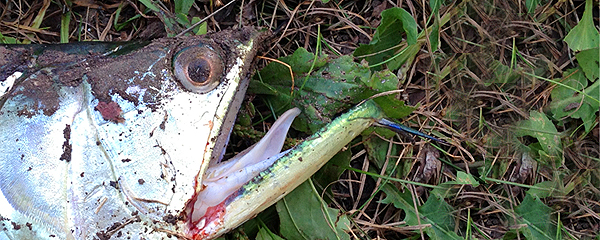
TOPEKA­– An unidentified angler landed quite a surprise at Lake Shawnee in Topeka Sunday, July 21, when he hauled in a silver arowana, a primitive freshwater fish native to the Amazon River Basin in South America. Often kept as aquarium pets, arowanas do not belong in Kansas waters. The fish was about 20 inches long and was likely released into Lake Shawnee or upstream by someone who could no longer care for it. Sold as youngsters, arowanas can grow to 2 feet long or more in captivity and can quickly outgrow their aquariums. They grow to nearly 4 feet long in the wild. Arowanas are aggressive and carnivorous, and they may eat other aquarium fish.
Jessica Howell, aquatic nuisance species coordinator for the Kansas Department of Wildlife, Parks and Tourism (KDWPT), cautioned that people should not release aquarium animals into the wild. “It’s against state and federal law to release any exotic species into Kansas waters, and new regulations also make it illegal to dump any fish into waters where they don’t originate,” she said. “Responsible aquarium owners never release anything, including water, plants, snails and fish into a stream, pond, lake, ditch or storm drain.”
The angler who caught the fish asked Torrey Bevans, who was fishing nearby, for help. Bevans photographed the fish so it could be identified and correctly advised the angler to not return the fish to the lake. The fish died on the bank, although it took some time, as arowanas can get oxygen by drawing air into their swim bladders. Bevans visited a KDWPT office in Topeka on Monday to report the catch and share his photos.
Howell said Bevans gave the correct advice. “If you catch an exotic fish, do not return it to the water. Instead, let it die and photograph it or put it on ice for later identification by a KDWPT biologist. If you own exotic fish, visit ProtectKSWaters.org for suggestions on responsibly handling unwanted aquarium specimens so you don’t break the law.”
With sharply upturned lower jaws and eyes high on the sides of their heads, arowanas are specialized for feeding at the surface where they pick off insects, small fish and other animals. Two barbels (“whiskers”) on their lower jaws help arowanas sense movement and locate prey in murky water. Sometimes called monkey fish or water monkeys, they are spectacular jumpers in their native waters and can leap up to 6 feet out of the water to catch birds, snakes or frogs.
For information on aquatic nuisance species, visit ProtectKSWaters.org.
Photo courtesy of Torrey Bevans.