Showing posts with label Drought. Show all posts

Saturday, October 12, 2013

2013 KANSAS UPLAND BIRD FORECAST NOW AVAILABLE

Despite drought during the reproductive season, some upland game hunters may experience a memorable harvest this fall
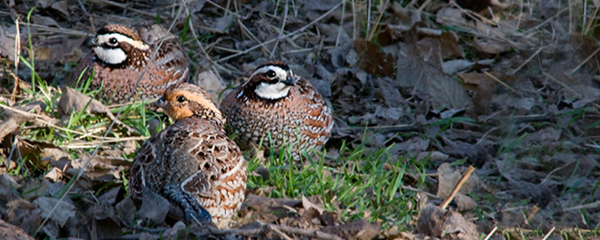
PRATT – The 2013 Upland Bird Forecastis now available for viewing online at ksoutdoors.com, and although population levels are projected to be less than favorable, upland bird hunters willing to travel to northern Kansas, may find a silver lining to the season.
Since extreme drought conditions persisted in most of the state again this year, ideal vegetation conditions were scarce going into the breeding season. This left most upland game birds without sufficient brood rearing cover and insect abundance, and thus led to a lower than average chick survival rate. Although the precipitation that fell across much of the state in late summer came too late to improve the upcoming season, biologists anticipate upland bird hunters may see enhanced conditions and a potential for better production next summer as vegetation conditions continue to improve.
As with any forecast, predictions are general and regional in nature. Although survey data indicate below average bird populations, hunters willing to work will likely find pockets with adequate bird numbers. Going from poor to fair hunting can often be as simple as driving 30 miles.
Listed below are statewide summaries on pheasant, quail, and prairie chickens. For the full forecast, including region-specific summaries, visit ksoutdoors.com and click “Hunting / Upland Birds / Upland Bird Regional Forecast.” For a printed copy of the 2013 Upland Bird Forecast, 2013 Kansas Hunting and Furharvesting Regulations Summary, and 2013 Kansas Hunting Atlas, call (620) 672-5911.
PHEASANT – Pheasant populations in Kansas continue to suffer from the extended drought. Breeding populations dropped across their range from 2012 to 2013 resulting in less adult hens in the population to start the 2013 nesting season. However, opportunities will still exist to harvest roosters in the Sunflower State, especially for those willing to work for their birds. Though the drought has taken its toll, Kansas still has one of the best pheasant populations and the fall harvest will again be among the best in the country. The best areas this year will likely be pockets in northwest and northcentral Kansas.
QUAIL – The statewide bobwhite breeding population decreased in 2013 compared to 2012, but there is some variation across the state. Areas east of the Flint Hills showed improved productivity this year. Populations have rebounded over the last two years in eastern Kansas, but overall populations are still below historic averages. The best quail hunting will likely be found within the Flint Hills and southeast regions.
PRAIRIE CHICKEN – The spring prairie chicken lek survey indicated that most populations remained stable or declined slightly from last year. Areas within the Flint Hills and southcentral regions fared the best, while areas in the northern and western regions, where the drought was most severe, experienced the sharpest declines. Many areas in the Flint Hills were not burned this spring due to drought conditions. This resulted in slightly more residual grass cover for nesting compared to recent years. There have been some reports of prairie chicken broods in these areas, and hunting will likely be somewhat improved compared to recent years.
Upland Game Bird Seasons
PHEASANT
  • Regular: November 9, 2013 - January 31, 2014
  • Youth: November 2-3, 2013
  • Area Open: Statewide
  • Daily Bag Limit: 4 cocks in regular season, 2 cocks in youth season
  • NOTE: Pheasants in possession for transportation must retain intact a foot, plumage, or some part that will determine sex.
QUAIL
  • Regular: November 9, 2013 - January 31, 2014
  • Youth: November 2-3, 2013
  • Area Open: Statewide
  • Daily Bag Limit: 8 in regular season, 4 in youth season
PRAIRIE CHICKEN (Permit required)
  • Early (East and Northwest zones): Sept. 15 - Oct. 15, 2013
  • Daily Bag Limit: 2 (single species or in combination)
  • Regular (East and Northwest zones): Nov. 16, 2013 - Jan. 31, 2014
  • Daily Bag Limit: 2 (single species or in combination)
  • Southwest Zone: Nov. 16 - Dec. 31, 2013
  • Daily Bag Limit: 1

Sunday, March 4, 2012

BISON BEING MOVED FROM SANDSAGE WILDLIFE AREA

English: A small, privately owned Bison herd.
Image via Wikipedia
Drought forces temporary move of 40 animals
GARDEN CITY — A two-year drought is forcing the Kansas Department of Wildlife, Parks and Tourism (KDWPT) to move bison from the Sandsage Bison Range and Wildlife Area, near Garden City, to Maxwell Wildlife Area, in McPherson County north of Canton. The drought has depleted forage on the area, and the move is being made to protect both the sensitive range as well as the bison.

“We have been supplementing the bison with hay and range cubes since August,” said area manager Tom Norman. “However, the bison still have too great a need for grass for supplements to be a long-term solution. Also, the Sandsage Bison Range is a pretty fragile ecosystem, so maintaining the type of vegetative cover that provides food for the bison and prevents sand movement is a challenge even under normal climatic conditions. A drought makes it almost impossible to maintain vegetation to provide for either.”

Attempts to stay within the carrying capacity of the range have resulted in consistent herd reductions since 2002, and today, the herd has 50 percent fewer animals than in 2001. Even with the reductions in herd size, the pastures have been unable to keep up with the forage needs of the bison. According to Norman, the area needs long-term rest.

“We will be moving 40 head and retaining nine,” Norman explained. “We would take all of them, but there just isn't room at Maxwell for any more. The bison we retain will be kept in the corral pens at least until we get some forage growth this spring. I am hoping to get a large exhibition pasture fenced to hold them until we can allow them into the sandhill pastures. But it all depends on precipitation. We are hoping that conditions will improve enough to bring the majority of the herd home in the fall.”

The agency began transporting animals on Feb. 29 and plans to complete transportation by the end of the week. Since Feb. 8, the herd has been confined to the corral pens, where they have been vaccinated against the Mycoplasma bovisorganism.

Historically, bison herds would move great distances during drought, but today’s fences across the Great Plains require transportation by truck and trailer. The 2,500-acre Maxwell Bison Refuge was donated to KDWPT in 1943 by Henry Maxwell to create a wildlife refuge dedicated to bison and other prairie species.

Sunday, September 25, 2011

HEAT AND DROUGHT IMPACT 2011 UPLAND BIRD FORECAST

Flint HillsImage by kswx_29 via Flickr
While some areas of central, northcentral, and northwest Kansas may offer good hunting, drought and heat have reduced bird numbers
PRATT — Kansas upland bird hunters enjoyed a banner season in 2010, but this summer’s heat and drought in parts of the state have hurt upland bird prospects for 2011. The Kansas Department of Wildlife, Parks and Tourism (KDWPT) has released its 2011 Kansas Upland Bird Forecast, and although good numbers of pheasants and quail will be found in some areas, severe drought and record high temperatures throughout much of the birds’ range resulted in fewer birds overall.
Generally, the best pheasant hunting in 2011 will be north of I-70 in western Kansas, the best quail hunting will be in the central part of the state, and the best greater prairie chicken hunting should be in native grasslands from the northern Flint Hills westward throughout the Smoky Hills.
Central and western Kansas had a relatively mild 2010-2011 winter, and over-winter survival was very high for upland game throughout most of the state. Breeding populations in central and western areas neared all time highs, especially for pheasant. However, drought that began in the summer of 2010 and persisted through the 2011 nesting season (May through July) and the summer hampered growth of wheat — primary nesting habitat for pheasants — especially in western Kansas. Areas in northwest and northcentral parts of the state received rain in May, which improved nesting conditions in those areas but likely hurt nest success where rainfall was excessive. In July and August, some severe hailstorms hit these areas, possibly decreasing chick survival in localized areas.
The southern half of the state endured prolonged drought through the rest of the summer. Southwest and southcentral Kansas had particularly bad reproductive conditions for pheasants, quail, and prairie chickens.
So what does this mean for Kansas upland bird hunters this fall? Here’s the statewide breakdown by species.

Pheasants
Unfortunately, drought through much of the state hampered pheasant reproduction this year. A substantial number of hens nest in winter wheat in the primary pheasant range (western Kansas). This year, much of western Kansas, especially southwest, had much-reduced wheat production. Nest success was likely much lower in these areas due to poor vegetative structure. Additionally, earlier wheat harvest dates due to poor growing conditions likely caused losses to nests or young broods. Thus, like many other pheasant states, Kansas will experience a substantial decline in the pheasant population this year.
The timing and quantity of early summer precipitation also plays a direct role in game bird productivity. Success of nests and survival of young is generally best when rain comes slowly and in near average amounts during May and June. Most of the areas in Kansas’ primary pheasant range did not meet that prescription this year and had little or no precipitation. Additionally, a few areas where there was reproductive success (northwest and northcentral Kansas) received heavy rainfall and/or hail during the peak reproductive period. Although these storms were often localized, in some counties they occurred multiple times. Counties affected by hail include portions of Norton, Graham, and Rooks.
Compared to 2010, pheasant numbers will be considerably lower throughout their range. This will especially be true in northeastern, southwestern, and southcentral Kansas. In those parts of northwestern and northcentral Kansas not affected by severe summer storms, pheasant numbers will be relatively good compared to other areas of the state but still down from last year.
Quail
The bobwhite breeding population in 2011 was generally stable compared to 2010, except for southwestern Kansas, where there were severe declines. However, 2011 summer brood surveys indices were down throughout much of the state for quail, indicating a general decline. There were some indications of higher reproductive success in the northcentral, southcentral, and southeast parts of Kansas although good areas may be spotty.
Because quail breed later than pheasants and prairie chickens, early summer moisture may have provided better conditions for nesting and brood-rearing in central and eastern Kansas. In past years, heavy precipitation and flooding associated with summer storms has negatively impacted bobwhite productivity in many parts of central and eastern Kansas. Fortunately, these conditions were absent this year. Counties that reported higher quail reproductive success are Pratt, Reno, Woodson, Phillips, and Rooks.
The best quail hunting will be found throughout the central part of the state. However, extreme southcentral Kansas experienced prolonged drought, likely hampering reproduction. Quail numbers declined considerably in southwestern and northeastern Kansas, and opportunities will likely be limited in those areas. Bobwhite numbers in far northwestern Kansas continue to improve, but that portion of the state is at the fringe of the bird’s range, and densities will still be low compared to central Kansas. Although southeast Kansas may see an improvement in reproduction this year, numbers remain far below historic levels in that region.
Prairie Chicken
Kansas is home to greater and lesser prairie chickens. Both species require a landscape of predominately native grass. Lesser prairie chickens are found in westcentral and southwestern Kansas in native prairie and nearby stands of native grass within the Conservation Reserve Program (CRP). Greater prairie chickens are found primarily in the tallgrass and mixed grass prairies in the eastern one-third and northern half of the state.
The spring prairie chicken lek survey indicated that the lesser prairie chicken breeding population was similar to last year, except at the northern extent of their range in westcentral Kansas, where there were increases. This area is occupied by both greater and lesser prairie chickens. Nesting and brood rearing conditions for lesser prairie chickens were generally not good this summer throughout most of their range due to drought in southcentral and southwest Kansas. It is likely that populations will be down from last year, and the best hunting will be in the central and northern portions of the lesser prairie chicken range.
Greater prairie chicken breeding populations were generally down in the eastern parts of the state (Flint Hills), but up considerably in the northcentral (Smoky Hills) and northwest (grasslands in the northern High Plains) parts of Kansas. In the core of the Flint Hills of eastern Kansas, the majority of occupied habitat was burned again this spring, leaving little nesting cover. While periodic burning is essential to prevent woody encroachment into the prairie, burning the same acreage annually in early spring greatly reduces the potential for successful nesting, even when weather is favorable.
Conditions were comparatively better for production throughout the northern Flint Hills due to less spring burning and more rainfall. Conditions were good for production throughout most of the Smoky Hills region that spans across northcentral and northwest Kansas. The best greater prairie chicken hunting should again be found in native grasslands from the northern Flint Hills westward throughout the Smoky Hills.
A detailed 2011 Kansas Upland Bird Hunting Forecast is available online at the KDWPT website,www.kdwpt.state.ks.us. Click "Hunting/Upland Birds/Upland Bird Regional Forecast" for the complete report.
The following table includes the upland birds seasons for 2011. Possession limits are four times the daily bag limits.

SeasonOpen DatesDaily BagOpen Areas
Prairie chicken (Early)Sep. 15 –Oct. 152East of Hwy. 281
Youth PheasantNov. 5-62Statewide
Youth QuailNov. 5-64Statewide
PheasantNov. 12 – Jan. 314Statewide
QuailNov. 12 - Jan. 318Statewide
Prairie chicken
East and Northwest Units
Nov. 19 –Jan. 312North of I-70 & east of Hwy. 281
Prairie chicken
Southwest Unit
Nov. 19 –Dec. 311South of I-70 & west of Hwy. 281

Sunday, August 21, 2011

SALVAGE ORDER ISSUED FOR SALINE STATE FISHING LAKE

I-135 in Salina, Kansas.Image via Wikipedia
Low water due to drought makes salvage necessary; fishing license required
SALINA — As a result of drought that has severely lower the water level at Saline State Fishing Lake, northwest of Salina, Kansas Department of Wildlife, Parks and Tourism (KDWPT) Secretary Robin Jennison has issued a fish salvage order for the lake. The order will take effect when the lake is posted and remain in effect until the notices are removed.
During this time, it will be legal to take fish from this lake by any legal means, as well as snagging, seine, gig, and hand.
Those 16 and older taking fish during this salvage order must have a fishing license. For more information, phone the KDWPT Region 1 Office at 785-628-8614.

Enhanced by Zemanta