Friday, October 25, 2013

MIGRATING WATERFOWL BRING FLOCKS OF HUNTING OPPORTUNITIES

Daily bag limits increased for dark and light geese for 2013 seasons

PRATT – “More is better” isn’t always true in a lot of instances, but for waterfowl hunters this season, “more” is a beautiful thing. New regulations now allow hunters to harvest greater quantities of waterfowl than ever before, increasing Canada geese bag limits from three to six birds, and light geese bag limits from 20 to 50 birds. Possession limits on all migratory birds was increased from two times the daily bag limit to three times the daily bag limit. The daily bag limit for ducks remained at six, but the number of scaup that may be included in the daily limit was reduced from three to two.

Oct. 26, 2013 is a big day for waterfowl hunters, marking the opening day of goose season, the first day of the Low Plains Late Zone season for ducks, and the first day of youth season in the Low Plains Southeast Zone. White-fronted geese may be hunted Oct. 26-Dec. 29, 2013 and Feb. 1-Feb. 9, 2014. The daily bag limit for white-fronted geese is two birds, and possession limit is six. Canada geese and light geese may be hunted Oct. 26-Nov. 3, 2013 AND Nov. 6-Feb. 9, 2014.The daily bag limit on Canada geese is six, possession limit is 18. The daily bag limit on light geese is 50, and there is no possession limit. The Low Plains Late Zone for ducks will run Oct. 26-Dec. 29, AND Jan. 18-Jan. 26, 2014. Following the Low Plains Late Zone, waterfowl hunters in the Low Plains Southeast Zone may hunt Nov. 2-3, 2013 AND Nov. 16, 2013-Jan. 26, 2014. Youth season the Low Plains Southeast Zone will run Oct. 26-27, 2013.

The daily bag limit for ducks is six, which may include no more than five mallards, of which only two may be hens; two redheads; three wood ducks; three scaup; two pintails; and two canvasbacks.

Following regular goose seasons, hunters may hunt light geese during a special conservation period Feb 10-April 30, 2014. During the Light Goose Conservation Order there is no bag or possession limit. In addition, hunters will be allowed to use unplugged shotguns and electronic calls and take light geese from one-half hour before sunrise to one-half hour after sunset during the period of the conservation order.

Although not as widely sought-after as geese and ducks, sandhill cranes may be hunted from Nov. 6 2013-Jan 2, 2014 with a valid federal permit. All sandhill crane hunters must take an online crane identification test each year before obtaining a permit. The test can be found by visiting ksoutdoors.com and clicking “Hunting / Migratory Birds / Sandhill Crane.” The daily bag limit on sandhill cranes is three birds, with a possession limit of nine. Quivira and Kirwin National Wildlife Refuge are closed to crane hunting.

For more information on migratory bird regulations, visit ksoutdoors.com.

Sunday, October 20, 2013

KANSAS DEER-VEHICLE COLLISIONS PEAK DURING NOVEMBER

In 2012, nearly 8,700 vehicle accidents in Kansas involved deer

TOPEKA – Deer can be spotted near our state’s roadways any time of the year. However, in the fall, motorists should be especially vigilant for deer crossing the highways. Deer breeding season peaks in mid-November, and this marks the period when deer-vehicle collisions are highest. That’s why the Kansas Department of Transportation (KDOT), the Kansas Department of Wildlife, Parks and Tourism (KDWPT), and the Kansas Highway Patrol are working together to raise awareness and help drivers avoid collisions with deer.

According to KDWPT biologist Lloyd Fox, the increase in deer-vehicle crashes is strongly influenced by the deer mating season, called “rut.” During rut, deer focus on mating; they travel more than in other seasons and pay less attention to hazards such as vehicles. Also during the fall, many deer move to more secure areas as crops are harvested and leaves fall from trees and shrubs.

Not only are deer more active during the fall, but shorter days mean dusk and dawn — when deer are more likely to be on the move — occur when commuter traffic is highest. According to KDOT spokesperson Steve Swartz, 15 percent, or 8,695, of all traffic crashes in 2012 involved deer. Two people were killed and 322 were injured in these crashes. Deer-vehicle collisions occur in every Kansas county. In most cases, counties with high human populations and high traffic volumes record the most deer-vehicle crashes. Johnson County recorded the most crashes with 304, followed by Sedgwick County with 293, and Reno County with 237. The good news is the number of deer-related accidents has continued to decline since 2004 when 9,954 accidents were recorded.

Motorists should observe the following tips to avoid deer collisions:


Be especially watchful at dawn and dusk when deer are particularly active;
Watch for more than one deer, as they seldom travel alone;
Reduce speed and be alert near wooded areas or green spaces such as parks or golf courses and near water sources such as streams or ponds;
Don’t swerve to avoid hitting a deer – the most serious accidents sometimes occur when motorists swerve and collide with another vehicle or run off the road and hit an obstacle;
Heed deer crossing signs;
Always wear a seat belt and use appropriate child safety seats; and
Use bright lights and slow down whenever the reflective eyes of deer are spotted.
According to KHP Lieutenant Joshua Kellerman, if you hit a deer, slow down and pull onto the shoulder, turn on your emergency flashers, and watch for traffic if you have to exit your vehicle. If you have a cellular phone and are on a Kansas highway, dial *47 (*HP) for a highway patrol dispatcher, *582 (*KTA) for assistance on the Kansas Turnpike, or dial 911.

Anyone involved in a vehicle-deer crash resulting in personal injury or property damage that totals $1,000 or more is required to immediately report the crash to the nearest law enforcement agency. Failure to report any traffic crash is a misdemeanor and may result in suspension of driving privileges.

A salvage tag is required to remove a deer carcass from an accident site. Tags can be issued by KHP troopers, sheriff’s deputies, or KDWPT natural resource officers.

If you are involved in a non-injury crash on an interstate, U.S. highway, or any divided or multi-lane road in the state of Kansas, and if you are not transporting hazardous materials, you are required by law to move your vehicle out of the lane of traffic. This law is intended to help keep drivers and passengers safe by getting them out of the lane of traffic and away from oncoming vehicles.

Saturday, October 19, 2013

MILFORD FISH HATCHERY SUPPLY LAKE NEW WINTER HOURS IN PLACE NOW

Hatchery supply lake, known as the Gathering Pond, open to fishing only on weekends under winter
hours

JUNCTION CITY – The Milford Fish Hatchery Supply Lake, known locally as the Gathering Pond, located below the dam of Milford Reservoir will be open to fishing under reduced winter hours beginning immediately. The new winter hours will open the lake from 8:30 a.m. to 4:30 p.m. on weekends only and will be in place through March 16, 2014.

Winter hours started Nov. 1 last year, but the decision was made to begin 2013 winter hours immediately after the recent government shutdown ended. On weekdays, the gate just beyond the River Walk Trail parking lot will be closed. Fishing is restricted to weekend days. Other activities such as wildlife viewing and hiking will be permitted by foot traffic during the weekdays.

The supply lake reopened in 2012 to restricted hours and controlled access after being closed when zebra mussels were discovered in Milford Reservoir in 2009. Kansas Department of Wildlife, Parks and Tourism staff were concerned about the potential for zebra mussels being introduced into the supply lake and ultimately into the hatchery. During the closure, staff worked with the U.S. Army Corps of Engineers to develop procedures designed to prevent zebra mussel infestation. Following the two-year closure, the lake was reopened with controlled access, limited hours and restrictions prohibiting boats and live aquatic bait. A gate attendant informs the public and conducts surveys. All efforts have been made to minimize the impact to recreational users during this time period. Spring/summer restrictions and hours will begin on March 17, 2014.

Friday, October 18, 2013

STATE PARK CABINS SERVE AS IDEAL BASE CAMPS FOR HUNTERS

Lodging at a comfortable state park cabin can save hunters money and time

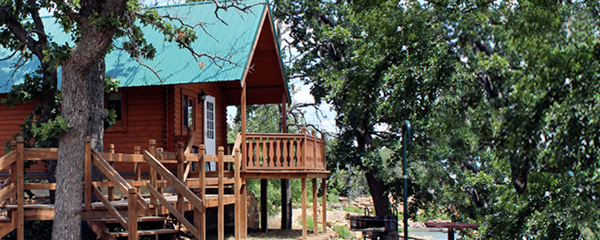
PRATT – Hunters have to factor in a lot of components when planning a hunt, and one of the most important aspects focuses on timing. Whether you are figuring out what time to wake up, when to change locations, how soon to call an animal in, or even when you should shoot, it’s always better when a hunter has time on their side. State park cabins can offer hunters an affordable base camp that won’t require factoring in a ton of extra time for travel. Often located within just a few miles, some even within walking distance, of some of the state’s most popular public hunting areas, state park cabins are a great way to enjoy the outdoors long after shooting hours are over.

Offered in either “deluxe” or “sleeper” styles, state park cabins provide the flexibility that comes with lodging at a chain hotel, without the brand-name price. Depending upon the season and amenities offered, nightly fees vary from $35 to $110 and can sleep anywhere from four to ten adults. Deluxe cabins offer heating and air conditioning, a bathroom, shower, and often a furnished kitchen equipped with a refrigerator, stove, microwave, and coffee pot. Sleeper cabins are a little more rustic with fewer amenities, but are still equipped with heating and air conditioning, as well as electricity. Beds are included, however guests are required to bring their own linens.

Reservations can be made online at reserveamerica.com as far out as 364 days in advance and as soon as three days in advance. If booking on a Friday, cabins must be reserved for both Friday and Saturday, and cabins booked on a Saturday must be reserved for both Saturday and Sunday. Hunters wishing to make a reservation one to two days in advance my contact the nearest state park office for availability, or call (620) 672-5911 for assistance.

For more information on state park cabin locations and amenities, visit ksoutdoors.com and click “State Parks / Reservations.”

Thursday, October 17, 2013

TREESTAND HUNTERS ARE ENCOURAGED TO HARNESS UP

Fall-restraint systems can be a life-saving tool when hunting from a treestand


PRATT – The deer rut can be some of the best hunting all year for bowhunters, and in the whirlwind of activity that takes place during this special time, it can be easy to get lackadaisical about safety practices. Every year, a surprising number of treestand hunters fall from treestands, some suffering serious injury or death.

“I’ve found that approximately 50 percent of all treestand hunters do not use any form of fall arrest devise,” says Kansas Department of Wildlife, Parks and Tourism assistant hunter education coordinator Aaron Austin, “so it’s not surprising that up to 30 percent of hunters who hunt from treestands will have an incident sometime in their lives.” Since treestand incidents aren’t required to be reported the way firearm-related hunting incidents are, Austin believes the number is a lot higher.

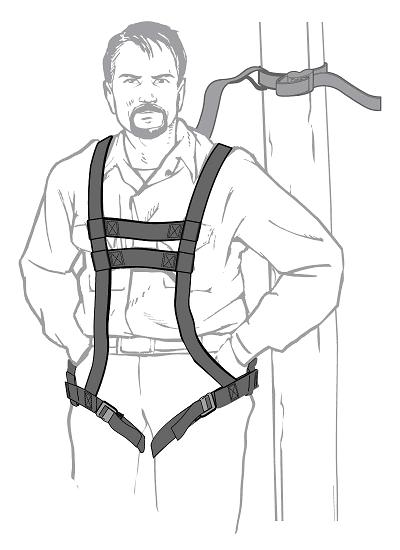
“As a bowhunter, I feel that being 20 feet up in a tree is part of the tradition of deer hunting, but it is important for hunters to be aware of the dangers of treestand hunting,” says Austin. “There are some great products on the market that fix this problem such as the Hunter Safety System Lifeline used in conjunction with a safety harness. This system allows the hunter to stay attached to the tree from the ground to the stand using a simple Prusik knot that slides up and down the line while ascending or descending the tree.”

Apart from using a proper-fitting full-body fall arrest system, Austin recommends treestand hunters keep the following in mind to stay safe this season:

-Select a live, straight tree to hang a stand on, and never hang a stand on a power pole.

-While hanging a stand or climbing a tree for the first time, use a full-body fall arrest system that is equipped with a lineman style climbing belt. A climbing rope, such as a HSS Lifeline, can then be permanently attached above the stand and to the base of the tree so that the hunter is always attached to the tree.

-Permanent stands are particularly dangerous and should be avoided because nails always pull out over time.

-ALWAYS maintain three points of contact with your steps or ladder while climbing up or down the tree.

-Use a haul line to raise or lower hunting equipment instead of trying to carry it.

-While the hunter is seated, there should be little to no slack in the tether that secures the hunter to the tree. Failure to keep the tether above the hunter could result in the hunter being unable to reboard the stand platform after a fall.

-Cold weather can effect the body and mind in several ways, including a delayed down reaction time, tightened muscles, and numbness, therefore treestand hunters should take every precaution to stay as warm as possible while hunting.

-Hunters should be cautious of any surface on the treestand that is wet, frosty or muddy. Failure to take notice of this can cause a hunter to lose traction, creating a potentially serious hazard.

For more information, including videos and current statistics on treestand safety, visit www.projectstand.net.

Sunday, October 13, 2013

WESTAR ENERGY GREEN TEAM INVITE YOUTH ON DEER HUNT

Applications for the Jeffrey Energy Center youth deer hunt dueNov. 1
TOPEKA – The Westar Energy Green Team will host a youth rifle deer hunt at the Jeffrey Energy
Center, seven miles north of St. Marys, Dec. 4-15and Jan. 1-12. Youth 12 and older are invited to attend and submit an application by Nov. 1. A limited number of spots are available, so hunts will be awarded on a first-come, first-served basis.
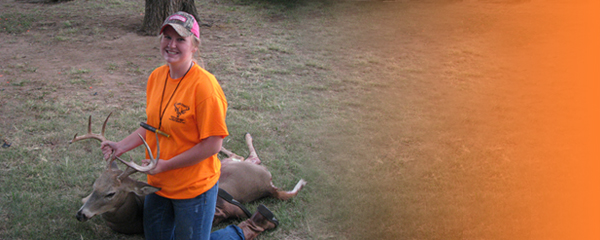
Hunts will be conducted from ground blinds in the early morning and late afternoon, and will be led by volunteer, experienced hunters. Hunters must be accompanied by an adult mentor and are encouraged to bring their own rifle; however, one can be provided upon request. Hunters must have a Unit 9 deer permit and hunters 16 and older must possess a hunting license and hunter education certificate.
An orientation session will be held on Nov. 16 to instruct hunters on safety, deer biology, and assist youth with sighting-in rifles. To apply for the hunt, contact Barb Cornelius at (785) 575-8125. Hunters successful in receiving a spot will be notified by Nov. 8.
The Green Team’s annual youth deer hunts are part of an initiative designed to introduce youth to hunting, and encourage hunting as a life-long tradition.

Saturday, October 12, 2013

2013 KANSAS UPLAND BIRD FORECAST NOW AVAILABLE

Despite drought during the reproductive season, some upland game hunters may experience a memorable harvest this fall

PRATT – The 2013 Upland Bird Forecastis now available for viewing online at ksoutdoors.com, and although population levels are projected to be less than favorable, upland bird hunters willing to travel to northern Kansas, may find a silver lining to the season.
Since extreme drought conditions persisted in most of the state again this year, ideal vegetation conditions were scarce going into the breeding season. This left most upland game birds without sufficient brood rearing cover and insect abundance, and thus led to a lower than average chick survival rate. Although the precipitation that fell across much of the state in late summer came too late to improve the upcoming season, biologists anticipate upland bird hunters may see enhanced conditions and a potential for better production next summer as vegetation conditions continue to improve.
As with any forecast, predictions are general and regional in nature. Although survey data indicate below average bird populations, hunters willing to work will likely find pockets with adequate bird numbers. Going from poor to fair hunting can often be as simple as driving 30 miles.
Listed below are statewide summaries on pheasant, quail, and prairie chickens. For the full forecast, including region-specific summaries, visit ksoutdoors.com and click “Hunting / Upland Birds / Upland Bird Regional Forecast.” For a printed copy of the 2013 Upland Bird Forecast, 2013 Kansas Hunting and Furharvesting Regulations Summary, and 2013 Kansas Hunting Atlas, call (620) 672-5911.
PHEASANT – Pheasant populations in Kansas continue to suffer from the extended drought. Breeding populations dropped across their range from 2012 to 2013 resulting in less adult hens in the population to start the 2013 nesting season. However, opportunities will still exist to harvest roosters in the Sunflower State, especially for those willing to work for their birds. Though the drought has taken its toll, Kansas still has one of the best pheasant populations and the fall harvest will again be among the best in the country. The best areas this year will likely be pockets in northwest and northcentral Kansas.
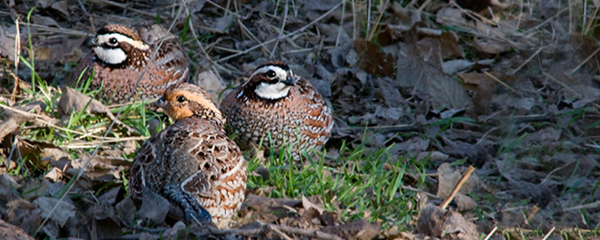
QUAIL – The statewide bobwhite breeding population decreased in 2013 compared to 2012, but there is some variation across the state. Areas east of the Flint Hills showed improved productivity this year. Populations have rebounded over the last two years in eastern Kansas, but overall populations are still below historic averages. The best quail hunting will likely be found within the Flint Hills and southeast regions.
PRAIRIE CHICKEN – The spring prairie chicken lek survey indicated that most populations remained stable or declined slightly from last year. Areas within the Flint Hills and southcentral regions fared the best, while areas in the northern and western regions, where the drought was most severe, experienced the sharpest declines. Many areas in the Flint Hills were not burned this spring due to drought conditions. This resulted in slightly more residual grass cover for nesting compared to recent years. There have been some reports of prairie chicken broods in these areas, and hunting will likely be somewhat improved compared to recent years.
Upland Game Bird Seasons
PHEASANT
  • Regular: November 9, 2013 - January 31, 2014
  • Youth: November 2-3, 2013
  • Area Open: Statewide
  • Daily Bag Limit: 4 cocks in regular season, 2 cocks in youth season
  • NOTE: Pheasants in possession for transportation must retain intact a foot, plumage, or some part that will determine sex.
QUAIL
  • Regular: November 9, 2013 - January 31, 2014
  • Youth: November 2-3, 2013
  • Area Open: Statewide
  • Daily Bag Limit: 8 in regular season, 4 in youth season
PRAIRIE CHICKEN (Permit required)
  • Early (East and Northwest zones): Sept. 15 - Oct. 15, 2013
  • Daily Bag Limit: 2 (single species or in combination)
  • Regular (East and Northwest zones): Nov. 16, 2013 - Jan. 31, 2014
  • Daily Bag Limit: 2 (single species or in combination)
  • Southwest Zone: Nov. 16 - Dec. 31, 2013
  • Daily Bag Limit: 1