Saturday, October 12, 2013

2013 KANSAS UPLAND BIRD FORECAST NOW AVAILABLE

Despite drought during the reproductive season, some upland game hunters may experience a memorable harvest this fall
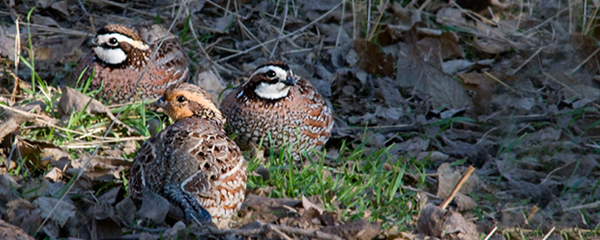
PRATT – The 2013 Upland Bird Forecastis now available for viewing online at ksoutdoors.com, and although population levels are projected to be less than favorable, upland bird hunters willing to travel to northern Kansas, may find a silver lining to the season.
Since extreme drought conditions persisted in most of the state again this year, ideal vegetation conditions were scarce going into the breeding season. This left most upland game birds without sufficient brood rearing cover and insect abundance, and thus led to a lower than average chick survival rate. Although the precipitation that fell across much of the state in late summer came too late to improve the upcoming season, biologists anticipate upland bird hunters may see enhanced conditions and a potential for better production next summer as vegetation conditions continue to improve.
As with any forecast, predictions are general and regional in nature. Although survey data indicate below average bird populations, hunters willing to work will likely find pockets with adequate bird numbers. Going from poor to fair hunting can often be as simple as driving 30 miles.
Listed below are statewide summaries on pheasant, quail, and prairie chickens. For the full forecast, including region-specific summaries, visit ksoutdoors.com and click “Hunting / Upland Birds / Upland Bird Regional Forecast.” For a printed copy of the 2013 Upland Bird Forecast, 2013 Kansas Hunting and Furharvesting Regulations Summary, and 2013 Kansas Hunting Atlas, call (620) 672-5911.
PHEASANT – Pheasant populations in Kansas continue to suffer from the extended drought. Breeding populations dropped across their range from 2012 to 2013 resulting in less adult hens in the population to start the 2013 nesting season. However, opportunities will still exist to harvest roosters in the Sunflower State, especially for those willing to work for their birds. Though the drought has taken its toll, Kansas still has one of the best pheasant populations and the fall harvest will again be among the best in the country. The best areas this year will likely be pockets in northwest and northcentral Kansas.
QUAIL – The statewide bobwhite breeding population decreased in 2013 compared to 2012, but there is some variation across the state. Areas east of the Flint Hills showed improved productivity this year. Populations have rebounded over the last two years in eastern Kansas, but overall populations are still below historic averages. The best quail hunting will likely be found within the Flint Hills and southeast regions.
PRAIRIE CHICKEN – The spring prairie chicken lek survey indicated that most populations remained stable or declined slightly from last year. Areas within the Flint Hills and southcentral regions fared the best, while areas in the northern and western regions, where the drought was most severe, experienced the sharpest declines. Many areas in the Flint Hills were not burned this spring due to drought conditions. This resulted in slightly more residual grass cover for nesting compared to recent years. There have been some reports of prairie chicken broods in these areas, and hunting will likely be somewhat improved compared to recent years.
Upland Game Bird Seasons
PHEASANT
  • Regular: November 9, 2013 - January 31, 2014
  • Youth: November 2-3, 2013
  • Area Open: Statewide
  • Daily Bag Limit: 4 cocks in regular season, 2 cocks in youth season
  • NOTE: Pheasants in possession for transportation must retain intact a foot, plumage, or some part that will determine sex.
QUAIL
  • Regular: November 9, 2013 - January 31, 2014
  • Youth: November 2-3, 2013
  • Area Open: Statewide
  • Daily Bag Limit: 8 in regular season, 4 in youth season
PRAIRIE CHICKEN (Permit required)
  • Early (East and Northwest zones): Sept. 15 - Oct. 15, 2013
  • Daily Bag Limit: 2 (single species or in combination)
  • Regular (East and Northwest zones): Nov. 16, 2013 - Jan. 31, 2014
  • Daily Bag Limit: 2 (single species or in combination)
  • Southwest Zone: Nov. 16 - Dec. 31, 2013
  • Daily Bag Limit: 1

Friday, October 11, 2013

KANSAS WILDLIFE, PARKS AND TOURISM COMMISSION MEETING OCT. 17

Kansas Wildlife, Parks and Tourism Commission to conduct last meeting of the year
PRATT – The Kansas Cosmosphere and Space Center, 1100 N. Plum, Hutchinson, will be the location
of the next Kansas Wildlife, Parks and Tourism Commission public meeting and hearing Oct. 17, 2013. The afternoon session will begin at1:30 p.m. and recess at 5 p.m., with the evening session reconvening at 7 p.m.
The afternoon session will begin with time for public comments on non-agenda items, followed by a general discussion period. Topics covered in the general discussion include: Secretary’s remarks regarding agency and state fiscal status and an update on the 2014 legislature, a briefing on tourism, the Bass Pass program, a series of antelope and elk regulations, and an update on the potential federal listing of lesser prairie chickens.
During the afternoon session, commissioners will workshop items that were covered under general discussion at the August meeting. Workshop topics, which will be discussed for potential regulatory action at a future meeting, include permanent regulations pertaining to big game, a series of deer-specific regulations, and regulations regarding state parks.
The commission will recess at 5 p.m., then reconvene at 7 p.m. at the same location for the public hearing. The public hearing will be focused on youth permit fees; special provisions pertaining to fishing, as well as creel, size, and possession limits, and open season; and spring turkey season, including bag limits, permits, and game tags.
Time will be available in both the afternoon and evening sessions for public comment on topics not on the agenda. If necessary, the commission will reconvene at the same location at 9 a.m., Oct. 18, to complete any unfinished business.
A commercial-free version of live video and audio streaming of commission meetings will be broadcast through the KDWPT website, ksoutdoors.com.
If notified in advance, the department will have an interpreter available for the hearing impaired. To request an interpreter, call the Kansas Commission for the Deaf and Hard of Hearing at 1-800-432-0698. Any individual with a disability may request other accommodations by contacting the Kansas Wildlife, Parks and Tourism Commission secretary at (620) 672-5911.
The next commission meeting is scheduled for Jan. 9, 2014 at Southwestern College, 100 College St., Winfield.

Thursday, October 10, 2013

ILLEGAL MARIJUANA PLOT FOUND ON PERRY WILDLIFE AREA

More rebel doj marijuana
(Photo credit: Wikipedia)
Hunters should be alert for signs of illegal grows
OSKALOOSA – According to the Jefferson County Sheriff’s Office, two men were arrested in connection with a cultivated marijuana grow found on the Lower Ferguson Marsh on the Perry Wildlife Area. Hunters reported what they thought that was a “weed grow” – wild marijuana. However, after a Kansas Department of Wildlife, Parks and Tourism (KDWPT) game warden met with the hunters and viewed the field, he determined it was a cultivated plot.
The KDWPT game warden requested assistance from the Jefferson County Sheriff’s Office, and on October 4, the warden and a sheriff’s officer watched the field. At sundown, the officers observed two men cut and bag marijuana stalks. The two men, one from Pomona and one from Savannah, Mo. were arrested and charged with unlawful cultivation of a controlled substance, unlawful possession of controlled substances, unlawful possession of certain drug precursors and paraphernalia, distribute or possession with intent to distribute drug paraphernalia, and no drug stamp.
Illegal marijuana plots on public and private lands are not uncommon across the country. They are usually located in remote areas with low human traffic, but as fall hunting seasons open, chances of illegal fields being discovered increase.
KDWPT law enforcement staff reminds hunters and anyone else spending time in remote areas of private or public lands this fall to be vigilant and cautious.
“If you come across what you think could be cultivated marijuana plants, note the location, back out of the area and contact either a KDWPT game warden or the local sheriff’s office,” KDWPT Law Enforcement Division Director Kevin Jones recommended. “You have to assume that whoever is cultivating the plants doesn’t want them found, and if they are in the area, you could be in danger.”
Jones said that while only a small number of illegal grows have been reported on Kansas public lands, even one is cause for caution. He recommends hunters add cell phone numbers of local game wardens into their cell phone contact lists. These numbers are listed on Page 45 the 2013 Kansas Hunting and Furharvesting Regulations Summary by county of jurisdiction. The toll-free Operation Game Thief number, 1-877-426-3843, should also be included. These numbers will allow hunters to report suspicious activity quickly, increasing the chances of catching the culprits. The local sheriff’s office can be reached by dialing 911.
Marijuana is a lush, green plant that can grow up to 20 feet tall. It has jagged leaves with three to thirteen fingers, always an odd number. In addition to the marijuana plants, other signs of illegal grows include PVC pipe, black drip line tubing, trash piles and evidence of human activity and traffic that looks out of place. Jones emphasizes that anyone finding such evidence should get away from the area immediately and report it to law enforcement as soon as possible.

Sunday, October 6, 2013

ANGLER EDUCATION CLASS TO BE HELD AT OLATHE BASS PRO

Participants can be certified to teach fishing techniques in Kansas
PRATT – The Kansas Department of Wildlife, Parks and Tourism, along with Fishing’s Future, is excited to announce the Bass Pro Shops in Olathe as the site of the next angler education course on Saturday, Nov. 2, 2013. The class will be held from 9 a.m. to 1 p.m. in the Conservation Room on the second floor. There is no cost to attend; however pre-registration is required through the Fishing’s Future website (fishingsfuture.org). The Olathe Bass Pro Shops is located at 12051 Bass Pro Drive, Olathe, Kan. 66061.
“Conducting a Kansas Angler Instructor Certification Class at Olathe Bass Pro Shops provides a fun and professional atmosphere for our future instructors to learn in,” said KDWPT Community Fisheries Assistance Program coordinator Bryan Sowards. “We are grateful for Olathe Bass Pro Shops’ cooperation with our new Angler Education Program, and we hope to see many more events like this in the future.”
The Angler Education program, which was launched earlier this year, certifies anglers who successfully complete the course to teach fishing techniques within the state. Apart from becoming certified, participants will also be given valuable information regarding working with children, sample curriculums, and tips for preparing a class or clinic. Other subjects covered in the four-hour class include current fishing rules and regulations, species identification, fishing ethics, equipment, knot-tying, casting, fish habitat, aquatic nuisance species, and conservation practices.
“This class allows us to recruit fishing instructors who will eventually be able to act as volunteers on KDWPT's behalf, educating the public on fishing and the wonderful fishing resources our state provides,” said Sowards. “Kansas offers some of the best public fishing opportunities in the nation, and we think this is a great way for anglers to pass on their passion for fishing to those who may have yet to experience Kansas fishing.”
Anglers interested in registering for the Nov. 2 course can sign up by visiting fishingsfuture.org and clicking “upcoming events,” then “Kansas Angler Education Training Program.”
For more information, contact Fishing’s Future local coordinator Kevin Reich at kevin.reich@fishingsfuture.org, or by phone at (785) 577-6921.

Saturday, October 5, 2013

FIRST EVER PRE-RUT WHITETAIL ANTLERLESS SEASON OPENS OCT. 12

Firearm deer hunters will have an additional opportunity to take antlerless whitetails during
this special two-day season
PRATT – As part of a legislative mandate last year that required the state of Kansas to open a pre-rut firearm deer season, deer hunters may now hunt white-tailed antlerless deer Oct. 12-13, 2013. This new two-day season has been designed as an effort to create additional opportunities for hunters wishing to take antlerless whitetails.
After careful consideration, several commission meetings, and input from the public, it was decided that a two-day season over Oct.12-13 would provide a unique opportunity without infringing on established traditional seasons. During this two-day season, any permit that allows the harvest of a white-tailed antlerless deer is valid during this season. Equipment and unit restrictions listed on permits will still be in effect, and all deer hunters are required to wear hunter orange.
For more information, consult the 2013 Kansas Hunting and Furharvesting Regulation Summary, or visitksoutdoors.com and click “Hunting / Hunting Regulations.”

Friday, October 4, 2013

HUNTERS CAN PROCESS DEER IN FIELD WITH ELECTRONIC REGISTRATION

Voluntary electronic deer registration allows hunters to transport a carcass without a head attached

PRATT – With permit sales reaching nearly 100,000 every year, whitetail deer are easily one of Kansas’ most sought-after big game animals. One important regulation deer hunters should be aware of is deer must be tagged before being moved from the site of the kill. Unless a hunter has an either-sex permit, the head must also remain attached to the carcass for identification purposes while in transit to a residence or place of commercial processing or preservation. In an effort to allow hunters to bone out deer prior to transport, the Kansas Department of Wildlife, Parks and Tourism created a voluntary electronic deer check-in system. Electronic registration is not required but allows hunters to register their deer through the Internet, using photos taken at the harvest site. Once registered, hunters will receive a confirmation number that allows them to transport the carcass without the head attached. If Internet access is unavailable at the kill site, the hunter can retain the photographs while in transit and a registration number can be obtained later.
This registration process requires a hunter to submit two digital photographs — one close-up clearly showing the completed tag attached to the deer and a second showing the entire body of the deer with the head still attached. Once logged on to the KDWPT website, a hunter must submit the photos and enter the KDWPT number from their permit, time and date of the kill and the county where the deer was taken. A confirmation number will be issued by email when the photos and data are successfully received. This confirmation number must be retained during transportation.
Once these steps are completed, the deer head may be removed and the carcass prepared for transportation. The system allows KDWPT staff to see the deer and the hunter’s completed tag without the time and expense of maintaining a check station. This flexibility is a benefit to both the hunter and KDWPT. To access the electronic deer check-in, go online to the KDWPT website, www.ksoutdoors.com, and click “Hunting/Big Game/Deer/Deer Check-in.”
This option was developed to address two important issues regarding deer carcass transportation. The first concern is about the movement of any material from a deer that may contribute to the transmission of chronic wasting disease (CWD). It is believed that spread of CWD could be diminished if certain body parts affected by the disease are not moved from the site where the deer is taken. Because CWD affects the brain and central nervous system, the transportation of a deer head and skeleton from one location to another is considered a likely means for the disease to spread. The new registration system allows a hunter to leave these items at the kill site, minimizing the possibility of spreading CWD.
The second concern is directly related to the first. Many states have adopted strict regulations to prevent the spread of CWD. Typically, these regulations do not allow the transportation of a deer head with brain tissue from a state with confirmed CWD cases. Hunters have been cited in other states and their deer confiscated for not complying with the transportation laws of that state. The new registration system allows a hunter to properly dispose of the head and legally transport the boned meat, as well as the cleaned skull cap and antlers, to the hunter’s home.
More information on CWD and transportation laws may be found on the KDWPT website, www.ksoutdoors.com under “Hunting/Big Game/Chronic Wasting Disease.”

Thursday, October 3, 2013

DEER PROCESSING WORKSHOP OCT. 24

English: Venison from Seasonal Swiss Hunt
 (Photo credit: Wikipedia)
Venison 101 participants will learn the basics of getting a deer from the field to the dinner table
PRATT – Fall is officially here and that means freezers are going to start filling up with deer meat. Whether you are a beginner or veteran deer hunter, or just looking to expand your culinary repertoire, consider attending the “Venison 101: From Field to Table” deer processing workshop. Hosted by the Central Kansas Extension District and the Kansas Department of Wildlife, Parks and Tourism (KDWPT), the workshop will be conducted Oct. 24, 2013 from 5:30 p.m. - 9 p.m. at Scout Hall in Minneapolis. Participants will learn how to process and prepare delicious venison the whole family will enjoy. In addition to the workshop, participants can enjoy a chili supper and drawings for door prizes. The cost to attend is $10.00 per person, with pre-registration required by Oct. 17.
“We believe hunters of all experience levels should be able to enjoy their product long after the hunt has ended,” said extension agent Leah Robinson. “If the game is handled properly along the way, the fruit of hard work can continue to the dinner table.”
Speakers from K-State Research and Extension and KDWPT will provide an in-depth cutting demonstration, various home processing methods, and talk about food safety practices. Changes and updates regarding hunting laws and deer diseases will also be discussed.
For more information, or to register for the workshop, contact Robinson at (785) 392-2147.