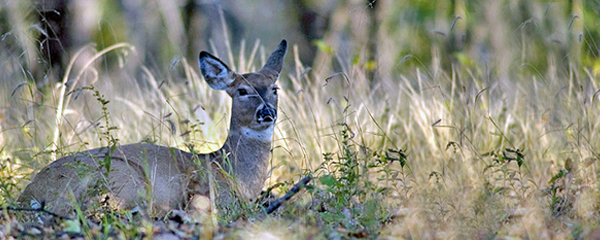
Showing posts with label White-tailed deer. Show all posts

Saturday, June 20, 2015

Leftover Nonresident White-tailed Deer Permits Available July 1

PRATT – A total of 957 leftover Nonresident Either-sex White-tailed Deer Permits will be available for purchase on a first-come, first-served basis beginning July 1 at 12 a.m. CDT. Hunters can purchase a permit online at ksoutdoors.com, in person anywhere wherever licenses are sold, or over the phone by calling (620) 672-0728.

Leftover permits for purchase beginning July 1 are available in the following units:

Unit 6- 31 permits

Unit 10- 227 permits

Unit 13- 260 permits

Unit 15- 24 permits

Unit 16- 313 permits

Unit 18- 102 permits

During the time of purchase, hunters may designate equipment and season, as well as one adjacent unit to hunt in. Hunters who purchase a leftover permit will lose any preference points they may have accumulated for next year's drawing. No hunter may purchase more than one permit that allows the taking of an antlered deer. An antlered deer permit is required before purchasing additional Antlerless-only White-tailed Deer Permits. All nonresident White-tailed Either-sex Deer Combo Permits include two tags; one good for a buck or doe, and one valid for a white-tailed antlerless deer.

For the most up-to-date information on the total number of permits available for any given unit following July 1, visit ksoutdoors.com and click “Hunting,” “Applications and Fees,” “Deer,” and “Quotas and Draw Stats.”

Wednesday, May 20, 2015

2015 Nonresident Deer Permit Draw Results Available

Nonresident hunters wishing to check the status of their deer permit application may do so by visiting ksoutdoors.com and clicking  “Licenses/Permits” and then “Search Draw Status.” Hunters can search for their results by inputting their last name and date of birth, or their Kansas Department of Wildlife, Parks and Tourism number and date of birth.

Nonresident hunters who drew deer permits for the 2015-2016 season will receive their permits via mail in June. Nonresident hunters who have not yet purchased a 2015-2016 Kansas hunting license will need to do so before they can use their permit.

A total of 957 Nonresident Deer Permits were not drawn and will be made available for purchase on a first-come, first-servedbasis beginning July 1 at 12 a.m. 
CST on ksoutdoors.com. Whitetail Either-sex Permits are still available in Deer Management Units 6, 10, 13, 15, 16, and 18. Leftover permits may also be purchased over the phone beginning July 1 by calling(620) 672-0728.

Sunday, April 19, 2015

Apply For Nonresident Deer Permit By April 24


 The Kansas Department of Wildlife, Parks and Tourism (KDWPT) would like to remind nonresident deer hunters that the application deadline for 2015-2016 Nonresidents Deer Permits is midnight on April 24. Only online applications are being accepted through the KDWPT website, ksoutdoors.com, where applicants will be taken through a process step-by-step.

A nonresident white-tailed deer combo permit is $346.96, including application and convenience fees. The Mule Deer Stamp is $102.50. Nonresident youth white-tailed deer combo permits (hunters 15 and younger) are $116.34. All nonresident permits are combo permits and include one either-sex whitetail tag and one antlerless-only whitetail tag. Hunters who draw a permit will also need a nonresident hunting license.
Application instructions, season information, permit quotas, as well as last year’s drawing statistics, can be accessed at www.ksoutdoors.com.

Wednesday, April 23, 2014

APRIL 25 DEADLINE TO APPLY FOR NONRESIDENT DEER PERMIT

English: A white-tailed deer

Nonresidents must apply online for limited deer permits
PRATT – Nonresidents deer hunters looking to fill a Kansas tag this fall have until midnight Friday, April 25, 2014 to apply online for a permit. Only online applications will be accepted through the Kansas Department of Wildlife, Parks and Tourism’s website, ksoutdoors.com, where applicants will be taken through a process step-by-step.
A nonresident white-tailed deer combo permit is $346.96, including application and convenience fees. The Mule Deer Stamp is $102.50. Nonresident youth white-tailed deer combo permits (hunters 15 and younger) are $116.34. All nonresident permits are combo permits and include one either-sex whitetail tag and one antlerless-only whitetail tag.
Application instructions, season information, permit quotas, as well as last year’s drawing statistics, can all be viewed on the Kansas Department of Wildlife, Parks and Tourism’s website, www.ksoutdoors.com.

Thursday, April 10, 2014

KANSAS NONRESIDENT DEER APPLICATION PERIOD OPEN

Nonresidents must apply online for limited deer permits
PRATT – Nonresidents who want to hunt deer in Kansas this fall must apply online for the limited number of nonresident deer permits by April 25, 2014. Season information, www.ksoutdoors.com.
application instructions, permit quotas, as well as last year’s drawing statistics can all be viewed on the Kansas Department of Wildlife, Parks and Tourism’s (KDWPT) website,
Just more than 22,000 nonresident white-tailed deer combo permits were authorized for 2014, the same as last year. In addition, 266 mule deer stamps are allocated in Units 1, 2, 3, 4, 5, 7, 16, 17 and 18. Nonresidents who wish to hunt mule deer must apply for a mule deer stamp. If they draw a muzzleloader or archery whitetail permit in one of these units, they will then be entered into the drawing for a mule deer stamp. Those who draw a mule deer stamp will receive a combo permit valid for one white-tailed or mule deer, buck or doe, and one white-tailed antlerless deer.
Only online applications will be accepted, and applicants will be taken through the process step-by-step on KDWPT’s website. General nonresident white-tailed deer combo permits are $346.96, including application and convenience fees. The Mule Deer Stamp is $102.50. Nonresident youth white-tailed deer combo permits (hunters 15 and younger) are $116.34. All nonresident permits are combo permits and include one either-sex whitetail tag and one antlerless whitetail only tag.
For more information go to www.ksoutdoors.com or phone 620-672-0728.

Friday, December 6, 2013

2014 LICENSES AND PERMITS GO ON SALE DEC. 16

English: White-tailed deer

Buy a license or permit and give the gift of the outdoors this holiday
PRATT – Looking for the perfect gift for dad? Need an affordable stocking stuffer for the kids? Consider purchasing a 2014 hunting or fishing license. Starting Monday, Dec. 16, 2013, all licenses and permits for the 2014 season will go on sale, and for those looking for one last “hoorah” of the year, 2014 license holders can hit the field or a stream the very same day.
2014 hunting and fishing licenses and permits can be purchased online at ksoutdoors.com, at any Kansas Department of Wildlife, Parks and Tourism state park or regional office, and at any license vendor beginning Dec. 16.
New this year, significant price reductions have been placed on youth deer, turkey and antelope permits, for hunters age 15 and younger. Youth fees that have been reduced beginning 2014 are as follows:
RESIDENT
General Resident Youth Deer Permit: $10.00
General Resident Youth Antelope Permit: $10.00
General Resident Youth Turkey Permit (1-bird limit): $5.00
Resident Youth Turkey Game Tag (1-bird limit): $5.00
General Resident Youth Turkey Permit/Game Tag Combination (2-bird limit): $10.00
NONRESIDENT
Nonresident Youth Turkey Permit (1-bird limit): $10.00
Nonresident Youth Turkey Game Tag (1-bird limit): $10.00
Nonresident Youth Turkey Permit/Game Tag Combination (2-bird limit): $20.00
Nonresident Youth Combination 2-deer Permit (antlered deer and antlerless white-tailed deer): $90.00
Nonresident Youth Antelope Permit (Archery only): $100.00
For more information, visit ksoutdoors.com

Saturday, October 5, 2013

FIRST EVER PRE-RUT WHITETAIL ANTLERLESS SEASON OPENS OCT. 12

Firearm deer hunters will have an additional opportunity to take antlerless whitetails during
this special two-day season
PRATT – As part of a legislative mandate last year that required the state of Kansas to open a pre-rut firearm deer season, deer hunters may now hunt white-tailed antlerless deer Oct. 12-13, 2013. This new two-day season has been designed as an effort to create additional opportunities for hunters wishing to take antlerless whitetails.
After careful consideration, several commission meetings, and input from the public, it was decided that a two-day season over Oct.12-13 would provide a unique opportunity without infringing on established traditional seasons. During this two-day season, any permit that allows the harvest of a white-tailed antlerless deer is valid during this season. Equipment and unit restrictions listed on permits will still be in effect, and all deer hunters are required to wear hunter orange.
For more information, consult the 2013 Kansas Hunting and Furharvesting Regulation Summary, or visitksoutdoors.com and click “Hunting / Hunting Regulations.”

Monday, September 16, 2013

“DR. DEER” TO SPEAK AT KSU SEPT. 20

English: A white-tailed deer

Guest lecturers are brought in from all over the U.S. as part of the Wildlife and Outdoor Enterprise Management program at KSU
PRATT ­­– Dr. James C. Kroll, also known as “Dr. Deer,” of Austin, Tex. will share his knowledge of private land deer management on Friday, Sept. 20, 2013 at Kansas State University in Manhattan. The lecture will be held at 4:00 p.m. in the Town Hall Lecture room of the Leadership Studies Building, preceded by refreshments at 2:45 p.m. in the first floor lobby of the Throckmorton Plant Sciences Center. The lecture is free and open to the public.
One of nation’s leading wildlife biologists, Kroll will cover a variety of topics in his lecture, including native and supplemental nutrition management; population management; demographics and increasing recruitment; genetics and culling, and more.
Apart from being a scholar and avid hunter, Kroll is also the Henry M. Rockwell Chair in Forest Wildlife, Director of the Institute for White-tailed Deer Management and Research, and Co-director of the Pineywoods Native Plant Center. He has taught courses in wildlife habitat management, wildlife management techniques, wildlife ecology, land management planning, white-tailed deer ecology and management, introduction to forestry, wildlife diseases and research methods.
Visitors are encouraged to arrive early and may be required to obtain a one-day parking permit, which can be purchased for $5.00 at the parking garage located at 17th and Anderson.
For more information on this event, contact Dr. Peg Althoff at (785) 532-1949.

Saturday, July 20, 2013

Deer Hunting News - Kansas

Male Kansas White-tailed Deer (Odocoileus virg...
Male Kansas White-tailed Deer (Odocoileus virginianus macrourus). Taken at Quivira National Wildlife Refuge (Photo credit: Wikipedia)
First, over the counter deer permits go on sale July 30th. These permits are for Kansas residents.

KANSAS PUBLIC LAND HUNTING RESEARCH

There is a host of deer seasons and species for which residents can buy these tags.  They include Resident Whitetail Any Season, Statewide Archery, Muzzleloader Either-Species, and antlerless-only permits.  According to KDWPT, "the only deer permit that requires an application for resident hunters is the firearm either-species permit, which allows the harvest of a mule or white-tailed deer during the firearm season."

For more information visit ksoutdoors.com and look for license/permits.

Saturday, April 6, 2013

NEW REGULATIONS CREATE GREATER FLEXIBILITY FOR HUNTERS

The Kansas Department of Wildlife, Parks and Tourism (KDWPT) adopted a total of six regulations at the Mar. 21 commission meeting in Topeka. The newly-adopted changes simplify hunting regulations, allow more flexibility in legal equipment, and most importantly, provide additional opportunities for individuals interested in outdoor recreation.

Commissioners approved a recommendation to establish a fee for a nonresident combination either-sex/antlerless only whitetail permit, as directed by the 2012 legislature. The new permit fee was set at $315

KDWPT commissioners approve several changes related to legal hunting equipment
and will provide nonresidents applicants successful in the drawing with a permit that includes two carcass tags, one valid for an antlered white-tailed deer or an antlerless deer and one for a white-tailed antlerless deer. The combo permit will be the only choice for nonresidents.

KDWPT staff also recommended simplified equipment regulations for big game and turkey that were approved. Big game hunters can now select any caliber centerfire rifle or handgun, any gauge shotgun with slugs, and any muzzleloader rifle and pistol .40 caliber or larger. Crossbows are now legal equipment during archery seasons for anyone with a valid archery permit. Turkey hunters are no longer restricted to 20-gauge shotguns or larger. All gauges will be allowed, using shot size No. 2 through No. 9.


Equipment regulations for turkey hunting allowing all shotgun gauges and crossbowsduring the archery season won’t take effect until April 19, 2013. Crossbows will also not be legal for archery hunters during the April 1-9 season (youth and hunters with disabilities can use any legal equipment, except shotguns smaller than 20 gauge).

Restrictions on electronic devices attached to bows were amended, allowing cameras, and rangefinders, as well as radio frequency devices attached to arrows, designed to make retrieval of hit deer more efficient.

The 2013 deer season was approved, including a pre-rut whitetail antlerless-only season mandated by the 2012 legislature, and the dates are as follows:

Youth and Disability, September 7, 2013 – September 15, 2013
Early Muzzleloader, September 16, 2013 – September 29, 2013
Archery, September 16, 2013 – December 31, 2013
Pre-Rut Whitetail antlerless only October 12, 2013 – October 13, 2013
Regular Firearms December 4, 2013 – December 15, 2013
Extended Whitetail antlerless only January 1, 2014 – January 12, 2014
Special Extended Whitetail antlerless only January 13, 2014 – January 19, 2014
Extended Archery (DMU 19) January 20, 2014– January 31, 2014

A complete copy of the aforementioned regulations and their perspective economic impact statements may be obtained electronically by visiting www.ksoutdoors.com, by calling (785) 296-2281, or by writing the chairman of the commission at: Kansas Department of Wildlife, Parks and Tourism, 1020 S. Kansas Ave, Suite 200, Topeka, KS 66612.

Monday, August 13, 2012

DAILY HUNTING PERMITS REQUIRED AT MELVERN WILDLIFE AREA

English: A white-tailed deer
 (Photo credit: Wikipedia)
Free permits will help with game management
MELVERN — In an attempt to gather better information regarding how game populations respond to management activities and hunter harvest, Melvern Wildlife Area and Lyon State Fishing Lake will require daily hunting permits beginning Sept. 1. Melvern Wildlife Area is a popular destination for many hunters and provides more than 10,000 acres of public hunting for a variety of game, including white-tailed deer, wild turkey, bobwhite quail, and waterfowl. Providing high-quality habitat for each of these game species and a superior experience for the hunters pursuing them requires the best tools and information available, and data gleaned from these permits will help area biologists with their habitat management plans.

The hunting permit will be free and required for anyone hunting on these wildlife areas for any species of game. A new permit must be filled out and returned each day. Permits can be obtained at 10 locations on Melvern Wildlife Area and two locations on Lyon State Fishing Lake. At these locations, permits will be stored in metal boxes called “iron rangers,” which are similar to mailboxes.

Prior to hunting, hunters will fill out the top portion of the card and deposit it in the iron ranger. The bottom portion must be kept on their person while hunting. When the hunter is finished for the day, the bottom portion should be filled out and returned to an iron ranger. The information collected will be used to help direct management in the future. Additionally, these permits will provide much-needed information regarding game population trends on the area as well as hunter preferences, participation, success, and satisfaction with their hunting experience.

When the fall hunting season finally arrives, remember to stop by an iron ranger prior to hunting Melvern Wildlife Area or Lyon State Fishing Lake and fill out a permit. Cooperation and participation in this new program will help the Kansas Department of Wildlife, Parks and Tourism collect valuable information to ensure a high-quality hunting experience for future generations. For more information, phone the Melvern Wildlife Area Office at 620-699-3372.

Friday, March 30, 2012

2012 NONRESIDENT DEER APPLICATION DEADLINE APRIL 27


Application deadline last Friday in April; no mail-in applications accepted
PRATT — The Kansas Department of Wildlife, Parks and Tourism (KDWPT) reminds all nonresident deer hunters that the application period for 2012 Kansas Deer permits is April 1-27 (closing the last Friday in April. All applications must be made online through the KDWPT website, ksoutdoors.com, or by phoning 620-672-5911 and asking for Licensing. Mail-in applications are not available, and none will be accepted. Phone applications will be accepted through 5 p.m. on Friday, April 27. The online application deadline is midnight on April 27. This application applies to nonresident either-sex deer permits only. Nonresident Hunt-Own-Land and Antlerless White-tailed Deer permits will be available beginning June 18 over the counter.
White-tailed deer
White-tailed deer (Photo credit: Wikipedia)
Nonresident either-sex deer permits allow the taking of one white-tailed deer buck, doe, or fawn. The cost of the permit is $322.50, and if successful in the drawing, the applicant must also purchase a nonresident hunting license, $72.50, prior to hunting. The hunter applies in one of 18 deer management units and may also select one adjacent unit in which to hunt. Applicants also select one equipment type and season choice (archery, muzzleloader, or firearm) at the time of application. Muzzleloader permit holders may hunt during early muzzleloader season and regular firearm season using muzzleloader equipment only. If unsuccessful in the draw, the hunter receives a $301 refund and a preference point for next year’s draw.
A nonresident who successfully draws an Archery or Muzzleloader either-sex deer permit in Unit 1, 2, 3, 4, 5, 7, 16, 17, or 18 may also apply for one of a limited number of Mule Deer Stamps for an additional fee of $102.50, submitted at time of application; if drawn, the applicant’s archery or muzzleloader whitetail permit converts to an either-species/either-sex archery or muzzleloader permit. Preference points do not count toward this stamp. If unsuccessful in the Mule Deer Stamp draw, the hunter will receive a $101 refund and be issued the whitetail permit.
A nonresident hunter who doesn’t want to hunt in 2011 can purchase a preference point online for $22.50. The preference point will count toward a nonresident whitetail either-sex deer permit in a future drawing.
To apply for a Nonresident Whitetail Either-sex Deer permit, go to the KDWP website,www.kdwp.state.ks.us and click "Licenses/Permits" in the upper right-hand corner of the page. Then click "Buy your License/Permit Online" and follow the directions. To learn more about permits you may qualify for, go online to the KDWPT website, ksoutdooors.com, and click “Hunting/Big Game Information/Deer.”

Monday, September 12, 2011

MUZZLELOADER, YOUTH/DISABLED, ARCHERY DEER SEASONS ON TAP

Friend of co-worker took these pictures at the...Image via Wikipedia
Sept. 8, 2011
Resident Any Season White-tailed Deer permits available over the counter
PRATT — Three deer seasons open this September: the muzzleloader season, which runs Sept. 19-Oct. 2; the archery season, which runs Sept. 19-Dec. 31; and the youth/disabled season, which runs Sept. 10-18. Resident hunters who have yet to obtain a Resident Any Season White-tailed Deer permit may still obtain one at Kansas Department of Wildlife, Parks and Tourism (KDWPT) offices, select license vendors, online at www.kdwp.state.ks.us (click "License/Permits" on the top menu bar), or by phoning 1-800-918-2877 toll-free.
The Any Season permit is valid statewide and allows the hunter to harvest one antlered or antlerless white-tailed deer during any season with equipment legal for that season.
Resident hunting licenses, required of anyone age 16 through 64 in addition to the deer permit, cost $20.50. Resident Any Season White-tailed Deer permits cost $32.50. Antlerless-Only White-tailed Deer permits, which may be purchased only after an antlered deer permit has been purchased, cost $17.50.
After Dec. 30, deer hunters may purchase Antlerless-Only White-tailed Deer permits valid during January seasons without having first purchased an antlered deer permit.
There is no minimum age to apply for and receive a big game permit, and youth younger than 16 may hunt without hunter education, if supervised by an adult 18 years or older. For more information, visit the KDWPT website, www.kdwpt.state.ks.us, or phone 620-672-5911.

Thursday, March 31, 2011

2011 NONRESIDENT DEER APPLICATION DEADLINE APRIL 29

Application deadline last Friday in April; no mail-in applications accepted
PRATT — The Kansas Department of Wildlife and Parks (KDWP) reminds all nonresident deer hunters that the application deadline for 2011 permits is April 29, the last Friday in April. All applications must be made online through the KDWP website, www.kdwp.state.ks.us, or by phoning 620-672-5911 and asking for Licensing. Mail-in applications are not available, and none will be accepted. Phone applications will be accepted through normal working hours on Friday, April 29. The online application deadline is midnight on April 29. This application applies to nonresident either-sex deer permits only. Nonresident Hunt-Own-Land and Antlerless White-tailed Deer permits will be available beginning July 25 over the counter.
Nonresident either-sex deer permits allow the taking of one white-tailed deer buck, doe, or fawn. The cost of the permit is $322.50, and if successful in the drawing, the applicant must also purchase a nonresident hunting license, $72.50, prior to hunting. The hunter applies in one of 18 deer management units and may also select one adjacent unit in which to hunt. Applicants also select one equipment type and season choice (archery, muzzleloader, or firearm) at the time of application. Muzzleloader permit holders may hunt during early muzzleloader season and regular firearm season using muzzleloader equipment only. If unsuccessful in the draw, the hunter receives a $301 refund and a preference point for next year’s draw.
A nonresident who successfully draws an Archery or Muzzleloader either-sex deer permit in Unit 1, 2, 3, 4, 5, 7, 16, 17, or 18 may also apply for one of a limited number of Mule Deer Stamps for an additional fee of $102.50, submitted at time of application; if drawn, the applicant’s archery or muzzleloader whitetail permit converts to an either-species/either-sex archery or muzzleloader permit. Preference points do not count toward this stamp. If unsuccessful in the Mule Deer Stamp draw, the hunter will receive a $101 refund and be issued the whitetail permit.
A nonresident hunter who doesn’t want to hunt in 2011 can purchase a preference point online for $22.50. The preference point will count toward a nonresident whitettail either-sex deer permit in a future drawing.
To apply for a nonresident either-sex deer permit, go to the KDWP website,www.kdwp.state.ks.us and click "Licenses/Permits" in the upper right-hand corner of the page. Then click "Buy your License/Permit Online" and follow the directions. To learn more about permits you may qualify for, go tokdwp.state.ks.us/deer_permit_guide.


Enhanced by Zemanta

Friday, February 18, 2011

FURBEARER RUNNING SEASON BEGINS MARCH 1

Season runs through Nov. 1; firearms may not be possessed
PRATT — Although beaver trapping season runs through March 31, all other Kansas trapping seasons and furbearer hunting seasons are over for the winter. However, the Kansas Department of Wildlife and Parks (KDWP) reminds hound enthusiasts that the furbearer running season begins March 1. This is the time for furbearer hunters and their dogs to hone skills necessary during the furbearer hunting seasons.
During the running season, no furbearer may be legally killed or taken. In addition, it is illegal for runners to possess any firearm or other weapon while pursuing furbearers during the running season. Legal hours for running furbearers are 24 hours daily, and a furharvester license is required. The running season is open through Nov. 1.
Furbearers may also be run during the open furbearer hunting seasons, which coincide with trapping seasons.
KDWP also reminds furbearer trappers and hunters that bobcats and swift foxes must be pelt tagged within seven days of season’s end, which was Feb. 15. Tags should be kept with mounted specimens.
Enhanced by Zemanta

Wednesday, January 19, 2011

LATE-SEASON HUNTING: THE BEST IS YET TO COME

Excellent waterfowl, small game, upland game, more await winter hunters
PRATT — Upland bird and waterfowl seasons have been open for more than two months, but there’s still time for quality hunts. Quail, pheasant, prairie chicken (Northwest and East units), and fall turkey seasons are open through Jan. 31, and rabbit and squirrel seasons provide additional opportunities for the avid hunter.
Late-season hunting is a great time to go afield; hunting spots are uncrowded, and weather may cause birds to hold in heavier cover, making dogs a real asset. In most areas, crops have been cut, concentrating birds in draws and thick grass, such as CRP. Late-migrating geese and ducks, especially mallards, are often abundant where open water can be found. And as hunting pressure eases, private landowners are often more receptive to hunters looking for new places to pursue game.
Heavy pressure can make public hunting areas less desirable than private land in early seasons, but public areas may provide better hunting in late season. Wildlife management practices on public lands usually provide excellent cover and food supplies, making them good late-season options as hunting pressure decreases.
Hunters looking for a place to stay can rent one of more than 90 cabins at state parks and wildlife areas across the state. Most cabins are open year-round and provide a range of amenities, many with full bathrooms and kitchens. Click "Cabin Reservations" in the upper right-hand corner of the Kansas Department of Wildlife and Parks website, www.kdwp.state.ks.us, for more information.
A number of opportunities await hunters this winter. Those seasons still open or opening soon include the following:
  • ducks High Plains Zone (west of U.S. 283) — Jan. 22-30;
  • ducks Late Zone — Jan. 22-30;
  • Canada geese (including Brant) — through Feb. 13;
  • white-fronted geese — Feb. 5-13;
  • light geese — through Feb. 13;
  • Light Goose Conservation Order — Feb. 14-April 30;
  • pheasant and quail — through Jan. 31;
  • prairie chicken (Northwest and East units) — through Jan. 31;
  • fall turkey — through Jan. 31;
  • exotic dove (Eurasian collared and ringed turtle) — through Feb. 28;
  • squirrel — through Feb. 28;
  • rabbit — year-round;
  • extended archery antlerless only whitetail deer (management Unit 19 only) — through Jan. 31;
  • coyote — year-round;
  • furbearer hunting and trapping — through Feb. 15; and
  • beaver trapping — through March 31.
Sometimes the best things are saved for last. This winter, make it so with a late-season Kansas hunt. For detailed information, consult the Kansas Hunting & Furharvesting Regulations Summary, available at most license vendors, Kansas Department of Wildlife and Parks offices, or online atwww.kdwp.state.ks.us.

Enhanced by Zemanta

Wednesday, January 5, 2011

JANUARY DEER SEASONS PUT MEAT IN THE FREEZER

Three whitetail antlerless deer seasons usher in the New Year
PRATT — The regular Kansas firearm deer season is over and archery deer season closes Dec. 31, but deer hunters can still look forward to hunting one or more of three January whitetail antlerless-only seasons. The Kansas Department of Wildlife and Parks (KDWP) will conduct an extended firearm whitetail antlerless season Jan. 1-9 (open statewide); a special extended firearm whitetail antlerless season Jan. 10-Jan. 16 (open in Units 7, 8, and 15 only); and an archery extended whitetail antlerless season Jan. 10-31 (in Unit 19 only).
Many hunters who did not fill a deer permit during one of the regular 2010 seasons (muzzleloader, early firearm, archery, regular firearm) may use that permit during these seasons. However, all permits revert to Antlerless-Only White-tailed Deer permits, and unit restrictions listed on the permit apply.
For those who have not purchased a permit but would like to hunt the January season, Antlerless-Only White-tailed Deer permits for the Jan. 1-9 season may be purchased through Jan. 8. For the Jan. 10-16 season, permits may be purchased through Jan. 15, and for the extended archery season, permits may be purchased through Jan. 30. After Dec. 30, hunters may purchase whitetail antlerless permits without first purchasing an antlered deer permit.
These rules are clarified in the 2010 Kansas Hunting and Furharvesting Regulations Summary, available wherever licenses are sold or online at www.kdwp.state.ks.us.
Enhanced by Zemanta

FIRST CASE OF CHRONIC WASTING IN 2010 DEER SEASON CONFIRMED

White-tailed deer taken in Decatur County Nov. 7; complete results due in spring
PRATT — The Kansas Department of Wildlife and Parks (KDWP) has announced the first confirmed case of chronic wasting disease (CWD) found in a deer taken during a 2010 deer season. The animal was the only one of 90 tested by KDWP as of Dec. 8 to show a “presumptive positive” result. Samples of deer tissue taken by KDWP are sent to the K-State Diagnostic Veterinary Lab in Manhattan for preliminary testing. If the K-State lab determines the sample is a presumptive positive, the sample is then sent to the National Veterinary Services Lab in Ames, Iowa, for confirmation.
This deer was a 3 ½-year-old male taken in Decatur County by an archery hunter on Nov. 7. Because samples from the January whitetail antlerless only seasons have yet to be collected, complete results of testing won’t be available until March. Last year, 2,738 animals were tested for CWD, including 17 elk, 289 mule deer, and 2,428 white-tailed deer, and four unknown species. Of those samples, 15 were confirmed positive.
Annual testing is part of ongoing effort by KDWP to monitor the prevalence and spread of CWD. The fatal disease was first detected in a wild deer taken in Cheyenne County in 2005. Three infected deer were taken in Decatur County in 2007, 10 tested positive in 2008, and 15 in 2009, all in northwest Kansas.
CWD is a member of the group of diseases called transmissible spongiform encephalopathies (TSEs). Other diseases in this group include scrapie in sheep and goats, bovine spongiform encephalopathy (BSE or Mad Cow Disease) in cattle, and Cruetzfeldt-Jacob disease in people. CWD is a progressive, fatal disease that results in small holes developing in the brain, giving it a sponge-like appearance under the microscope. An animal may carry the disease without outward indication but in the later stages, signs may include behavioral changes such as decreased interactions with other animals, listlessness, lowering of the head, weight loss, repetitive walking in set patterns, and a lack of response to humans. Anyone who discovers a sick or suspect deer should contact the nearest KDWP office.
There is no vaccine or other biological method that prevents the spread of CWD. However, there is no evidence that CWD in the natural environment poses a risk to humans or livestock. Still, precautions should be taken. Hunters are advised not to eat meat from animals known to be infected, and common sense precautions are advised when field dressing and processing meat from animals taken in areas where CWD is found. More information on CWD can be found on KDWP’s website, www.kdwp.state.ks.us or at the Chronic Wasting Disease Alliance website, www.cwd-info.org
Enhanced by Zemanta

Tuesday, November 23, 2010

KANSAS FIREARMS DEER SEASON OPENS DEC. 1

A white-tailed deerImage via Wikipedia
PRATT — The 2010 Kansas firearm deer season runs Wednesday, Dec. 1, through Sunday, Dec. 12, and hunters are sighting in their rifles and practicing their shooting skills in anticipation of one of the state's favorite hunting seasons. Deer are plentiful, and a good season is expected.
In 2009, KDWP issued more than 80,000 Any-Season White-tailed Either-Sex Deer permits Kansas to residents. In addition, more than 27,000 Nonresident White-tailed Either-Sex Deer permits were issued. Combined with the number of Antlerless-Only Deer game tags issued, more than 174,000 permits and game tags to take deer were issued in Kansas last year, and hunters took approximately 87,000 deer. Kansas firearms deer hunters enjoy a phenomenal success rate of more than 50 percent, and a similar harvest is expected this year.
All deer hunters must have a deer permit to hunt deer in Kansas. Resident hunters 16 to 65 years old must also possess a hunting license, unless exempt by law. Nonresident hunters must apply for a nonresident deer permit in April, and the drawing is held in May. A nonresident hunting license is also required. Hunters must purchase a permit that allows the harvest of an antlered deer before they can purchase a Antlerless-Only White-tailed Deer permit, until after Dec. 30.
Other upcoming deer seasons include a Jan. 1-9, 2011, Extended Firearm Season (antlerless whitetails only) open statewide; a Jan. 10-31 Extended Archery Season (Unit 19, antlerless whitetails only); and a Jan. 10-16 Special Extended Firearm Season (units 7, 8, and 15, antlerless whitetails only). Archery season runs through Dec. 31 (hunter orange required during firearms season).
Resident whitetail deer permits are available online or at license vendors throughout the state. Hunters are reminded that landowner permission is required to hunt any private land, whether that land is posted or not.
The first Kansas deer season in modern times was held in 1965, and less than half of the state was open. Biologists estimated state deer numbers at about 30,000. Thirty-nine hundred permits were issued, and firearms hunters took approximately 1,340 deer. Today, deer can be found throughout the state. Many upland bird hunters are afield at this time, as well, and while they are always urged to wear hunter orange, it is especially important at this time.

Enhanced by Zemanta