Friday, February 22, 2013

FISHING FORECAST TAKES GUESS WORK OUT OF WHERE TO FISH


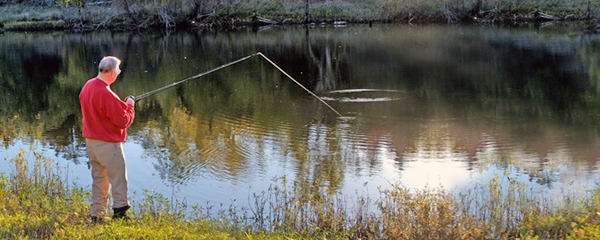
The Kansas Department of Wildlife, Parks and Tourism (KDWPT) 2013 Fishing Forecast features the ins and outs of fish populations in public waters around the state, helping anglers to better decide where to cast their lines. Comprised of sampling efforts conducted during annual lake monitoring, the fishing forecast gives anglers detailed information on the best bodies of water to fish for their specific fishing needs.
The data collected is divided into three categories based on the size of the body of water sampled. Reservoirs are defined as bodies of water larger than 1,200 acres, lakes are defined as bodies of water from 10 to 1,200 acres, and bodies of water smaller than 10 acres are defined as ponds. Since not every lake is sampled each year, the forecast provides a three-year average of each location to provide anglers with the best available information.
In addition to what species of fish can be caught at any given body of water, the fishing forecast also includes tables with a Density Rating, Preferred Rating, Lunker Rating, Biggest Fish (the largest fish sampled), Biologist’s Rating and the previously-mentioned Three-Year Average of popular species.

The Density Rating is the number of fish that were high-quality size or larger sampled per unit of sampling effort. High-quality size, listed in parentheses at the top of the Density Rating column, is the length of fish considered acceptable to most anglers and is different for each species. The higher the Density Rating, the more high-quality-sized or larger fish per surface acre in the lake. Theoretically, a lake with a Density Rating of 30 has twice as many high-quality-sized fish per acre as a lake with a Density Rating of 15.

The Preferred Rating identifies how many above-average-sized fish a water contains. For example, a lake may have a good density of crappie, but few fish over 10 inches. The Preferred Rating tells an angler where to go to for a chance to catch bigger fish.

The Lunker Rating is similar to the Density Rating, but it tells you the relative density of lunker-sized fish in the lake. A lunker is a certain length of fish considered a trophy by most anglers. It also differs with each species and is listed in parentheses at the top of the Lunker Rating column. For example, most anglers consider a channel catfish longer than 28 inches a lunker. Many lakes may have a lunker rating of 0, but this does not mean there are no big fish in that lake. It just means that no lunker fish were caught during sampling, and they may be less abundant than in lakes with positive Lunker Ratings.

You can use the Density Rating and Lunker Rating together. If you want numbers, go with the highest Density Rating. If you want only big fish, go with the Lunker Rating. Somewhere in the middle might be a better choice. A lake with a respectable rating in all three categories will provide the best overall fishing opportunities.
The Biggest Fish column lists the weight of the largest fish caught during sampling. A heavy fish listed here can give the lunker fishermen confidence that truly big fish are present.

The Biologist’s Rating adds a human touch to the forecast. Each district fisheries biologist reviews the data from annual sampling of their assigned lakes. This review considers environmental conditions that may have affected the sampling. They also consider previous years’ data. A rating of P (poor), F (fair), G (good), or E(excellent) will be in the last column. Sometimes the Density Rating may not agree with the Biologist’s Rating. This will happen occasionally and means the Density Rating may not accurately reflect the biologist’s opinion of the fishery.

The Three-Year Average rating refers to the averaging of the Density Rating over the previous three years of sampling to help show a trend for a particular lake.

Whether anglers are simply looking for a new spot to cast, or are searching for that elusive trophy fish, the 2013 Fishing Forecast is an invaluable tool for any fisherman.

A copy of this year’s forecast can be found in the March/April issue of Kansas Wildlife and Parks magazine, any KDWPT office or license vendor.

To view an electronic version of the 2013 Fishing Forecast, visit www.ksoutdoors.com and click “Fishing/Fishing Forecast.”

Thursday, February 21, 2013

K-9 OFFICER RETIRES AFTER DECADE OF EXEMPLARY SERVICE


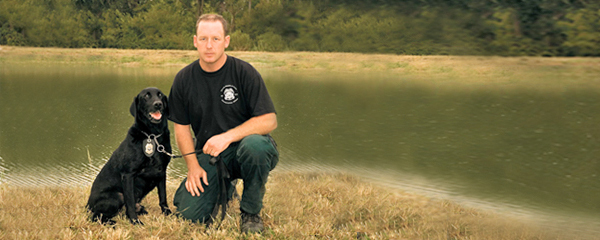
PRATT – After 10 years of faithful service, K-9 “officer” Rex retired from the Kansas Department of Wildlife, Parks and Tourism (KDWPT) Law Enforcement K-9 unit. Owner and program supervisor Lt. Jason Sawyers has been partners with Rex since the program’s inception in 2002.

During their initial training in Indiana with the Indiana Department of Natural Resources, Sawyers and Rex were educated in tracking, wildlife detection and evidence recovery.

“When I first met Rex, it was actually in Indiana,” said Sawyers. “My previous dog wasn't performing well after the first few days, so I decided to try our back up dog, Rex.” Sawyers explained that Rex immediately exhibited the energy and drive he was looking for. “I knew right then that we were going to be a team,” added Sawyers.

One of five teams throughout the state, Jason and Rex played a pivotal role in the enforcement of game-related laws and the conservation of our resources.

“Our dogs allow us and other officers to make cases they wouldn't have made before,” said Sawyers. “Rex has recovered items including guns, spotlights, shell casings, knives, wallets, cell phones and various game.” Sawyers added that Rex even found evidence that led to the apprehension of an individual suspected of shooting another man.

In an attempt to spread the conservation message throughout the state, the KDWPT K-9 unit is often used in public programs and demonstrations.

“Even if we aren't around, they’re a big deterrent. The public knows we have dogs and it helps to keep them honest,” said Sawyers. “I think Rex and the entire K-9 unit have really been positive for the law enforcement division. We couldn’t do it without them.”

Start up costs for the program were funded by private donations, including the dogs. Like many of his K-9 officer counterparts, Rex, a labrador retriever, was obtained from an animal shelter.

Rex is 11 years old and will remain at home with Sawyer’s family.

For more information on the KDWPT K-9 unit, visit www.ksoutdoors.com and click “Services/Law Enforcement/K-9 Unit.

Tuesday, February 12, 2013

HUNTER EDUCATION MAKING HUNTERS SAFER IN FIELD


2012 Hunting incident report indicates hunting is a safe outdoor activity
PRATT – A total of 17 hunting-related incidents were reported in Kansas for 2012, a decrease of 73 percent from 35 years ago. Since the implementation of programs such as Hunter Education and Pass It On, the Kansas Department of Wildlife, Parks and Tourism (KDWPT) has seen a steady decline in the number reported each year.
With thousands of hunters taking to the field each year, incidents are inevitable. However unfortunate, the majority reported were considered preventable.
Last year, hunters swinging on game, namely upland birds, accounted for eight of the reported incidents. Despite most of the parties involved wearing hunter orange, eight incidents related to a hunter firing toward and hitting another hunter in the field.
“Wearing hunter orange is not enough,” said Kent Barrett, KDWPT Hunter Education Coordinator. “Communication between hunters must be improved to prevent these types of incidents.”
Six of the 17 reports were categorized as careless gun handling, one of the most preventable types of incidents. From hunters pointing their barrels in unsafe directions, to firing what was thought to be an empty gun, it’s no surprise Hunter Education instructors are continually pressing their students to remember “load your brain before your gun.”
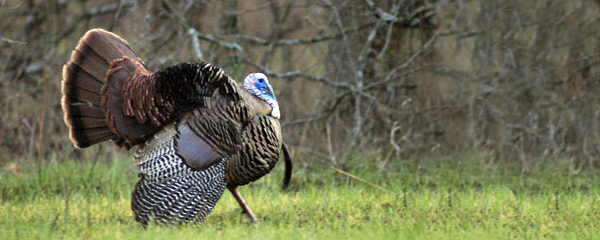
Two incidents were reported last year during spring turkey season in which hunters were mistaken for game, one of which resulted in the year’s lone fatality. In addition, KDWPT received one report of a hunter being struck by pellets from an unknown shooter; however this was considered a rarity.
Although even one incident can be tragic, the number of incidents is small in comparison to the total number of hunt days in the field. Statistically, hunting is one of the safest outdoor activities.
“Thousands of hunters take to the field each and every hunting season and return home without an incident to mar their excursion,” said Barrett. “We can maintain this legacy of safety by not taking shortcuts in recognized safety procedures and remaining aware of what we do with our firearms.”

Monday, February 11, 2013

MELVERN WILDLIFE AREA HOSTING 1ST ANNUAL YOUTH SPRING TURKEY HUNT


10 lucky youth to receive a guided turkey hunt this spring
Department of Wildlife, Parks and Tourism (KDWPT) is partnering with the Flint Hills Gobblers chapter of the National Wild Turkey Federation (NWTF) to host a youth spring turkey hunt at Melvern Wildlife Area on April 6. Volunteers from NWTF, KDWPT and local residents will assist with the event.
“We are going to start small,” said Melvern Wildlife Area assistant manager, Clint Bowman. “Assuming everything goes well, we hope to do this every year and eventually build on to it.”
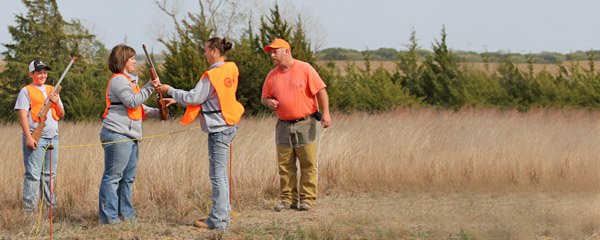
Open to youth ages 11-16, the spring turkey hunt is designed to provide youngsters with an opportunity to experience Kansas outdoors at its finest. Participants will learn about turkey behavior and habitat, how to pattern a shotgun and even scout for turkeys prior to their guided hunt.
“Spring turkey hunting is exciting, interactive and a perfect way to introduce youngsters to hunting,” said Bowman. “Even if the participants don’t kill anything, we think they’ll enjoy just being out there and seeing and listening to the birds.”
The youth spring turkey season is April 1-9 and all participants must have a spring turkey permit. Hunters who are 16 must also have a Kansas hunting license.
Due to limited space, applications are required and must be turned in by March 15. Youth hunters must be accompanied by a parent or guardian.
For information on how to apply, contact Clint Bowman at (620) 699-3372.

Sunday, February 10, 2013

LIGHT GOOSE CONSERVATION ORDER PROVIDES LATE-SEASON HUNTING


Special season set to reduce light goose populations
PRATT – The dark and light goose regular seasons end Sunday, Feb. 10, 2013. However, from Feb. 11-April 30, 2013, hunters can hunt snow and Ross’ geese during the Light Goose Conservation Order. The U.S. Fish and Wildlife Service established the special season 13 years ago to increase the harvest of light geese.
Since the mid-1970s, mid-continent light goose populations have increased more than 300 percent. These historic numbers of geese have denuded portions of their fragile tundra breeding habitat in the arctic, which may take decades to recover. This impacts other bird species that nest there, including semi-palmated sandpipers and red-necked phalaropes.
The harvest of light geese has more than doubled since the first conservation order in 1999, in turn reducing population growth. However, the management goal is to reduce the population of mid-continent light geese by 50 percent.
To increase hunter success, the conservation order authorizes hunting methods not allowed during the regular seasons, including the use of electronic calls and unplugged shotguns. Shooting hours are one-half hour before sunrise to one-half hour after sunset and there is no bag or possession limit for light geese.
For more information on goose hunting, visit www.ksoutdoors.com and click on “Hunting/When to Hunt/Migratory Birds.”

Sunday, February 3, 2013

TRAPPERS REACH SEASON QUOTA ON OTTERS


Kansas furharvesters have taken the season quota on river otters before the official end of the otter trapping season. The quota for 2012-2013 was met on Jan. 25. Trappers were allowed a grace period for notification that the quota was met, so all otters taken on or before Jan. 28 may be kept by furharvesters.
The 2012-2013 season was set for Nov. 14, 2012-March 31, 2013, or until 100 otters were taken. Trappers are limited to two otters per season and are required to report otters taken to KDWPT within 24 hours through a toll-free number. The pelt and skinned carcasses must be brought to KDWPT for tagging within four days of harvest. Skinned carcasses, including skulls, are retained by KDWPT so that age, reproductive output and other biological information can be determined.
Otters, once common along Kansas waterways, were extirpated by the turn of the century due to unregulated trapping and development. A modest reintroduction program relocated wild otters into Kansas in the early 1980s, and the population began recovering slowly. In recent years, Kansas Department of Wildlife, Parks and Tourism (KDWPT) biologists have monitored a healthy and growing population, so much so that a limited-quota trapping season was implemented in 2011-2012.
During the first otter trapping season in modern history, which ran Nov. 16, 2011-March 31, 2012, trappers were limited to two otters each, or until the statewide trapping quota of 100 otters was met. Last season, that quota was met on February 2.
Otters accidentally taken while trapping for other species after Jan. 28 must be reported to KDPWT prior to removal from the trap site. They may be reported to the toll free hotline at (855) 778-6887(RPT-OTTR) or to a local KDWPT natural resource officer or biologist. Inadvertent capture of otters shall not be deemed illegal if the capture is reported or if the animal is released unharmed. For more information, phone Matt Peek at 620-342-0658.

Saturday, February 2, 2013

Animal killed by coyote hunters verified as wolf

Gray Wolf, Canis lupus
 (Photo credit: ArranET)

In December, coyote hunters in southwest Kansas killed an animal they thought was too big to be a coyote. The large male canine weighed more than 80 pounds, more than twice as much as a large coyote. The hunters called the local Kansas Department of Wildlife, Parks and Tourism (KDWPT) game warden, who contacted U.S. Fish and Wildlife Service (USFWS) agents. The USFWS confirmed through tissue testing that the animal was a full-blooded Great Lakes gray wolf.
Because wolves are still on the Threatened Species list for Kansas, the matter was turned over to the USFWS. Agents then took tissue samples for testing. While uncommon, there are wolf-dog hybrids available through the pet trade, and many of those hybrids are indistinguishable from full-blooded wolves by appearance.
This is the first documented wolf in Kansas since 1905. There have been several wolves killed in Missouri, most recently this past November when a deer hunter shot what he thought was a coyote. That animal, which tested as a full-blooded wolf, weighed 81 pounds.
Officials would still like to know how this wolf ended up in Kansas. However, questions about its origin may be difficult to answer.