 Image via Wikipedia
As I sit here on a cool, but not yet cold November evening, I am already contemplating our Winter camping trips. I enjoy them as much as I do any camping trips we take all year long. Of course Winter camping is not for everyone. If you simply detest
cold weather, no matter how much preparation you make, and no matter how much gear you own, your trip will likely not be an enjoyable one. However, if the thought of camping in a snowy scene with a full moon and the stillness that snow on the ground brings does pique your interest, then read on.
First, it is my opinion that unless you are in a warmer climate region, simply camping out with no attendant activities may not fulfill your wishes and/or needs. We find that we enjoy our Winter camping trips the most when we are engaging in some other activity such as hiking, hunting, or fishing. This is in juxtaposition to trips we take in Fall Summer, and Spring when just hanging out at camp and getting some R&R may be just the ticket. Realistically, unless you brought enough wood for a perpetual bonfire, sitting around camp when the temperature is well below freezing may not be what you consider recreation.
Staying warm on your
camping trip involves paying attention to the following areas. For the purposes of this article, we will speak in generalities as opposed to discussing specific gear or synthetic materials. We will save these more in-depth discussions for future treatment. Our discussion will delve into clothing and footwear, sleeping gear,
tents, and campfires.
When it comes to clothing there are some basic principles to remember. First, insulation created by pockets of air are what help us retain body heat. The enemies of this principle are moisture and wind. Moisture hinders heat retention in two ways. First of all, many synthetic and natural materials loose their insulation potential to a great degree when moisture becomes present via environmental sources or from sweat from the body. The classic example is cotton fabrics. Blue jeans are an awful choice for example for
outdoor activities in cold weather, especially when they might become wet. Other poor examples of
Winter clothing are flannel shirts made only of cotton.
As far as natural materials go, wool is the best. Even when wet it retains a high percentage of its insulation potential. Also, there are a number of outstanding synthetics on the market. These materials can however be quite expensive. The advantage of some of the synthetics is their breathability.
A couple of structural issues bear mentioning as well. First, dress in layers. This allows you to shed layers as you warm and add them back as you chill. Also, remember that a very large percentage of your body heat is lost through your head. A cap in cold weather is a must. On the other end of things, good footwear is critical as well. Waterproof and insulated boots are great. Coupled with wool or synthetic socks, you should be in good shape.
When sleeping in your tent, a good sleeping bag is critical when Winter camping. Couple this with a good pad between you and your sleeping bag and the ground. This
sleeping pad is vital. Even if you do not care about comfort, the heat transfer between you and the ground without the pad will cause rapid body heat loss. I like a
mummy bag where is can cinch the top closed. This crates a situation where the bag keeps in not only my body heat but my breathing also helps with warmth. Take the time and make the effort to get your bag zipped properly and if equipped with a drawstring, that you draw the hood tight.
When it comes to your tent, depending on where you live, you may or may not be able to get by with a three season tent. We use 3-season solo tents (individual tents) during the Winter. With the fly attached, not much heat escapes, and with such a small area to heat, our body heat has to do less work to warm the tent area. For more extreme climates (we are in the
Midwest), a more expensive four season tent will be a real plus or even a necessity. These 4-season tents can be bought realistically at the low end for around $200 all the way up to $1,000 or more.
Building a campfire can bring its own challenges in
Winter weather. If there is snow, the dampness may make it hard to ignite the fire. We bring fire starter sticks that can be purchased at local stores for under a dollar. These sticks are infused with a fuel and burn hot for quite some time. They are easy to start. With a good layer of kindling you should be able to start a fire in most conditions. As a back-up, I like to bring a one-burner stove. I can boil water or heat chili or whatever we food we have should a fire not be an option.
Some of my favorite camping memories are from Winter trips. The invigorating aspect of awaking on a cold Winter morning makes me feel more alive. At another level, this activity makes me appreciate more my warm bed at home. At any rate, we hope these tips are a quality starting point for your Winter camping considerations.
Visit Family-Outdoors Camping

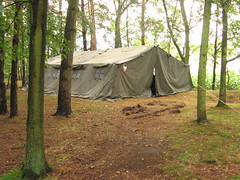 Image by florisla via Flickr


