Showing posts with label Mourning Dove. Show all posts

Monday, August 15, 2016

Register for Mentored Dove Hunt On Clinton Wildlife Area

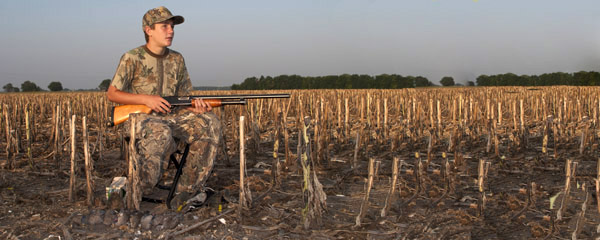
PRATT – The Jayhawk Chapter of the Quail and Upland Wildlife Federation (QUWF) and the Kansas Department of Wildlife, Parks and Tourism (KDWPT) invite youth age 16 and younger to register for the 9th Annual Youth Dove Hunt. The Sept. 1 opening-day hunt will take place at Clinton Wildlife Area west of Lawrence and will begin at 3 p.m. Mentors will accompany all participants, but non-hunting family members are encouraged to attend, as well.
Non-toxic shells, and eye and ear protection will be provided to participants, who are encouraged to dress in camouflage or dark-colored clothing. Shotguns may be provided upon request.
Participants age 16 must have a Kansas hunting license, unless exempt by Kansas law, and a Harvest Information Program (HIP) permit. For more information, visit ksoutdoors.com and click “Services / Education / Hunter.”
For more details and to register, contact Dr. John Hill at (785) 841-9555 or (785) 550-5657, or by e-mail at hills4ku@hotmail.com.
The 2016 hunting season for mourning, white-winged and exotic doves (Eurasian collared and ringed turtle) is Sept. 1-Nov. 29. The season for exotic doves only is Nov. 30, 2016 - Feb. 28, 2017 for the exotic dove season. For information regarding migratory bird hunting regulations, license and stamp requirements, legal methods of take, non-toxic shot and more, visit ksoutdoors.com and click “Hunting,” “Hunting Regulations,” then “Migratory Birds.”

Sunday, August 25, 2013

DOVE HUNTING SEASON OPENS SEPTEMBER 1

Kansas hunters anxiously await the arrival of fall’s first hunting season
PRATT – For avid bird hunters, the summer has slowly dragged on, but the September
1opening day of dove season will be here before you know it. It’s time to stock up on shells, practice your wingshooting skills and scout for water holes and feed fields doves are using.
Kansas is often referred to as the Sunflower State, and maybe that’s why so many mourning doves summer here; they love sunflower seeds. Doves are one of the most numerous game birds in the U.S., and Kansas usually ranks near the top when state dove breeding populations are surveyed. By the end of August, Kansas is literally teeming with mourning doves. In 2012, an estimated 37,791 hunters harvested 753,390 doves in Kansas.
The dove season is open Sept. 1-Oct. 31 and Nov. 2-10 for mourning, white-winged Eurasian, and ringed turtle doves. The daily bag limit is 15, and the possession limit is 45, which applies only to mourning and white-winged doves, single species or in combination. There is no limit on Eurasian collared and ringed turtle doves, but any taken in addition to a daily bag limit of mourning and white-winged doves must have a fully-feathered wing attached while in transport. An extended exotic dove season for Eurasian collared and ringed turtle doves is open Nov. 20, 2013-Feb. 28, 2014. There is no daily bag or possession limit, but a fully-feathered wing must remain attached while in transport.
Residents 16-74 must have a hunting license and Harvest Information Program (HIP) permit, unless exempt by law, to hunt doves. All nonresidents, regardless of age, must have a nonresident hunting license and a Kansas HIP permit.
Finding a productive dove hunting spot requires some advance scouting, and this can be as simple as driving backroads during the early morning hours looking for fields doves are using. Birds will often congregate along power lines or dead trees. Before hunting on private land, get landowner permission.
Public lands can provide outstanding hunting opportunities, especially on managed dove fields. Many Kansas Department of Wildlife, Parks and Tourism wildlife areas have fields managed specifically to attract mourning doves. The small fields are planted to sunflowers or wheat and managed to make them attractive to doves. When the weather cooperates, dove hunting around these fields can be fantastic. Thirty-nine wildlife areas across the state feature managed dove fields and some special restrictions may apply. Go to www.ksoutdoors.com, click on “Hunting,” “Migratory Birds,” then “Doves” for a listing of dove field locations and special regulations. Many of the dove fields will be designated as “Non-toxic Shot Only,” and some may be set aside for youth hunting opportunities. Fields designated as “Non-toxic Shot Only” will be marked with signs.
The impending autumn brings with it the optimism of the 2013 hunting season, and it won’t get here a day too soon for avid hunters. Get out and take advantage of the great hunting opportunities available here in Kansas.

Friday, August 10, 2012

MANAGED FIELDS EXCELLENT FOR SEPT. 1 DOVE OPENER

English: Mourning Doves will perch for safety ...
 (Photo credit: Wikipedia)
KDWPT-managed areas are magnets for elusive mourning doves
PRATT — Many hunters view Sept. 1 as the opening of hunting season, with dove season beginning on that day. It’s been a blistering hot, dry summer, but mourning doves seem to thrive in hot, dry weather, and Kansas hunters should have no problem finding this acrobat game bird when the season opens. Hitting them may be another matter, so target practice prior to season is important.

Although the mourning dove is the primary quarry, Kansas hunters enjoy pursuing four species of doves in split fall and winter seasons. The season for all doves runs Sept. 1-Oct. 31 and Nov. 3-11. During these segments, two native species (mourning and white-winged doves) as well as two exotic species (Eurasian collared and ringed turtle doves) may be taken. In addition, an exotic species season runs Nov. 20-Feb. 28, 2013. During this time, only Eurasian collared and ringed turtle doves may be taken.

To enhance public hunting opportunities, the Kansas Department of Wildlife, Parks and Tourism (KDWPT) manages fields specifically to attract doves. Dove fields may include standing or mowed sunflowers, unharvested strips of wheat and burned crop stubble, mowed wheat, mixed plantings, or any combination of techniques.

Some areas have restricted hunting dates or times, and others may be restricted to youth, novice, and/or disabled hunters. Some may also require hunters using managed dove fields to obtain and complete a daily hunt permit or obtain access through a drawing. Other areas are open to the general public. Fields within waterfowl management areas require non-toxic shot only. Daily hunt permits are free and located in “iron rangers” (similar to mailboxes) at the field near you.

Use the KDWPT website, ksoutdoors.com, to find details on areas specially managed for doves. Click "Hunting/Migratory Birds/Doves/Managed Hunting Areas" for details on a managed dove area.

Hunters are reminded that there are no bag and possession limits for Eurasian collared doves and ringed turtle doves. However, during the regular dove season — Sept. 1 through Oct. 31 and Nov. 3-11 — if the take of exotic doves exceeds a hunter’s daily bag of 15 mourning and white-winged doves (single species or in combination), the exotic doves must be transported with a fully-feathered wing attached. The possession limit for mourning and white-winged doves is 30.

Doves are excellent table fare. Whether wrapped in bacon and grilled, baked in a pie, or skewered for shish-ka-bobs, this game bird is a favorite of many. But don’t wait until Sept. 1 to get ready. Hunters should be scouting areas and obtaining permission on private ground or planning for a public land hunt now. Shooting clay targets for a couple of weeks will save shells once the season opens, but stock up on shells anyway; this is one of the most difficult game birds to hit. These things done, all that remains is knowing the law and cleaning the grill.

All dates and regulations needed for hunting doves may be found online at the KDWPT website, ksoutdoors.com. On Aug. 23, the Kansas Wildlife, Parks and Tourism Commission will approve final regulations for ducks and geese at the Wetland Education Center, 592 NE K156 Highway, near Great Bend. Once that action is complete, KDWPT can post the 2012 Kansas Hunting and Furharvesting Regulations Summary, on the agency’s website, where hunters can go to learn more about identifying dove species. At that time, click "Hunting/Hunting Regulations" to view or download this booklet.

Printed copies of the 2012 Kansas Hunting and Furharvesting Regulations Summary, as well as the Kansas Hunting Atlas, will be available where licenses are sold the first week in September.

Wednesday, August 10, 2011

SEPT. 1 DOVE OPENER FLAGS FALL HUNTING SEASONS

The range of the Mourning DoveImage via Wikipedia
Kansas Department of Wildlife and Parks manages fields just for dove hunters
PRATT — The Sept. 1 opening of dove season is fast approaching. While a blistering summer may have punished crops and people, mourning doves seem to thrive in hot, dry weather. Reports from many parts of the state suggest ample numbers of this elusive, fast-flying quarry.
Although the mourning dove is the primary quarry, Kansas hunters enjoy pursuing four species of doves in split fall and winter seasons. The season for all doves runs Sept. 1-Oct. 31 and Nov. 5-13. During these segments, two native species (mourning and white-winged doves) as well as two exotic species (Eurasian collared and ringed turtle doves) may be taken. In addition, an exotic species season runs Nov. 20-Feb. 28, 2012. During this time, only Eurasian collared and ringed turtle doves may be taken.
To enhance public hunting opportunities, the Kansas Department of Wildlife, Parks and Tourism (KDWPT) manages fields specifically to attract doves. Dove fields may include standing or mowed sunflowers, unharvested strips of wheat and burned crop stubble, mowed wheat, mixed plantings, or any combination of techniques.
Some areas have restricted hunting dates or times, and others may be restricted to youth, novice, and/or disabled hunters. Some may also require hunters using managed dove fields to obtain and complete a daily hunt permit or obtain access through a drawing. Others are open to the general public. Fields within waterfowl management areas require non-toxic shot only.
Use the KDWPT website, www.kdwpt.state.ks.us, to find details on areas specially managed for doves. Click "Hunting/Migratory Birds/Doves/Managed Hunting Areas" for details on the nearest managed dove area.
Hunters are reminded that there are no bag and possession limits for Eurasian collared doves and ringed turtle doves. However, during the regular dove season — Sept. 1 through Oct. 31 and Nov. 5-13 — if the take of exotic doves exceeds a hunter’s daily bag of 15 mourning and white-winged doves (single species or in combination), the exotic doves must be transported with a fully-feathered wing attached. The possession limit for mourning and white-winged doves is 30.
On Aug. 11, the Kansas Wildlife, Parks and Tourism Commission will approve final regulations for ducks and geese. Once that action is complete, KDWPT can post the 2011 Kansas Hunting and Furharvesting Regulations Summary on the agency’s website where hunters can go online to learn more about identifying dove species. Click "Hunting/Hunting Regulations" to view or download this booklet, which has all the information needed for hunting doves, including color pictures of the doves that may be legally taken. Information on all other game species is included, as well.
Doves are excellent table fare. Whether wrapped in bacon and grilled, baked in a pie, or skewered for shish-ka-bobs, this game bird is a favorite of many. But don’t wait until Sept. 1 to get ready. Hunters should be scouting areas and obtaining permission on private ground or planning for a public land hunt now. Shooting clay targets for a couple of weeks will save shells once the season opens, but stock up on shells anyway; this is one of the most difficult game birds to hit. These things done, all that remains is knowing the law and cleaning the grill.
Printed copies of the 2011 Kansas Hunting and Furharvesting Regulations Summary, as well as the Kansas Hunting Atlas, will be available where licenses are sold the first week in September.

Enhanced by Zemanta