Showing posts with label Trespass. Show all posts

Saturday, November 30, 2013

LANDOWNER PERMISSION A MUST WHEN HUNTING PRIVATE LAND

Hunters must ask for permission before hunting on private land
PRATT – Hunters can face serious penalties for hunting on private land without landowner
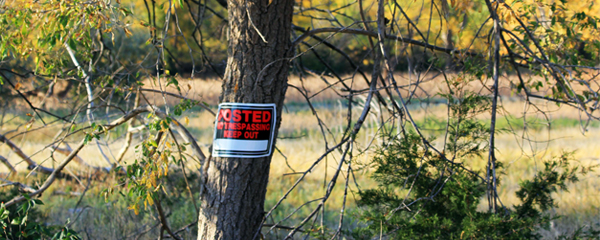
permission, and however tempting a trophy-sized buck, or a pond covered in greenheads may be, the consequences will always outweigh the perceived reward. With firearm season just around the corner, the Kansas Department of Wildlife, Parks and Tourism (KDWPT) reminds all hunters that it is illegal to hunt on private land, posted or not, without the owner's permission. Whether someone actually enters private land without permission or shoots onto it from the road or another landowner's property without permission, it is illegal.
Trespassing affects more than just the immediate parties involved. The perception of the hunting community as a whole and our hunting heritage are just a couple pieces of the puzzle affected by illegal hunting practices. Because trespassing harms landowner-hunter relations — and because the penalties for trespassing can be severe — hunters should be aware of the following trespass issues:
  • landowner permission should be obtained before pursuing wounded game onto private property. If the landowner cannot be found, contact a local natural resource officer or sheriff's office;
  • hunting from roads or railways without legal permission is a form of trespassing called criminal hunting;
  • conviction of trespass or criminal hunting may prevent the convicted person from enjoying hunting privileges in other states. KDWPT is a member of the Wildlife Violator Compact, that includes 34 other states. Under this compact, anyone who has had hunting, fishing, or furharvesting privileges revoked or suspended in a member state cannot hunt, trap, or fish in other member states;
  • conviction of simple criminal hunting can result in a maximum fine of $500, plus court costs, and one month in jail on the first conviction. Additionally, the court can suspend or revoke license privileges for up to a year. A second conviction requires at least a one-year suspension of privileges in addition to any fines or jail time;
  • if big game or turkey hunting is involved, the penalties get stiffer. Upon first conviction, the law states that the violator "shall not be fined less than $500 nor more than $1,000 or be imprisoned in the county jail for not more than six months, or both." The law requires fifth and subsequent conviction penalties of a minimum $1,000 fine and minimum 90 days in jail;
  • criminal trespassing is when the violator does not leave property when told;
  • it is illegal to hunt on land posted with written permission signs or marked with purple paint without having written permission on one's person;
  • in any of these cases, hunting privileges may also be revoked; and
  • by law, all hunters must have permission whether the land is posted or not.
Kansas’ wildlife resources should not only be revered, but respected. Before a hunter contemplates hunting on private land without landowner permission, the long term and widespread affect those actions will have on the future of Kansas hunting should be considered.
If you witness trespassing or illegal hunting, report it to your local natural resource officer, sheriff's office, or call the Operation Game Thief toll-free hotline at 1-877-426-3843. A list of phone numbers for all natural resource officers, listed by counties they cover, can be found in the 2013 Kansas Hunting & Furharvesting Regulations Summaryavailable wherever licenses are sold, or online at www.ksoutdoors.com.

Wednesday, November 30, 2011

PERMISSION REQUIRED TO HUNT ANY PRIVATE LAND


Dec. 1, 2001
Land does not have to be posted
PRATT — The Kansas firearm deer season began Nov. 30, and many other hunting season are currently open, as well. With this in mind, officials with the Kansas Department of Wildlife, Parks and Tourism (KDWPT) are reminding all hunters that it is illegal to hunt on private land, posted or not, without the owner's permission. Whether someone actually enters private land without permission or shoots onto it from another landowner's property without permission, it is illegal.
Not only is trespassing illegal, but hunting from public roads requires permission of the landowner adjoining the side of the road being hunted, the center of the road defining who should grant permission. Railroad rights-of-way require permission from the railroad. In addition, writtenpermission is required to enter land posted with hunting and/or trapping "By Written Permission Only" signs or bordered by trees or fence posts painted purple.
In any situation, shooting from a vehicle is illegal unless the hunter has a disability permit on land where permission has been granted. Shooting from a road is also extremely dangerous, threatening landowners, other hunters, livestock, and equipment.
According to KDWPT’s Law Enforcement Division, Kansas convicted 285 poachers for trespassing-related violations in 2010. Whether trespassing is accidental or intentional, it damages the hunting heritage. Because trespassing harms landowner-hunter relations — and because the penalties for trespassing can be severe — hunters should be aware of the following:
  • landowner permission should be obtained before pursuing wounded game onto private property. If the landowner cannot be found, contact a local natural resource officer or sheriff's office;
  • hunting from roads or railways without legal permission is a form of trespassing called criminal hunting;
  • conviction of trespass or criminal hunting may prevent the convicted person from enjoying hunting privileges in other states. KDWPT is a member of the Wildlife Violator Compact, to which 34 other states currently belong. Under this compact, anyone who has had hunting, fishing, or furharvesting privileges revoked or suspended in a member state cannot hunt, trap, or fish in other member states;
  • conviction of simple criminal hunting can result in a maximum fine of $500, plus court costs, and one month in jail on the first conviction. Additionally, the court can suspend or revoke license privileges for up to a year. A second conviction requires at least a one-year suspension of privileges in addition to any fines or jail time;
  • if big game or turkey hunting is involved, the penalties get stiffer. Upon first conviction, the law states that the violator "shall not be fined less than $500 nor more than $1,000 or be imprisoned in the county jail for not more than six months, or both." The law requires fifth and subsequent conviction penalties of a minimum $1,000 fine and minimum 90 days in jail;
  • refusing to leave property when told is a form of criminal trespassing;
  • it is illegal to hunt on land requiring written permission without having written permission on one's person;
  • in any of these cases, hunting privileges may be revoked; and
  • by law, all hunters should have permission whether the land is posted or not.
Hunters can address this problem by always asking for permission courteously and accepting denial in the same manner. Hunters can also help by reporting trespassers. Take down the license tag number and all other details of the violation before phoning a local natural resource officer, sheriff's office, or KDWPT's Operation Game Thief toll-free hotline, 1-877-426-3843. Do not confront the violator. A list of phone numbers for all natural resource officers and other KDPWT staff, listed by counties they cover, can be found online at www.kdwpt.state.ks.us/news/KDWPT-Info/Locations/County-Information.