Showing posts with label Bait fish. Show all posts

Wednesday, January 11, 2012

2012 FISHING REGULATION SUMMARY NOW AVAILABLE

Red Bait Hook
Image via Wikipedia

Latest rules; how, where, and what to fish for; new bait restrictions included
PRATT — Printed copies of the 2012 Kansas Fishing Regulations Summary booklet are now available at Kansas Department of Wildlife, Parks and Tourism (KDWPT) office and license vendors, the agency has announced. Among other things, the publication lists new regulations that took effect Jan. 1. From new regulations regarding bait fish to new lakes and ice fishing regulations, the booklet has everything the angler needs to begin the New Year right.
The following information details Kansas fishing regulation changes for 2012:
ANS-designated Waters
Aquatic Nuisance Species (ANS) waters are defined as waters containing the prohibited species Asian carp, white perch, and/or zebra mussels. Fish may not be transported alive from ANS-designated waters.
Zebra mussels were found in Council Grove, Kanopolis, and Melvern reservoirs, as well as both Jeffery Energy Center lakes last year, bringing the total number of infested lakes to 15.
Bait
Wild-caught bait fish shall only be used on the body of water where taken. If taken on a flowing stream or river, wild-caught bait fish shall not be transported upstream across any dam or natural barrier.
New regulations have been passed regarding what bait dealers may legally sell. Among the restrictions are that certain fish and crayfish and amphibians may no longer be sold for bait. For details, contact a local natural resource officer, fisheries biologist, or KDWPT?office.
New Lakes
Critzer Reservoir, near Mound City, was opened to fishing last spring. And ponds on the Grand Osage Wildlife Area, near Parsons, may be opened for fishing in 2012.
Transporting Fish/Bilges and Livewells
Stocking or releasing of wildlife on navigable publicly-owned rivers and federal reservoirs and department lands and waters is prohibited.
Livewells and bilges must be drained and drain plugs removed from all vessels prior to transport from any waters of the state on a public highway.
No person may possess any live fish upon departure from any designated aquatic nuisance body of water.
Trout
Opening day of trout season for 2012 will be Nov. 1. Colby Villa High Lake has been added to the Type 1 list of waters stocked with trout.
Ice Fishing
Motorized electric or gasoline-powered two-wheeled vehicles, all-terrain vehicles, work-site utility vehicles, golf carts, and snowmobiles may be operated on ice-covered department waters only for the purpose of ice fishing from one-half hour before sunrise to one-half hour after sunset. These vehicles shall enter onto the ice only from boat ramps and points of entry as established by posted notice.
The 2012 booklet also features state park and cabin information and detailed regulations for each body of water managed by KDWPT.
In addition, a full-color fish identification guide lists all the state's sportfish, complete with text descriptions and detailed illustrations by renowned fish illustrator Joseph Tomelleri. Look-alike species are grouped together with complementary text to help the angler distinguish the difference between such closely-related species as white bass and wipers; blue catfish and channel catfish; the state's three black basses; black and white crappie; and pallid, shovelnose, and lake sturgeon.
The booklet also provides the latest information about aquatic nuisance species (ANS) in Kansas waters, including a complete listing of ANS waters by county. Three pages are dedicated to this subject, complete with detailed illustrations and tips on how to prevent the spread of ANS plants, mollusks, and fish.
Anglers who want to contact a district fisheries biologist will find a listing of names and phone numbers of the nearest biologist, as well as regional supervisors. A listing of natural resource officer contacts is also included.
For more information, contact the nearest KDWPT office, pick up a copy of the 2012 Kansas Fishing Regulations Summary wherever licenses are sold. Copies may also be downloaded from the KDWPT website, www.kdwpt.state.ks.us. Click the “Fishing” icon at the top of the page, then “Fishing Regulations” in the left-hand column.

Friday, December 30, 2011

2012 FISHING REGULATIONS SUMMARY AVAILABLE IN JANUARY


Latest rules; how, where, and what to fish for; new bait fish rules included
PRATT — Printed copies of the 2012 Kansas Fishing Regulations Summarybooklet will be available in early January, according to the Kansas Department of Wildlife, Parks and Tourism (KDWPT). Among other things, the publication lists new regulations that take effect Jan. 1, 2012. From new regulations regarding bait fish to new lakes and ice fishing regulations, the booklet has everything the angler needs to begin the New Year right.
The following information details Kansas fishing regulation changes for 2012:
ANS-designated Waters
Aquatic Nuisance Species (ANS) waters are defined as waters containing the prohibited species Asian carp, white perch, and/or zebra mussels. Fish may not be transported alive from ANS-designated waters.
Bait
Wild-caught bait fish shall only be used on the body of water where taken. If taken on a flowing stream or river, wild-caught bait fish shall not be transported upstream across any dam or natural barrier.
New Lakes
Critzer Reservoir, near Mound City, was opened to fishing last spring. And ponds on the Grand Osage Wildlife Area, near Parsons, may be opened for fishing in 2012.
Transporting Fish/Bilges and Livewells
Stocking or releasing of wildlife on navigable publicly-owned rivers and federal reservioirs and department lands and waters is prohibited.
Livewells and bilges must be drained and drain plugs removed from all vessels prior to transport on a public highway.
No person may possess any live fish upon departure from any designated aquatic nuisance body of water.
Trout
Opening day of trout season for 2012 will be Nov. 1. Colby Villa High Lake has been added to the Type 1 list of waters stocked with trout.
Ice Fishing
Motorized electric or gasoline-powered two-wheeled vehicles, all-terrain vehicles, work-site utility vehicles, golf carts, and snowmobiles may be operated on ice-covered department waters only for the purpose of ice fishing from one-half hour before sunrise to one-half hour after sunset. These vehicles shall enter onto the ice only from boat ramps and points of entry as established by posted notice.
The 2012 booklet also features state park and cabin information and detailed regulations for each body of water managed by KDWPT.
In addition, a full-color fish identification guide lists all the state's sportfish, complete with text descriptions and detailed illustrations by renowned fish illustrator Joseph Tomelleri. Look-alike species are grouped together with complementary text to help the angler discern the difference between such closely-related species as white bass and wipers; blue catfish and channel catfish; the state's three black basses; black and white crappie; and pallid, shovelnose, and lake sturgeon.
The booklet also provides the latest information about aquatic nuisance species (ANS) in Kansas waters, including a listing of ANS-designated waters by county. Three pages are dedicated to this subject, complete with detailed illustrations and tips on how to prevent the spread of ANS plants, mollusks, and fish.
Anglers who want to contact a district fisheries biologist will find a listing of names and phone numbers of the nearest biologist, as well as regional supervisors. A listing of natural resource officer contacts is also included.
For more information, contact the nearest KDWPT office, pick up a copy of the 2012 Kansas Fishing Regulations Summary wherever licenses are sold in early Jan. Copies may also be downloaded from the KDWPT website, www.kdwpt.state.ks.us, in early January. Click the “Fishing” icon at the top of the page, then “Fishing Regulations” in the left-hand column.

Friday, December 9, 2011

KANSAS WILDLIFE, PARKS AND TOURISM COMMISSION MOVES TO PROTECT KANSAS WATERS

Dreissena polymorpha English: Zebra mussel Esp...
Image via Wikipedia

Wild-caught bait may only be used in waters where caught; other restrictions passed
TOPEKA – During a special public hearing Tuesday evening, Dec. 6, Kansas Wildlife, Parks and Tourism Commissioners acted on regulations governing the use and movement of wild-caught live bait fish and the transport of fish from waters designated as having aquatic nuisance species (ANS) present.
The new regulations change the way Kansas anglers collect and use live bait fish and were approved to curtail the spread of invasive aquatic species — particularly Asian carp, zebra mussels, and white perch — in Kansas lakes and streams. These and other aquatic nuisance species are often spread accidently by people using the state’s lakes and rivers.
The Commission listened to public comments and considered various options before taking action. Commissioners voted on regulations that will take effect Jan. 1, 2012 and will 1) allow anglers to use wild-caught live bait fish only in the pool of a lake or impoundment where taken; 2) prohibit anglers from transporting wild-caught bait fish taken from a flowing stream or river across any dam or natural barrier; 3) prohibit anglers from transporting any live fish upon departure from any ANS-designated body of water; 4) prohibit releasing any fish in department waters (unless the fish was caught from the water into which it is being released), navigable publicly-owned rivers, and federal reservoirs; and 4) require that vessels being removed from all waters of the state have livewells and bilges drained and drain plugs removed before transport on any public highway.
Aquatic nuisance species are animals and plants not native to Kansas that can threaten lake and river ecology, harm native or desirable species, and interfere with the state’s economy. Negative impacts on Kansas waters include, but are not limited to, the following:
  • diminished food supplies and degraded habitat for other species;
  • reduced numbers and variety of desirable fish;
  • reduced fishing and other recreational opportunities;
  • lowered property values and decreased quality of municipal water sources;
  • fouled water lines, clogged intakes, burned out pumps, damaged power generating facilities, and decreased water system efficiency; and
  • increased risk of flooding due to overcrowded biomass and clogging of lake outlets.
Biologists have identified the movement of wild-caught bait fish and water as a significant factor in the spread of these dangerous species. With the passage of these regulations, anglers will be restricted to using wild-caught bait fish caught only from the waters where they are fishing or using live bait fish purchased from certified bait dealers.
Anglers will not be able to transport any live fish from waters listed in the Kansas Fishing Regulations Summary(available wherever licenses are sold) as harboring ANS species. And finally, all boaters will be required to remove drain plugs and drain livewells and bilges before transporting vessels on public highways from waters of the state.
For details on aquatic nuisance species, including the Kansas Department of Wildlife, Parks and Tourism’s Aquatic Nuisance Species Management Plan, go online to www.kdwpt.state.ks.us/news/content/search?SearchText=ans .

Thursday, November 24, 2011

SPECIAL WILDLIFE, PARKS AND TOURISM COMMISSION MEETING DEC. 6

Illustration employs an above and below waterl...
Image via Wikipedia

Commissioners to set regulations on take, use, and movement of bait fish or minnows
TOPEKA — On Tuesday, Dec. 6, the Kansas Wildlife, Parks and Tourism Commission will conduct a special meeting at the Kansas Department of Wildlife, Parks and Tourism Region 2 Office (basement conference room), 300 SW Wanamaker Road in Topeka. The meeting was called to cover possible regulation changes that would go in effect in 2012 if approved, regarding the take, use, movement, and release of bait fish and minnows.
In addition to bait fish regulations, commissioners will also vote on a regulation change that would eliminate the second motor vehicle permit for Kansas state parks. The public is invited to attend the meeting and provide input.
The meeting will be called to order at 7 p.m., and time will be allowed for general public comment on non-agenda items, followed by a public hearing on the following regulations:
  • KAR 115-2-2 — motor vehicle permit fees;
  • KAR 115-7-3 — fish; taking and use of bait fish or minnows;
  • KAR 115-7-6 — fishing; bait;
  • KAR 115-7-10 — fishing; special provisions;
  • KAR 115-8-6 — fishing, fish bait, and seining;
  • KAR 115-8-12 — stocking or releasing of wildlife; and
  • KAR 115-30-13 — removal of vessels from waters of the state.
The outcome of some of these regulations will result in one of three changes regarding the use of bait fish: 1) wild-caught bait fish may be used as live bait only within the impoundment or stream where taken; 2) wild-caught bait fish may be used as live bait only within the impoundment or stream where taken, except that green sunfish, bluegill, and yellow and black bullhead may be used in waters other than where they are taken; or 3) no change in the regulations. Live bait fish purchased from a licensed bait dealer may be used under any of these options.
Live video and audio streaming of this meeting will be broadcast through the Kansas Department of Wildlife, Parks and Tourism (KDWPT) website, www.kdwpt.state.ks.us.
If notified in advance, the department will have an interpreter available for the hearing impaired. To request an interpreter, call the Kansas Commission for the Deaf and Hard of Hearing at 1-800-432-0698. Any individual with a disability may request other accommodations by contacting the Kansas Wildlife, Parks and Tourism Commission secretary at 620-672-5911.
The next commission meeting is scheduled for Jan. 5, 2012, at Kansas Wesleyan University (Hauptli Student Center), 100 East Claflin Ave. in Salina.

Tuesday, October 4, 2011

KANSAS WILDLIFE, PARKS AND TOURISM COMMISSION TO MEET OCT. 13

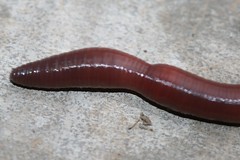
Earthworm (Family: Megascolecidae)Image by Arthur Chapman via Flickr
Commercial fishing and bait regulations to be set
PRATT — The Kansas Wildlife, Parks and Tourism Commission will conduct a public meeting and hearing on Thursday, Oct. 13, at the Kansas Department of Wildlife, Parks and Tourism (KDWPT) Pratt Operations Office basement conference room, 512 SE 25th Ave. in Pratt. The afternoon session will begin at 1:30 p.m. and recess at 5 p.m., and the evening session will begin at 7 p.m.
The afternoon session will begin with time for public comments on non-agenda items, followed by a general discussion period on the following topics:
  • Secretary’s remarks;
  • agency and state fiscal status;
  • 2012 legislative agenda;
  • welcome to Pratt by local entities;
  • tourism briefing; and
  • Hillsdale Shooting Range update.
The afternoon will also include a workshop session, in preparation for potential future regulatory action, covering preliminary recommendations on the following regulations:
  • big game permanent regulations;
  • potential changes in deer regulations for 2012;
  • big game 25-Series regulations – deer;
  • big game 25-Series regulations – elk/antelope;
  • falconry regulations;
  • fall turkey regulations; and
  • second state park motor vehicle permit.
The commission will recess at 5 p.m., then reconvene at 7 p.m. at the same location for a public hearing on the following regulations:
  • K.A.R. 115-8-1, department lands and waters — hunting, furharvesting, discharge of firearms, and Public Lands Reference Document;
  • K.A.R. 115-2-3, camping — utility and other fees;
  • K.A.R. 115-8-9, camping — general provisions;
  • K.A.R. 115-8-10, pets — provisions and restrictions;
  • cabin camping rates;
  • K.A.R. 115-17-1, commercial harvest of fish bait — legal species, harvest seasons, size restrictions, daily limits, and possession limits;
  • K.A.R. 115-17-2, commercial sale of bait fish — testing procedures;
  • K.A.R. 115-17-2a, commercial sale of bait fish — possible amendment to testing procedures;
  • K.A.R. 115-17-3, commercial fish bait permit — requirement, application, general provisions, and possible amendment;
  • K.A.R. 115-17-4, commercial harvest of fish bait — legal equipment, taking methods, and general provisions;
  • K.A.R. 115-17-5, commercial harvest of fish bait — open areas;
  • K.A.R. 115-17-10, commercial harvest of fish — permit requirement, application, reports, and permit revocation;
  • K.A.R. 115-17-11, commercial harvest of fish — legal equipment and taking methods, identification tags, and identification tag fee;
  • K.A.R. 115-17-12, commercial harvest of fish — legal species, seasons, size restrictions, daily limits, and possession limits; and
  • K.A.R. 115-25-14, fishing — creel limit, size limit, possession limit, and open season.
Time will be set aside in both the afternoon and evening sessions for public comment on topics that are not on the agenda. If necessary, the commission will recess on Oct. 13 and reconvene at the same location at 9 a.m., Oct. 14, to complete unfinished business.
Live video and audio streaming of this meeting will be broadcast through the Kansas Department of Wildlife, Parks and Tourism (KDWPT) website, www.kdwpt.state.ks.us.
If notified in advance, the department will have an interpreter available for the hearing impaired. To request an interpreter, call the Kansas Commission for the Deaf and Hard of Hearing at 1-800-432-0698. Any individual with a disability may request other accommodations by contacting the Kansas Wildlife, Parks and Tourism Commission secretary at 620-672-5911.
The next commission meeting is scheduled for Dec. 6 at the KDWPT Region 2 Office basement meeting room, 300 SW Wannamaker Road in Topeka. This will be a special session on bait regulations.