Showing posts with label Ice fishing. Show all posts

Monday, February 3, 2014

CATCH FIRST GLIMPSE OF 2014 FISHING REGULATIONS SUMMARY ONLINE

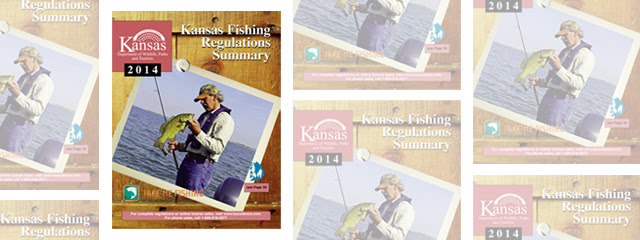
 For anglers, timely, quality information can be the difference between getting a couple tugs on a lure and a grill lined-to-the-brim with your favorite catch. Cram-packed with all the information you need to set up for a perfect day of fishing, the 2014 Kansas Fishing Regulations Summaryis the closest you can get to having a game warden, a fisheries biologist, ksoutdoors.com by clicking “Fishing / Fishing Regulations.” Print copies will be available wherever licenses are sold within one to two weeks.
and a hatchery manager at your beck and call. This free, easy to use, full-color pamphlet can be downloaded online now at

Apart from information on important fishing regulations such as special seasons, creel and length limits, license fees and legal fishing methods, anglers will also find a helpful section highlighting new regulations for the 2014 season in the summary. This publication is a must-have for anglers because creel and length limits vary from lake to lake.

Included in a special 16-page section, this pamphlet also lists all public waters, along with their location and any special regulations in effect. At the turn of a page, anglers can see which community lakes don’t charge extra fees for fishing, as well as community lakes designated as Family Friendly Facilities (FFF)thatwill include flush toilet facilities, security patrols, security lighting, easy access to the water and do not allow alcohol.

Information is also provided on aquatic nuisance species (ANS), as well as regulations governing the use of live baitfish. Five pages are devoted to fish identification, featuring color illustrations by Joe Tomelleri. Current state record fish are listed, and there is also a Master Angler Application for anglers who catch fish that qualify forthis certificate award program.

The2014 Kansas Fishing Regulations Summarypamphlet is truly an angler’s “Bible.” Grab a copy, read it, and keep it by your side. Available at more than 200 outlets statewide, and online, there’s no excuse to ever find yourself without one.

Saturday, February 23, 2013

MITCHELL COUNTY GAME WARDEN RESCUES STRANDED FISHERMEN


On Feb. 1, 2013, two men ice fishing for crappie and white bass in the Boller Point area on Glen Elder Reservoir found themselves in a dangerous situation when the piece of ice they were fishing on broke away from shore and headed toward the main lake. Frigid temperatures, high winds, and a lack of personal flotation devices (PFDs) put both men at risk of hypothermia and drowning. At 12:56 p.m., local goose hunter Charlie Stevens stumbled upon the two men and quickly phoned Kansas Department of Wildlife, Parks and Tourism (KDWPT) game warden Landen Cleveland for assistance.

Stevens assured Cleveland that he could launch a boat from shore, but it was going to be difficult; the only part of the lake not completely covered in ice was just northeast of the Boller Point boat ramp. Upon arrival, Cleveland was joined by Mitchell County Sheriff’s Deputy Steve Martin. Cleveland quickly provided Martin with a PFD, as well as directions on how to use rescue ropes.

“We could see these guys were in bad shape,” said Cleveland. “It’s not uncommon for us to rescue people off water, but strong winds and near-freezing temperatures made this cold-water rescue dangerous for everyone involved.”

Driving the boat upwind of where the men were stranded, Cleveland positioned the boat on top of the ice the men were on, leaving the motor in the water. Finding both men had already tied themselves together, Cleveland then threw the closest man an orange rescue disc and advised him to tie it to the rope already wrapped around his waist. As Cleveland attempted to throw the same man a PFD, the man then slipped and fell on to the ice. After several seconds of lying still, the man, seemingly uninjured, stood back up and grabbed the PFD. Cleveland then provided the second man with a PFD.

With Martin at the edge of the boat, Cleveland advised the men to walk toward the boat, staying in unison and maintaining as much distance as possible between each other for better weight distribution on the ice slab. As the first man approached the boat, Martin quickly grabbed him and pulled him aboard. The second man followed, and was also assisted on to the boat by Martin.

“I don’t think they realized the situation they were in until they were on shore,” said Cleveland. “When they looked back and saw that the piece of ice they were just on was now gone, it finally hit them that they could have died.”
Cleveland explained that wind will often send drift ice to shore. When it’s cold enough, the drift ice will refreeze, attaching itself to land. In this instance, a rise in temperature and strong winds caused waves that eventually broke the ice loose at a weak point, detaching it from shore again. Cleveland added that the men didn’t realize they were on drift ice.

Upon their arrival to shore, the two men were checked out and later discharged by Mitchell County medical personnel.

“Once the men were safely on the boat, they calmed down and realized they could breath easy,” said Cleveland. He added that one of the men even joked about not having to get wet amid the whole ordeal.

“I’m glad we got there when we did, but people can really learn a lesson from this,” said Cleveland. “It’s important that people educate themselves on their surroundings and always be cautious of the circumstances because in a split second, it can be a life or death situation.”

For information on who to call in your area in case of an emergency such as this, visit www.ksoutdoors.com and click “Services/Law Enforcement/Who do I call?”

Wednesday, January 11, 2012

2012 FISHING REGULATION SUMMARY NOW AVAILABLE

Red Bait Hook
Image via Wikipedia

Latest rules; how, where, and what to fish for; new bait restrictions included
PRATT — Printed copies of the 2012 Kansas Fishing Regulations Summary booklet are now available at Kansas Department of Wildlife, Parks and Tourism (KDWPT) office and license vendors, the agency has announced. Among other things, the publication lists new regulations that took effect Jan. 1. From new regulations regarding bait fish to new lakes and ice fishing regulations, the booklet has everything the angler needs to begin the New Year right.
The following information details Kansas fishing regulation changes for 2012:
ANS-designated Waters
Aquatic Nuisance Species (ANS) waters are defined as waters containing the prohibited species Asian carp, white perch, and/or zebra mussels. Fish may not be transported alive from ANS-designated waters.
Zebra mussels were found in Council Grove, Kanopolis, and Melvern reservoirs, as well as both Jeffery Energy Center lakes last year, bringing the total number of infested lakes to 15.
Bait
Wild-caught bait fish shall only be used on the body of water where taken. If taken on a flowing stream or river, wild-caught bait fish shall not be transported upstream across any dam or natural barrier.
New regulations have been passed regarding what bait dealers may legally sell. Among the restrictions are that certain fish and crayfish and amphibians may no longer be sold for bait. For details, contact a local natural resource officer, fisheries biologist, or KDWPT?office.
New Lakes
Critzer Reservoir, near Mound City, was opened to fishing last spring. And ponds on the Grand Osage Wildlife Area, near Parsons, may be opened for fishing in 2012.
Transporting Fish/Bilges and Livewells
Stocking or releasing of wildlife on navigable publicly-owned rivers and federal reservoirs and department lands and waters is prohibited.
Livewells and bilges must be drained and drain plugs removed from all vessels prior to transport from any waters of the state on a public highway.
No person may possess any live fish upon departure from any designated aquatic nuisance body of water.
Trout
Opening day of trout season for 2012 will be Nov. 1. Colby Villa High Lake has been added to the Type 1 list of waters stocked with trout.
Ice Fishing
Motorized electric or gasoline-powered two-wheeled vehicles, all-terrain vehicles, work-site utility vehicles, golf carts, and snowmobiles may be operated on ice-covered department waters only for the purpose of ice fishing from one-half hour before sunrise to one-half hour after sunset. These vehicles shall enter onto the ice only from boat ramps and points of entry as established by posted notice.
The 2012 booklet also features state park and cabin information and detailed regulations for each body of water managed by KDWPT.
In addition, a full-color fish identification guide lists all the state's sportfish, complete with text descriptions and detailed illustrations by renowned fish illustrator Joseph Tomelleri. Look-alike species are grouped together with complementary text to help the angler distinguish the difference between such closely-related species as white bass and wipers; blue catfish and channel catfish; the state's three black basses; black and white crappie; and pallid, shovelnose, and lake sturgeon.
The booklet also provides the latest information about aquatic nuisance species (ANS) in Kansas waters, including a complete listing of ANS waters by county. Three pages are dedicated to this subject, complete with detailed illustrations and tips on how to prevent the spread of ANS plants, mollusks, and fish.
Anglers who want to contact a district fisheries biologist will find a listing of names and phone numbers of the nearest biologist, as well as regional supervisors. A listing of natural resource officer contacts is also included.
For more information, contact the nearest KDWPT office, pick up a copy of the 2012 Kansas Fishing Regulations Summary wherever licenses are sold. Copies may also be downloaded from the KDWPT website, www.kdwpt.state.ks.us. Click the “Fishing” icon at the top of the page, then “Fishing Regulations” in the left-hand column.

Friday, December 30, 2011

2012 FISHING REGULATIONS SUMMARY AVAILABLE IN JANUARY


Latest rules; how, where, and what to fish for; new bait fish rules included
PRATT — Printed copies of the 2012 Kansas Fishing Regulations Summarybooklet will be available in early January, according to the Kansas Department of Wildlife, Parks and Tourism (KDWPT). Among other things, the publication lists new regulations that take effect Jan. 1, 2012. From new regulations regarding bait fish to new lakes and ice fishing regulations, the booklet has everything the angler needs to begin the New Year right.
The following information details Kansas fishing regulation changes for 2012:
ANS-designated Waters
Aquatic Nuisance Species (ANS) waters are defined as waters containing the prohibited species Asian carp, white perch, and/or zebra mussels. Fish may not be transported alive from ANS-designated waters.
Bait
Wild-caught bait fish shall only be used on the body of water where taken. If taken on a flowing stream or river, wild-caught bait fish shall not be transported upstream across any dam or natural barrier.
New Lakes
Critzer Reservoir, near Mound City, was opened to fishing last spring. And ponds on the Grand Osage Wildlife Area, near Parsons, may be opened for fishing in 2012.
Transporting Fish/Bilges and Livewells
Stocking or releasing of wildlife on navigable publicly-owned rivers and federal reservioirs and department lands and waters is prohibited.
Livewells and bilges must be drained and drain plugs removed from all vessels prior to transport on a public highway.
No person may possess any live fish upon departure from any designated aquatic nuisance body of water.
Trout
Opening day of trout season for 2012 will be Nov. 1. Colby Villa High Lake has been added to the Type 1 list of waters stocked with trout.
Ice Fishing
Motorized electric or gasoline-powered two-wheeled vehicles, all-terrain vehicles, work-site utility vehicles, golf carts, and snowmobiles may be operated on ice-covered department waters only for the purpose of ice fishing from one-half hour before sunrise to one-half hour after sunset. These vehicles shall enter onto the ice only from boat ramps and points of entry as established by posted notice.
The 2012 booklet also features state park and cabin information and detailed regulations for each body of water managed by KDWPT.
In addition, a full-color fish identification guide lists all the state's sportfish, complete with text descriptions and detailed illustrations by renowned fish illustrator Joseph Tomelleri. Look-alike species are grouped together with complementary text to help the angler discern the difference between such closely-related species as white bass and wipers; blue catfish and channel catfish; the state's three black basses; black and white crappie; and pallid, shovelnose, and lake sturgeon.
The booklet also provides the latest information about aquatic nuisance species (ANS) in Kansas waters, including a listing of ANS-designated waters by county. Three pages are dedicated to this subject, complete with detailed illustrations and tips on how to prevent the spread of ANS plants, mollusks, and fish.
Anglers who want to contact a district fisheries biologist will find a listing of names and phone numbers of the nearest biologist, as well as regional supervisors. A listing of natural resource officer contacts is also included.
For more information, contact the nearest KDWPT office, pick up a copy of the 2012 Kansas Fishing Regulations Summary wherever licenses are sold in early Jan. Copies may also be downloaded from the KDWPT website, www.kdwpt.state.ks.us, in early January. Click the “Fishing” icon at the top of the page, then “Fishing Regulations” in the left-hand column.