Showing posts with label Chronic wasting disease. Show all posts

Friday, October 4, 2013

HUNTERS CAN PROCESS DEER IN FIELD WITH ELECTRONIC REGISTRATION

Voluntary electronic deer registration allows hunters to transport a carcass without a head attached
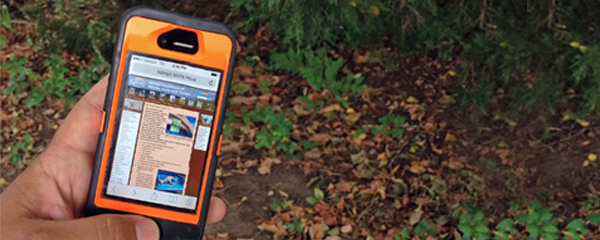
PRATT – With permit sales reaching nearly 100,000 every year, whitetail deer are easily one of Kansas’ most sought-after big game animals. One important regulation deer hunters should be aware of is deer must be tagged before being moved from the site of the kill. Unless a hunter has an either-sex permit, the head must also remain attached to the carcass for identification purposes while in transit to a residence or place of commercial processing or preservation. In an effort to allow hunters to bone out deer prior to transport, the Kansas Department of Wildlife, Parks and Tourism created a voluntary electronic deer check-in system. Electronic registration is not required but allows hunters to register their deer through the Internet, using photos taken at the harvest site. Once registered, hunters will receive a confirmation number that allows them to transport the carcass without the head attached. If Internet access is unavailable at the kill site, the hunter can retain the photographs while in transit and a registration number can be obtained later.
This registration process requires a hunter to submit two digital photographs — one close-up clearly showing the completed tag attached to the deer and a second showing the entire body of the deer with the head still attached. Once logged on to the KDWPT website, a hunter must submit the photos and enter the KDWPT number from their permit, time and date of the kill and the county where the deer was taken. A confirmation number will be issued by email when the photos and data are successfully received. This confirmation number must be retained during transportation.
Once these steps are completed, the deer head may be removed and the carcass prepared for transportation. The system allows KDWPT staff to see the deer and the hunter’s completed tag without the time and expense of maintaining a check station. This flexibility is a benefit to both the hunter and KDWPT. To access the electronic deer check-in, go online to the KDWPT website, www.ksoutdoors.com, and click “Hunting/Big Game/Deer/Deer Check-in.”
This option was developed to address two important issues regarding deer carcass transportation. The first concern is about the movement of any material from a deer that may contribute to the transmission of chronic wasting disease (CWD). It is believed that spread of CWD could be diminished if certain body parts affected by the disease are not moved from the site where the deer is taken. Because CWD affects the brain and central nervous system, the transportation of a deer head and skeleton from one location to another is considered a likely means for the disease to spread. The new registration system allows a hunter to leave these items at the kill site, minimizing the possibility of spreading CWD.
The second concern is directly related to the first. Many states have adopted strict regulations to prevent the spread of CWD. Typically, these regulations do not allow the transportation of a deer head with brain tissue from a state with confirmed CWD cases. Hunters have been cited in other states and their deer confiscated for not complying with the transportation laws of that state. The new registration system allows a hunter to properly dispose of the head and legally transport the boned meat, as well as the cleaned skull cap and antlers, to the hunter’s home.
More information on CWD and transportation laws may be found on the KDWPT website, www.ksoutdoors.com under “Hunting/Big Game/Chronic Wasting Disease.”

Sunday, November 11, 2012

ELECTRONIC REGISTRATION OF DEER AVAILABLE

Registration number allows hunters to process deer in the field
PRATT — Nearly 100,000 hunters will pursue deer in Kansas this fall, and those numbers will peak from now through early December. The archery season is open, and November is the most popular month with bowhunters. The regular firearm season is Nov. 28-Dec. 9. One important regulation hunters should be aware of is deer must be tagged before being moved from the site of the kill. Unless a hunter has an either-sex permit, the head must remain attached to the carcass while in transit to a residence or place of commercial processing or preservation. However, the agency does offer a voluntary option for transporting harvested deer that allows hunters to register their deer through the Internet, using photos taken at the harvest site. Once registered, the hunter may then transport the carcass without the head attached. If Internet access is unavailable at the kill site, the hunter can retain the photographs while in transit and a registration number can be obtained later. To access the electronic deer check-in, go online to the KDWPT website, www.ksoutdoors.com, and click “Hunting/Big Game/Deer/Deer Check-in.”
This is not a telephone registration system and it is not required.
The hunter is walked through the registration process and given the necessary instructions. The registration process requires the hunter to submit two digital photographs — one close-up clearly showing the completed tag attached to the deer and a second showing the entire body of the deer with the head still attached. Once logged on to the KDWPT website, a hunter must submit the photos and enter the KDWPT number from their permit, time and date of the kill and the county where the deer was taken. A confirmation number will be issued by email when the photos and data are successfully received. This confirmation number must be retained during transportation.
Once these steps are completed, the deer head may be removed and the carcass prepared for transportation. The system allows KDWPT staff to see the deer and the hunter’s completed tag without the time and expense of maintaining a check station. This flexibility is a benefit to both the hunter and KDWPT.
This option was developed to address two important issues regarding deer carcass transportation. The first concern is about the movement of any material from a deer that may contribute to the transmission of chronic wasting disease (CWD). It is believed that spread of CWD could be diminished if certain body parts affected by the disease are not moved from the site where the deer is taken. Because CWD affects the brain and central nervous system, the transportation of a deer head and skeleton from one location to another is considered a likely means for the disease to spread. The new registration system allows a hunter to leave these items at the kill site, minimizing the possibility of spreading CWD.
The second concern is directly related to the first. Many states have adopted strict regulations to prevent the spread of CWD. Typically, these regulations do not allow the transportation of a deer head with brain tissue from a state with confirmed CWD cases. Hunters have been cited in other states and their deer confiscated for not complying with the transportation laws of that state. The new registration system allows a hunter to properly dispose of the head and legally transport the boned meat, as well as the cleaned skull cap and antlers, to the hunter’s home.
More information on CWD and transportation laws may be found on the KDWPT website, www.ksoutdoors.com under “Hunting/Big Game/Chronic Wasting Disease.”

Sunday, September 9, 2012

SUMNER COUNTY DEER DID NOT HAVE CHRONIC WASTING DISEASE

English: Distribution of Chronic Wasting Disea...

Initial test was false-positive
PRATT— In July, the Kansas Department of Wildlife, Parks and Tourism (KDWPT) reported that nine deer had tested positive for chronic wasting disease (CWD) during the 2011-12 testing period. The agency now reports that the National Veterinary Services Laboratory in Ames, Iowa, after two different tests, did not detect CWD prions in the Sumner County deer, so initial testing in this case yielded a false-positive result. This reduces the total 2011-2012 positives to eight. Counties where CWD was detected during the 2011-2012 surveillance period include Wallace (one), Rawlins (one), Decatur (one), Norton (two), Trego (one), Ford (one), and Stafford (one).

The white-tailed deer in question was taken from Sumner County last winter. This result brings the total number of confirmed CWD cases in Kansas to 48 since testing began in 1996. In total, 2,446 animals were tested for CWD during the 2011-2012 surveillance period, Aug. 1, 2011, through July 31, 2012.

Annual testing is part of an ongoing effort by KDWPT to monitor the prevalence and spread of CWD. The fatal disease was first detected in the Kansas free-ranging deer herd in 2005 in Cheyenne County.

More information on CWD can be found on KDWPT’s website, ksoutdoors.com, or at the Chronic Wasting Disease Alliance website, www.cwd-info.org.

Saturday, July 28, 2012

NINE DEER TEST POSITIVE FOR CHRONIC WASTING DISEASE

CWD
CWD (Photo credit: Wikipedia)
All but three from northwest Kansas; numbers stable
PRATT— The Kansas Department of Wildlife, Parks and Tourism (KDWPT) has announced that nine deer from Kansas tested positive for chronic wasting disease, seven confirmed and two presumptive, for the current test year. That total is down from 10 confirmed positive during last year’s testing. The two presumptive positive samples will be sent to the National Veterinary Services Laboratory in Ames, Iowa for confirmation. All but three of the nine deer — one from Stafford County one from Sumner County, and one from Ford County — were animals from northwestern Kansas. The Stafford, Sumner, and Ford county cases were firsts for each county. Eight of the deer were taken by hunters during the 2011 hunting seasons, and one was euthanized by a KDWPT natural resource officer after it was reported as acting sick.
Two cases were from Norton County and one each from Decatur, Ford, Rawlins, Stafford, Sumner, Trego, and Wallace counties.
All cases were white-tailed deer. This season’s testing results bring the total number of confirmed CWD cases in Kansas to 49 since testing began in 1996. In total, 2,447 animals were tested for CWD for the 2011 deer seasons. Although most testing is finished for the year, KDWPT will continue testing some vehicle-killed and sick or suspect-looking deer, as well as deer taken with depredation permits, through July 31.
Annual testing is part of an ongoing effort by KDWPT to monitor the prevalence and spread of CWD. The fatal disease was first detected in a Kansas wild deer taken in Cheyenne County in 2005.
CWD is a member of the group of diseases called transmissible spongiform encephalopathies (TSEs). Other diseases in this group include scrapie in sheep and goats, bovine spongiform encephalopathy (BSE or mad cow disease) in cattle, and Cruetzfeldt-Jacob disease in people. CWD is a progressive, fatal disease that results in small holes developing in the brain, giving it a sponge-like appearance under the microscope. An animal may carry the disease without outward indication, but in the later stages, signs may include behavioral changes such as decreased interactions with other animals, listlessness, lowering of the head, weight loss, repetitive walking in set patterns, and a lack of response to humans. Anyone who discovers a sick or suspect deer should contact the nearest KDWPT office.
“It must be noted that many symptoms of CWD are indicative of other diseases,” says KDWPT wildlife disease coordinator Shane Hesting. “A sick deer may or may not be infected with CWD. CWD is a serious deer disease but is still a rare disease in Kansas. There is no vaccine or other biological method that prevents the spread of CWD. However, there is no evidence that CWD poses a risk to humans or livestock in the natural environment.”
Still, precautions should be taken. Hunters are advised not to eat meat from animals known to be infected, and common-sense precautions are advised when field dressing and processing meat from animals taken in areas where CWD is found. More information on CWD can be found on KDWPT’s website, ksoutdoors.com or at the Chronic Wasting Disease Alliance website, www.cwd-info.org.

Sunday, May 27, 2012

“RESCUING” YOUNG FAWNS AGAINST THE LAW

Fawn Under a tree
 (Photo credit: Wikipedia)
Taking fawns from wild is usually a death sentence
PRATT — Recently, Kansas Department of Wildlife, Parks and Tourism (KDWPT) staff have received numerous reports of individuals taking young fawns from the wild and either attempting to raise them or taking them to licensed wildlife rehabilitators. KDWPT reminds everyone that picking up these young animals — under any circumstances — is against the law. Both the KDWPT and the Department of Health and Environment have regulations against such activity.
Often, well-meaning Kansans see a deer fawn by itself and assume that it has been abandoned by its mother. In almost all cases, the mother is actually nearby, keeping a hidden eye on the young. If those well-meaning folks decide to "rescue" the young animal, they are usually giving it a death sentence.
The majority of fawns are born in late May and early June. However, some whitetail does may breed for the first time in late winter, so newborn fawns may be seen as late as July or even August. If found alone, these charming young animals are tempting targets for the misinformed wildlife lover.
“Wildlife kidnapping" incidents are reported each year. The young often fail to survive in captivity, and if they do, they almost always lose the instincts that allow them to survive in the wild and are thus condemned to a life in captivity.
Wild animals are better off left in the wild. They cannot legally be inoculated by veterinarians, and few people really know how to care for them. Due to the threat of chronic wasting disease, KDWPT discourages wildlife rehabilitators from accepting them. In at least one case, a “rescued” fawn infected with the disease was transported from northwestern Kansas to Hutchison.
"We encourage the public to leave fawns in the wild," said Shane Hesting, wildlife disease coordinator for KDWPT. "As we all know, in many cases, lone fawns are seldom 'orphaned'. The mother is usually nearby but out of sight, keeping watch. The risk of spreading such a dangerous disease should override the emotion of wanting to 'save' a fawn."
If you see young animals in the wild this spring or summer, consider yourself lucky to have seen them. But remember, their mother is most likely watching nearby. Leave them in the wild world where they were born and where they belong.

Wednesday, February 15, 2012

THREE KANSAS DEER CONFIRMED POSITIVE IN EARLY STAGES OF CWD TESTING

This micrograph of brain tissue reveals the cy...
Image via Wikipedia

Numbers still low; no known threat to humans or livestock
PRATT — The number of cases of chronic wasting disease (CWD) detected in Kansas deer continues to be low and is currently isolated to the northwest part of the state, according to the Shane Hesting, wildlife disease coordinator for the Kansas Department of Wildlife, Parks and Tourism (KDWPT). Samples from three white-tailed bucks taken during this year’s hunting season were confirmed positive for CWD in tests completed last week. Counties where the deer were taken include Wallace (new county of detection), Decatur, and Rawlins. KDWPT will continue testing some vehicle-killed and sick or suspect-looking deer, as well as deer taken with depredation permits, through July 31.
“This season’s testing results bring the total number of confirmed CWD cases in Kansas to 43 since testing began in 1996,” says Hesting. “About 2,400 samples were collected during the 2011-2012 deer seasons, but testing has been slow, and testing kits are continually on back order. We’re about 35 percent done. More importantly, U.S. Department of Agriculture funding will not be available for collecting and testing samples next season. Without federal financial assistance, surveillance will be very limited and less robust.”
Annual testing has been a part of an ongoing effort by KDWPT to monitor the prevalence and spread of CWD. The disease, fatal in wild deer, was first detected in deer taken in Cheyenne County in 2005.
CWD is a member of the group of diseases called transmissible spongiform encephalopathies (TSEs). Other diseases in this group include scrapie in sheep and goats, bovine spongiform encephalopathy (BSE or Mad Cow Disease) in cattle, and Cruetzfeldt-Jakob disease in people. CWD is a progressive, fatal disease that results in small holes developing in the brain, giving it a sponge-like appearance under the microscope. An animal may carry the disease without outward indication, but in the later stages, signs may include decreased interactions with other animals, listlessness, lowering of the head, weight loss, repetitive walking in set patterns, and a lack of response to humans.
“It must be noted that many of the symptoms of CWD are indicative of other diseases,” Hesting explains. “Thus, a sick deer may or may not be infected with CWD. CWD is a serious deer disease but is still rare in Kansas.”
All but three of the 43 positive animals detected since 2005 were asymptomatic, meaning 40 animals did not show any symptoms of CWD at the time of collection. Anyone who discovers a sick or suspect deer should contact the nearest KDWP office.
There is no vaccine or other biological method that prevents CWD. However, there is no evidence that CWD poses a risk to humans or livestock in the natural environment. Still, precautions should be taken. Hunters are advised not to eat meat from animals known to be infected, and common sense precautions are advised when field dressing and processing meat from animals taken in areas where CWD is found. More information on CWD can be found on KDWPT’s website, www.ksoutdoors.com(Hunting/Big Game Information), or at the Chronic Wasting Disease Alliance website,www.cwd-info.org.

Saturday, December 10, 2011

DEER HUNTERS: TAG YOUR DEER PROPERLY

English: A white-tailed deer
Image via Wikipedia

Nonresidents should know laws regarding transport through other states, as well
PRATT — The regular Kansas firearm deer season is winding down, but archery season remains open the rest of the year, and several whitetail antlerless-only seasons will be held in January. After a deer is taken, hunters must dress the deer out, cool it down, and get it to a place for processing — all of which is hard work. But before moving the deer, the hunter must fill out his or her carcass tag and attach it to the deer. There is more to this than meets eye.
“Hunters need to make sure they attach the carcass tag securely,” says Mark Rankin, assistant director of Law Enforcement for the Kansas Department of Wildlife, Parks and Tourism (KDWPT). “We have problems every year when hunters get to a locker or are stopped en route and there is no tag on their deer, but they say they have tagged it. Follow-up often reveals that they did have a permit, but the carcass tag had blown off in the back of the vehicle. In that case, we have no choice but to investigate. In some cases, a citation may be issued.”
The best way to tag a deer is to follow the directions in the 2011 Kansas Hunting and Furharvesting Regulations Summary, Page 16, available at KDWPT offices and license vendors, as well as the KDWPT website,www.kdwpt.ks.us.
Another issue regarding tagging affects nonresidents who may want to have their deer meat processed in Kansas and shipped home, but they want to travel home with the head and antlers. Or they may want to donate the meat in Kansas and travel home with the head and antlers. Kansas law requires that the carcass tag remain attached to the animal until processed and remain with the meat.
“In these cases, we suggest that the hunter keep the top part of their deer permit with the head and antlers,” Rankin explains. “The carcass tag must remain with the carcass, but if the hunter keeps the top half of the permit with the head and antlers, he’ll be within the law.”
It’s not just Kansas law that’s at issue, however. Many states have adopted strict regulations to prevent the spread of chronic wasting disease (CWD). Typically, these regulations do not allow the transportation of a deer head with brain tissue from a state with confirmed CWD cases (which includes Kansas). Hunters have been cited in other states and had their deer confiscated for not complying with the transportation laws of that state. Boned meat, as well a the cleaned skull cap and antlers, may be all that can be legally transported in some states.
Nonresident hunters should check the laws regarding transport of deer in all states through which they plan to transport any portion of a harvested deer.

Sunday, November 13, 2011

KDWPT VOLUNTARY ELECTRONIC DEER REGISTRATION ONLINE ONLY


KDWPT VOLUNTARY ELECTRONIC DEER REGISTRATION ONLINE ONLY


PRATT — Although the Kansas Department of Wildlife, Parks and Tourism (KDWPT) does not require registration of deer taken in Kansas, the agency does offer a voluntary option for transporting harvested deer that allows hunters to register their harvested deer through the Internet, using photos taken at the harvest site. Once registered, the hunter may then transport the carcass without the head or evidence of sex being attached (required for species- and sex-specific permits). To access the electronic deer check-in, go online to the KDWPT website,www.kdwpt.state.ks.us, and click “Hunting/Big Game/Deer/Deer Check-in.”
This is not a telephone registration system, and it is not required.
The registration process requires access to the KDWPT website through a conventional, wireless, or air-card Internet connection. Once logged on to the website, the hunter will need to submit two digital photographs — one close-up clearly showing the completed tag attached to the deer and a second showing the entire body of the deer with the head still attached. Hunters must enter the KDWPT number from their permits, time and date of the kill, and the county where the deer was taken. A confirmation number will be issued by email when the photos and data are successfully received. This confirmation number must be retained during transportation, so the hunter should write it down.
The hunter is walked through the registration process and given the necessary instructions. Once these steps are completed, the deer head may be removed and the carcass prepared for transportation. The system allows KDWPT staff to see the deer and the hunter’s completed tag without the time and expense of maintaining a check station. This flexibility is a benefit to both the hunter and KDWPT.
This option was developed to address two important issues regarding deer carcass transportation. The first concern is about the movement of any material from a deer that may contribute to the transmission of chronic wasting disease (CWD). While there is a lot yet to be learned about this disease, and how it is spread, it is believed that its transmission could be diminished if certain body parts affected by the disease are not moved from the site where the deer is taken. Because CWD affects the brain and central nervous system, the transportation of a deer head and skeleton from one location to another is considered a likely means for the disease to spread. The new registration system allows a hunter to leave these items at the kill site, minimizing the possibility of spreading the disease.
The second concern is directly related to the first. Many states have adopted strict regulations to prevent the spread of CWD. Typically, these regulations do not allow the transportation of a deer head with brain tissue from a state with confirmed CWD cases. Hunters have been cited in other states and had their deer confiscated for not complying with the transportation laws of that state. The new registration system allows a hunter to properly dispose of the head and legally transport the boned meat, as well as the cleaned skull cap and antlers, to the hunter’s home.
More information on CWD and transportation laws may be found on the KDWPT website under “Hunting/Big Game/Chronic Wasting Disease.”

Thursday, March 31, 2011

TEN KANSAS DEER CONFIRMED POSITIVE IN CWD TESTS

Number of confirmed cases same as last year
PRATT— The number of positive cases of chronic wasting disease (CWD in Kansas appears to be stable for now. On March 2, the Kansas Department of Wildlife and Parks (KDWP) announced that 10 deer from northwestern Kansas had tested positive for chronic wasting disease, the same number as last year although two of those deer were found in counties farther east than any previous confirmations. These were animals taken by hunters in the 2010 hunting seasons.
Six confirmed cases of CWD deer were taken by hunters in Decatur County and one each from Graham, Norton, Sherman, and Smith counties. The Norton, Sherman, and Smith cases were firsts for those counties. The cases included nine white-tailed and one mule deer. This season’s testing results brings the total number of confirmed CWD cases in Kansas to 40 since testing began in 1996. In total, 2,503 animals were tested for CWD for the 2010 deer seasons. Although most testing is finished for the year, KDWP will continue testing some vehicle-killed and sick or suspect-looking deer, as well as deer taken with depredation permits, through July 31. If U.S. Department of Agriculture funding is available, and new surveillance period will begin Aug. 1.
Annual testing is part of ongoing effort by KDWP to monitor the prevalence and spread of CWD. The fatal disease was first detected in a wild deer taken in Cheyenne County in 2005. Three infected deer were taken in Decatur County in 2007 and 10 tested positive in 2008, all in northwest Kansas.
CWD is a member of the group of diseases called transmissible spongiform encephalopathies (TSEs). Other diseases in this group include scrapie in sheep and goats, bovine spongiform encephalopathy (BSE or Mad Cow Disease) in cattle, and Cruetzfeldt-Jacob disease in people. CWD is a progressive, fatal disease that results in small holes developing in the brain, giving it a sponge-like appearance under the microscope. An animal may carry the disease without outward indication (only two of the 40 positive animals showed symptoms) but in the later stages, signs may include behavioral changes such as decreased interactions with other animals, listlessness, lowering of the head, weight loss, repetitive walking in set patterns, and a lack of response to humans. Anyone who discovers a sick or suspect deer should contact the nearest KDWP office.
“It must be noted that many symptoms of CWD are indicative of other diseases,” says KDWP wildlife disease coordinator Shane Hesting. “Thus, a sick deer may or may not be infected with CWD. CWD is a serious deer disease but is still a rare disease in Kansas. There is no vaccine or other biological method that prevents the spread of CWD. However, there is no evidence that CWD poses a risk to humans or livestock in the natural environment.”
Still, precautions should be taken. Hunters are advised not to eat meat from animals known to be infected, and common sense precautions are advised when field dressing and processing meat from animals taken in areas where CWD is found. More information on CWD can be found on KDWP’s website,www.kdwp.state.ks.us or at the Chronic Wasting Disease Alliance website,www.cwd-info.org.


Enhanced by Zemanta

Wednesday, January 5, 2011

FIRST CASE OF CHRONIC WASTING IN 2010 DEER SEASON CONFIRMED

White-tailed deer taken in Decatur County Nov. 7; complete results due in spring
PRATT — The Kansas Department of Wildlife and Parks (KDWP) has announced the first confirmed case of chronic wasting disease (CWD) found in a deer taken during a 2010 deer season. The animal was the only one of 90 tested by KDWP as of Dec. 8 to show a “presumptive positive” result. Samples of deer tissue taken by KDWP are sent to the K-State Diagnostic Veterinary Lab in Manhattan for preliminary testing. If the K-State lab determines the sample is a presumptive positive, the sample is then sent to the National Veterinary Services Lab in Ames, Iowa, for confirmation.
This deer was a 3 ½-year-old male taken in Decatur County by an archery hunter on Nov. 7. Because samples from the January whitetail antlerless only seasons have yet to be collected, complete results of testing won’t be available until March. Last year, 2,738 animals were tested for CWD, including 17 elk, 289 mule deer, and 2,428 white-tailed deer, and four unknown species. Of those samples, 15 were confirmed positive.
Annual testing is part of ongoing effort by KDWP to monitor the prevalence and spread of CWD. The fatal disease was first detected in a wild deer taken in Cheyenne County in 2005. Three infected deer were taken in Decatur County in 2007, 10 tested positive in 2008, and 15 in 2009, all in northwest Kansas.
CWD is a member of the group of diseases called transmissible spongiform encephalopathies (TSEs). Other diseases in this group include scrapie in sheep and goats, bovine spongiform encephalopathy (BSE or Mad Cow Disease) in cattle, and Cruetzfeldt-Jacob disease in people. CWD is a progressive, fatal disease that results in small holes developing in the brain, giving it a sponge-like appearance under the microscope. An animal may carry the disease without outward indication but in the later stages, signs may include behavioral changes such as decreased interactions with other animals, listlessness, lowering of the head, weight loss, repetitive walking in set patterns, and a lack of response to humans. Anyone who discovers a sick or suspect deer should contact the nearest KDWP office.
There is no vaccine or other biological method that prevents the spread of CWD. However, there is no evidence that CWD in the natural environment poses a risk to humans or livestock. Still, precautions should be taken. Hunters are advised not to eat meat from animals known to be infected, and common sense precautions are advised when field dressing and processing meat from animals taken in areas where CWD is found. More information on CWD can be found on KDWP’s website, www.kdwp.state.ks.us or at the Chronic Wasting Disease Alliance website, www.cwd-info.org
Enhanced by Zemanta